The Ultimate Guide to the Best Educational Toys for 4-Year-Olds: Fostering Growth Through Play
Introduction: The Magic of Play at Age Four
At the age of four, children are no longer toddlers but inquisitive preschoolers who stand at a fascinating crossroads of development. Their language skills are blossoming, their imaginations are running wild, and their physical coordination is improving by the day. This is precisely the moment when the right educational toys can make a profound difference—not by turning play into a chore, but by harnessing the natural joy of discovery to build foundational skills. A four‑year‑old learns best through hands‑on, sensory‑rich experiences that invite creativity, problem‑solving, and social interaction. The toys we choose should spark curiosity rather than overwhelm, encourage independence while allowing for collaborative play, and above all, be irresistibly fun. In this guide, we will explore the most effective categories of educational toys for four‑year‑olds, each selected for its ability to nurture cognitive, motor, language, and social‑emotional development. Whether you are a parent, a caregiver, or an educator, understanding what makes a toy truly educational at this age will help you create a play environment that is both stimulating and supportive.
Why Educational Toys Matter at Age Four
The preschool years are a period of rapid brain development. According to child development experts, the brain of a four‑year‑old is forming neural connections at an astonishing rate—up to one million new connections per second. Every interaction, every challenge, and every moment of creative play helps strengthen these pathways. Educational toys are specifically designed to target key developmental domains: fine and gross motor skills, problem‑solving abilities, language acquisition, emotional regulation, and early math and science concepts. Unlike passive entertainment such as screen‑based games, physical toys require active engagement, decision‑making, and sensory feedback. For instance, stacking blocks challenges a child to balance, estimate spatial relationships, and persist through failure. A simple set of play dough encourages hand strength, creativity, and even scientific experimentation when colors mix. Moreover, at age four, children are beginning to understand rules, take turns, and negotiate with peers. Toys that facilitate cooperative play—like board games or pretend‑play sets—teach essential social skills in a low‑pressure context. The best educational toys do not feel like lessons; they feel like adventures. They respect the child’s natural pace and allow for open‑ended exploration, which is far more valuable than rote learning. In short, investing in quality educational toys at this age is an investment in lifelong learning habits.
Building and Construction Toys: Engineering the Imagination
Few categories of toys are as universally beneficial for four‑year‑olds as building and construction sets. From classic wooden blocks to interlocking plastic bricks, these toys offer endless opportunities for creative expression while simultaneously teaching physics, geometry, and perseverance. At four, children are ready for more complex construction challenges. They can follow simple visual instructions to build a tower, a bridge, or a house, but they also delight in free‑form creations. Brands like LEGO Duplo (the larger blocks designed for little hands) are particularly excellent because they combine safety with versatility. A set that includes wheels, windows, and animal figures allows a child to build a farm, a fire station, or a spaceship—each project reinforcing planning skills and spatial awareness. Magnetic tile sets, such as Magna‑Tiles, are another outstanding choice. The satisfying click of magnets connecting provides immediate feedback, and the translucent tiles let children explore light and color as they construct three‑dimensional forms. What makes construction toys truly educational is the process of trial and error. When a tower collapses, a four‑year‑old must figure out why and adjust. This builds executive function—the ability to plan, monitor progress, and adapt strategies. Additionally, building with a sibling or parent encourages language development as children describe what they are making and negotiate roles. For maximum benefit, choose sets that include a variety of shapes, sizes, and connectors, and avoid those with too many single‑use pieces. The best construction toys are those that can be rebuilt into something new every day, mirroring the limitless creativity of a four‑year‑old’s mind.
Art and Creativity Toys: Unleashing Self‑Expression
Art supplies and creative kits are indispensable for a four‑year‑old’s emotional and cognitive growth. At this age, children are transitioning from random scribbles to intentional drawings—circles that represent people, lines that form houses, and colors chosen with meaning. Providing high‑quality, non‑toxic art materials encourages this evolution while building fine motor control and hand‑eye coordination. Washable markers, crayons, finger paints, and watercolors are staples, but the truly educational art toys go a step further. Consider a set of child‑safe modeling clay or play dough with tools like rolling pins, cutters, and extruders. Sculpting strengthens the small muscles in the hands that are essential for writing later on. Open‑ended art kits that include googly eyes, pipe cleaners, felt pieces, and glue let children create their own characters, animals, or abstract sculptures, merging art with imaginative storytelling. Another powerful option is a light‑up tracing board or a magnetic drawing board like the Etch A Sketch or Boogie Board, which allows for endless practice without waste. For four‑year‑olds, the process is far more important than the product. When a child mixes paint and declares it “dinosaur green,” they are engaging in scientific reasoning and vocabulary expansion. Collaborative art projects—like a large roll of paper that two children can paint on together—teach sharing and compromise. Do not underestimate the value of messy play; sensory experiences with textures like sand, rice, or shaving cream (supervised, of course) also fall under the umbrella of creative toys. These activities stimulate the brain’s tactile processing centers and can be incredibly calming for a child who is learning to regulate big emotions. Ultimately, the best art toys for a four‑year‑old are those that offer freedom, not a predetermined outcome.
Puzzles and Problem‑Solving Toys: Sharpening the Mind
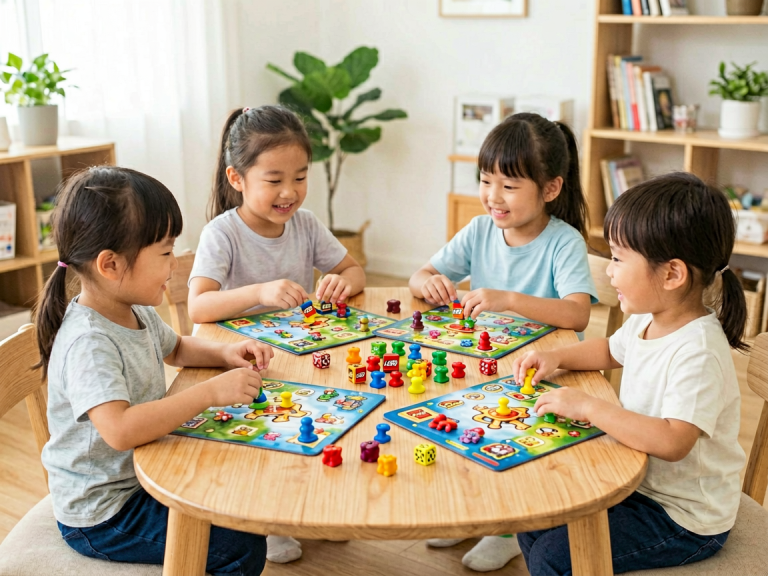
Puzzles are a classic educational toy for good reason. They teach logical thinking, pattern recognition, and patience—all crucial skills for academic success. For a four‑year‑old, the optimal puzzle has between 12 and 48 large, sturdy pieces with clear, engaging imagery. Jigsaw puzzles featuring favorite characters, animals, or vehicles capture attention, while wooden peg puzzles with knobs are excellent for younger fours who are still refining their grip. Beyond traditional jigsaw puzzles, there are many other types of problem‑solving toys that challenge a preschooler’s mind. Pattern blocks and tangrams, for example, require children to match shapes and rotate them in space, an early geometry lesson. Memory games with cards (where you flip and find matching pairs) boost short‑term memory and concentration. Sequencing puzzles—where a child arranges cards to tell a story or show a process like a seed growing into a flower—develop narrative understanding and cause‑and‑effect reasoning. Another fantastic option is a simple board game designed for preschoolers, such as “Hi‑Ho! Cherry‑O” or “The Sneaky, Snacky Squirrel Game.” These games combine counting, turn‑taking, and rule‑following with the excitement of competition. The educational value lies in the social and emotional lessons: winning gracefully, losing without tears, and waiting for one’s turn. For children who thrive on logic, consider a coding‑based toy made for pre‑readers, like the “Code‑a‑Pillar” by Fisher‑Price. This caterpillar has segments that move in sequence based on how the child arranges them, teaching the basics of sequencing and debugging. The key is to select puzzles and games that are challenging enough to hold interest but not so difficult that they cause frustration. As a child masters a puzzle, the sense of accomplishment boosts self‑esteem and motivates them to tackle the next challenge.
STEM and Science Toys: Cultivating a Curious Mind
Four‑year‑olds are natural scientists. They ask endless “why” questions, observe insects with fascination, and love mixing, pouring, and experimenting. STEM (Science, Technology, Engineering, and Math) toys designed for this age group channel that innate curiosity into structured discovery, fostering critical thinking and a love for learning. One of the best entry points is a simple magnet set. Magnets feel almost magical to a child, and exploring which objects are magnetic (and which are not) introduces fundamental concepts of physics. A magnetic wand with colorful discs or a magnetic maze board where beads move with a stylus strengthens fine motor control while teaching cause and effect. Another excellent category is water play toys. A water wheel station or a set of tubes and funnels for the bathtub or a sensory bin teaches principles of flow, gravity, and volume. Similarly, a sand or kinetic sand kit with sifters, scoops, and molds allows for hands‑on exploration of textures and shapes. For early biology, consider a bug viewer or a butterfly garden kit (where children can observe the life cycle of a painted lady butterfly). These kits require patience and care, teaching responsibility and scientific observation. Building a simple volcano with baking soda and vinegar is a classic activity that fits into the “science toy” category—it introduces chemical reactions in a safe, dramatic way. Many companies now produce preschool‑friendly microscopes or magnifying glasses with large, durable lenses. A four‑year‑old can examine a leaf, a feather, or their own fingerprint, developing observation skills and vocabulary. Technology toys, when used thoughtfully, also have a place. An interactive globe that lights up when touched, or a tablet‑free coding game with physical blocks, can teach geography or basic logic without screen addiction. The golden rule for STEM toys at age four is that they should involve real, tangible experimentation rather than passive viewing. The child should be the one pouring, mixing, building, and observing—the toy is just a tool for discovery.
Pretend Play and Role‑Playing Toys: Building Social and Emotional Intelligence
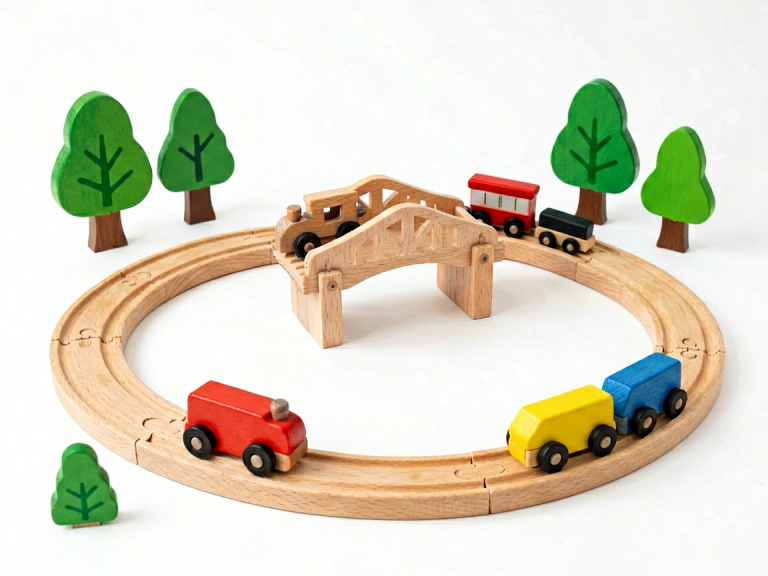
Perhaps no category of educational toy is more vital for a four‑year‑old’s social‑emotional development than pretend play. At this age, children begin to engage in complex imaginative scenarios—playing “house,” “doctor,” “grocery store,” or “firefighter.” Through these roles, they practice empathy, negotiation, language, and problem‑solving. A well‑equipped play kitchen with realistic pots, pans, and food items allows a child to mimic cooking and serving, which builds sequencing skills (first wash, then cut, then cook) and social scripts (offering food to a doll or friend). Similarly, a doctor’s kit with a stethoscope, syringe, and bandages helps a child process experiences with medical visits and develop comforting behaviors. Costume sets—simple capes, hats, vests, and masks—unlock endless possibilities. A child wearing a firefighter helmet might suddenly rush to “rescue” a stuffed animal from a burning building (the couch), narrating the action: “Don’t worry, I’ll save you!” This narrative play strengthens language and storytelling abilities. Puppets and puppet theaters are another powerful tool. A child can use a puppet to express feelings they might not yet have words for, such as anger or fear, making puppets excellent for emotional regulation. For collaborative pretend play, consider a toy cash register with play money, a wooden train set with people and cargo, or a dollhouse with furniture. These toys encourage multiple children to negotiate roles and rules, sharing materials and taking turns. The educational value extends beyond social skills: pretend play often incorporates early math (counting pretend money), literacy (reading menus or signs), and problem‑solving (figuring out how to fit the furniture into the dollhouse). Parents can enhance the experience by asking open‑ended questions: “What should we cook for dinner?” or “How is the patient feeling today?” This co‑play deepens the child’s engagement and vocabulary. The best pretend play toys are open‑ended, minimal on sounds and lights, and rich in possibilities—a simple piece of fabric can become a cape, a tent, or a picnic blanket.
Conclusion: Choosing Toys That Grow with Your Child
When selecting the best educational toys for a four‑year‑old, remember that the most effective toys are not necessarily the loudest or most high‑tech. They are the ones that invite active participation, encourage repetition and variation, and adapt to a child’s evolving interests. A toy that a child returns to again and again, building new stories and skills each time, is worth far more than a flashy gadget that is played with once. The categories we have explored—construction, art, puzzles, STEM, and pretend play—each target different aspects of development, but they also overlap. A child who builds a castle with blocks is practicing engineering, geometry, and storytelling. A child who paints a picture is exploring color theory and self‑expression. A child who plays doctor is learning empathy and biology. The key is to provide a balanced selection of toys across these categories, rotating them periodically to maintain novelty. Also, consider the child’s individual temperament: a quiet child might first gravitate toward puzzles, while a more active child might prefer building with large blocks. Both are valid. Finally, do not underestimate the power of simple, everyday objects—cardboard boxes, empty yogurt containers, and cloth scraps can become the most educational toys of all. When you combine thoughtful toy choices with your own presence and engagement, you create a rich learning environment that honors the wonder and energy of being four years old. The best educational toy is, ultimately, the one that sparks a smile and a question: “What if I try this?”