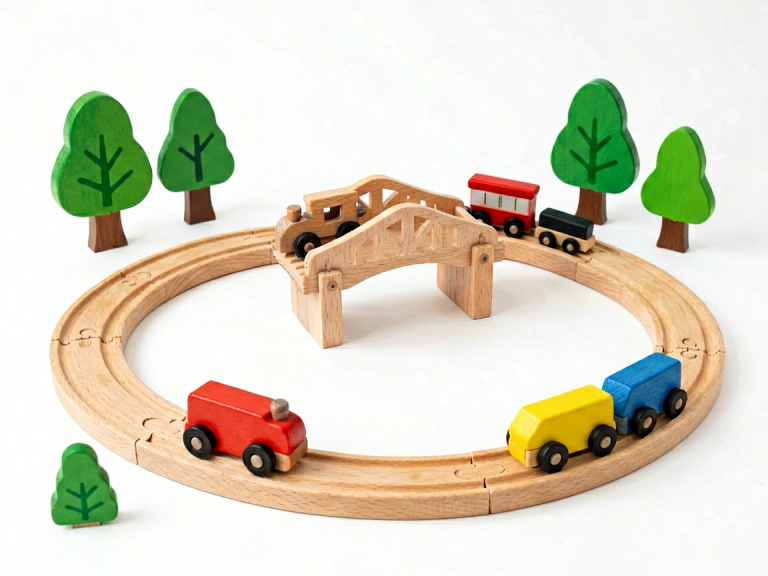
Building the Future: The Best STEM Toys for 4-Year-Olds That Spark Curiosity and Learning
—
Introduction
The phrase “STEM toys” has become a buzzword in parenting circles, but its true value extends far beyond trendy marketing. STEM—an acronym for Science, Technology, Engineering, and Mathematics—represents a hands-on, inquiry-based approach to learning that encourages children to ask questions, experiment, and solve problems. For a 4-year-old, whose brain is rapidly developing neural connections and whose natural curiosity is at its peak, the right STEM toy can transform playtime into a powerful learning experience.
At this age, children are not expected to understand complex equations or program a robot. Instead, the best STEM toys for 4-year-olds focus on foundational skills: pattern recognition, cause-and-effect relationships, fine motor coordination, early counting, and the joy of discovery. They should be safe, durable, and engaging enough to hold a preschooler’s attention span (which, let’s face it, can be fleeting). In this article, we will explore why STEM toys matter for 4-year-olds, what features to look for, and the top categories—along with specific recommendations—that will delight your little one while laying the groundwork for lifelong learning.
—
Why STEM Toys Matter for 4-Year-Olds
1. Cognitive Development and Problem-Solving
At age four, children are transitioning from purely sensory exploration to more structured thinking. They can sort objects by color or size, follow simple two-step instructions, and begin to understand concepts like “more” and “less.” STEM toys capitalize on these emerging abilities by presenting small challenges: “Can you make the tower stand?” or “Which magnet is stronger?” This process teaches persistence and logical reasoning, skills that are far more valuable than rote memorization.
2. Language and Communication Growth
When a child builds a bridge with blocks or mixes colored water in a test tube, they naturally want to talk about it. “Look, the red and blue make purple!” Descriptive vocabulary, sequencing words (“first, then, next”), and even basic scientific terms (“absorb,” “float,” “sink”) become part of their everyday language. Parents and caregivers can scaffold this learning by asking open-ended questions like, “What do you think will happen if we add more water?”
3. Fine Motor Skills and Hand-Eye Coordination
Many STEM activities require precise movements: snapping together interlocking pieces, turning a screw, pressing a button in a sequence, or arranging small parts. These actions strengthen the small muscles in the hands and improve dexterity, which later supports writing, drawing, and self-care tasks like buttoning a shirt.
4. Confidence and a Growth Mindset
Perhaps the most overlooked benefit is the emotional boost. When a 4-year-old successfully completes a simple circuit and makes a light bulb glow, they experience a sense of accomplishment that fuels their self-esteem. STEM toys often allow for multiple attempts—there is no “wrong” way to explore. This failure-friendly environment teaches children that mistakes are stepping stones, not dead ends.
—
Key Features to Look for in STEM Toys for 4-Year-Olds
Not every toy labeled “STEM” is appropriate for a preschooler. Here are the criteria that separate a genuinely educational toy from a gimmick:
- Open-ended Play: The best toys do not have a single correct outcome. Building blocks, magnetic tiles, and simple coding games allow children to create their own designs, fostering creativity alongside logic.
- Safe and Durable Materials: No sharp edges, no small parts that pose a choking hazard (check age recommendations), and non-toxic finishes. For 4-year-olds, pieces should be at least 1.25 inches in diameter.
- Multi-Sensory Engagement: Toys that combine visual, tactile, and sometimes auditory feedback keep children engaged. Lights, sounds, and different textures deepen the learning experience.
- Progressive Challenge: The toy should grow with the child. For example, a magnetic building set can start with simple towers and later be used to create complex geometric shapes.
- Adult-Child Interaction Potential: While independent play is valuable, the best STEM experiences often involve a caregiver asking questions or working alongside the child. Look for toys that encourage conversation and collaboration.
—
Top Categories of STEM Toys for 4-Year-Olds
1. Building and Construction Sets
This is the quintessential STEM category. From classic wooden blocks to modern magnetic tiles, construction toys teach balance, symmetry, gravity, and spatial awareness.
Recommended example: *Magna-Tiles Clear Colors 100-Piece Set* – These translucent magnetic squares, triangles, and rectangles snap together easily. Children can build houses, rockets, or castles while learning about geometry and magnetism. The clear plastic allows light to pass through, adding a sensory element.
Why it works: 4-year-olds experiment with weight distribution and stability without realizing they are doing physics. The magnets provide satisfying “click” feedback, and the pieces are large enough to be safe.
2. Simple Coding and Logic Games
Screen-free coding toys introduce sequencing, pattern recognition, and directional thinking.
Recommended example: *Learning Resources Code & Go Robot Mouse* – This activity set includes a small robot mouse that moves forward, backward, left, and right based on arrow tiles children place. Kids press “Go,” and the mouse follows the path.
Why it works: It teaches cause and effect (“If I put a red tile here, the mouse will turn left”). The mouse is cute and non-intimidating, and the set includes maze grids and walls that challenge children to plan ahead. No screen required.
3. Science Exploration Kits
“Science” for a 4-year-old means observing, predicting, and experimenting with everyday phenomena.
Recommended example: *Primary Science Lab Set by Learning Resources* – This kit includes child-sized beakers, test tubes, a magnifying glass, and a funnel. Pair it with simple household items like baking soda, vinegar, or food coloring for safe chemistry.
Why it works: The giant magnifying glass sparks curiosity about tiny details. Test tubes with lids allow for shaking and mixing. Parents can guide simple experiments like “What happens when we add oil to water?” The hands-on nature makes abstract concepts concrete.
4. Early Engineering and Mechanical Toys
Gears, pulleys, and simple machines introduce cause-and-effect mechanics.
Recommended example: *Gears! Gears! Gears! Beginners Building Set* by Learning Resources – This set contains colorful interlocking gears, cranks, and connectors. Turning one gear makes others spin, demonstrating transfers of motion.
Why it works: Children love the spinning action. They learn about direction, speed, and connectivity. The pieces are chunky and easy for small hands to grip.
5. Math and Number Fun
Math toys for 4-year-olds should focus on counting, sorting, and comparing—not worksheets.
Recommended example: *Melissa & Doug Abacus* – A classic wooden abacus with brightly colored beads. Also consider *edx Education Early Math101 to go* – a portable kit with number rods, counters, and pattern cards.
Why it works: Abacus beads slide smoothly, making counting tactile. Pattern cards teach sequencing. These toys build number sense and one-to-one correspondence in a playful way.
—
Tips for Parents: Maximizing the STEM Experience
- Don’t Over-Structure Play. Let your child lead. If they want to use the magnetic tiles to make a “pizza” instead of a skyscraper, that’s fine. Creativity is a core STEM skill.
- Ask Open-Ended Questions. Instead of “What color is that?” try “How could we make this bridge stronger?” or “What do you think will happen if we put the red gear here?”
- Rotate Toys. Keep 3–4 STEM toys available at a time, then swap them every few weeks. This maintains novelty and prevents boredom.
- Connect to Real Life. Point out examples of STEM in daily life: “See how the door hinges work like the gears in your toy?” or “The magnets on your fridge are just like the ones in your building set.”
- Embrace Messy Play. Some STEM exploration gets messy—water, sand, or flour. That’s okay. Messiness is often a sign of deep engagement. Keep a plastic mat handy.
—
Conclusion
The best STEM toys for 4-year-olds are not about pushing academic pressure onto young children. They are about nurturing a natural love for learning, curiosity, and the confidence to explore the unknown. A simple set of magnetic tiles or a coding mouse can spark conversations that last a lifetime. By choosing toys that are open-ended, safe, and engaging, you give your child the tools to understand the world—one building block, one gear, one experiment at a time.
Remember, the most powerful “toy” remains your presence and your words. Sit alongside your 4-year-old, watch them discover, and celebrate every small “aha!” moment. That is where true STEM education begins.