The Power of Educational Building Toys: Shaping Young Minds Through Creative Construction
In an age dominated by screens and passive entertainment, the humble building toy stands as a quiet revolution in childhood development. From the simple interlocking bricks immortalized by LEGO to advanced magnetic tiles and engineering kits, educational building toys have proven themselves to be far more than mere playthings. They are the architects of young minds, laying the foundation for cognitive growth, creativity, and lifelong learning. This article explores the profound impact of these toys on children’s development, the various types available, and how parents and educators can harness their potential to nurture the next generation of thinkers, creators, and problem-solvers.
The Cognitive Benefits: Building Blocks of Intelligence
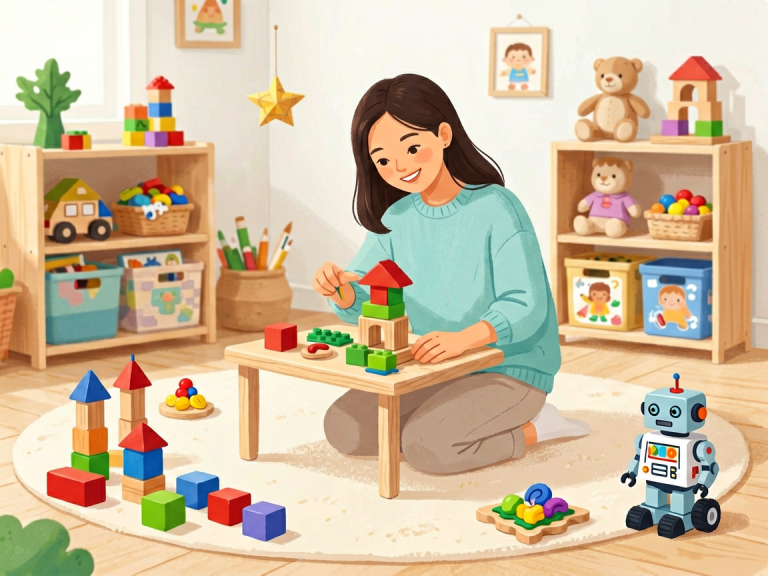
Educational building toys engage children in a form of active learning that no screen can replicate. When a child picks up a wooden block or snaps together a plastic connector, they are engaging in a complex cognitive process that involves planning, spatial reasoning, and memory. Research in developmental psychology consistently shows that construction play strengthens executive function—the set of mental skills that include working memory, flexible thinking, and self-control.
For example, a simple task like stacking blocks requires a child to estimate sizes, balance weights, and adjust their actions based on feedback. When a tower falls, the child learns cause and effect: “If I place this block too far to the left, the whole structure collapses.” This trial-and-error process builds neural pathways that are critical for logical reasoning. Moreover, building toys often require children to follow a mental blueprint—either from their imagination or from a set of instructions. This activates the prefrontal cortex, the area of the brain responsible for planning and goal-directed behavior.
Spatial intelligence is another key area cultivated by building toys. A child who constructs a bridge or a castle must visualize how objects relate to each other in three-dimensional space. Studies have shown that children who frequently play with construction toys score higher on spatial reasoning tests, which are strong predictors of success in STEM fields (science, technology, engineering, and mathematics). By manipulating physical objects, children develop an intuitive understanding of geometry, symmetry, and proportion that later translates into proficiency in subjects like physics and architecture.
Fostering Creativity and Problem-Solving Skills
One of the most remarkable aspects of educational building toys is their ability to encourage divergent thinking. Unlike many structured toys that have a single correct use, building materials are open-ended. A set of magnetic tiles can become a spaceship, a zoo enclosure, or a medieval fortress depending on the child’s whim. This freedom to create without predefined outcomes nurtures creativity in its purest form.
Problem-solving emerges naturally during building play. Consider a child attempting to construct a stable tower using irregularly shaped rocks from a natural building set. The initial attempt may fail; the tower wobbles and falls. The child then must analyze why it fell, experiment with different arrangements, and persist until a solution is found. This process teaches resilience and adaptability—qualities that are essential in academic and professional life. Unlike a video game that offers instant rewards, building toys require patience. The delayed gratification of completing a complex structure strengthens a child’s ability to work toward long-term goals.
Furthermore, building toys often involve constraints that spark creative solutions. For example, a child with only twenty specific blocks must figure out how to build a car that can move. This limitation forces them to think resourcefully, perhaps using a round block as a wheel or stacking blocks to create a chassis. Such constraints mirror real-world challenges where resources are limited and innovation is required.
STEM Foundations: Engineering and Math Through Play
Educational building toys are arguably the most effective tools for introducing young children to STEM concepts without the intimidation of formal instruction. When a child connects gears to make a spinning mechanism or builds a bridge that can bear weight, they are engaging in practical engineering. They learn about forces, load distribution, and structural integrity through hands-on experience long before they encounter these terms in a textbook.
Mathematics also becomes intuitive. A child building a symmetrical pattern with pattern blocks naturally learns about fractions and symmetry. Counting blocks, comparing sizes, and matching shapes all reinforce early math skills. More advanced building sets, like those that include pulleys, levers, and inclined planes, introduce the principles of simple machines. Kits that incorporate motors, sensors, and programmable bricks—such as LEGO Mindstorms or similar robotics sets—take STEM education further by blending coding with physical construction. Children learn to write algorithms that control their creations, bridging the gap between the digital and physical worlds.
The beauty of this learning is that it is implicit. A child does not sit down to “study engineering”; they sit down to build a fun robot that can move its arm. The knowledge is absorbed through joyful engagement. By the time they reach middle school, children who have played with such toys often demonstrate a stronger grasp of physics and problem-solving strategies compared to their peers. Educators and researchers have noted that building toys can also help close the gender gap in STEM fields. When girls are given the same opportunities to build and experiment with construction toys as boys, their interest and confidence in engineering and technology increase significantly.
Social and Emotional Development Through Cooperative Building
While building toys are often used solo, they shine as tools for social interaction. When two or more children collaborate on a construction project, they must communicate, negotiate, and share resources. A child may say, “I’ll build the base, and you make the roof.” This division of labor teaches teamwork and respect for others’ ideas. Disagreements over design choices become opportunities for conflict resolution—skills that are far more valuable when practiced in childhood than in adulthood.
Cooperative building also builds emotional intelligence. Children learn to give and receive feedback. If a peer suggests that a tower is too tall and might fall, the builder must decide whether to accept advice or take a risk. This sharpens decision-making and empathy. Moreover, completing a shared project fosters a sense of collective achievement. The pride a child feels when they and their friend successfully build a working drawbridge is immense. This positive reinforcement encourages further collaboration and strengthens social bonds.
For children who struggle with social anxiety or communication disorders, building toys can be a non-threatening medium for interaction. The focus on a shared task reduces pressure, allowing shy children to participate more freely. Therapists often use construction toys in play therapy to help children express emotions and work through trauma. Building a house and then knocking it down, for instance, can be a healthy way for a child to process anger or frustration in a controllable environment.
Types of Educational Building Toys: From Classic to Modern
The market for educational building toys is vast, and understanding the options helps parents choose effectively. The most traditional category is wooden blocks. Simple, durable, and classic, these blocks come in various shapes and sizes. They are ideal for toddlers because they are safe, tactile, and encourage open-ended play. As children grow, interlocking plastic bricks (like LEGO) become popular. The addition of minifigures, themed sets, and specialized pieces allows for both imaginative play and structural complexity.
Magnetic building toys—such as Magna-Tiles, Geomag, or Picasso Tiles—have gained immense popularity. Their built-in magnets make it easy for young children to create 3D structures without the frustration of pieces falling apart. They are excellent for teaching geometry and symmetry. Another category includes construction toys that focus on motion, such as K’NEX, Tinkertoys, or marble runs. These teach children about mechanics, trajectory, and cause-and-effect relationships. More advanced toys incorporate electronics and coding. For instance, littleBits allows children to snap together electronic modules to create working circuits, while LEGO Boost combines building with programming via a tablet app.
Natural building materials, such as tree blocks, sand, or clay, also belong in this category. They offer a different sensory experience and connect children to the natural world. Finally, there are architectural building sets, like those from Arckit or Blockaroo, which mimic real-world engineering challenges. Each type serves different developmental stages and interests, so variety is beneficial.
Choosing the Right Building Toys for Different Ages
Selecting age-appropriate building toys is crucial for maximizing educational benefits and minimizing frustration. For infants and toddlers (ages 1 to 3), large, soft blocks or foam building bricks are best. They are safe, easy to grasp, and encourage motor skills. At this stage, children are exploring cause and effect and simple stacking. Around ages 3 to 5, children can handle smaller wooden blocks, basic interlocking bricks with larger pieces, and magnetic tiles. They begin to create simple structures like towers and houses. This is the age where imaginative play peaks, so sets with characters or animals add value.
From ages 5 to 8, children can manage classic LEGO sets with smaller pieces, as well as construction sets that include gears, wheels, and simple connectors. They can follow step-by-step instructions and begin to invent their own designs. This is also a great age for marble runs and magnetic sets that allow complex shapes. For ages 8 and up, advanced building toys like robotics kits, architectural models, and programmable bricks come into play. These require reading comprehension, logical sequencing, and patience. Parents should also consider the child’s individual interests—a child who loves space might thrive with a space-themed building set, while a future engineer might prefer a mechanical construction kit.
Safety is paramount. Always check for small parts that could be choking hazards, and ensure materials are non-toxic. Many building toys now boast sustainable materials, such as plant-based plastics or FSC-certified wood, which appeal to eco-conscious families.
Conclusion
Educational building toys are not mere distractions; they are catalysts for holistic development. They shape cognitive abilities, ignite creativity, build foundational STEM knowledge, and foster social and emotional skills. In a world that increasingly values adaptability, innovation, and collaboration, these toys offer a playful yet powerful way to prepare children for the future. Parents and educators who invest in quality building sets—and, more importantly, the time to play alongside children—are giving a gift that extends far beyond any physical product. They are nurturing a mindset that embraces challenges, finds joy in discovery, and sees the world not as it is, but as it could be. So the next time you see a child deeply absorbed in constructing a block tower or connecting magnetic tiles into a rainbow castle, know that you are witnessing the foundations of a brilliant mind at work.