Science Kits vs. Building Toys: Which Builds a Brighter Future for Young Minds?
Introduction
In the vast landscape of children’s toys, few categories have sparked as much debate among educators, parents, and child development experts as science kits and building toys. On one side, we have the structured, experiment-driven world of science kits—little laboratories that promise to turn a curious child into a budding chemist, physicist, or biologist. On the other side, we have the timeless appeal of building toys—blocks, LEGOs, magnetic tiles, and construction sets that encourage children to design, stack, and create from scratch. While both are undeniably educational, each offers a distinct pathway to learning and growth. This article delves deep into the strengths, weaknesses, and unique contributions of science kits and building toys, aiming to help parents and educators make informed choices that nurture a child’s cognitive, social, and emotional development.
The Unique Appeal of Science Kits
Science kits are designed with a clear purpose: to introduce children to the scientific method, hands-on experimentation, and specific concepts from the natural and physical sciences. A typical science kit might include a microscope, chemical reagents, a circuit board, or a set of magnets, accompanied by step-by-step instructions for conducting experiments. The allure lies in the promise of “real” science—children can grow crystals, launch a miniature volcano, or build a simple robot that follows a line.
One of the greatest strengths of science kits is their ability to demystify abstract concepts. For instance, a kit that demonstrates the principles of electrolysis can make the idea of splitting water into hydrogen and oxygen tangible and memorable. This kind of experiential learning aligns well with the “learning by doing” philosophy, which research shows significantly improves retention and understanding. Moreover, science kits often come with explanatory materials that teach the “why” behind the “how,” fostering a deeper appreciation for the sciences.
However, science kits are not without limitations. Many are highly structured; the child follows a recipe, and success is measured by whether the experiment works as expected. This can sometimes stifle creative exploration. If a young scientist wants to deviate from the instructions—say, by mixing different chemicals in a chemistry kit—the results might be disappointing or even dangerous. Furthermore, once the included experiments are completed, the kit can lose its appeal unless the child is motivated to design their own experiments, which requires advanced guidance and materials.
The Enduring Power of Building Toys
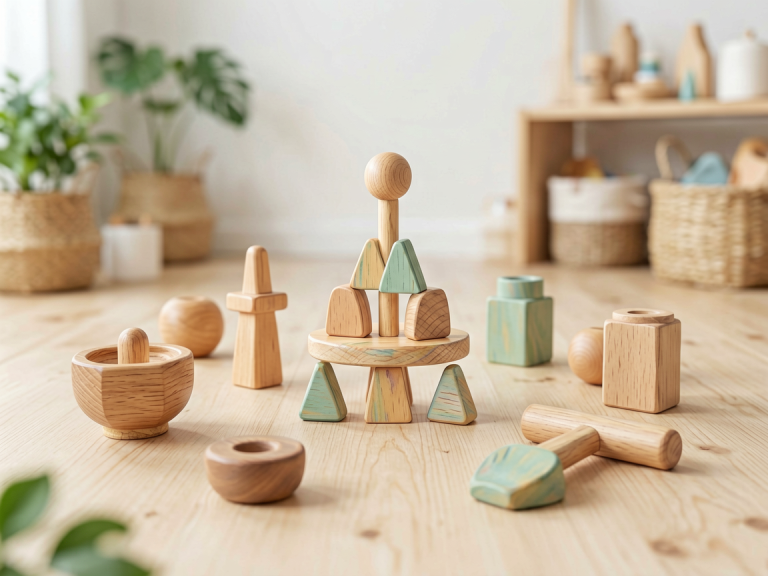
Building toys, in contrast, represent the epitome of open-ended play. From simple wooden blocks to complex LEGO Technic sets, these toys offer a blank canvas for a child’s imagination. There are no predetermined outcomes. A child can build a castle, a spaceship, a bridge, or an abstract sculpture—limited only by the availability of pieces and the creativity of the mind. This freedom is a powerful engine for cognitive development.
Building toys excel at developing spatial reasoning, fine motor skills, and problem-solving abilities. When a child tries to balance a tower or connect two gears to make a moving mechanism, they engage in trial-and-error learning that is self-directed and deeply personal. Frustration becomes a teacher: if a structure collapses, the child must analyze why and redesign. This iterative process mirrors the engineering design cycle, teaching resilience and logical thinking without the need for a manual.
Another critical advantage of building toys is their longevity. While a science kit might be used for a few weekends before the chemicals run out or the novelty fades, a set of building blocks can provide years of play. As a child grows, the complexity of their creations can grow with them. Many building toy systems allow for incremental expansion, and online communities share endless ideas for new projects. This adaptability makes building toys a cost-effective investment in a child’s development.
Comparative Analysis: Skills Development
To evaluate which type of toy better prepares children for the future, it is helpful to compare the specific skills each fosters.
*Critical Thinking and Problem-Solving:* Both science kits and building toys encourage critical thinking, but they do so in different contexts. Science kits typically pose a well-defined problem (“How can we make this battery light a bulb?”) and guide the child through a solution. Building toys, however, present open-ended problems (“I want to build a roller coaster—how do I make the ball go faster?”). The latter demands more original thought because no instruction sheet provides the answer. For this reason, building toys may be slightly superior for cultivating flexible, creative problem-solving skills.
*STEM Literacy:* Science kits have a clear edge when it comes to teaching specific STEM content. A child who uses a physics kit about pulleys and levers will walk away with concrete terminology and an understanding of mechanical advantage. Building toys can also teach physics concepts—a child building a bridge will intuitively learn about load distribution—but the learning is indirect and may remain implicit unless an adult points it out.
*Social and Emotional Development:* Both types of toys can be used collaboratively, but building toys often lend themselves better to group play. A group of children can collaborate on a single large structure, negotiating roles, sharing pieces, and resolving conflicts. Science kits, because they require careful adherence to procedures and often involve fewer materials, can be more individualistic. However, when used in a classroom setting with supervision, science kits can also promote teamwork and communication.
*Creativity and Self-Expression:* This is where building toys shine. A science kit typically constrains creativity to the boundaries of the predefined experiment. Building toys, by contrast, are a medium for pure self-expression. A child can build a replica of the Eiffel Tower, a spaceship from their favorite movie, or an entirely imaginary creature. This freedom nurtures divergent thinking—the ability to generate many unique ideas—which is a cornerstone of innovation.
Creativity and Open-Ended Play
The debate between structured and unstructured play is central to understanding the difference between science kits and building toys. Research in developmental psychology consistently shows that unstructured play is critical for developing executive functions like self-regulation, planning, and cognitive flexibility. Building toys, being inherently unstructured, provide endless opportunities for this type of play. A child might decide to build a zoo one day and a racing track the next, constantly reimagining the possibilities.
Science kits, on the other hand, fall more on the structured side of the spectrum. They are excellent for teaching children to follow instructions and achieve specific results—skills that are valuable in many real-world contexts, from cooking to laboratory work. Yet, if overused, they may risk turning play into a task-oriented chore. The key is balance: using science kits as a tool for focused learning while ensuring that children have ample time for free-form building.
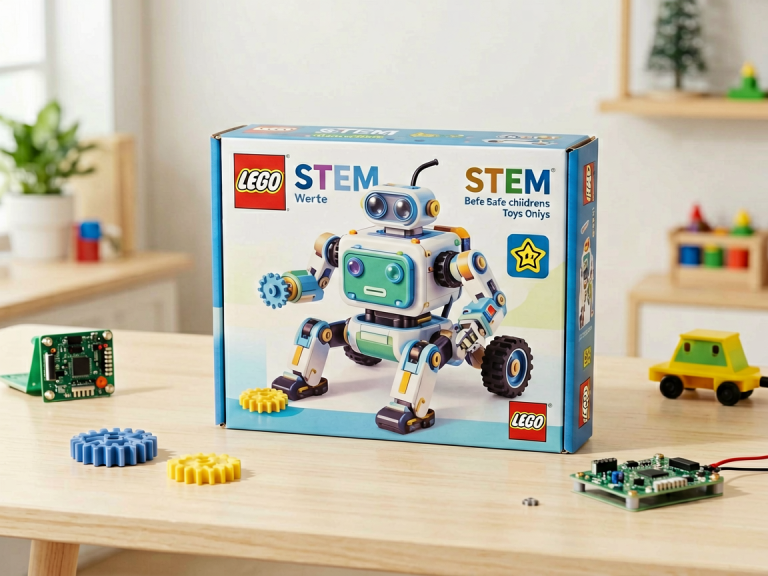
Modern toy manufacturers have recognized this tension and begun to create hybrid products. For example, some building toys now include electronic components like motors, sensors, and lights, effectively merging the open-ended construction of building toys with the interactive experimentation of science kits. LEGO Mindstorms is a classic example: children build a robot structure (building toy aspect) and then program it to react to stimuli (science/technology aspect). Such hybrids offer the best of both worlds, allowing children to experiment with scientific principles within a creative framework.
Practical Considerations for Parents and Educators
When choosing between science kits and building toys, several practical factors come into play.
*Age Appropriateness:* Science kits often have minimum age recommendations due to small parts, chemicals, or complex instructions. For very young children (ages 3-5), simple building blocks are ideal, while science kits become more suitable around ages 6-8, when children can follow multi-step directions. For older children (9+), advanced building sets like Meccano or electronic kits can provide both challenges and learning.
*Cost and Reusability:* Science kits typically have a one-time use. Once you grow a crystal or use up the baking soda and vinegar, the kit is essentially depleted unless you purchase refills. Building toys, even expensive sets like LEGO, are reusable indefinitely. Over the long term, building toys offer better value for money.
*Space and Storage:* Building toys can take up considerable space, especially if a child tends to keep creations intact. Science kits are usually more compact, but they may require a dedicated workspace for experiments and safe storage for chemicals or glassware.
*Safety:* Science kits often involve materials that require adult supervision—batteries, small magnets, liquids that could stain clothing. Building toys made from non-toxic materials are generally safer for independent play, though small parts remain a choking hazard for toddlers.
Conclusion: A Symbiotic Relationship
Rather than declaring a winner in the science kits vs. building toys debate, it is more productive to view them as complementary tools in a child’s developmental toolkit. Science kits provide focused, direct instruction in scientific principles and methods, building a foundation of knowledge that can inspire lifelong curiosity in the STEM fields. Building toys, with their open-ended nature, cultivate the flexible thinking, creativity, and resilience that are equally essential for innovation. The ideal childhood play environment includes both: the guided discovery of a chemistry set and the boundless imagination of a bucket of blocks.
Ultimately, what matters most is not the toy itself, but the engagement and enthusiasm it sparks. A child who loves their science kit may grow up to become a researcher; a child who spends hours building with blocks may become an architect or an engineer. The most important goal is to encourage play that is joyful, challenging, and rich in learning. By embracing a diverse array of toys—science kits and building toys in equal measure—we give children the best chance to develop a well-rounded intellect and a love for discovery that will serve them for a lifetime.