Puzzle Toys vs Logic Games: Which Builds Better Brains for Kids?
Introduction
Every parent, educator, and child development specialist has faced the same question: in a world overflowing with educational toys, which ones actually make a difference? Two categories consistently rise to the top of the recommendation list—puzzle toys and logic games. Both promise to sharpen young minds, improve problem-solving abilities, and nurture intellectual growth. But are they interchangeable? Do they serve the same purpose? And more importantly, which one deserves a bigger place in your child’s playroom? This article dives deep into the differences, benefits, and optimal uses of puzzle toys and logic games for children, drawing on developmental psychology, neuroscience, and practical parenting wisdom.
Defining the Difference: What Are Puzzle Toys and Logic Games?
At first glance, the line between puzzle toys and logic games may seem blurry. A jigsaw puzzle and a Sudoku grid are both “puzzles,” yet they engage the brain in fundamentally different ways. To avoid confusion, let us establish clear definitions.
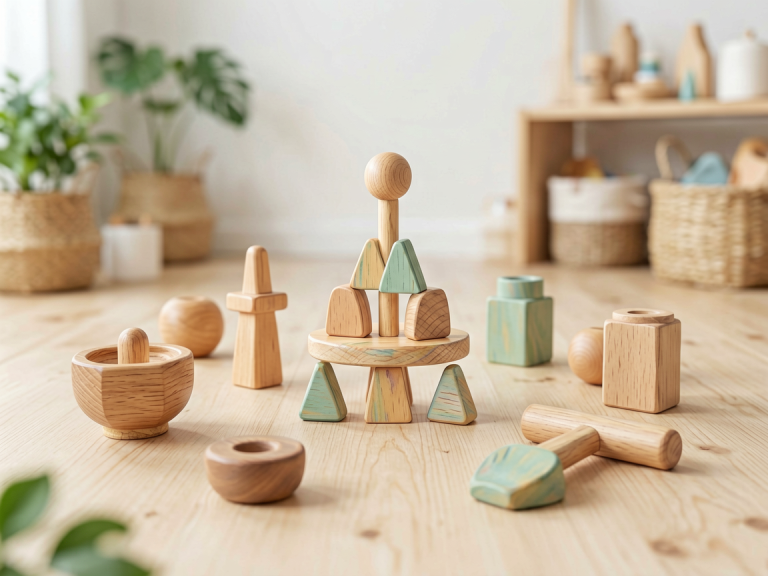
Puzzle toys are physical, often three-dimensional objects that require hands-on manipulation to achieve a specific outcome. Examples include jigsaw puzzles, tangrams, Rubik’s cubes, wooden shape-sorters, and interlocking blocks. The primary challenge lies in spatial reasoning, pattern recognition, and fine motor coordination. Children must see how pieces fit together, rotate them mentally, and test physical configurations until the solution is found. The feedback is immediate and tactile—a piece either fits or it does not.
Logic games, on the other hand, are rule-based activities that rely on deductive reasoning, sequencing, and strategic thinking. While some logic games come in physical form (like board games or card games), many are digital or paper-based. Classic examples include chess, checkers, memory matching games, Sudoku, “Mastermind,” “Rush Hour,” and “Codenames” for older kids. The emphasis is not on physical fitting but on following rules, predicting outcomes, and making decisions based on abstract information. Winning a logic game often depends on the child’s ability to hold multiple possibilities in mind and eliminate wrong paths.
The distinction matters because these two categories stimulate different regions of the brain and develop distinct cognitive skills. A child who excels at puzzles may struggle with logic games, and vice versa. Understanding this difference helps parents tailor playtime to their child’s unique developmental needs.
Cognitive Benefits: How Each Shapes Young Minds
Puzzle Toys: Building Spatial Awareness and Persistence
Puzzle toys are especially powerful for developing spatial intelligence—the ability to visualize and manipulate objects in space. A classic study from the University of Chicago found that children who played with puzzles between ages 2 and 4 performed significantly better on spatial transformation tasks later in life. When a toddler turns a triangular puzzle piece until it clicks into a slot, she is not just playing; she is training her brain to mentally rotate shapes, a skill that predicts success in STEM fields like engineering and architecture.
Moreover, puzzles teach persistence and frustration tolerance. A child who tries to force a piece into the wrong spot and then tries again learns that mistakes are part of the process. The tactile feedback—the satisfying “snap” when a piece fits—provides an intrinsic reward that encourages repeated effort. This builds a growth mindset, where children understand that challenges can be overcome through trial and error.
Fine motor skills also get a workout. Picking up small puzzle pieces, aligning edges, and pressing them into place strengthens the small muscles in the hands and fingers, which is essential for handwriting and other precise tasks later in school.
Logic Games: Cultivating Critical Thinking and Executive Function
Logic games target the brain’s executive functions—the higher-order cognitive processes that control attention, planning, and self-regulation. When a child plays a game like “Mastermind” (where they must guess a secret color code using clues), they practice deductive reasoning: “If red is in the correct position, then blue cannot be in that position.” They learn to hold hypotheses in working memory, test them systematically, and adjust strategies based on feedback.
Research from Harvard’s Center on the Developing Child shows that activities requiring rule-based thinking strengthen the prefrontal cortex, which is crucial for impulse control and decision-making. Logic games also promote flexible thinking. A child who is stuck on a strategy in chess must learn to abandon it and try a new approach—a cognitive skill that translates directly to problem-solving in school and life.
Additionally, logic games often involve sequential logic—understanding that steps must happen in a certain order. For example, in “Rush Hour” (a sliding block game), moving one car out of the way before another is essential. This helps children grasp concepts like cause and effect, planning ahead, and backward chaining (solving a problem by starting from the goal and working backward).
Developmental Stages: Matching Activities to Age
Not all puzzle toys and logic games are created equal, and the key to maximizing benefits is matching the activity to the child’s developmental stage.
Ages 1–3: The Sensorimotor Phase
For toddlers, simple puzzle toys reign supreme. Chunky wooden puzzles with large knobs, shape sorters, and stacking rings are ideal. These activities teach basic spatial concepts (up/down, inside/outside) and cause-and-effect (pulling a lever makes a piece pop up). Logic games at this age are almost nonexistent because abstract reasoning has not yet developed. However, simple matching games (like finding the other sock in a pair) can introduce the idea of rules in a very concrete way.
Ages 4–6: The Pre-Operational Stage
During the preschool years, children begin to engage with simple logic games like memory matching, “Candy Land” (which teaches turn-taking and following rules), and basic jigsaw puzzles with fewer than 20 pieces. At this stage, puzzle toys remain crucial—floor puzzles with 24–48 pieces help develop attention span and planning (sorting edge pieces first). Logic games should be cooperative rather than competitive to avoid frustration. “Simon Says” and “I Spy” are excellent for teaching attention to detail and rule-following without the pressure of winning.
Ages 7–11: The Concrete Operational Stage
Now the real fun begins. Children can handle more complex logic games like checkers, “Rush Hour,” “Clue,” and “Qwirkle.” They understand that strategies can be planned several steps ahead. Puzzle toys can evolve into 3D puzzles (like building a plastic dinosaur skeleton) or mechanical puzzles (like a wooden brain teaser that requires unlocking a latch). At this age, children also benefit from hybrid activities—for instance, “Logic Links” puzzles that use colored chips placed on a grid based on clues, combining spatial reasoning with deductive logic.
Ages 12 and Up: Formal Operations
Teenagers can tackle abstract logic games like chess, “Settlers of Catan,” and robotic coding kits. Puzzle toys become more sophisticated, such as complex mechanical puzzles (like a Chinese wooden puzzle box) or high-piece-count jigsaw puzzles (1000+ pieces). The key is to maintain challenge without causing burnout. Many teens enjoy digital logic games like “Portal” or “The Witness,” which combine spatial navigation with logical deduction.
The Social and Emotional Angle
Beyond pure cognition, puzzle toys and logic games differ in their social and emotional impact.
Puzzle toys are often solitary activities. A child working on a jigsaw puzzle is alone with her thoughts, which can be meditative and calming. For children with anxiety or attention difficulties, puzzles provide a low-stakes, self-paced environment to focus. However, puzzles can also be collaborative—a family working together on a large puzzle practices communication, negotiation, and shared goal-setting. The emotional reward comes from the sense of completion: “I did it!”
Logic games, especially tabletop games, shine in social settings. A game of “Chess” requires two players to read each other’s strategies, practice sportsmanship, and handle both victory and defeat gracefully. Group logic games like “The Mind” (where players must play cards in order without speaking) teach nonverbal cooperation and empathy. Children learn to manage frustration when they lose, which builds emotional resilience. Many logic games also involve turn-taking and patience, skills that are harder to learn from solitary play.
In today’s screen-saturated world, both types of activities offer a respite from passive entertainment. However, digital logic games (apps like “Monument Valley” or “Flow Free”) also have their place—they can be highly engaging and accessible, but parents should monitor screen time and ensure a balance with physical, tactile play.
Practical Tips for Parents: Balancing Fun and Learning
- Rotate, don’t hoard. Children lose interest when the same puzzle or game is always available. Rotate puzzle toys and logic games every few weeks to reignite curiosity.
- Scaffold, don’t solve. When your child is stuck, ask guiding questions: “What would happen if you turned that piece?” or “Which color could go here?” Avoid giving the answer, as that undermines the learning process.
- Match difficulty to ability. A puzzle that is too easy becomes boring; one that is too hard breeds frustration. The “Goldilocks zone” is where the child can succeed with effort but not without struggle.
- Mix it up. The best cognitive development comes from a balanced diet of both puzzle toys and logic games. Consider a weekly schedule: Monday–Wednesday puzzle time, Thursday–Saturday game night.
- Model persistence. Let your child see you struggle with a puzzle or a strategy game. Talk aloud: “Hmm, I tried that and it didn’t work. Let me think of another way.” This teaches resilience.
- Use real-world connections. Point out logic in everyday life: “We need to put on our socks before our shoes—that’s a sequence, just like in your game.” Or spatial thinking: “Can you fit that box into the trunk? You might need to turn it.”
Conclusion
The debate between puzzle toys and logic games for kids is not a competition with a single winner. Both are invaluable tools for nurturing a child’s developing brain. Puzzle toys excel at building spatial intelligence, fine motor skills, and persistence through tactile trial and error. Logic games sharpen deductive reasoning, executive function, and social-emotional skills through rule-based play. The wisest approach is to embrace both, tailoring the choice to your child’s age, temperament, and interests. By providing a rich variety of challenges, you give your child the gift of a flexible, resilient, and curious mind—one that will serve them well in school, in relationships, and in all the puzzles and games that life has to offer.