Marble Runs vs Building Sets: A Comparative Exploration of Creativity, Physics, and Play
In the vast and vibrant universe of children’s toys, few categories spark as much imaginative engineering and cognitive development as construction-based play. Among these, two distinct yet overlapping genres stand out: marble runs and building sets. Both invite young minds to design, assemble, and test their creations, but they do so in fundamentally different ways. Marble runs, with their gravity-driven tracks, ramps, and chutes, emphasize dynamic motion and causal reasoning. Building sets, whether classic wooden blocks or advanced interlocking systems like LEGO, focus on structural integrity, modularity, and open-ended creation. This article delves into the nuances of these two play paradigms, comparing their educational benefits, creative potentials, and the unique sensory experiences they offer. By examining marble runs versus building sets, we can better understand how each nurtures distinct aspects of a child’s intellectual and motor development.
The Mechanics of Play: Physics in Action vs. Structural Foundation
At first glance, a marble run is a lesson in motion. A single ball—the marble—travels through a constructed path, propelled by gravity and momentum. The player’s task is to design a sequence of tracks, funnels, loops, and drops that guide the marble from start to finish. This process inherently teaches principles of physics: potential energy becomes kinetic as the marble rolls downhill; friction slows it down; centrifugal force keeps it on a curved track; and obstacles can alter its trajectory. Children learn through trial and error. A ramp that is too steep might launch the marble off the track; a turn that is too sharp might cause it to stall. Each failure is a data point, prompting adjustments in angle, height, or length. Marble runs thus become a hands-on experiment in cause and effect, where the result is immediate and visually satisfying.
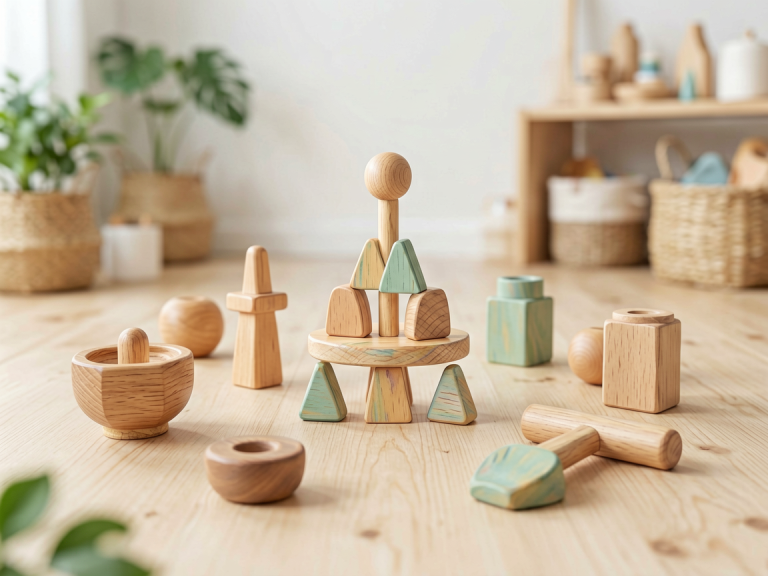
Building sets, by contrast, are about stability and composition. Whether you are stacking wooden blocks or snapping plastic bricks, the emphasis is on creating a structure that stands without falling. The physics here is static: balance, weight distribution, and the strength of connections. A tower built with building blocks must have a broad base to support its height; a LEGO castle needs proper interlocking of bricks to resist collapse. While building sets also involve trial and error—a wall might lean awkwardly, or a roof might be too heavy—the feedback is less dynamic. The structure either holds or it doesn’t. There is no moving element until the child introduces one (e.g., adding a wheel or a hinge). This difference in mechanical focus means that marble runs cultivate an understanding of motion and energy, while building sets develop an intuition for statics and structural integrity.
Creativity and Open-Endedness: Guided Trajectory vs. Infinite Possibilities
Both marble runs and building sets are celebrated for fostering creativity, but they channel it in distinct directions. Marble runs are inherently goal-oriented. There is a clear objective: get the marble from point A to point B. The creativity lies in the path itself. Children can make the track twist, turn, drop, and soar. They can incorporate obstacles like a spinning wheel or a seesaw. However, the design is constrained by the laws of physics—the marble must always move downward overall. Moreover, many marble run kits come with pre-made pieces that limit the number of possible configurations. While some advanced sets allow for elaborate custom tracks, the underlying goal remains unchanged. This structure can be beneficial for children who thrive on clear challenges and sequential thinking.
Building sets, on the other hand, are almost entirely open-ended. A set of blocks or LEGO bricks can become a house, a spaceship, a dinosaur, or an abstract sculpture. There is no predetermined goal unless the child imposes one. This freedom encourages divergent thinking—generating multiple solutions to a non-existent problem. A child with a pile of bricks can build, dismantle, rebuild, and repurpose forever. The creative process is self-directed and often narrative-driven: a tower becomes a castle for a king; a simple rectangle becomes a car. Building sets also facilitate collaborative storytelling, as children can build together and invent scenarios. This open-endedness is critical for developing executive function, planning skills, and the ability to work without external constraints.
However, some might argue that marble runs also harbor a form of open-endedness. After all, there are countless ways to design a track. But the difference is subtle: the marble run’s success is measured by the marble’s completion, not by the aesthetic or imaginative value of the structure. In building sets, the success is entirely subjective. A lopsided block tower might be a “leaning robot” to its builder. Thus, building sets arguably offer a richer playground for pure imagination, while marble runs offer a more focused challenge that integrates engineering and physics.
Educational Value and Cognitive Development: Sequencing vs. Spatial Reasoning
From an educational standpoint, both toy types contribute significantly to cognitive growth, but they emphasize different skills. Marble runs are excellent for developing sequential reasoning. To build a successful track, a child must plan the order of components: first the start platform, then a ramp, then a curve, then a drop. The sequence must be logical—the marble cannot jump over gaps or travel uphill. This step-by-step planning mirrors the logic of programming and algorithm design. Each segment of the track is like a line of code, and debugging a failed run is akin to finding a bug in software. Indeed, some modern marble run kits incorporate coding concepts by using programmable components that control timing and direction.
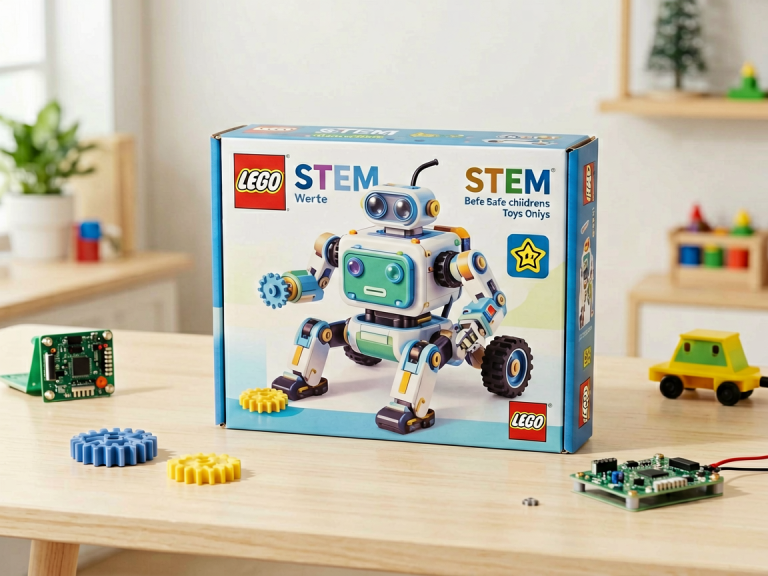
Building sets, meanwhile, excel at enhancing spatial reasoning and geometry. Children learn how shapes fit together, how angles affect stability, and how to visualize three-dimensional structures from flat instructions or from imagination. Assembling a LEGO set that comes with a manual requires reading diagrams, understanding symmetry, and following a sequence—skills that are valuable for mathematics and engineering. But beyond instructions, free building with blocks allows children to explore concepts like symmetry, proportion, and tessellation. They also develop fine motor skills—picking up small bricks, aligning them precisely, and applying the right pressure.
Another key difference lies in the type of feedback. Marble runs provide immediate, kinetic feedback: the marble rolls or it doesn’t, and the child can see exactly where the flaw lies. This visual and auditory feedback (the clack of marble on plastic) is engaging and reinforces learning. Building sets offer slower feedback: a structure might stand for minutes before collapsing due to a hidden imbalance. This delayed feedback requires more patience and reflection. Some children may prefer the instant gratification of marble runs, while others enjoy the sustained focus of building.
Social Interaction and Collaborative Play
Play is often a social activity, and both marble runs and building sets can be enjoyed alone or with others. However, they foster different types of collaboration. Marble runs are well-suited for parallel play or cooperative problem-solving. Two or more children can work on the same track, one designing the initial ramp, another adding a loop, and a third placing the end cup. This requires communication and negotiation: “If you make the drop higher, the marble will go faster—is that okay?” “Let’s put a see-saw here.” The goal is shared, so teamwork is focused on achieving a common outcome. Moreover, the excitement of watching the marble complete the run together creates a shared emotional experience.
Building sets, especially large collections, encourage more elaborate role-playing and narrative building. Children might construct a city together, each taking a different building. They negotiate space, resources, and storylines. “I’ll build the police station, you build the fire station! And then we need a road between them.” This type of play fosters language development, perspective-taking, and conflict resolution. However, it can also lead to disagreements over who gets which bricks or whose idea is better. Marble runs, with their more constrained goal, might reduce such conflicts because the task is more rigid. Conversely, building sets require a higher level of social flexibility.
The Sensory and Aesthetic Appeal
Beyond cognitive and social factors, the sensory experience of each toy differs markedly. Marble runs are auditory delights: the rhythmic rolling, the click of marbles falling through funnels, the satisfying “thunk” as they hit a target. The visual aspect is also dynamic—colors blur as marbles speed through curved tubes. This kinetic spectacle is mesmerizing and can be meditative. The act of dropping the marble and watching it navigate a carefully built path triggers a sense of anticipation and reward. Building sets, in contrast, are more tactile and static. The feel of a smooth wooden block, the satisfaction of a LEGO brick clicking into place, the texture of different materials—these are quiet pleasures. The aesthetic reward comes from the completed structure, which can be displayed or used as a backdrop for other play. Some children may find greater satisfaction in building something permanent, while others prefer the transient thrill of a marble run that can be dismantled and rebuilt differently.
Conclusion: Complementary, Not Competitive
Ultimately, marble runs and building sets are not rivals but complementary tools for development. They address different facets of creativity, problem-solving, and physical understanding. Marble runs excel at teaching dynamic physics, sequential thinking, and cause-and-effect reasoning in an engaging, high-reward format. Building sets shine in fostering open-ended imagination, spatial reasoning, and structural engineering. A child who grows up with both will likely develop a more rounded set of skills—able to plan a sequence of events, but also to think laterally when no predefined path exists. For parents and educators, the choice is not which is better, but when to introduce each. A marble run might captivate a five-year-old obsessed with motion, while a building set might enthrall a seven-year-old who loves creating worlds. In the end, the best play is the play that invites curiosity, persistence, and joy—and both marble runs and building sets deliver that in their own unique ways.