Marble Runs vs. Building Sets for Kids: Which Toy Builds Better Minds?
Introduction: The Great Toy Debate
In the ever-expanding universe of children’s toys, few categories have captured the hearts and minds of both kids and parents quite like construction-based playthings. Among the most beloved and educationally touted options are marble runs and building sets. On the surface, both seem to offer similar promises: hands-on creativity, problem-solving skills, and hours of engrossing entertainment. Yet any parent or educator who has observed a child deep in play with a marble run versus one engrossed in a classic building set knows that the experiences are profoundly different. Each toy speaks to a different type of cognitive engagement, spatial reasoning, and creative expression.
This article delves into a comprehensive comparison between marble runs and building sets for children. We will explore their unique mechanics, developmental benefits, ideal age ranges, and the kind of play they inspire. By the end, you will have a clearer understanding of which toy—or combination of toys—best supports your child’s growing mind. After all, the goal is not to declare a single winner, but to equip parents with the insights needed to make informed choices that align with their child’s interests and developmental stage.
The Allure of Marble Runs: Physics in Motion
A marble run is a system of tracks, ramps, tubes, and funnels designed to guide a marble—or several marbles—from a starting point to a final destination through gravity and momentum. The moment a child releases a marble and watches it cascade down a spiral, bounce through a bell, or roll along a zigzag path, they witness a delightful spectacle of cause and effect.
Why Marble Runs Captivate Young Minds
The magic of marble runs lies in their immediate, visible feedback. A child builds a structure, places a marble at the top, and within seconds the entire creation is put to the test. If the marble gets stuck, jumps the track, or fails to reach the end, the child must diagnose the problem: Is the incline too steep? Is a connector misaligned? Is the path blocked? This process of trial and error is a powerful teacher. It cultivates patience, persistence, and a scientific mindset long before any formal physics lesson.
Moreover, marble runs encourage non-linear thinking. Modifying a single curve or adding a new ramp can completely alter the marble’s trajectory, forcing the child to anticipate and adjust. Many modern marble run sets come with special elements like switches, launchers, and even motorized lifts, adding layers of complexity. Children learn to think in sequences: first the ramp, then the drop, then the spiral, then the funnel. This sequencing is foundational for coding and logical reasoning.
The Social Dimension of Marble Runs
Marble runs are also highly social toys. Two or more children can collaborate to build an elaborate track, negotiating where each piece should go and predicting what will happen. The shared anticipation of a successful run—or the collective groan when the marble derails—creates a bonding experience. However, marble runs can also be solitary and meditative, allowing a child to lose themselves in the rhythmic sound of rolling marbles.
The Endless Possibilities of Building Sets
Building sets, such as classic interlocking blocks, magnetic tiles, or construction beams, offer a completely different play experience. Instead of guiding a moving object, the child is the architect of a static or moderately mobile structure. The primary goal is to create a stable, aesthetic, or functional design—a tower, a bridge, a house, a vehicle, or an abstract sculpture.
Open-Ended Creativity and Structural Integrity
The hallmark of building sets is open-endedness. A child can build anything they imagine, limited only by the number of pieces and the laws of physics. There is no predetermined outcome; the play is driven by the child’s vision. This type of play strongly develops divergent thinking—the ability to generate many possible solutions to a problem. For example, a child might ask, “How can I make a roof that doesn’t collapse?” or “What happens if I use a triangular block here instead of a square one?”
Building sets also teach structural engineering concepts in a tactile way. A tower built on a narrow base may wobble; a bridge without proper support will sag. Children learn about balance, weight distribution, symmetry, and geometry through direct manipulation. Unlike marble runs, where the marble’s path is the focus, building sets place the emphasis on the integrity of the structure itself. Mistakes are not just about a failed marble run; they are about a collapsed wall or a leaning pillar. The child must rebuild from the ground up, often discovering stronger designs in the process.
Advanced Building Sets and STEM Education
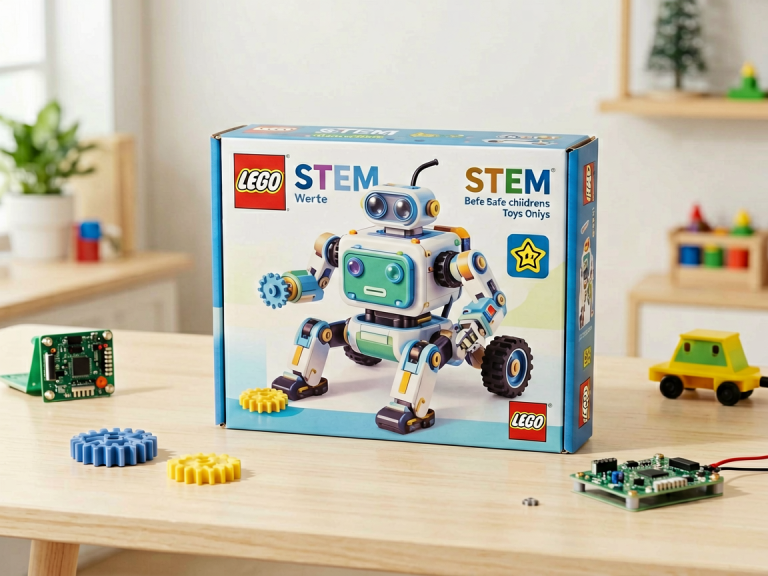
Many modern building sets incorporate gears, pulleys, axles, and even programmable components. These sets bridge the gap between pure construction and mechanical engineering. Children can create working models that move, spin, or lift objects. This is where building sets truly shine in terms of STEM (Science, Technology, Engineering, and Mathematics) education. A gear set, for instance, teaches ratios, torque, and rotational direction far more effectively than a textbook diagram.
Cognitive and Developmental Benefits: A Comparative Analysis
When we compare marble runs and building sets from a cognitive development perspective, we see complementary but distinct skill sets being nurtured.
Spatial Reasoning and Problem-Solving
Both toys require spatial awareness, but in different ways. Marble runs demand a three-dimensional understanding of how a ball will travel through space. The child must visualize the marble’s path from start to finish, accounting for gravity, momentum, and obstacles. This is akin to mental simulation—a skill used in everything from sports to mathematics. Building sets, on the other hand, require spatial planning for static structures. The child must consider how pieces fit together in three dimensions, often rotating and flipping shapes mentally before placing them. Research has shown that both types of play enhance spatial ability, but marble runs may have a slight edge in developing dynamic spatial thinking (movement through space), while building sets excel at static spatial reasoning (arrangement of objects in space).
Persistence and Frustration Tolerance
Marble runs can be particularly frustrating because a single misaligned piece can ruin an otherwise perfect run. The child must revisit their design methodically, testing and retesting. This iterative process builds resilience and a growth mindset. Building sets can also lead to frustration—especially when a tower collapses—but the failure is often less dramatic. A child can simply rebuild the same part without rethinking the entire system. Both toys teach valuable lessons about failure, but marble runs might better prepare children for real-world engineering challenges where small errors have large consequences.
Creativity: Structured vs. Unstructured
Creativity manifests differently in each toy. Building sets tend to promote what psychologists call “divergent creativity”—the generation of many different ideas and structures. A child can build a castle one day, a spaceship the next, and a dinosaur the day after. The possibilities are nearly infinite. Marble runs, by contrast, offer a more constrained form of creativity. The ultimate goal—getting the marble from point A to point B—remains constant, but the path can be wildly different. This is “convergent creativity” within a defined problem space. Both forms are essential. A child who excels at building sets might struggle with the logical constraints of a marble run, and vice versa.
Social Interaction and Collaboration
Both toys are excellent for cooperative play, but they foster different social dynamics. Marble runs often involve a shared goal: build a track that works. Children must communicate, compromise, and coordinate their actions. If a child wants to add a loop-the-loop but another child insists on a straight ramp, they must negotiate. Building sets can be more individualistic; children often build their own separate creations and then compare or combine them. However, large building projects—like constructing a life-sized fort or a city—can also involve teamwork and division of labor. In my observation, marble runs may encourage more focused, task-oriented collaboration, while building sets allow for more parallel play and independent expression.
Age Appropriateness and Skill Development
Choosing between marble runs and building sets often comes down to the child’s age and fine motor skills.
Toddlers and Preschoolers (Ages 2–4)
For very young children, large, chunky building blocks (like unit blocks or LEGO Duplo) are ideal. They develop fine motor skills, hand-eye coordination, and basic spatial awareness. Marble runs are generally not recommended for children under three due to choking hazards from the marbles. However, some marble run sets designed for toddlers use larger balls and simplified tracks. Even so, building sets offer a safer, more forgiving introduction to construction at this stage. The open-ended nature of blocks allows toddlers to practice stacking, knocking down, and stacking again—a fundamental learning loop.
Early Elementary (Ages 5–7)
This is the sweet spot for both toys. Children in this age range have the dexterity to handle smaller marbles and more complex track pieces. They also have the cognitive ability to plan multi-step marble runs. Building sets become more sophisticated, with smaller bricks, gears, and jointed pieces. A five-year-old might build a simple marble run with a single ramp, while a seven-year-old might design a track with multiple loops and a target. Building sets, meanwhile, can be used to create detailed models of houses, vehicles, or animals that reflect the child’s emerging interests.
Older Children and Tweens (Ages 8–12)
For older children, the appeal of marble runs may wane unless the sets include complex mechanical components (lifts, switches, electronic sensors) or allow for integration with building blocks. Some marble run systems are modular and can be combined with building sets, creating hybrid play experiences. Building sets, however, continue to scale in complexity. Advanced LEGO Technic sets, magnetic tiles for architectural models, or wooden construction kits with real working mechanisms appeal to this age group. These sets can challenge even teenagers and adults.
Choosing the Right Toy for Your Child
There is no single “best” toy. The right choice depends on your child’s personality, learning style, and goals.
- If your child loves cause-and-effect, enjoys watching things move, and is naturally drawn to physics: A marble run will captivate them. Look for sets that offer variety in tracks and special elements like spirals, switches, and marble-catching towers.
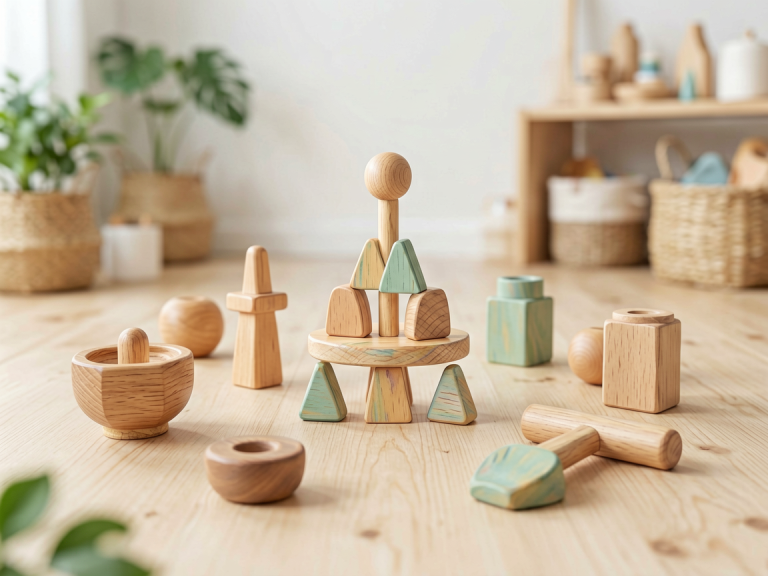
- If your child is a visionary builder who loves creating elaborate structures and imagining new worlds: Building sets are the better investment. Consider sets that offer a wide range of pieces, such as magnetic tiles, LEGO classic boxes, or wooden block sets.
- If your child struggles with frustration and gives up easily: A marble run might be challenging but ultimately rewarding. Pair it with plenty of encouragement and a willingness to problem-solve together. Building sets might be gentler, allowing the child to succeed with simpler structures before advancing.
- If you want to encourage collaborative play: Both are excellent, but marble runs may naturally lead to more intense teamwork. Building sets can also work well if you propose a joint project, like building a city together.
The Verdict: Not a Competition, but a Complement
After examining the nuances of both marble runs and building sets, it becomes clear that these toys are not rivals. They are complementary tools in a child’s developmental toolkit. A child who only plays with marble runs might miss out on the infinite creative freedom of pure construction. A child who only plays with building sets might not develop the same intuitive understanding of physics and dynamic systems.
The ideal playroom includes both. A child can spend the morning designing a complex marble track that winds around a castle built from blocks. In this hybrid scenario, the building set provides the structure, and the marble run provides the animation. This kind of integrated play mirrors real-world engineering, where architects and mechanical engineers work together to bring designs to life.
Furthermore, adults should not underestimate the value of free, unstructured play with both types of toys. Marble runs and building sets teach lessons that no screen can replicate: gravity, friction, balance, patience, and the joy of creation. Whether the marble zips to the finish line or the block tower reaches skyward, the child is learning to think, to try, and to triumph.
In the end, the “better” toy is the one that ignites a child’s curiosity and keeps them coming back for more. For some, that will be the hypnotic roll of a marble; for others, the satisfying click of interlocking bricks. And for the lucky few, it will be both—a world of endless possibilities, built and rebuilt one piece at a time.