Building Toys for 7-Year-Olds: How Construction Play Shapes Minds, Hands, and Futures
Introduction: The Golden Age of Building
At age seven, children stand at a remarkable crossroads of development. They have outgrown the simple stacking of toddler blocks but have not yet entered the fully abstract world of pre-adolescence. Their fine motor skills are refined enough to handle small pieces, their attention spans can sustain multi-step instructions, and their imaginations are still wild and uninhibited. This is the golden age for building toys. More than mere pastimes, construction sets for 7-year-olds serve as powerful tools for cognitive growth, emotional resilience, and social learning. In a world increasingly dominated by passive screen time, building toys demand active engagement—a child must plan, persist, test, and rebuild. This article explores why building toys are essential at this age, what types offer the most benefit, and how parents and educators can maximize the experience.
1. Why Age Seven Is a Critical Window for Building Play
The developmental leap that occurs around age seven is well documented by child psychologists. Children enter what Jean Piaget called the “concrete operational stage,” where they begin to think logically about concrete events. They grasp concepts like conservation, reversibility, and cause-and-effect relationships. Building toys perfectly align with this cognitive shift. When a 7-year-old constructs a tower, they intuitively learn that a wider base provides stability; when a bridge collapses, they deduce that the span was too long for the material. These are not abstract lessons but tangible, hands-on discoveries.
Moreover, executive function skills—working memory, self-control, and cognitive flexibility—blossom during this period. A complex building project requires holding a mental blueprint, inhibiting the urge to haphazardly attach pieces, and shifting strategies when a design fails. These are precisely the skills that predict academic success and lifelong problem-solving ability. Building toys also offer a safe space for frustration. A 7-year-old who watches their castle crumble learns to manage disappointment, take a deep breath, and start again—a lesson more valuable than any finished model.
2. Essential Skill Development Through Construction Play
Building toys are not one-dimensional; they nurture a constellation of abilities. Below are the key skill domains that construction play actively develops.
2.1 Fine Motor Control and Hand-Eye Coordination
At age seven, children’s hands are growing stronger but still need deliberate training. Manipulating small plastic bricks, aligning magnetic tiles, or threading nuts onto bolts exercises the small muscles of the fingers and wrists. This dexterity directly translates to better handwriting, improved tool use, and greater independence in daily tasks such as buttoning clothes or tying shoelaces. The repetitive, precise movements required by building toys also reinforce neural pathways that improve reaction time and spatial awareness.
2.2 Spatial Reasoning and Mathematical Thinking
Spatial intelligence—the ability to visualize and manipulate objects in three dimensions—is one of the strongest predictors of success in STEM fields (science, technology, engineering, and mathematics). When a child builds a symmetrical structure, estimates how many blocks are needed to fill a gap, or rotates a piece mentally before placing it, they are doing geometry and engineering in a natural, playful context. Research from the University of Chicago has shown that children who engage in more spatial play perform better on math tests later in elementary school. Building toys for 7-year-olds essentially turn abstract mathematical concepts into physical realities.
2.3 Creativity and Divergent Thinking
Unlike puzzles with a single correct answer, most building toys are open-ended. A set of magnetic sticks and balls can become a rocket ship, a dinosaur skeleton, a geodesic dome, or an abstract sculpture. This freedom encourages divergent thinking—generating multiple solutions to a single challenge. A child who builds a bridge that collapses might redesign it with arches, trusses, or a suspension system. Each iteration flexes creative muscles. Moreover, building toys allow for storytelling. A structure is rarely just a structure; it is a castle with knights, a space station with aliens, a treehouse for imaginary friends. This narrative dimension enriches language development and emotional intelligence.
2.4 Persistence and Growth Mindset
Perhaps the most crucial psychological skill nurtured by building toys is resilience. A 7-year-old who spends thirty minutes constructing a complex tower only to see it topple must decide: give up or try again. With gentle encouragement, they learn that failure is not a verdict but data. “Oh, the base was too narrow. What if I make it wider?” This iterative process embodies Carol Dweck’s concept of a growth mindset—the belief that abilities can be developed through effort. Every snapped piece, every wobbly joint, every collapse becomes a lesson in persistence. In an era where children are often shielded from frustration, building toys offer a healthy, controlled dose of productive struggle.
3. Top Types of Building Toys for 7-Year-Olds
Not all building toys are created equal. The best choices for 7-year-olds balance complexity with accessibility, and they challenge without overwhelming. Below are the most effective categories.
3.1 Classic Interlocking Bricks (e.g., LEGO)
LEGO remains the gold standard, and for good reason. By age seven, children can follow instructions for sets with 200 to 500 pieces, yet they also enjoy free-building. The system’s universal compatibility means that a spaceship from one set can combine with a castle from another. LEGO also offers themed lines (e.g., LEGO City, LEGO Classic, LEGO Creator 3-in-1) that spark specific interests. The key is to choose sets that require some planning—like those with gears, axles, and moving parts—rather than simple stackable characters. Look for sets labeled “7+” or “8+” to match the child’s developmental stage.
3.2 Magnetic Tile Systems (e.g., Magna-Tiles, PicassoTiles)
Magnetic building sets have surged in popularity because they are forgiving. Pieces connect easily with magnets, making it simple to build towers, bridges, and 3D geometric shapes. For a 7-year-old, magnetic tiles are ideal for exploring symmetry, volume, and structural integrity. They are also superb for collaborative play, as large floor projects invite siblings or friends to contribute. Unlike bricks, magnetic tiles offer immediate feedback—a wobbly structure can be adjusted instantly. They also allow for elaborate architectural designs like castles with archways and domes.
3.3 Construction Kits with Connectors and Rods (e.g., K’NEX, ZOOB)
These systems move beyond simple stacking. Rods, connectors, gears, and wheels let children build machines that actually move—cranes that lift, cars that roll, and Ferris wheels that spin. For a 7-year-old, this introduces basic physics concepts like leverage, torque, and rotational motion. K’NEX sets often include battery-powered motors, adding an element of kinetic excitement. The challenge lies in the connectors: they require more precise force to snap together, which strengthens hand muscles. Building a working model also demands careful sequencing, a skill that translates directly to reading comprehension and procedural writing.
3.4 Wooden Block Sets and Architectural Blocks
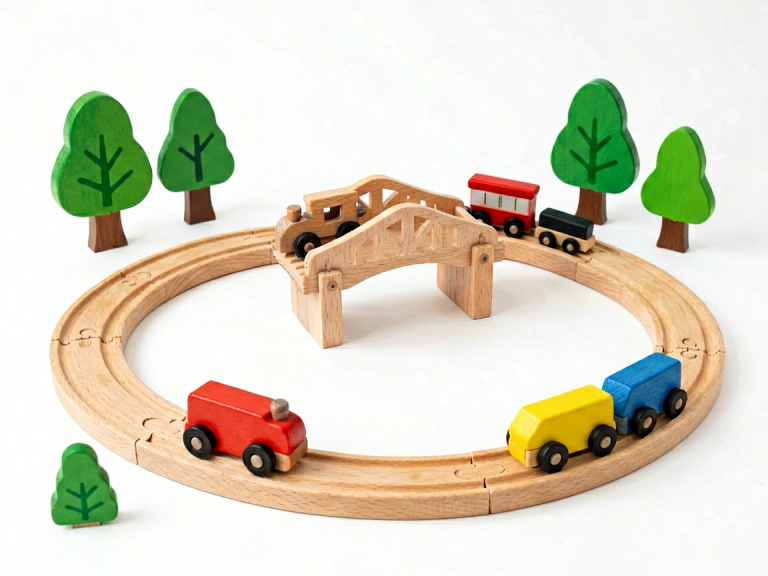
While wooden blocks are often associated with toddlers, larger, more complex sets are perfect for 7-year-olds. Untinted hardwood blocks in various shapes (cylinders, arches, triangles, planks) allow for sophisticated engineering. Unlike plastic bricks that lock together, wooden blocks rely entirely on gravity and friction. This makes them excellent for teaching load distribution and balance. A child building a Roman aqueduct or a suspension bridge with wooden blocks must think like a real architect. Many sets also include small figures, trees, and road pieces for imaginative play.
3.5 STEM Robotics and Coding Kits (e.g., Lego Boost, littleBits)
For the tech-inclined 7-year-old, building toys that incorporate electronics and coding offer a unique fusion of construction and programming. Lego Boost, for example, lets children build a robot or a guitar and then control it via a simple drag-and-drop app. LittleBits provides magnetic electronic modules (light, sound, sensors) that snap together to create circuits. These toys demystify technology. A child learns that a motor spins because current flows through a switch and a battery—they touch the physical principles behind screens. However, adult guidance is often beneficial for the initial setup.
4. How to Choose the Right Building Toy for Your 7-Year-Old
With so many options, selection can feel overwhelming. The following criteria will guide smart purchases.
4.1 Consider the Child’s Temperament
Some children revel in following step-by-step instructions; others prefer total freedom. A child who loves order and completion may thrive with a specific set like a LEGO city skyline. A more rebellious or artistic temperament might prefer a simple bag of magnetic tiles or a huge pile of mixed bricks. Observe how the child plays. If they become frustrated when a model doesn’t match the picture, choose sets with clear, manageable instructions. If they abandon instructions entirely to invent their own creations, prioritize open-ended sets.
4.2 Balance Complexity with Independence
A toy that is too easy bores a 7-year-old; one that is too difficult leads to meltdowns. As a rule of thumb, the recommended age label is a good starting point but not infallible. Some 7-year-olds can handle a 600-piece Technic set; others need 150 pieces. Look for sets that offer a “challenge but success” ratio—the child should need to try a few times but ultimately be able to complete a project without constant adult intervention. The sweet spot is when a child says, “This is hard, but I can do it.”
4.3 Prioritize Durability and Safety
7-year-olds are still prone to putting small pieces in mouths (though less than toddlers), and they often drop or step on toys. Ensure all pieces are made of non-toxic materials, free from sharp edges, and sturdy enough to withstand rough play. Building sets with very tiny pieces (less than 1 inch) should be used with supervision if younger siblings are present. Check for certifications like ASTM (American Society for Testing and Materials) or CE marking.
4.4 Look for Expandability
The best building toys are systems, not standalone sets. LEGO bricks from different sets always fit together; magnetic tiles from different brands often work with each other. Purchasing sets that can be combined with existing toys extends their lifespan. A child can keep building bigger and more complex creations as they grow. Some sets offer expansion packs or online resources with new building ideas.
5. Integrating Building Toys into Daily Learning and Family Time
Building toys need not be relegated to solo play. They can become a cornerstone of family bonding, educational activities, and even academic enrichment.
5.1 Building Challenges and Games
Turn construction play into a family game. Set a timer and challenge everyone to build the tallest tower using only twenty pieces. Or ask the child to build a structure that can hold a certain weight (e.g., a stack of books). These activities introduce physics concepts (compression, tension, stability) in a playful context. For a 7-year-old, competing with parents—and occasionally winning—builds confidence.
5.2 Story Integration
Link building to literacy. After reading a book like *The Three Little Pigs*, ask the child to build a house that the “big bad wolf” (a hair dryer on low setting) cannot blow down. After learning about ancient Egypt, they can build a pyramid with small figures. This deepens comprehension and makes history or science tangible.
5.3 Collaborative Projects
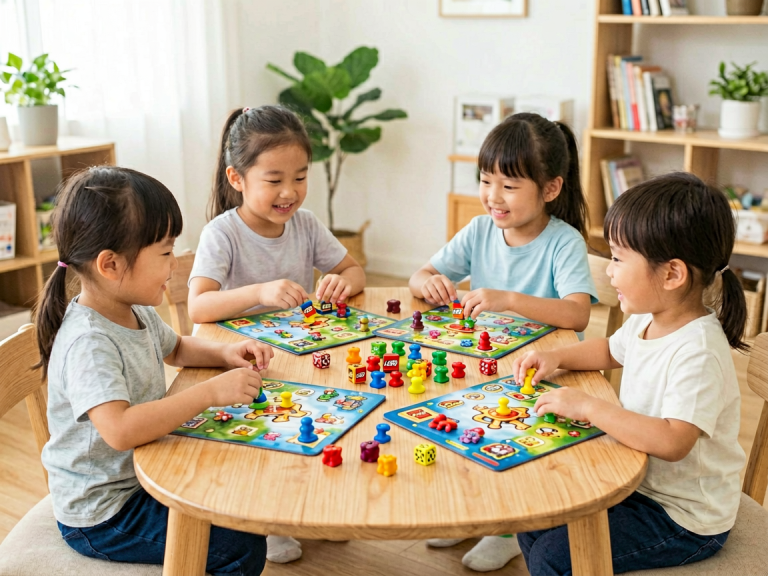
Building with a sibling or friend teaches negotiation, division of labor, and conflict resolution. Two 7-year-olds building a castle must decide who builds the walls and who builds the tower. They learn to compromise on design and share limited pieces. These social skills are as important as the spatial ones.
5.4 Documenting and Celebrating Creations
Encourage children to take photos or make drawings of their completed builds. Some families create a “building journal” where the child writes a sentence or two about what they made and how they solved problems. This reinforces reflection and communication skills. Displaying finished creations on a shelf (for a week before dismantling) gives a sense of pride and accomplishment.
Conclusion: More Than Toys, They Are Tools for Growth
Building toys for 7-year-olds are far more than playthings—they are laboratories for learning. In a hands-on, joyful way, they teach physics, geometry, persistence, creativity, and collaboration. They respect a child’s natural curiosity and give it a constructive outlet. As screens increasingly dominate childhood, the simple act of snapping two bricks together or balancing a wooden arch becomes an act of resistance—a return to tangibility, to trial and error, to the satisfaction of creating something real with one’s own hands. The right building toy, chosen with care and used with encouragement, can spark a lifelong love of engineering, architecture, or simply the joy of making. For a 7-year-old, the world is a building set waiting to be assembled. Let them build.