Art Toys vs. Craft Kits: A Creative Dilemma – Which One Reigns Supreme?
Introduction
In a world bursting with creative outlets, two contenders often dominate the shelves of toy stores and craft aisles: art toys and craft kits. At first glance, they appear to serve the same purpose—unleashing imagination, keeping hands busy, and producing something tangible. But scratch beneath the surface, and you will find that these two categories cater to fundamentally different creative philosophies. Art toys typically refer to pre-formed figures, often made of vinyl or resin, that come with blank canvases for painting, accessorizing, or customizing. Think of those adorable wooden robots waiting for a splash of color, or the blind-box characters begging to be decorated with markers. Craft kits, on the other hand, are packaged instructions that guide a user through a specific project—knitting a scarf, building a model airplane, or assembling a terrarium. The question “which is better” is far from trivial; it touches on how we define creativity, education, relaxation, and even consumerism. This article will delve into multiple dimensions—from cognitive development to cost efficiency—to help you decide which type of activity deserves a spot on your table.
Defining the Contenders: What Exactly Are Art Toys and Craft Kits?
Before any comparison can begin, we must establish clear definitions. An art toy is a hybrid between a toy and an art supply. It typically starts as a blank or partially finished object—a figure, a mask, a ceramic plate—that the user is invited to transform through painting, drawing, sticking, or otherwise embellishing. The finished product is unique, personally expressive, and often intended for display. Examples include Funko Pop! blank figures, wooden dolls, or the popular “Paint Your Own” animal banks.
A craft kit, by contrast, is a self-contained bundle that contains all materials and step-by-step instructions to complete a specific project. The outcome is predetermined—a cross-stitch pattern, a crystal-growing experiment, a mosaic picture. Creativity is exercised within boundaries: you choose colors or minor variations, but the fundamental design is fixed. Examples range from beginner embroidery sets to advanced model ship kits.
The distinction is subtle but critical: art toys emphasize *open-ended exploration*, while craft kits emphasize *guided achievement*. Which one is “better” depends entirely on what you seek.
The Freedom Factor: Open-Ended Creativity vs. Structured Achievement
One of the most passionate arguments for art toys is the sheer freedom they offer. When you pick up a plain white resin figure, there are no rules. You can paint it like a rainbow, cover it with glitter, give it three eyes, or leave it half-finished and call it abstract. This openness nurtures divergent thinking—the ability to generate many solutions to a single problem. Psychologists have long associated divergent thinking with creative intelligence. Art toys allow children (and adults) to explore their unique aesthetic without the anxiety of “doing it wrong.” The process is the product.
Craft kits take the opposite stance. They provide a clear, replicable outcome. This is not a flaw; it is a feature. For people who feel overwhelmed by a blank canvas—which can be intimidating—craft kits offer a gentle handhold. They teach patience, precision, and the satisfaction of following instructions. When you finish a craft kit, you have something that looks like the picture on the box. That success builds confidence, especially in younger children who may not yet have the fine motor skills or visual imagination to create from scratch.
So which is better? If your goal is to foster original thinking and personal expression, art toys have the edge. If your goal is to build confidence through achievable milestones, craft kits win.
Skills Development: Motor, Cognitive, and Emotional
Both activities sharpen a range of skills, but they emphasize different ones.
Art Toys predominantly develop fine motor skills through painting, drawing, and gluing small accessories. They also encourage color theory experimentation and spatial reasoning—deciding where to place a sticker or how to blend paint. Emotionally, art toys are excellent for stress relief. The lack of a deadline or correct answer allows the brain to enter a “flow state,” reducing cortisol levels. They also promote self-esteem because the result is uniquely yours. However, a downside is that without guidance, some users may become frustrated by their own lack of technical skill (e.g., shaky lines) and give up.
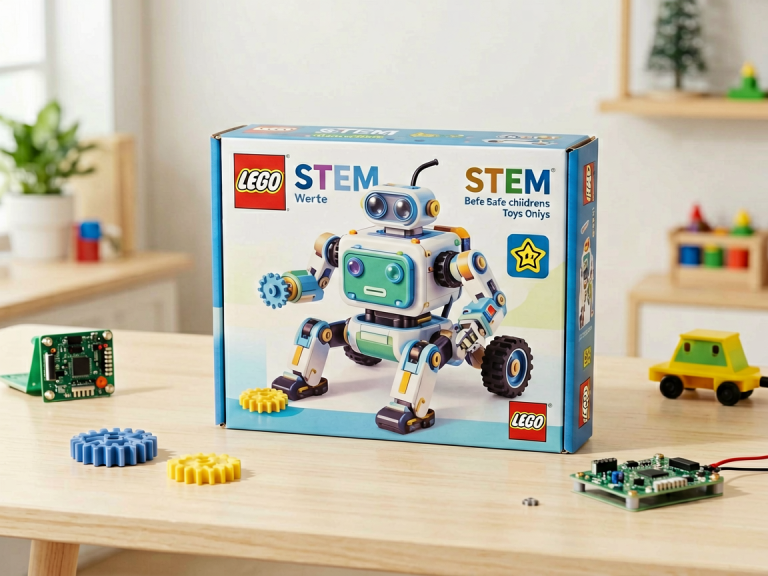
Craft Kits systematically train hand-eye coordination, sequencing (doing steps in order), and reading comprehension (following written instructions). Many kits incorporate STEM skills—like understanding gears in a wooden car kit or measuring yarn for a loom. The emotional payoff is the dopamine hit of completion. For children with attention difficulties, the structured nature of a craft kit can be therapeutic because it breaks a large task into small, manageable steps. On the other hand, over-reliance on kits can stifle improvisation. A child who always builds the same Lego model by the book may never learn to invent new structures.
In the skills department, there is no clear winner—they complement one another. A balanced creative diet would include both.
Educational Value Parallels with Curriculum Goals
Educators and parents often ask: which tool better supports academic learning? Art toys integrate seamlessly with art education. They allow teachers to discuss artistic movements, color palettes, and composition without a rigid template. For example, a class painting blank masks can learn about African tribal patterns, Greek theatre, or Japanese Kabuki—all while creating something personal.
Craft kits can be aligned with subject-specific learning. A chemistry kit teaches about crystals and solutions; a birdhouse kit teaches about carpentry and geometry; a knitting kit teaches about patterns and counting. They can be used to reinforce math concepts (fractions in sewing, measurement in woodworking) or scientific concepts (the chemistry of baking a clay project). Some kits even include historical background—like building a model of the Mayflower. So educationally, they serve different subject areas.
However, a notable limitation of craft kits in education is that the outcome is often the same for every student. This can lead to a “cookie-cutter” classroom display, which may undervalue individual expression. Art toys, by contrast, guarantee variety. For a teacher aiming to celebrate diversity, art toys might be more suitable.
Cost and Accessibility: The Economics of Creativity
Let’s talk money. Art toys are often more expensive per unit because they are pre-manufactured figures with high-quality blank surfaces. A single blank wood figure can cost anywhere from $5 to $30. Additionally, you need to buy paints, brushes, and embellishments separately, which adds up. However, those supplies can be reused for many projects, so the long-term cost per project may decrease.
Craft kits are typically priced to include everything you need, from glue to sequins. They range from $10 to $50, depending on complexity. Because they eliminate the need to shop for materials, they are more accessible for someone who wants an immediate, no-hassle experience. For families on a tight budget, a $15 kit that provides a complete afternoon of activity can be more practical. However, each kit is a one-time use, and the materials often cannot be repurposed for another project.
So in terms of upfront convenience, craft kits win. In terms of long-term creative reusability, art toys (with separate supplies) offer more value.
Age and Personality Considerations
Not every person thrives with the same creative tool. Art toys tend to suit those who are already confident in their artistic abilities, or who are willing to experiment without fear. They are ideal for older children (8+) and adults who enjoy mindfulness coloring or figure customization. They can be a hit at parties where everyone paints the same figure differently.
Craft kits are often better for younger children (ages 3–7) who need clear boundaries to prevent chaos. A step-by-step kit reduces frustration and teaches patience. They also appeal to perfectionist personalities who take pride in a polished result. For people who suffer from decision fatigue, a kit’s predetermined design can be a relief.
Conclusion: The Verdict Is a Balanced Palette
After exploring creativity, skills, education, cost, and personality, it should be evident that the question “which is better” has no single answer. Art toys and craft kits are not competitors; they are complementary tools in a well-rounded creative toolkit. Art toys champion the wild, untamed spirit of imagination. They teach us that there is no wrong answer, only a different one. Craft kits champion the discipline of craft and the joy of accomplishment. They teach us that following a plan can lead to beauty.
Perhaps the ideal choice is not one or the other, but a rhythm: a week of painting a blank dragon figure (art toy) followed by a weekend of assembling a model lighthouse (craft kit). In this rotation, the mind learns both freedom and structure. For parents, educators, and hobbyists, the better question might not be “which is better” but “what do I need right now?” If you need to recharge your creative batteries with pure play, grab an art toy. If you need the satisfaction of a finished product that looks exactly like the picture, pick a craft kit. In the end, both are gateways to a more colorful, hands-on life. And that is a win for everyone.