The Silent Symphony: Why Quiet Toys Are Essential for Newborn Development
Introduction
In the cacophony of modern parenting advice, one often overlooked yet profoundly impactful choice is the selection of toys for a newborn. While flashing lights, loud sounds, and electronic gadgets dominate store shelves, a growing body of pediatric and developmental research suggests that the most beneficial toys for infants in their first months of life are those that make little to no noise. Quiet toys for newborns are not merely a matter of parental preference for peace; they are a critical tool for sensory integration, neural development, and the cultivation of a calm, attentive environment. This article explores the rationale behind quiet toys, the types that are most effective, safety considerations, and how these simple objects lay the foundation for lifelong learning.
The Neurological Case for Silence in Early Infancy
Newborns enter the world with an immature nervous system. Their brains are rapidly forming synaptic connections, but they are also easily overwhelmed by intense stimuli. Loud, sudden, or continuous sounds can trigger the stress response, elevating cortisol levels and disrupting sleep cycles. Quiet toys, by contrast, provide gentle, predictable sensory input that supports the development of the auditory cortex without overstimulation. When an infant interacts with a soft, silent rattle or a fabric texture, their brain is free to process the experience at a natural pace, encouraging focused attention and self-regulation. Studies in developmental psychology have shown that infants who are exposed to excessive auditory stimulation early on may develop hypersensitivity or difficulty with concentration later in life. Quiet toys allow the baby to initiate interaction rather than react to external noise, fostering a sense of agency and curiosity.
Types of Quiet Toys That Support Sensory Growth
There is a diverse array of quiet toys designed specifically for newborns, each targeting different aspects of sensory and motor development.
- Soft Fabric Books and Sensory Squares
Made from crinkly, silky, or fleece materials, these toys produce only the softest rustle when touched. They encourage tactile exploration, visual tracking (with high-contrast patterns), and early grasping. Because they are silent, they can be used during nursing or diaper changes without startling the baby.
- Silent Silicone Teethers and Grasping Rings
Unlike plastic teethers that click or rattle, many modern silicone designs are completely silent. Their varied textures—ridges, bumps, and smooth surfaces—provide oral motor stimulation and help soothe teething discomfort. The absence of noise allows the baby to focus entirely on the tactile and proprioceptive feedback, which is crucial for body awareness.
- Wooden or Fabric Dolls Without Sound Mechanisms
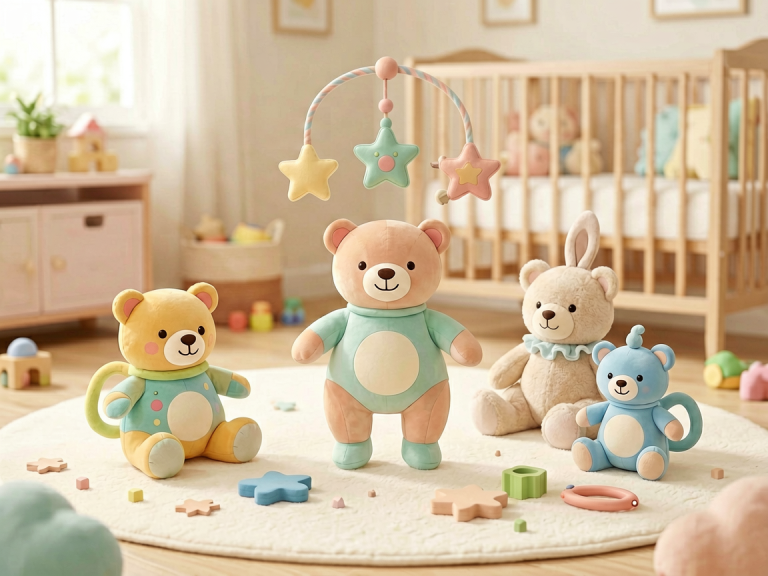
Simple, unpainted wooden animals or soft cloth dolls have no batteries, no bells, and no whistles. They invite the baby to observe, reach, and eventually hold. The lack of sound encourages the caregiver to narrate the play, introducing language in a natural, unhurried manner.
- Black-and-White Contrast Cards and Mobiles
Newborns have limited color vision; they respond best to high-contrast patterns. Quiet mobiles made of felt or paper, and contrast cards placed near the changing area, provide visual stimulation without auditory distraction. They help develop depth perception and the ability to focus.
- Sensory Balls with Soft, Muted Textures
Balls made from rope, fabric, or soft foam that make no noise when rolled are ideal. They encourage the development of hand-eye coordination and the realization that objects continue to exist when out of sight (object permanence) without the disruptive sound of rolling plastic.
Safety Considerations When Choosing Quiet Toys
While quiet toys are generally safer than their noisy counterparts, parents must remain vigilant. Any toy given to a newborn must be free of small parts that could become choking hazards. Because quiet toys often rely on texture and fabric, ensure that materials are non-toxic, washable, and free of loose threads or buttons. Wooden toys should be smooth and splinter-free, and all dyes should be food-grade or water-based. Silicone teethers should be labeled as BPA-free and phthalate-free. Additionally, avoid any toy that has strings longer than 12 inches, as they pose a strangulation risk. The quiet nature of these toys does not exempt them from supervision; always inspect for wear and tear, especially if the baby begins mouthing them.
How Quiet Toys Foster Parent-Child Bonding
One of the most beautiful aspects of quiet toys is the way they facilitate connection between caregiver and infant. Without the distraction of mechanical sounds, the parent is more likely to engage in face-to-face interaction, talking, singing softly, or mimicking the baby’s expressions. This reciprocal exchange is the foundation of attachment. When a baby reaches for a silent wooden rattle, and the parent smiles and hands it back, the baby learns that their actions have meaning. The quiet space allows the parent to observe the child’s subtle cues—a furrowed brow indicating frustration, a soft coo of delight—and respond appropriately. Over time, this attunement builds trust and emotional regulation. Research indicates that infants who experience consistent, responsive interactions in calm environments develop stronger social-emotional skills.
The Role of Quiet Toys in Sleep and Self-Soothing
Newborns spend the majority of their time asleep, and the quality of that sleep is profoundly affected by their environment. Overstimulation before naps or bedtime can lead to difficulty settling, shorter sleep cycles, and increased night waking. Quiet toys, when introduced during quiet play or as part of a bedtime routine, signal to the baby that it is time to wind down. A soft, silent lovey or a textured security blanket (always kept out of the crib until the baby can roll over, per safe sleep guidelines) can become a transitional object. The repetitive action of rubbing a silk edge or squeezing a quiet ball can mimic the rhythms of sucking or rocking, aiding self-soothing without auditory interference. This is especially important for babies who are sensitive to white noise machines or lullabies; a truly silent tactile toy offers a non-auditory pathway to calm.
Long-Term Benefits: From Quiet Play to Deep Learning
The habits formed in the first months of life persist. Infants who are accustomed to quiet toys often show greater tolerance for focused, independent play as toddlers. Without the constant reward of a flashing light or a loud beep, they learn to derive pleasure from the intrinsic properties of an object—its weight, texture, temperature, and shape. This type of play is called “epistemic” because it involves gathering knowledge about the world. Later, these children may find it easier to concentrate in a classroom setting, to engage in imaginative play, and to appreciate subtle forms of art and music. Quiet toys thus contribute to the development of a patient, observant mind.
Practical Tips for Integrating Quiet Toys into Daily Routines
To maximize the benefits, consider the following strategies:
- Rotate toys frequently to prevent boredom while maintaining novelty. Keep only two or three quiet toys available at a time.
- Use quiet toys during high-stress moments, such as before vaccinations when you need the baby to stay calm, or during car rides when you want to avoid the overstimulation of a noisy dashboard toy.
- Pair quiet toys with a calm voice. When the baby explores a silent toy, describe what they are doing: “You are touching the soft bunny. It is gentle and warm.” This builds vocabulary and reinforces the pleasure of shared attention.
- Resist the urge to add noise. Even though it might seem fun to attach a bell to a toy, remember that the baby’s nervous system is still forming. Let the quiet be enough.
Conclusion
In a world that often equates stimulation with engagement, quiet toys for newborns stand as a gentle but powerful reminder that less is more in the earliest stages of life. They protect the developing brain from overload, support sensory integration, deepen the bond between parent and child, and lay the groundwork for concentration, creativity, and calm. By choosing silence over sound, parents are not depriving their babies of joy; they are giving them the gift of a spacious, unhurried beginning—a symphony in which every touch, every glance, and every texture becomes a note in the music of growth. The next time you hold a soft, silent toy in your hand, know that you are holding an instrument of quiet wonder.