The Art of Choosing Educational Toys: A Parent’s Guide to Meaningful Play
Every parent wants the best for their child, and toys are often the first tools we use to spark learning, creativity, and growth. But in a world flooded with flashing lights, noisy gadgets, and thousand-piece kits, how do you separate the genuinely educational from the merely entertaining? Choosing the right educational toy is not about picking the most expensive or the most “academic” option; it is about understanding your child’s developmental needs, your family’s values, and the nature of play itself. This guide will walk you through the essential criteria, with practical advice to help you make thoughtful, effective choices.
—
Consider Age and Developmental Stage First
The most fundamental rule in choosing an educational toy is to match it to your child’s current stage of development. A toy that is too advanced will frustrate and discourage; one that is too simple will bore and fail to challenge. Manufacturers often print age ranges on boxes, but these are only starting points. You need to look deeper.
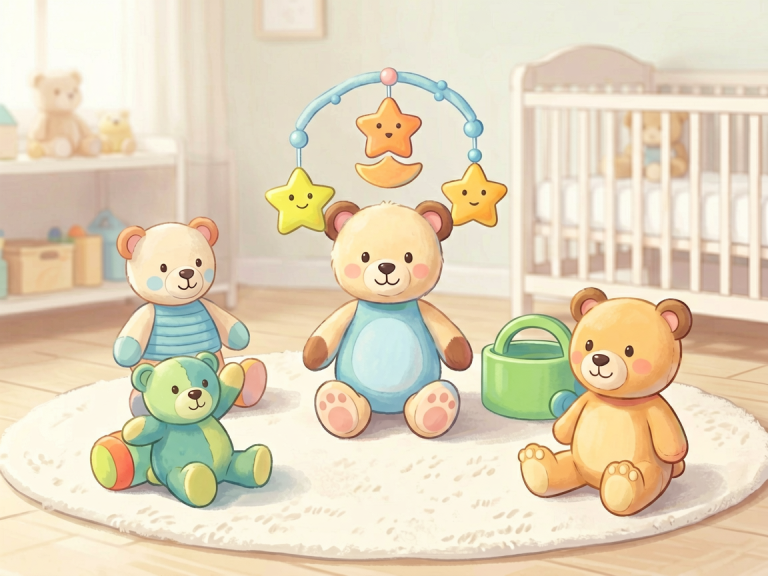
For infants (0–12 months), the world is a sensory buffet. Educational toys at this stage should stimulate sight, sound, touch, and cause-and-effect understanding. Think black-and-white contrast cards, soft rattles, textured teethers, and simple mobiles. These toys don’t need to “teach” letters or numbers—they are building the neural pathways that make future learning possible.
For toddlers (1–3 years), the focus shifts to gross motor skills, language development, and imitation. Stacking blocks, shape sorters, and push-pull toys encourage physical coordination. Simple puzzles with knobs, chunky crayons, and pretend-play sets (like a toy kitchen or tool bench) support cognitive leaps. The key is durability and safety, as toddlers love to throw, chew, and explore with their whole bodies.
Preschoolers (3–5 years) are ready for more complex reasoning. Look for toys that introduce early math concepts (counting bears, pattern boards), literacy skills (magnetic letters, story sequencing cards), and social-emotional growth (cooperative board games, dollhouses with diverse characters). At this stage, open-ended building sets like magnetic tiles or wooden blocks are goldmines, because they adapt to a child’s growing imagination.
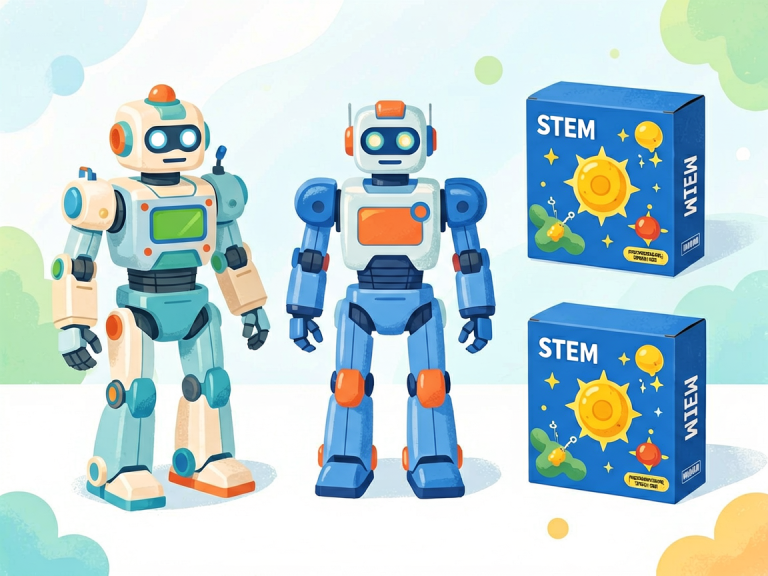
School-age children (6+ years) benefit from toys that deepen specific interests and teach systematic thinking. Science kits, programmable robots, advanced strategy games, and craft sets that require sustained attention all fit here. Remember, though, that even an older child still needs unstructured play—a simple set of LEGO bricks can be as educational as a coding toy, because it teaches spatial reasoning, problem-solving, and patience.
—
Prioritize Open-Ended Play Over Closed-Ended Tasks
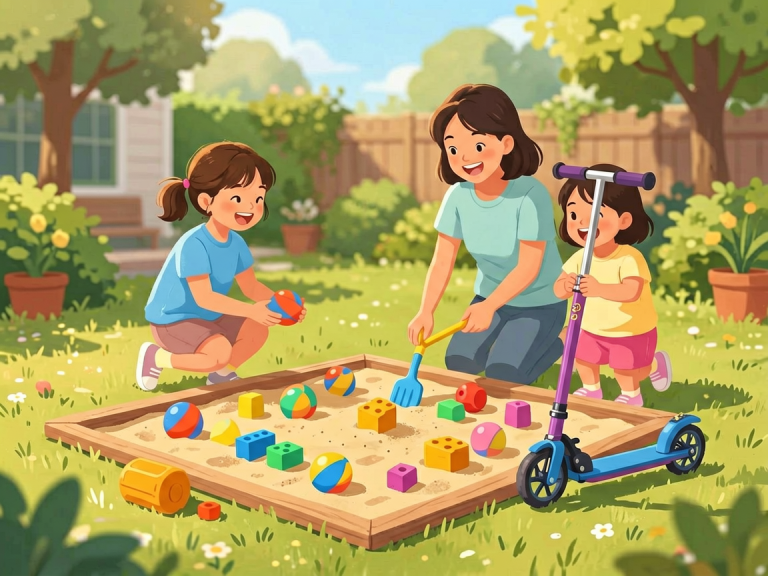
One of the greatest mistakes parents make is choosing toys that have only one “correct” way to play. A toy that lights up and sings when you press a specific button is teaching a single skill (cause and effect) and then stops being interesting. In contrast, open-ended toys—like blocks, art supplies, dress-up clothes, or sand and water tables—invite endless possibilities.
Open-ended toys encourage creativity, divergent thinking, and self-directed learning. A cardboard box can become a spaceship, a car, a castle, or a television—and in each transformation, the child is practicing executive function skills: planning, flexibility, and impulse control. When you choose an educational toy, ask yourself: Can my child use this in more than one way? Can they combine it with other toys? Does it allow for mistakes and experimentation?
For example, a wooden train set with straight and curved tracks is open-ended: children can build different layouts, create stories, and learn basic physics about slopes and connections. A battery-operated train that only runs on a fixed loop is closed-ended and will be abandoned quickly. Similarly, a set of play-dough with cookie cutters offers more learning than a pre-formed clay character, because the dough invites molding, rolling, and inventing.
—
Focus on Safety, Quality, and Longevity
Educational value means nothing if a toy is unsafe or falls apart after a week. Before buying, check for potential hazards. For young children, ensure that all parts are larger than a toilet paper tube to prevent choking hazards. Avoid toys with sharp edges, long strings (strangulation risk), or toxic paints and plastics. Look for certifications like ASTM (American Society for Testing and Materials) or CE (European Conformity) marks.
Quality matters because children learn through repetition and mastery. A flimsy puzzle whose pieces warp after one use teaches frustration, not problem-solving. Invest in toys made from sustainable materials like solid wood, organic cotton, or BPA-free plastic when possible. These toys often feel better in the hand, last for years, and can be passed down to siblings or friends.
Longevity also means choosing toys that grow with your child. A high-quality wooden dollhouse can serve a two-year-old who just puts dolls inside, a four-year-old who stages family scenes, and a six-year-old who invents complex narratives with miniature furniture. Similarly, a set of magnetic building tiles transitions from simple towers to geometric shapes to basic engineering projects as the child matures.
—
Encourage Multi-Sensory and Cross-Disciplinary Learning
The best educational toys engage more than one sense at a time, because multi-sensory experiences strengthen neural connections. A toy that combines sight, sound, touch, and even smell or movement will be more memorable and more effective.
Consider a simple set of alphabet blocks: children can see the letters, feel their shapes, hear the sounds when they drop them, and arrange them to form words—all while using fine motor skills. Compare that to a tablet app that only taps and swipes: the app may be convenient, but it lacks the rich tactile feedback that helps young brains encode information.
Cross-disciplinary learning is another hallmark of high-quality educational toys. A toy that teaches math concepts through art, or physics through music, helps children see connections between subjects. For instance, a set of rainbow-colored nesting cups can teach counting (how many cups?), size seriation (which fits inside which?), color recognition, and even basic volume (fill one cup with water and pour it into another). A simple xylophone introduces rhythm, pitch, cause and effect, and visual-spatial patterns.
When browsing toy stores, ask yourself: How many different kinds of learning does this toy offer? Does it address cognitive, physical, social, and emotional development simultaneously?
—
Look for Interactive and Social Elements
Many parents equate “educational” with “solo activity,” but some of the most valuable learning happens when children play together. Toys that encourage cooperation, negotiation, turn-taking, and communication teach essential life skills that cannot be learned from a worksheet.
Board games are classic examples of social-educational toys. A simple game like “Candy Land” teaches color recognition, patience, and following rules. More complex games like “Cooperation!,” “Outfoxed,” or “Sushi Go!” require players to share strategies, discuss moves, and sometimes work toward a common goal. These interactions build emotional intelligence, including empathy and dealing with disappointment.
Even solitary toys can become social if siblings or friends join in. A giant set of magnetic tiles invites group building; a dress-up trunk leads to collaborative pretend play. When choosing a toy, think about whether it naturally promotes interaction, or whether it isolates the child. While some quiet solo play is healthy, balance is key.
—
Resist the Hype of “Smart” and High-Tech Toys
In recent years, the toy market has been flooded with “smart” toys: tablets for babies, AI-powered robots that speak, and app-connected building kits. While some of these products are genuinely innovative, many are little more than expensive gimmicks. Research shows that the most effective learning toys are often the simplest ones, because they require active, imaginative participation rather than passive consumption.
A 2019 study by the American Academy of Pediatrics found that traditional blocks, puzzles, and art supplies provided richer language interactions between parents and children than electronic toys that talked or sang by themselves. The reason is that a parent who sits on the floor with blocks naturally narrates: “Look, you put the blue block on top of the red block—now it’s taller!” That live conversation, with timing, eye contact, and emotion, is what fuels language development and bonding.
This doesn’t mean all tech toys are bad. Some programmable robots, like Bee-Bot or Sphero, teach coding logic through hands-on play. The key is to choose tech toys that are interactive rather than reactive—toys that let the child control the outcome, not the other way around. Avoid toys that claim to “teach” through passive screen time; a child pressing a button and watching a light show is not learning nearly as much as a child who is physically building, testing, and failing.
—
Observe Your Child’s Unique Interests
Finally, the most important person in the selection process is your child. No toy, no matter how well-designed, will be educational if it doesn’t capture the child’s attention. Watch how your child plays in their natural environment. Do they love digging in the garden? Then a child-sized shovel, a worm farm kit, or a set of plant-growing experiments will be far more educational than a generic science kit. Do they arrange their stuffed animals in rows? Then they might be ready for sorting and pattern games.
Educational toys should feel like invitations, not assignments. The best ones spark curiosity and ask questions: “What happens if I put this here?” “How can I make it taller?” “What sound does this make?” When a child is intrinsically motivated, they learn faster and retain more. So take your child to the store or browse online together, and listen to their excitement. Then use the criteria above to refine your choices—balancing their passion with developmental appropriateness, safety, and openness.
—
Conclusion: Less Is More, but Thoughtful Is Everything
Choosing educational toys doesn’t need to be overwhelming. Start by simplifying: instead of buying a dozen trendy gadgets, invest in a few high-quality, open-ended, age-appropriate toys that you can enjoy together. Rotate toys every few weeks to keep them fresh, and remember that the most powerful educational tool in the room is you—parent, caregiver, or teacher—sitting on the floor, playing, talking, and wondering alongside your child. A toy is only as educational as the interactions it inspires. Choose wisely, and the learning will follow naturally.
*(Word count: 1,215)*