The Art of Play: Essential Tips for Choosing Screen-Free Toys That Inspire Growth and Imagination
In an era dominated by glowing screens, buzzing notifications, and an endless stream of digital content, the simple act of choosing a screen-free toy for a child has become an almost revolutionary gesture. Yet, as parents, educators, and caregivers, we know that the most profound learning often happens when a child’s hands are busy, their mind is wandering, and no battery-powered device is dictating the pace. A thoughtfully selected screen-free toy can be a gateway to creativity, problem-solving, emotional resilience, and authentic human connection. But with an overwhelming array of plastic, wood, and fabric options lining store shelves, how do you make a choice that truly benefits a child’s development? This article offers a comprehensive set of tips for selecting screen-free toys that are not only fun but also deeply enriching.
Understanding the Purpose: Why Screen-Free Toys Matter
Before diving into specific tips, it is essential to grasp why screen-free toys hold such value in a child’s life. Unlike digital devices that often provide passive entertainment with instant rewards, traditional toys require active participation. A wooden block tower demands patience, balance, and spatial reasoning. A set of crayons invites open-ended creation, not consumption. A simple ball encourages physical movement, coordination, and social play. Screen-free toys offer children the chance to control their own narrative, make mistakes, and learn from them in a tactile, low-stakes environment.
Moreover, research consistently shows that excessive screen time in early childhood can disrupt sleep, hinder language development, and reduce the time children spend engaging in imaginative play. By choosing screen-free toys, you are deliberately carving out space for the kind of deep, unhurried play that builds attention spans and fosters intrinsic motivation. Keep this foundational understanding in mind as you evaluate each toy: Does this toy invite the child to be an active creator, or is it designed to entertain them passively?
Age-Appropriate Selections: Matching Toys to Developmental Stages
One of the most common mistakes in toy selection is choosing something that is either too advanced or too simplistic for a child’s current developmental stage. A toy that frustrates a toddler or bores a seven-year-old will quickly be abandoned. Therefore, age appropriateness is not a mere guideline—it is a crucial factor in ensuring the toy delivers its intended benefits.
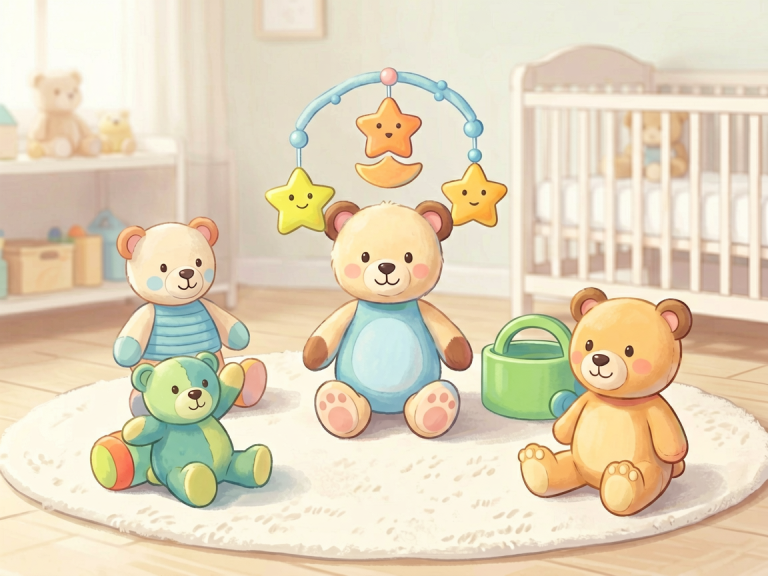
For infants (0–12 months), focus on sensory exploration. Soft fabric books with different textures, rattles that produce gentle sounds, and teething rings made of natural rubber are ideal. These toys stimulate the senses without overwhelming them. As babies begin to grasp and mouth objects, ensure all items are large enough to prevent choking and are free from small parts.
For toddlers (1–3 years), gross motor skills and cause-and-effect understanding are developing rapidly. Stacking cups, push-and-pull toys, simple puzzles with large knobs, and shape sorters are excellent choices. At this stage, children also begin to imitate adult actions, so toy kitchens, play telephones (non-electronic), and mini brooms encourage pretend play and language development.
For preschoolers (3–5 years), imagination explodes. This is the golden age for open-ended toys like wooden blocks, dolls, animal figurines, play dough, and art supplies (crayons, washable markers, finger paints). Building kits with large interlocking pieces, such as magnetic tiles, also support spatial reasoning. Avoid toys with overly prescribed narratives—let the child decide whether the block tower becomes a castle, a rocket ship, or a dinosaur pen.
For school-age children (6 years and up), complexity can increase. Board games that require strategy, construction sets with more intricate pieces (like LEGO classic sets without a single designated model), science kits, craft materials for jewelry or sewing, and musical instruments are all screen-free options that promote logical thinking, fine motor skills, and sustained focus. Remember that even older children benefit from toys that allow unstructured play, so don’t assume they have “outgrown” blocks or dolls—they just use them in more sophisticated ways.
Fostering Creativity: Open-Ended vs. Result-Oriented Toys
Not all screen-free toys are created equal when it comes to nurturing creativity. The most powerful toys are open-ended—they have no fixed outcome, no single “correct” way to play, and no pre-programmed response. A box of wooden planks can become a house, a bridge, a car ramp, or a seesaw. A set of colored scarves can be costumes, tents, rivers, or clouds. These toys adapt to the child’s imagination rather than limiting it.
In contrast, result-oriented toys often come with a specific goal: a puzzle that must be completed, a craft kit that produces a predetermined model, or a toy that plays a single tune when a button is pressed. While these can be valuable in moderation—puzzles teach perseverance, for instance—they should not dominate a child’s toy collection. If a toy’s manual says “Do it like this,” think twice. The best screen-free toys whisper, “What do you want to do?”
Tip: When shopping, look for toys labeled as “open-ended play,” “loose parts,” or “imaginative play.” Sets of natural items like pinecones, seashells, and wooden rings (often sold as “Waldorf toys”) are excellent. Also, consider classic toys like unit blocks, train tracks (without a fixed layout), and dress-up clothes—they have survived generations precisely because they allow endless variations.
Sensory and Motor Development: Toys That Engage the Senses
Young children learn through their bodies. Their brains are wired to process information from touch, sound, sight, smell, and even taste. Screen-free toys can be powerful tools for sensory integration and motor development, provided they are chosen with intention.
For fine motor skills (small hand and finger movements), consider threading beads, lacing cards, pegboards, small tweezers for transferring objects, and play dough with tools. These activities strengthen the hand muscles that children will later need for writing.
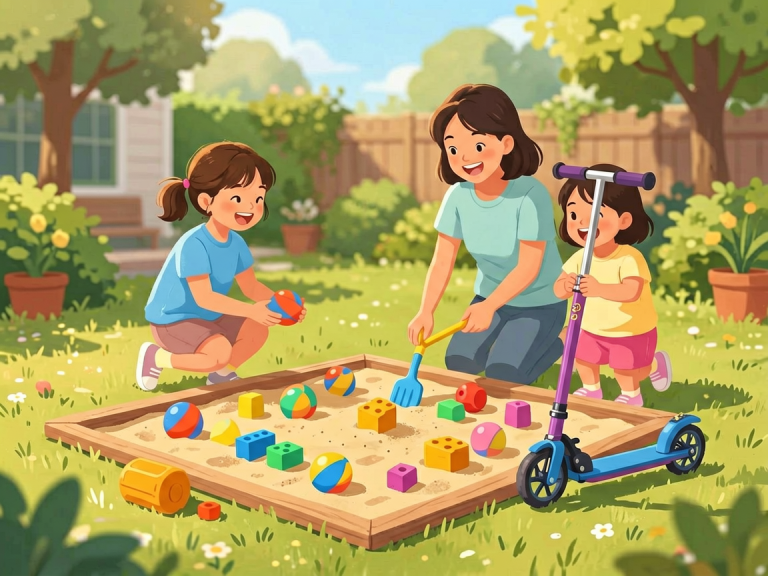
For gross motor skills (large body movements), think of climbing structures, balance boards, balls of various sizes, jump ropes, and hula hoops. Outdoor toys like sidewalk chalk, sand and water tables, and garden tools also encourage active, whole-body play.
For sensory exploration, look for toys that offer different textures (smooth, rough, bumpy, soft), weights (heavy wooden items vs. light fabric ones), and sounds (bells, clackers, drums). Sensory bins filled with rice, beans, or kinetic sand, combined with scoops and containers, are a rich screen-free experience. Always ensure that materials are non-toxic and that children are supervised with small items to avoid choking hazards.
A word on “educational” electronic toys: Many marketed as “interactive learning” actually provide poor sensory input. The bright flashing lights and repetitive sounds can overstimulate rather than engage. A simple wooden puzzle with knobs provides far richer tactile feedback than a plastic tablet app that drags shapes with a finger.
Durability and Safety: Choosing Quality and Non-Toxic Materials
Screen-free toys should withstand enthusiastic play, occasional drops, and even the occasional mouthing. Cheaply made plastic toys may break easily, leaving sharp edges or small swallowed parts. Moreover, many inexpensive toys contain harmful chemicals like phthalates, BPA, or lead in paints. Investing in durable, safe toys is not a luxury—it is a responsibility.
Material tips: Wooden toys made from sustainably sourced hardwoods (like beech, maple, or birch) with non-toxic, water-based finishes are excellent. Fabric toys should be washable and made from natural fibers like organic cotton or wool. Silicone toys for teething must be food-grade and free from fillers. For plastic toys (which can sometimes be appropriate for outdoor use or water play), look for brands that use BPA-free, phthalate-free materials and have certifications such as ASTM, EN71, or CPSIA.
Construction tips: Check that all parts are securely attached. Buttons, eyes on stuffed animals, and small wheels should be firmly stitched or glued. For toys with magnets, ensure they are encapsulated so they cannot be removed. Avoid toys with long strings or cords that could pose a strangulation risk for younger children.
Longevity tips: Choose toys that grow with the child. A set of wooden blocks can be used from age one well into elementary school. A dollhouse can be furnished differently as the child matures. Classic toys often have timeless appeal, while trendy character-based toys may be discarded as soon as the movie fades from popularity.
Social and Emotional Growth: Toys That Encourage Interaction
While solitary play is important, many of the richest developmental benefits come from playing with others. Screen-free toys can be powerful catalysts for social skills—sharing, negotiating, taking turns, and empathizing. When selecting toys, consider how they might be used by more than one child, or by a child and an adult.
Cooperative games are excellent: board games that require teamwork rather than competition, such as collaborative race-against-time games or simple matching games where everyone helps find pairs. Building sets like large floor puzzles or giant block constructions also naturally invite cooperation.
Role-playing toys—such as a doctor’s kit, a cash register, a train set, or a farm set—encourage children to step into different perspectives. They learn to negotiate roles (“You be the patient, I’ll be the doctor”), to listen, and to respond to others’ ideas. These interactions are the birthplace of emotional intelligence.
Simple toys like a ball or a jump rope require a partner for many games (catch, tag, jump rope rhymes). Even a set of scarves can become a game of “parachute” with a group. When you choose screen-free toys, you are also choosing to invite conversation, laughter, and connection.
Tip: Avoid single-player toys that isolate the child. While puzzles and individual art projects have their place, ensure the overall toy collection balances solo and group play. Also, consider that adults can be play partners too—a child’s most interactive toy is often a present, engaged grown-up.
Practical Considerations: Budget, Space, and Storage
Even the most beautifully designed screen-free toy is useless if it ends up buried under clutter or overcrowded in a tiny room. Practical tips help ensure that your toy choices are sustainable long-term.
Budget: You do not need to spend a fortune. Many of the best screen-free toys are everyday objects: cardboard boxes, empty containers, old clothes for dress-up, kitchen utensils, and natural objects from a walk. Thrift stores and hand-me-downs are treasure troves. When you do buy new, focus on quality over quantity. A few excellent toys are far better than a hundred cheap, broken ones.
Space: Rotate toys. Keep only a selection out at a time—perhaps ten to fifteen items—and store the rest in a closet or bin. When children see the same toys every day, they lose interest. Rotating every few weeks brings back excitement. Open shelving where toys are visible and accessible encourages independent play, but be careful not to overload shelves.
Storage: Choose storage that is child-friendly. Low bins with no lids, clear containers, or open baskets allow children to see and reach their toys. Label bins with pictures (for non-readers) so they can help with cleanup. A place for everything teaches responsibility and makes play more intentional.
Decluttering tip: Regularly go through toys with your child. Ask which they have outgrown, which are broken, or which they no longer enjoy. Donate or recycle. This habit prevents accumulation and helps children learn to appreciate what they have.
The Long-Term Benefits of Thoughtful Toy Choices
Choosing screen-free toys is not about rejecting technology altogether—it is about restoring balance. It is a conscious decision to prioritize hands-on, sensory-rich, and socially engaging experiences that build the foundation for a lifetime of learning. When you select a toy that invites creativity, challenges motor skills, and encourages connection, you are giving a child something far more precious than a few hours of entertainment. You are giving them the tools to understand their world, to express themselves, and to discover the joy of using their own mind and hands.
So the next time you are confronted with an aisle of blinking, beeping, screen-based toys, pause. Remember that the best toy is often the simplest one: the one that has no instructions, no battery, and no limits. The one that whispers, “Imagine what you can do.” And with the tips outlined in this article, you now have a map to find exactly those treasures. Happy playing.