The Ultimate Guide to the Best Birthday Gifts for 6-Year-Olds: Sparking Joy and Development
Choosing the perfect birthday gift for a 6-year-old can feel like navigating a maze of glitter, noise, and endless possibilities. At this magical age, children are rapidly transitioning from toddlerhood into a more independent, curious, and social phase. Their cognitive abilities are blossoming, they are learning to read and write, and their imaginations are soaring. A gift at this stage should not only entertain but also nurture their growing minds, bodies, and social skills. Whether you are a parent, grandparent, aunt, uncle, or family friend, finding a present that balances fun with developmental value is key. In this guide, I will explore several categories of gifts that are consistently beloved by 6-year-olds and highly recommended by educators and child development experts. Each category aims to support different aspects of a child’s growth—creativity, logical thinking, physical activity, emotional intelligence, and social bonding. Let’s dive into the best birthday gifts for 6-year-olds, ensuring your chosen present will be a source of joy, learning, and cherished memories.
Encouraging Creativity: Arts, Crafts, and Imaginative Play
At age 6, children are natural storytellers and artists. They love to create, build, and express themselves through various media. Gifts that encourage creativity are both entertaining and valuable for developing fine motor skills, spatial awareness, and self-confidence. One of the most popular options is a high-quality art kit that includes washable markers, crayons, watercolor paints, colored pencils, and plenty of paper. But do not stop there—consider a reusable sticker book or a magnetic dress-up doll set that allows kids to mix and match outfits, fostering narrative thinking. Another fantastic choice is a set of modeling clay or Play-Doh with accessories like cutters and molds. Six-year-olds often spend hours sculpting animals, foods, and imaginary creatures, which helps strengthen their hand muscles for writing. For the more ambitious creator, a simple sewing kit with large plastic needles and pre-punched felt shapes can introduce basic stitching while building patience. Imaginative play is equally important; a costume trunk filled with superhero capes, princess gowns, doctor coats, and astronaut helmets invites role-playing that develops empathy and language skills. Finally, consider a magnetic building set like Magna-Tiles or a large box of LEGO Classic bricks. These open-ended toys allow children to construct whatever their minds dream up—castles, spaceships, or robots—and they can be reused in countless ways. The key is to choose something that does not have a single “right” answer, thereby letting the child’s imagination run free.
Building Skills: STEM Toys and Educational Games
Six-year-olds are naturally curious about how the world works. They ask endless “why” questions and love to experiment. STEM (Science, Technology, Engineering, and Mathematics) toys are ideal for channeling that curiosity into hands-on learning. A simple but engaging gift is a beginner’s microscope or a magnifying glass set with prepared slides. Kids can examine leaves, insects, or their own fingerprints, sparking a lifelong interest in biology. Another excellent option is a chemistry kit designed for young children—look for ones with safe, non-toxic ingredients that allow them to make slime, volcanoes, or crystal gardens. These activities teach cause and effect while being incredibly fun. For engineering-minded kids, building sets like K’NEX or marble runs challenge them to follow instructions and solve spatial problems. A coding toy, such as a robot mouse or a simple programmable car, introduces basic sequencing and logic without requiring a screen. Many of these toys come with story-based missions that make learning feel like an adventure. Additionally, educational board games that focus on math or reading skills can be a stealthy way to reinforce school lessons. Games like “Sum Swamp” for addition and subtraction, or “Zingo!” for word recognition, are designed to be played with family and friends. When selecting a STEM gift, prioritize those that are age-appropriate, durable, and allow for trial and error. The best STEM toys are not about getting the right answer immediately, but about discovering how things fit together—a lesson that will serve children well beyond their sixth birthday.
Active Fun: Outdoor and Physical Play Gifts
At age 6, children have boundless energy and a growing need for physical activity. Gifts that get them moving outdoors are not only healthy but also help develop gross motor skills, coordination, and a love for nature. A classic choice is a bicycle with training wheels (or a balance bike if they are ready) paired with a well-fitted helmet. Biking offers a sense of independence and freedom that is exhilarating for a 6-year-old. Alternatively, consider a scooter—either a two-wheeled kick scooter or a three-wheeled model for extra stability. Both are excellent for building balance and leg strength. For backyard play, a sturdy swing set or a trampoline with a safety net can provide hours of jumping and laughter. If space is limited, a jump rope, a Hula Hoop, or a set of sidewalk chalk for hopscotch are inexpensive but beloved options. Sports equipment tailored to young children, such as a junior basketball hoop with an adjustable height, a T-ball stand, or a soccer ball and mini goals, encourages teamwork and practice. Another wonderful gift is a kite—simple, cheap, and utterly magical on a windy day. For water-loving kids, a sprinkler or a small inflatable pool turns a hot afternoon into a splashy adventure. Even a simple frisbee can lead to group games. The goal is to select something that invites active play and can be enjoyed with siblings or friends. Remember to also include safety gear when necessary: helmets, knee pads, and elbow pads. Physical gifts not only support a healthy lifestyle but also teach perseverance—learning to ride a bike or catch a ball requires practice, and achieving that milestone boosts a child’s self-esteem.
The Joy of Reading: Books and Storytelling
Reading opens windows to new worlds, and at age 6, many children are transitioning from picture books to early chapter books. A well-chosen book can become a treasured companion that fosters a lifelong love of reading. Start with series that are popular among this age group, such as “The Magic Tree House” by Mary Pope Osborne, “Frog and Toad” by Arnold Lobel, or “Mercy Watson” by Kate DiCamillo. These books feature engaging plots, relatable characters, and manageable text lengths that build reading confidence. For children who are still developing their skills, consider a set of leveled readers with colorful illustrations and simple vocabulary. Do not forget non-fiction—kids love facts about dinosaurs, space, animals, and vehicles. Books like “National Geographic Kids” or “The Big Book of Why” satisfy their curiosity while improving comprehension. A personalized book, where the child’s name appears in the story, adds an extra thrill. Another idea is to give a subscription to a children’s magazine like “Highlights” or “Ranger Rick Jr.”—a gift that keeps arriving every month, building anticipation and routine. To complement the books, include a cozy reading nook accessory: a beanbag chair, a small bookshelf, or a fun bookmark. You can also combine books with a related toy—for instance, a dinosaur book paired with a soft dinosaur plush. For a truly memorable gift, create a “storytelling kit” with a blank journal, stickers, and colored pens, encouraging the child to write and illustrate their own tales. Reading gifts are special because they offer quiet, thoughtful entertainment and can be revisited again and again. They also provide a wonderful opportunity for shared reading time with parents, grandparents, or siblings.
Social Development: Board Games and Group Activities
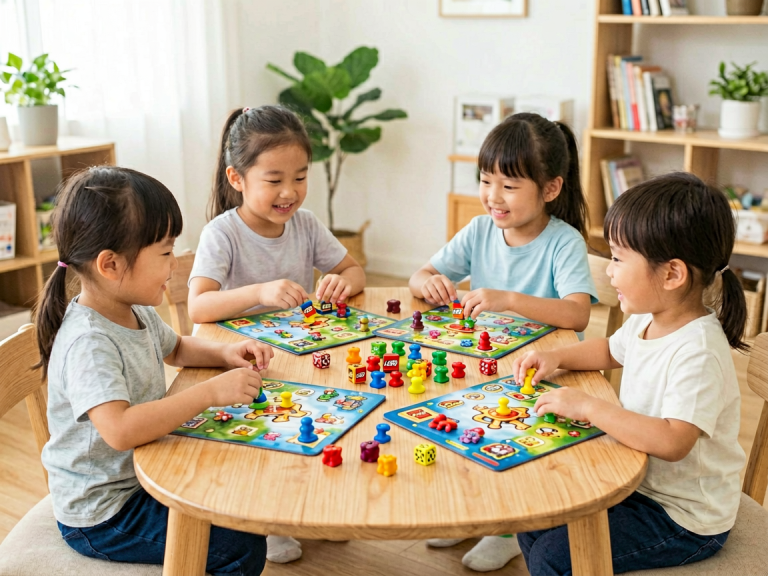
Six-year-olds are increasingly interested in playing with others, learning to take turns, follow rules, and handle both winning and losing gracefully. Board games and group activities are excellent tools for developing these social-emotional skills in a fun, low-pressure setting. Look for games that are specifically designed for ages 5–7, with simple rules and relatively short playtime. “Candy Land” and “Chutes and Ladders” are timeless classics that teach counting and patience. “The Sneaky Snacky Squirrel Game” works on fine motor skills and color matching while encouraging friendly competition. For cooperative play, consider “Hoot Owl Hoot!” where players work together to help owls reach their nest before sunrise, teaching teamwork instead of rivalry. Another fantastic choice is a memory card game with kid-friendly themes like animals or fairy tales—these strengthen concentration and visual recall. Building sets that require collaborative construction, such as large wooden blocks or a giant LEGO set, can also be a shared activity. For active group fun, backyard games like “Simon Says,” a scavenger hunt, or a simple obstacle course can be easily organized with minimal equipment. If you are looking for a gift that sparks creativity among friends, try a “story cubes” set—dice with pictures that players use to create a collaborative story. Board games do not have to be expensive; many classic games come in travel-sized versions or can be found at thrift stores. The most important factor is that the game is engaging and developmentally appropriate. Playing together strengthens bonds, teaches emotional regulation, and creates wonderful birthday party memories. As a bonus, many families love having a “family game night,” and your gift could become the centerpiece of that tradition for years to come.
Conclusion
Selecting the best birthday gift for a 6-year-old is an opportunity to contribute to their growth, happiness, and sense of wonder. Every child is unique, so consider their current interests and personality when making your choice. Some may gravitate toward art, others toward science, and still others toward physical challenges. The gifts discussed in this guide—creative arts, STEM toys, outdoor equipment, books, and board games—all share one crucial quality: they engage the child actively rather than passively. They invite exploration, problem-solving, interaction, and imagination. Avoid the trap of buying the latest electronic gadget that offers little beyond bright flashes and sounds. Instead, choose gifts that encourage the child to create, move, think, and connect with others. A thoughtful present can provide not just momentary excitement but lasting benefits that support a child’s development during these formative years. Remember, the best gift of all is your time and attention—so whenever possible, offer to play the game, read the book, or build the castle together. That shared experience is what truly makes a birthday unforgettable. Happy gifting!