The Best Building Toys for Screen-Free Play: Unlocking Creativity, STEM Skills, and Endless Fun
Introduction: Why Screen-Free Play Matters More Than Ever
In an era dominated by tablets, smartphones, and streaming services, children are spending an increasing amount of time in front of screens. The American Academy of Pediatrics recommends limiting screen time for young children, yet many parents struggle to find engaging, educational alternatives. Enter building toys—the original screen-free entertainment that has stood the test of time. Unlike digital games that provide instant gratification, building toys require patience, spatial reasoning, and hands-on problem-solving. They offer a tactile experience that no app can replicate, fostering creativity, fine motor skills, and even early engineering concepts. This article explores the best building toys for screen-free play, categorized by age group, skill level, and developmental benefits. Whether you are a parent, educator, or gift-giver, you will discover options that keep children engaged for hours—without a single pixel.
1. Classic Wooden Blocks: The Timeless Foundation
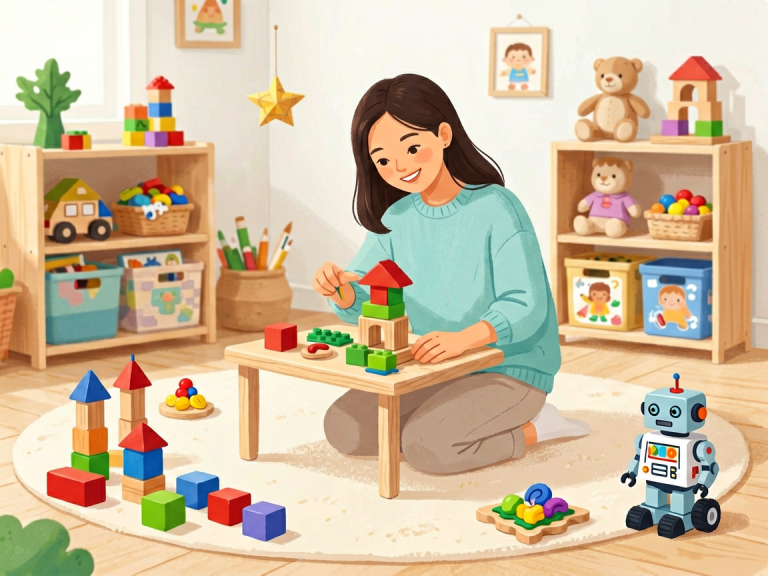
Before plastic bricks and magnetic tiles, there were simple wooden blocks. Despite their simplicity, they remain one of the most versatile building toys for children aged 18 months to 6 years. Brands like Melissa & Doug, Grimm’s, and Tegu offer wooden blocks in various shapes, sizes, and natural finishes. The beauty of wooden blocks lies in their open-ended nature: a child can stack them into towers, arrange them into castles, or use them as pretend food. Unlike sets that come with instruction manuals, wooden blocks encourage pure creativity. Research from the University of Delaware shows that block play improves spatial awareness, mathematical thinking, and language development. For screen-free play, wooden blocks are unbeatable because they require no batteries, no screens, and no predefined outcomes. They also promote social interaction when siblings or friends build together, negotiating design ideas and sharing pieces.
2. Magnetic Tiles and Connectors: Geometry Meets Magic
For children aged 3 and up, magnetic building toys have become a modern classic. Brands like Magna-Tiles, PicassoTiles, and Magformers produce colorful plastic tiles with embedded magnets along the edges. These pieces snap together with satisfying clicks, allowing children to create 2D patterns, 3D cubes, pyramids, bridges, and even complex structures like castles or rockets. What makes magnetic tiles exceptional for screen-free play is their ability to teach geometry and physics intuitively. As children build, they learn about angles, balance, and magnetic forces. A 2022 study in the Journal of Educational Psychology found that magnetic building play significantly enhanced preschoolers’ understanding of shapes and spatial visualization compared to digital geometry apps. Additionally, magnetic tiles are easy to clean, durable, and safe for small hands. Parents often report that their children spend entire afternoons constructing and reconstructing, making these toys a powerful tool for off-screen creativity.
3. Interlocking Plastic Bricks: The LEGO Phenomenon
No discussion of building toys would be complete without LEGO. Since the 1950s, LEGO bricks have captivated children worldwide with their precision interlocking system. Today, LEGO offers a vast range of sets—from simple Duplo blocks for toddlers to complex Technic sets for teens and adults. For screen-free play, LEGO provides a perfect balance between guided construction and free building. While many sets include step-by-step instructions, children can also disassemble and create original designs. The educational benefits are well documented: LEGO play enhances fine motor dexterity, spatial reasoning, problem-solving, and resilience when structures collapse. A 2019 study from MIT found that children who regularly built with LEGO showed improved executive function, including planning and cognitive flexibility. For parents seeking screen-free alternatives, LEGO is a staple because it grows with the child. A toddler might stack Duplo bricks, while a 10-year-old can engineer a working crane with gears and axles. Furthermore, LEGO encourages collaborative play—building with friends or family members fosters communication and teamwork.
4. Construction Kits: Bridges, Gears, and Real Engineering
For older children who crave more challenge, construction kits that mimic real-world engineering are ideal. Brands like K’NEX, Meccano, and Engino offer sets with rods, connectors, gears, pulleys, and motors. These toys require children to follow diagrams, measure forces, and understand mechanical principles. K’NEX, for example, allows kids to build roller coasters, Ferris wheels, and cars that actually move. Such kits are particularly effective for screen-free STEM learning. They teach physics concepts like torque, leverage, and friction in a hands-on way. A longitudinal study by the University of Cambridge found that children who engaged in construction toy play scored higher on standardized math tests in later grades. The key is that these toys demand patience and precision—traits that screen-based games often bypass. When a child builds a functional crane using K’NEX, they experience the satisfaction of a tangible result, reinforcing a love for engineering without any digital distractions.
5. Cardboard and Recycled Materials: The Ultimate DIY Building Toy
Sometimes the best building toys are not sold in stores. Cardboard boxes, paper tubes, plastic bottles, and egg cartons can become architectural wonders. The screen-free play potential of recycled materials is immense. Children can cut, tape, glue, and decorate to create forts, cars, robots, or entire cities. This type of play aligns with the Montessori and Waldorf philosophies that emphasize open-ended, natural materials. It also teaches sustainability and resourcefulness. A 2021 article in the Journal of Play highlighted that children who engage in building with recycled materials demonstrate higher creativity scores than those using only commercial toys. Parents can encourage this by keeping a “creation box” filled with clean recyclables, scissors, tape, and string. The beauty is that there is no limit—a cardboard box can become a spaceship one day and a castle the next. This type of screen-free play is also budget-friendly and can involve the whole family.
6. Wooden Railway and Track Sets: Engineering Through Stories
Wooden train sets, such as those from Brio, Thomas & Friends, and Melissa & Doug, are more than just trains—they are building toys that combine storytelling with engineering. Children lay out tracks, create bridges, tunnels, and inclines, then run little trains over them. This process teaches cause and effect (if I make the track too steep, the train will derail), spatial reasoning, and even basic physics of motion. Unlike digital train games, wooden tracks require manual assembly, which exercises fine motor skills and planning. The narrative aspect—imagining the train delivering cargo or picking up passengers—adds a layer of imaginative play. Many parents find that wooden train sets encourage sustained attention; children often spend 30–60 minutes adjusting tracks and experimenting with different configurations. This is a classic screen-free activity that has been beloved for generations.
7. Foam Building Blocks: Safe for Little Architects
For toddlers and preschoolers, foam building blocks are an excellent option. Giant foam blocks, like those from ECR4Kids or Softzone, allow children to build structures as tall as themselves without injury when they topple. These blocks are lightweight, soft, and easy to grip. They encourage gross motor development as children lift, stack, and carry them. Screen-free play with foam blocks can involve cooperative construction games, such as building a fort or a zoo for stuffed animals. The large size makes them perfect for group play in daycare or preschool settings. A study by the University of Minnesota found that large-scale block play improves spatial thinking and vocabulary—children learn words like “balance,” “over,” and “through” as they build. For screen-free homes, foam blocks offer a safe, active alternative to passive screen time.
8. How to Choose the Best Building Toys for Your Child
With so many options, selecting the right building toy depends on several factors: age, interest, and developmental goals. For children under 3, prioritize safety: no small pieces, no sharp edges. Wooden blocks, foam blocks, and magnetic tiles with encapsulated magnets are ideal. For ages 3–6, interlocking bricks (Duplo) and magnetic tiles promote creativity without overwhelming complexity. Ages 6–10 can handle smaller LEGO bricks, K’NEX, and marble run sets. For preteens and teens, consider Meccano, LEGO Technic, or architecture model kits. Also consider the child’s personality. A child who loves stories may prefer train sets or character-themed LEGO sets. A budding engineer may prefer construction kits with gears and motors. A child with high energy might enjoy large foam blocks or cardboard building that involves physical movement. Lastly, consider the frequency of use: investment in quality sets that are durable and easily expandable (like LEGO or Magna-Tiles) ensures years of screen-free play.
9. Tips for Maximizing Screen-Free Building Play
Even the best building toys need a supportive environment. Here are practical tips for parents and educators:
- Create a dedicated building space: A low table or a large floor mat where children can leave projects in progress encourages extended play.
- Rotate toys: If a child has access to every building set at once, they may become overwhelmed. Rotating a few toys each week keeps interest fresh.
- Join the play: While children should have independent play, occasional adult involvement can model new construction techniques and reinforce vocabulary.
- Embrace imperfection: Allow structures to fall. The reconstruction process teaches resilience and iterative thinking.
- Store pieces in clear containers: Organizing by type (wheels, bricks, specialty pieces) helps children plan and reduces frustration.
- Limit screen time as a rule: Set clear boundaries—for example, no screens until the building project is complete. This reinforces that building is the primary activity.
Conclusion: Building a Screen-Free Childhood
The best building toys for screen-free play are those that ignite a child’s imagination, challenge their problem-solving skills, and keep them engaged for hours. From classic wooden blocks to high-tech construction kits, each toy offers unique benefits that support cognitive, social, and physical development. In a world where screens compete for attention, these tangible, hands-on experiences are more valuable than ever. They teach children that creativity comes from their own minds and hands, not from a glowing rectangle. By investing in building toys—and by creating an environment that celebrates construction over consumption—we give children the gift of unplugged exploration. So put away the tablet, pull out the bricks, and watch as your child builds not just a tower, but a lifelong love of learning.
*(Word count: approximately 1,250)*