The Best Educational Gifts for 7-Year-Olds: Sparking Curiosity, Creativity, and a Love for Learning
Choosing the perfect gift for a 7-year-old can feel like a delightful puzzle. At this age, children are no longer toddlers but not yet pre-teens; they are in a magical stage of cognitive development where their ability to think logically, reason abstractly, and solve problems expands rapidly. Their attention spans lengthen, their reading skills blossom, and their social awareness deepens. A well-chosen educational gift does more than just entertain—it nurtures these emerging abilities, encouraging a lifelong passion for discovery. In this article, we explore the very best educational gifts for 7-year-olds, covering categories from STEM and science to literacy, arts, and hands-on exploration. Each suggestion is carefully selected to balance fun with learning, ensuring that playtime becomes a foundation for growth.
Why Educational Gifts Matter at Age Seven
At seven, children typically enter what developmental psychologist Jean Piaget called the “concrete operational stage.” They begin to understand cause and effect, can classify objects by multiple attributes, and start grasping concepts like time, space, and numbers in more sophisticated ways. They also become increasingly independent in their play, yet they still crave parental involvement and validation. Educational gifts at this age should therefore offer opportunities for independent exploration as well as collaborative interaction. They should challenge without frustrating, spark questions rather than provide all the answers, and open doors to new interests. Whether it’s a chemistry set that makes them feel like a real scientist or a book series that transports them to imaginary worlds, the right gift can plant seeds that grow into academic confidence and intellectual curiosity.
STEM and Science Kits: Hands-On Experiments for Future Innovators
Seven-year-olds are naturally curious about how the world works. They ask “why” and “how” constantly, and they love to tinker, mix, build, and test. STEM (Science, Technology, Engineering, and Math) gifts capitalize on this innate curiosity by providing structured yet open-ended activities. One outstanding choice is a beginner’s chemistry set with safe, non-toxic materials that allow children to create colorful reactions, grow crystals, or simulate volcanic eruptions. Such kits often come with illustrated instruction cards that teach basic scientific principles like pH, density, and chemical reactions. The hands-on nature of these experiments makes abstract concepts tangible—a child who sees baking soda fizz with vinegar remembers the reaction far longer than one who merely reads about it.
Another fantastic STEM gift is a build-your-own electrical circuit kit. These kits typically include wires, bulbs, buzzers, switches, and motor components that snap together on a baseboard. Children can follow plans to create a working light, a fan, or even a simple alarm. This teaches foundational engineering and physics concepts such as closed circuits, conductors, and insulators. The problem-solving aspect is equally valuable: when the bulb doesn’t light, the child must troubleshoot, testing connections and thinking logically about what went wrong—a skill that translates directly to mathematics and coding.
For children who love building, a magnetic tile set with geometric shapes—squares, triangles, hexagons—offers endless possibilities. Unlike traditional blocks, magnetic tiles click together with satisfying ease, allowing children to construct 3D structures, bridges, and even simple machines. This develops spatial reasoning, symmetry awareness, and basic architectural understanding. As children experiment with balance and weight distribution, they are essentially conducting informal physics experiments. Many brands also include pieces with wheels or axles, enabling the creation of cars and moving mechanisms.
Programming and Coding Toys: Digital Literacy in a Playful Package
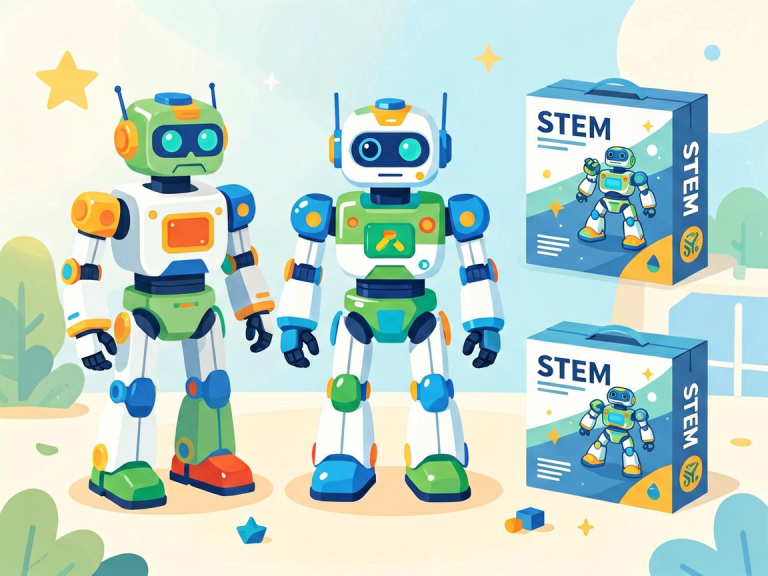
In our increasingly digital world, introducing coding concepts early helps children become creators of technology rather than passive consumers. For 7-year-olds, the best coding gifts are screen-based (or even screen-free) and use visual, block-based programming languages that eliminate the need for typing complex syntax. Coding robots like the Botley or the Dash robot are brilliant examples. Botley is a screen-free coding robot that children program using physical buttons on a remote control. They can sequence commands—forward, backward, turn left, turn right—to navigate Botley through obstacle courses. This teaches algorithmic thinking, sequencing, and debugging (when the robot doesn’t go where intended, the child must revise their code). The hands-on, no-tablet requirement makes it particularly appealing for parents seeking screen-time boundaries.
For those comfortable with some screen use, Osmo systems combine physical play with digital interaction. The Osmo Coding Starter Kit includes tangible coding blocks that children arrange on the table; the iPad’s camera reads the blocks and transforms them into on-screen actions for an animated character. This bridges the gap between the physical and virtual worlds, reinforcing that code is just a set of instructions. As children progress, they learn loops, conditionals, and even basic variables. The immediate feedback—seeing their character jump or collect gems based on their code—is highly motivating.
Alternatively, board games that teach programming concepts are gaining popularity. Games like “Robot Turtles” or “Code Master” are paper-and-card based but require players to think in terms of step-by-step instructions. In Robot Turtles, players guide their turtle through a maze by laying down cards that represent moves. They must plan several steps ahead, anticipate obstacles, and sometimes backtrack (debugging). These games are excellent for family game nights, building logic skills while encouraging turn-taking and communication.
Books and Reading Tools: Building Literacy and a World of Imagination
At age seven, many children are transitioning from learning to read to reading to learn. Their decoding skills are maturing, and they can handle chapter books with more complex plots and character development. However, every child progresses at their own pace, so the best book-related gifts support a range of reading levels. A series starter set—like “Magic Tree House,” “The Adventures of Dog Man,” or early “Percy Jackson” titles—can ignite a passion for reading. These series blend adventure, humor, and age-appropriate challenges, with each book building on the last. A 7-year-old who finishes one book is eager for the next, which naturally develops reading stamina.
Beyond fiction, non-fiction books with stunning photography appeal to the information-hungry 7-year-old. Subjects like dinosaurs, space, the human body, or animals are perennial favorites. National Geographic Kids publishes beautifully designed books with bite-sized facts, diagrams, and interactive elements like stickers or quizzes. These books not only expand vocabulary and general knowledge but also teach children how to use indexes, glossaries, and captions—important research skills.
For children who prefer tactile experiences, a subscription to a children’s magazine can be a gift that keeps on giving. Magazines like “Highlights,” “Ranger Rick,” or “National Geographic Kids” arrive monthly, offering a mix of stories, puzzles, science experiments, and crafts. The anticipation of receiving mail addressed to the child boosts their sense of ownership and excitement about reading. The short, varied articles suit shorter attention spans and model how to skim and scan for information.
Another powerful tool is a digital audio book subscription or a storytelling device like a Yoto Player or a Toniebox. These screen-free audio devices allow children to listen to professionally narrated stories by inserting cards or figurines. At age seven, children can follow complex plots even if their decoding skills lag behind, so audio books build listening comprehension, vocabulary, and narrative understanding. They also provide a calming alternative to screen time and can be enjoyed during car rides, before bed, or while drawing.
Creative Arts and Crafts: Fostering Self-Expression and Fine Motor Skills
Seven-year-olds are increasingly capable of detailed fine motor work. They can cut with scissors, draw recognizable figures, and write simple sentences. Art and craft gifts that allow them to express ideas while developing these skills are invaluable. One outstanding choice is a high-quality drawing and coloring set that goes beyond basic crayons. A set of artist-grade colored pencils, watercolor pencils, or gel pens encourages children to explore shading, blending, and color theory. Adding a sketchbook with blank pages empowers them to create their own visual stories, comics, or nature journals.
Kits for specific crafts—like weaving looms, friendship bracelet makers, or pottery wheels—are great for children who crave structured projects. Weaving, for example, teaches pattern recognition and sequencing (the same skills used in coding and math) while producing a tangible, usable item like a potholder or scarf. Similarly, a bead-making kit that uses polymer clay encourages children to design patterns, mix colors, and practice patience as they bake their creations. The end result is something they can wear or give as a gift, boosting self-esteem.
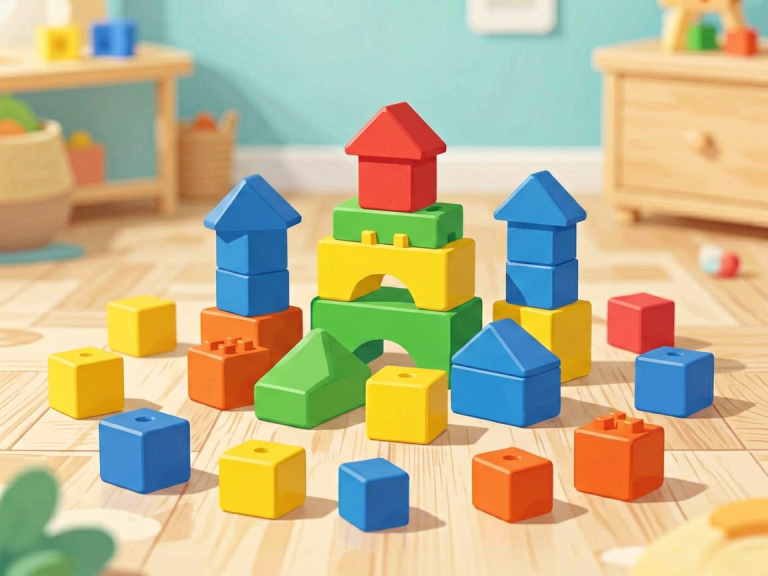
For children fascinated by architecture and design, a wooden block set with architectural elements (arches, columns, roofs) can be paired with books about famous buildings. Children can attempt to replicate the Eiffel Tower or design their own dream house. This combines creativity with engineering, spatial reasoning, and even history. Art doesn’t have to be limited to paper—3D construction art is a powerful learning tool.
Geography, History, and Culture: Expanding Horizons Beyond the Living Room
At seven, children begin to grasp that the world is vast and diverse. Gifts that introduce geography, history, and different cultures can broaden their worldview in exciting ways. A large, laminated world map with dry-erase markers allows children to draw routes, mark places they’ve learned about, or track the migration of animals. Many maps come with fun facts about each country, including animals, landmarks, and foods. Pairing the map with a globe that lights up turns learning into a discovery game. Children can spin the globe, find a country, and then look up its flag or traditional music online.
Board games with geography themes are especially effective. Games like “Ticket to Ride: First Journey” or “The Scrambled States of America” require players to locate cities, states, or countries on a map, thereby reinforcing location memory. “The World Game” is a card game where players compare country facts like population, area, and GDP, turning statistics into competition. These games make data feel relevant and memorable.
For history, consider a chronological timeline puzzle that depicts key events from ancient Egypt through the space age. As children fit the pieces together, they naturally learn the order of historical periods. Alternatively, DIY archaeology kits (mock dinosaur bones to excavate or ancient coin replicas to unearth) combine sensory play with lessons about past civilizations. The act of brushing away “dirt” to reveal a fossil feels like a real discovery, and the information card that follows teaches facts in a palatable way.
Puzzles, Logic Games, and Strategy Toys: Sharpening Critical Thinking
Seven-year-olds are developmentally ready for games that require planning, deduction, and multiple-step thinking. These gifts strengthen executive function skills—working memory, flexibility, and self-control—that are fundamental to academic success. Three-dimensional puzzles like a Rubik’s Cube or a wooden brain teaser set (with interlocking pieces that must be separated and reassembled) challenge spatial reasoning and persistence. There is no better lesson than the satisfaction of solving a tricky puzzle after repeated attempts.
Logic-based board games designed for ages 7–9 are plentiful. “Rush Hour Jr.,” for example, involves sliding cars and ice cream trucks around a grid to free a stuck vehicle. Each challenge card increases in complexity, requiring players to think ahead and visualize moves. “Gravity Maze” combines marble runs with logic puzzles; children must arrange towers to guide a marble to its target. These games explicitly teach cause and effect and strategic planning. They are also highly replayable because the challenge cards offer hundreds of variations.
Math-based games can turn dreaded arithmetic into fun. “Sum Swamp,” “Math Dice Jr.,” or “Zeus on the Loose” incorporate addition, subtraction, and early multiplication into fast-paced play. The competitive element motivates children to do mental calculations quickly, building fluency without worksheets. Even a simple deck of cards can become a math game (e.g., “War” with sums). The key is that children are doing math “in disguise,” which reduces anxiety and increases confidence.
Music and Performing Arts: Supporting Brain Development and Emotional Expression
Music engages both hemispheres of the brain, improves auditory processing, and enhances memory. For a 7-year-old, the best musical gift is often one that allows immediate success. A high-quality beginner’s keyboard with light-up keys, pre-recorded songs, and learning software can guide a child through basic recognition of notes and rhythm. Unlike a traditional piano lesson, which may feel intimidating, a guided keyboard lets children play simplified versions of popular songs quickly, building motivation. Some keyboards also include percussive sounds, allowing children to compose simple drumbeats or melodies.
Alternatively, a percussion instrument set—including a xylophone, hand drum, maracas, triangle, and bells—is ideal for children who love rhythm and movement. Seven-year-olds can follow along with song play-along videos or create their own beats. Making music with one’s hands and body strengthens coordination and provides a healthy emotional outlet. Many children find that playing a drum or shaking a shaker helps them regulate intense feelings.
For children who love pretending and storytelling, a simple puppet theater with hand puppets or finger puppets encourages dramatic play. Putting on a puppet show requires children to write a simple script, remember sequence, and express emotion through voice and movement. This supports language development, narrative skills, and empathy as they imagine what their character feels. It’s also a wonderful gift for siblings or friends to use together.
Outdoor and Active Learning: Connecting Education with Physical Movement
Learning doesn’t have to happen indoors. Seven-year-olds have abundant energy and need physical activity to stay focused and healthy. Educational outdoor gifts combine movement with discovery. A nature explorer kit—including a magnifying glass, tweezers, insect observation jar, field guides, and a compass—turns every walk into a scientific expedition. Children can collect leaves, identify birds, or start a rock collection. This develops observational skills, classification, and a sense of wonder about the natural world. Adding a kids’ camera (durable and simple to use) allows them to document their findings, creating a nature journal that integrates writing and art.
A gardening set with child-sized tools, seeds, and a small raised bed planter teaches biology and responsibility. Watching a seed sprout, develop leaves, and eventually produce a tomato or sunflower is a profound lesson in life cycles, photosynthesis, and patience. Children learn to care for something outside themselves, and the tangible reward of eating what they’ve grown is deeply satisfying.
For sports-oriented children, balance bikes or scooters with a twist—like a pedal-free bicycle that teaches balance before pedaling—combine physical coordination with problem-solving. Even a basic kite can teach aerodynamics: Why does the kite fly when the wind blows? What happens if the tail is too short? These everyday questions form the foundation of scientific inquiry.
Final Thoughts: Choosing the Right Gift for the Individual Child
While this list covers a wide range of categories, the very best educational gift for a 7-year-old depends on the individual child’s interests, temperament, and existing skills. A child who already loves reading might appreciate a book-themed escape room game more than a science kit. A highly active child might thrive with a construction kit that allows active building rather than a sedentary puzzle. The key is to observe what naturally engages the child—asking them open-ended questions, noting what they talk about during playdates, or seeing what types of videos or shows they prefer.
Also consider the role of parental involvement. Some gifts, like a chemistry set or a coding robot, benefit from an adult sitting alongside to explain and facilitate. Others, like a well-designed puzzle book or a set of superhero chapter books, are ideal for independent solo play. A balanced mix of both kinds ensures that the child can enjoy learning alone, while also building relationships through shared discovery.
Ultimately, an educational gift is not about drilling facts or pushing a child to be “smart.” It is about creating joyful experiences that make learning a natural, exciting part of everyday life. When a child builds a magnetic structure that holds, solves a logic puzzle to free the red car, or reads a book about space and then gazes at the stars, they are not just playing—they are building the neural pathways that will support them for years to come. These best educational gifts for 7-year-olds are investments in curiosity, resilience, creativity, and a lifelong love for learning.