Beyond Screens: The Vital Role of Screen-Free Toys in Nurturing 5-Year-Olds
Introduction
In an era where digital devices dominate children's attention from an alarmingly early age, the simple, enduring power of screen-free toys has never been more critical. For a 5-year-old, the world is a kaleidoscope of discovery, imagination, and rapid cognitive development. Yet, the magnetic glow of tablets, smartphones, and television screens often hijacks this precious period, offering passive entertainment in place of active, hands-on learning. As parents, educators, and caregivers, we must pause and ask ourselves: what are we trading away when we hand a five-year-old a screen? The answer is profound. We risk stifling creativity, diminishing attention spans, and undermining the foundational skills of social interaction, problem-solving, and physical coordination. Screen-free toys are not merely nostalgic alternatives; they are essential tools for holistic development. This article explores why these toys matter so deeply at age five, categorizes the most beneficial types, and offers practical guidance for selecting and integrating them into a child’s daily life.
Why Screen-Free? The Developmental Imperative
The Critical Window of Age Five
Five-year-olds are at a unique developmental crossroads. They have outgrown the purely sensory play of toddlerhood yet are not ready for the abstract reasoning of older children. This is the age of blossoming language, burgeoning social skills, and the first serious forays into logical thinking. Neuroscientific research shows that the brain’s prefrontal cortex—responsible for impulse control, planning, and problem-solving—undergoes rapid growth during early childhood. Screen-based activities, particularly those with fast-paced, reward-driven mechanics (like many apps and videos), can actually short-circuit this development. Instead of fostering sustained attention and deep engagement, screens condition children to expect instant gratification and constant novelty. Screen-free toys, by contrast, demand patience, repetition, and active participation. They teach a child that frustration is part of the learning process and that mastery comes through effort.
The Dangers of Screen Overload
The American Academy of Pediatrics recommends no more than one hour of high-quality screen time per day for children aged 2 to 5. Yet, many 5-year-olds far exceed this limit. Excessive screen exposure at this age has been linked to delayed language development, reduced empathy, poorer motor skills, and increased difficulty with emotional regulation. Beyond these clinical findings, there is a subtler cost: the loss of unstructured, imaginative play. When a child watches a cartoon or plays a digital game, the narrative and rules are pre-packaged. The child is a consumer, not a creator. In contrast, a set of wooden blocks or a dress-up trunk forces the child to author their own story, negotiate roles with friends, and navigate the messy, glorious unpredictability of open-ended play. This is where true cognitive and emotional growth happens.
Categories of Screen-Free Toys for 5-Year-Olds
Choosing the right screen-free toys means looking for open-ended, age-appropriate options that challenge without overwhelming. Below are the most powerful categories, each targeting specific developmental domains.
Construction and Building Toys: Engineering the Mind
At age five, children are natural builders. Their spatial reasoning, fine motor control, and understanding of cause and effect are rapidly maturing. Construction toys are the perfect medium to channel this energy.
- Classic Wooden Blocks: A set of simple, unpainted wooden blocks in various shapes remains one of the most versatile tools for a 5-year-old. Unlike plastic bricks with specific connection points, wooden blocks force a child to balance, stack, and experiment with gravity. Building a tower that doesn’t topple requires patience, trial and error, and a growing sense of physics. When multiple children play together, they must negotiate space, share resources, and collaborate—skills no app can teach.
- Magnetic Tiles: These translucent, geometric shapes that snap together with magnets are a modern marvel. They allow for three-dimensional construction—bridges, castles, rockets—that can be easily modified. The instant connection provides satisfying feedback, while the freedom to create asymmetrical or vertical structures stretches a child’s imagination. Magnet tiles also introduce basic concepts of geometry, symmetry, and structural integrity.
- Interlocking Bricks (e.g., LEGO Duplo or standard LEGO for older 5s): LEGO-style bricks are a staple for good reason. They refine fine motor skills as children press pieces together and pull them apart. Following simple instructions (or ignoring them entirely) teaches sequencing, pattern recognition, and perseverance. The ability to create vehicles, animals, or entire cities gives a powerful sense of accomplishment.
Imaginative Play and Pretend Toys: The Gateway to Empathy
Five-year-olds are masters of pretend play. They use it to process complex emotions, rehearse social roles, and build language. Screen-free toys that fuel the imagination are irreplaceable.
- Dress-Up Costumes and Props: A simple cape, a doctor’s kit, a cardboard crown, or a toy kitchen can transform a living room into a castle, a hospital, or a restaurant. Unlike a digital “dress-up” game where children merely click on outfits, real costumes require physical coordination, decision-making, and narrative construction. “What kind of king am I? Who is my patient? What will we cook for dinner?” These questions spark elaborate dialogues and scenarios.
- Puppets and Puppet Theaters: Hand puppets or finger puppets allow a child to project emotions onto another character. A shy child might speak more freely through a lion puppet; an angry child can work through frustration by having the puppet “argue” and then resolve the conflict. Puppet play is a powerful vehicle for social-emotional learning, as children practice turn-taking, perspective-taking, and conflict resolution.
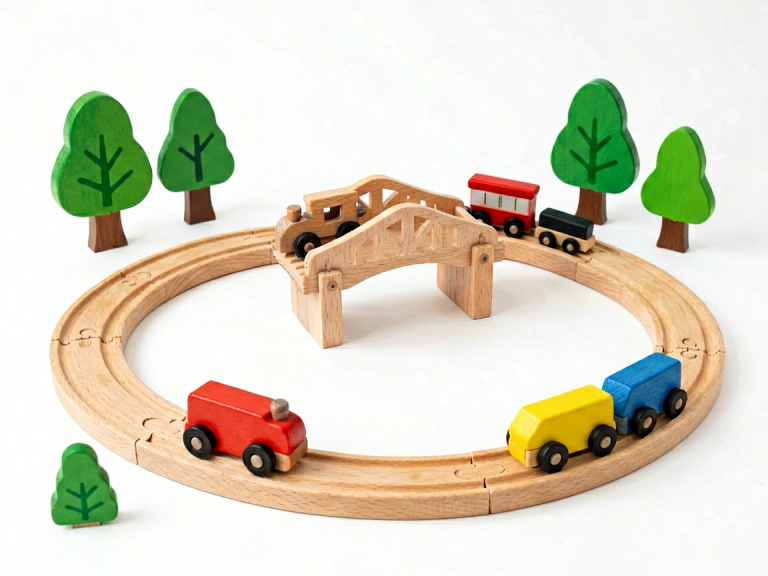
- Miniature Worlds (e.g., dollhouses, farms, train sets): Small-scale environments give children control over a whole universe. A farm set with animals, fences, and a barn lets a child tend to “animals,” plan their day, and invent stories. A simple dollhouse with furniture encourages family role-play. These toys teach organization, cause and effect (if the sheep jumps the fence, what happens?), and empathy as children care for their tiny inhabitants.
Art and Creativity Supplies: Unstructured Expression
Art is not just about the finished product; it’s about the process. For a 5-year-old, finger painting, cutting, gluing, and drawing are fundamental ways to understand the world and express inner thoughts.
- Good-Quality Crayons, Markers, and Paints: Provide a variety of mediums. Crayons offer control; watercolors teach blending and patience; finger paints invite sensory exploration. Resist the urge to give coloring books with pre-drawn lines—blank paper is infinitely more valuable. A 5-year-old who draws her own family portrait is not only practicing fine motor skills but also developing self-concept and visual literacy.
- Play-Dough or Modeling Clay: Squeezing, rolling, and shaping dough builds hand strength crucial for later handwriting. But beyond the physical, play-dough is a canvas for endless creativity. A child can make a pizza, a snake, a flower, or a monster—and then squish it and start again. This low-stakes environment encourages experimentation without fear of failure.
- Scissors, Glue, and Collage Materials: With child-safe scissors, a 5-year-old can cut paper, fabric scraps, yarn, or leaves. Gluing these onto a cardboard base creates a collage that tells a story. The decision-making process—what to cut, where to place, how to overlap—engages executive function skills like planning and organizing.
Outdoor and Active Play Toys: Physical Foundations
Five-year-olds have boundless energy and a biological need for vigorous physical activity. Screens do the opposite: they induce stillness. Outdoor and active toys channel this energy into healthy development.
- Balance Bikes and Scooters: A balance bike (without pedals) teaches a 5-year-old the core skill of balancing before transitioning to a pedal bike. Scooters develop leg strength and coordination. These toys offer a sense of speed and freedom that boosts confidence and spatial awareness.
- Balls, Hula Hoops, and Jump Ropes: Simple ball games—throwing, catching, kicking—teach hand-eye coordination, social turn-taking, and gross motor control. Hula hoops challenge core strength and rhythm. Jump ropes build endurance and timing. All of these require no batteries, just space and a willing playmate.
- Sand and Water Play Toys: A sandbox with shovels, buckets, sieves, and molds is a miniature laboratory for physics and creativity. Children learn about volume, texture, and cause and effect as they dig, pour, and sculpt. Water tables offer similar benefits with the added allure of liquid dynamics. These sensory experiences are deeply calming and focus the mind.
Board Games and Puzzles: Structured Thinking
Not all screen-free play needs to be wild and unstructured. Board games and puzzles teach patience, logic, and social skills.
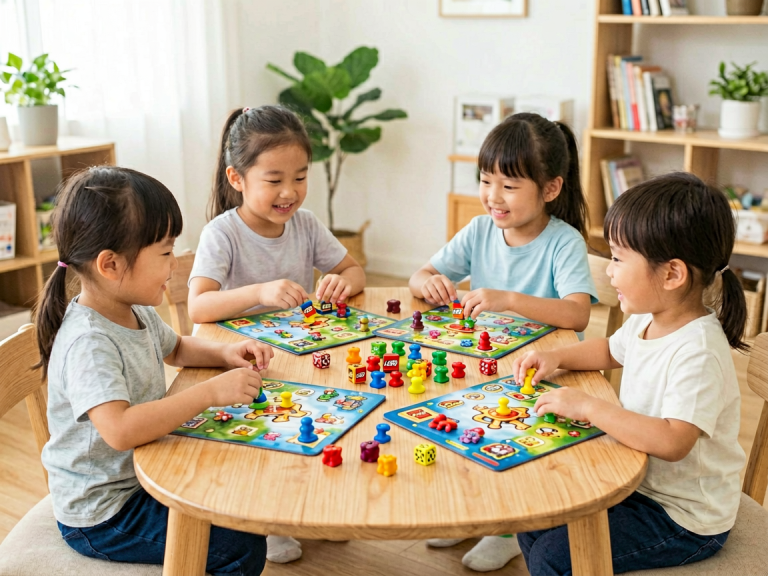
- Simple Cooperative Board Games: Games like “Hoot Owl Hoot!” or “The Sneaky, Snacky Squirrel Game” require players to work together toward a common goal rather than compete. This reduces frustration and teaches teamwork, turn-taking, and emotional regulation when things don’t go as planned.
- Jigsaw Puzzles: A 20- to 60-piece jigsaw puzzle challenges a 5-year-old’s visual discrimination, spatial reasoning, and persistence. Completing a puzzle provides a tangible sense of achievement and teaches a child to look for patterns and break a large problem into smaller parts.
- Memory and Matching Games: Classic memory card games sharpen concentration and working memory. They are also naturally social, as children take turns and support each other’s recall.
How to Choose the Right Screen-Free Toys
Selecting toys for a 5-year-old can be overwhelming given the sheer volume of products marketed to this age group. Here are guiding principles.
Prioritize Open-Endedness
The best toys are those that can be used in multiple ways. A set of plain wooden blocks is more valuable than a plastic castle that can only be assembled one way. The former invites a child to become an architect, while the latter offers a fixed, limited experience. Look for toys that have no single “correct” purpose.
Avoid Over-Stimulation
Many modern toys flash lights, play songs, and offer voice prompts. Ironically, these “interactive” features often reduce the child’s need to think. A toy that does all the work is not teaching anything. The most effective toys are quiet. They let the child’s own imagination supply the sound effects, dialogue, and plot.
Consider Durability and Safety
Five-year-olds are still developing impulse control. Toys should be sturdy, non-toxic, and free of small parts that could be choking hazards. Wood, sturdy cardboard, and high-quality plastic are good choices. Avoid toys with sharp edges or easily detachable magnets.
Rotate, Don’t Overwhelm
Having too many toys can actually reduce a child’s engagement. Research suggests that when children have fewer options, they play more deeply and creatively. A good strategy is to rotate a selection of 10–12 toys every few weeks. The “new” old toys suddenly feel fresh again, and the child rediscovers their potential.
The Parent’s Role in Fostering Play
Even the finest screen-free toys are ineffective if left in a corner while a tablet beckons. Parents must actively model and facilitate play.
Be Present, Not Directive
A child building a tower with blocks might appreciate a parent sitting nearby, occasionally asking open-ended questions: “What do you think will happen if you add another block on top?” or “Tell me about your castle.” Avoid telling the child what to do. The goal is to support their autonomy, not to take over the play.
Set Screen Boundaries
The most powerful influence on a child’s screen habits is the parent’s own behavior. If a child sees an adult constantly scrolling on a phone, they will naturally want to do the same. Establish clear screen-free zones (e.g., the dinner table, bedrooms) and screen-free times (e.g., the first hour after school). Make the home environment rich with inviting, accessible screen-free toys. Sometimes a child simply needs to be reminded that the blocks are there, waiting to become a spaceship.
Encourage Outdoor and Social Play
Screen-free toys are most powerful when used with others. Arrange playdates where the only entertainment is a sandbox, a box of dress-up clothes, or a jigsaw puzzle. The social negotiation, laughter, and occasional disagreements that arise are invaluable lessons. Outdoor play, in particular, should be a daily priority, weather permitting.
Conclusion
As we navigate the digital age, the humble screen-free toy stands as a quiet but powerful rebel. It does not flash, beep, or demand a subscription. Yet it teaches a 5-year-old how to think, feel, create, and connect. A wooden block becomes a skyscraper. A crayon becomes a dragon. A dress-up cape becomes a superhero’s armor. In these simple transformations, children learn the most important lesson of all: that they are not passive consumers of entertainment, but active makers of their own worlds. For parents, the choice is not about rejecting technology entirely, but about prioritizing what matters most. By filling our children’s lives with open-ended, screen-free toys—and by being present to play alongside them—we give them the greatest gift of childhood: the freedom to imagine, to fail, to try again, and to grow into resilient, creative, and curious human beings. The screen can wait. The blocks cannot.