The Best Fidget Toys for Newborns: Safe Sensory Stimulation for Early Development
Introduction
When we hear the term "fidget toy," we often think of stress-relieving gadgets for adults—spinners, cubes, or squishy balls. But for newborns, the concept takes on a completely different meaning. A newborn’s world is one of discovery, where every texture, sound, and movement is a new experience. The best fidget toys for newborns are not about relieving anxiety; they are about providing gentle, safe, and developmentally appropriate sensory stimulation. These toys help infants explore their environment, develop fine motor skills, and even self-soothe. However, choosing the right toys for a baby under three months old requires careful attention to safety, material, and size. In this article, we will explore why fidget toys matter for newborns, discuss essential safety guidelines, and present a curated list of the best options available on the market today. By the end, you will understand how to turn simple objects into powerful tools for your baby’s early growth.
Why Fidget Toys Matter for Newborns
Newborns are born with a natural instinct to grasp and explore. Their hands are one of the first tools they use to interact with the world. Fidget toys designed specifically for this age group serve multiple purposes. First, they encourage the development of hand-eye coordination. When a baby reaches for a rattle or a textured ring, they are practicing the connection between what they see and what they can touch. Second, these toys provide sensory feedback. Different materials—soft, bumpy, crinkly, or silky—offer varied tactile experiences that help wire the brain for future learning. Third, fidget toys can be a source of comfort. A soft, chewable teether or a gently vibrating plush can soothe a fussy baby by providing oral or tactile stimulation. Finally, these toys introduce cause and effect. A rattle that makes sound when shaken teaches the baby that their actions have consequences—a fundamental cognitive milestone. Even though newborns cannot yet consciously understand this, repeated exposure lays the groundwork for later problem-solving skills.
It is important to note that the term "fidget" in this context does not imply spinning or clicking parts that could break off. Instead, it refers to toys that invite repetitive, soothing motions such as squeezing, shaking, or mouthing. For a newborn, the best fidget toys are those that are easy to hold (or that can be held by a parent), safe to chew (since babies explore with their mouths), and free of small parts. They should also be easy to clean, because newborns have immature immune systems and frequently drool or spit up on their belongings.
Key Safety Considerations for Newborn Fidget Toys
Before diving into specific products, it is crucial to establish safety guidelines. The American Academy of Pediatrics (AAP) emphasizes that toys for infants should be free of sharp edges, toxic materials, and small detachable parts that pose choking hazards. For newborns, the following criteria are non-negotiable:
- Material Safety: All toys should be made from non-toxic, BPA-free, phthalate-free, and lead-free materials. Look for products labeled as food-grade silicone, organic cotton, or natural wood with safe finishes. Avoid anything with a strong chemical smell.
- Size and Shape: Toys should be large enough that they cannot fit entirely into a baby’s mouth. A good rule of thumb is that no part should be smaller than 1.25 inches in diameter. Avoid toys with long strings or ribbons that could wrap around a baby’s neck.
- Durability: Newborns are surprisingly strong for their size. They will shake, drop, and mouth toys vigorously. Ensure that toys are well-constructed and that no parts can be pulled off. Regularly inspect for wear and tear.
- Ease of Cleaning: Since newborns’ toys will inevitably end up on the floor, in their mouths, and possibly in the diaper bag, they must be easy to sanitize. Dishwasher-safe or machine-washable toys are ideal.
- No Batteries or Magnets: For newborns, avoid any toy that requires batteries (unless it is a parent-controlled device) or contains magnets, as these can be dangerous if swallowed.
By following these guidelines, you can ensure that your baby’s fidget toys are not only fun but also completely safe.
Top 5 Best Fidget Toys for Newborns
Below is a carefully selected list of the best fidget toys for newborns, based on safety, developmental benefits, and parent reviews.
1. Silicone Teething Rings with Textured Surfaces
Teething rings are a classic fidget toy for a reason. Look for rings made from 100% food-grade silicone, which is soft enough for tender gums but sturdy enough to withstand chewing. The best options have multiple textures—ridges, bumps, and smooth sections—to provide varied tactile sensations. For a newborn who is not yet teething, these rings still offer excellent oral exploration. Many come in bright, high-contrast colors (black, white, and red) that are visually stimulating for newborns whose color vision is still developing. Brands like Sophie la Girafe or Comotomo offer excellent choices. These toys are easy for tiny hands to grasp and can be attached to a pacifier clip or car seat strap to prevent drops.
2. Crinkle Cloth Books or Soft Fabric Toys
Newborns are captivated by sounds, and crinkle toys provide a gentle, paper-like noise that delights babies. Soft fabric books or small plush toys with crinkle panels inside are perfect because they are lightweight, machine-washable, and have multiple sensory elements: different fabrics (fleece, corduroy, satin), ribbons, and tags that babies love to explore. These toys encourage batting and reaching, which strengthen arm and shoulder muscles. Additionally, they often include high-contrast patterns or simple animal faces that promote visual tracking. The crinkle sound is a form of auditory fidgeting—babies will repeatedly squeeze or shake the toy to hear the noise, building early cause-and-effect understanding.
3. Wrist Rattles and Foot Finder Bands
Newborns often don’t realize they have hands and feet until about two months of age. Wrist rattles and foot finder bands are brilliant fidget toys that attach securely to a baby’s wrists or ankles. They typically feature a soft, stretchy band (velcro or elastic) and a small rattle or bell that jingles with movement. These toys encourage babies to move their limbs, which builds muscle strength and body awareness. The gentle sound rewards movement, making it a natural fidget toy. Ensure the bands are not too tight and that the rattle is securely attached. Brands like Sassy and Lamaze produce excellent versions. This type of toy is particularly useful for tummy time, as the noise encourages the baby to lift their head and look around.
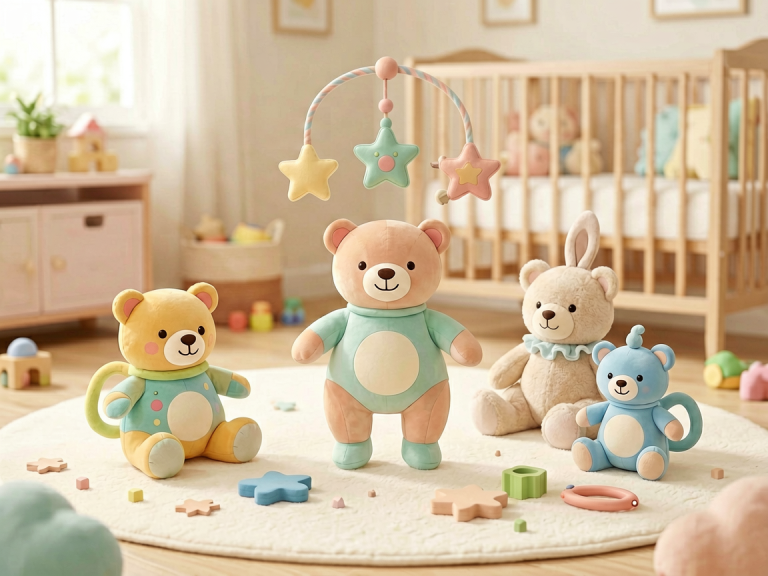
4. Soft, Weighted Stuffed Animals (for Comfort)
While traditional weighted blankets are not safe for infants, there are specially designed weighted stuffed animals for newborns. These plush toys have a small, evenly distributed weight (usually less than 1 pound) that provides gentle pressure, promoting a sense of security and calm. The best ones are made from ultra-soft, hypoallergenic materials and have a removable, washable cover. The weight acts as a form of deep pressure stimulation, which can help regulate a baby’s nervous system and reduce fussiness. Some models also have a gentle, timed vibration that simulates the feeling of being held or rocked. These toys are ideal for naptime or quiet play, but always follow safe sleep guidelines: never place loose plush toys in the crib for unsupervised sleep; instead, use them during supervised awake time.
5. Simple Grasp-and-Rattle Wooden Toys (with Safe Finishes)
Wooden toys have a timeless appeal and are excellent for sensory development. Choose unpainted or non-toxic, water-based painted wooden rings, rattles, or small animal figures. Wood provides a different temperature and weight compared to plastic or fabric, offering unique tactile feedback. Newborns enjoy the slight heft and the smooth, grainy texture. Simple wooden rattles with internal beads produce a pleasant, soft clacking sound. Look for toys that are rounded and smooth, with no splinter risks. Brands like PlanToys or Hape offer infant-safe wooden toys. Because they are easy to wipe clean and extremely durable, wooden fidget toys can last through multiple children.
How to Introduce Fidget Toys to Your Newborn
Introducing these toys should be a gentle, interactive process. During the first few weeks, your newborn may not show obvious interest—that is perfectly normal. Start by placing a toy in your baby’s hand while they are lying on their back. Gently guide their fingers over the texture. Shake a rattle near their ear (but not too close) to see if they turn their head toward the sound. Always supervise playtime. As your baby grows, around two months, you will notice more intentional grasping. Offer one toy at a time to avoid overwhelming them. Rotate toys every few days to maintain novelty. Remember that newborns tire easily; five to ten minutes of focused play is plenty. If your baby becomes fussy or turns away, respect their cues. The goal is not to force stimulation but to provide a rich, safe environment that supports natural curiosity.
Conclusion
The best fidget toys for newborns are not complex gadgets—they are simple, safe objects that invite exploration and comfort. From silicone teething rings to crinkle cloth books, each toy serves a unique purpose in supporting early sensory development, motor skills, and emotional regulation. By prioritizing safety, choosing age-appropriate designs, and engaging with your baby during play, you can turn fidget time into valuable bonding and learning opportunities. Remember that every baby is different; what works for one may not captivate another. Observe your newborn’s preferences and let their reactions guide your choices. With mindful selection and loving interaction, these toys can become cherished tools in your baby’s first journey of discovery.