The Best Toys for Kids Who Like Science: Sparking Curiosity Through Play
Introduction: The Power of Play in Scientific Discovery
Children are natural-born scientists. From the moment they can grasp objects, they begin exploring the world through observation, experimentation, and trial and error. A toddler dropping a spoon from a high chair is not just being messy—they are testing gravity. A preschooler mixing mud and water is not merely playing in the dirt—they are exploring states of matter. The best toys for kids who like science do far more than entertain; they channel this innate curiosity into structured, engaging learning experiences that can shape a lifelong passion for discovery.
In an age dominated by screens and passive entertainment, finding toys that actively engage a child’s mind is more important than ever. The right science toy can transform a rainy afternoon into a laboratory of wonder, a birthday gift into the seed of a future career, and a simple play session into a deep understanding of how the universe works. But with countless products on the market claiming to be “educational,” how can parents and gift-givers identify the truly exceptional ones? This article explores the best science toys across multiple categories, from chemistry sets to robotics kits, and explains why each one deserves a place in a young scientist’s toy box.
Hands-On Chemistry: The Magic of Reactions
The Classic Chemistry Set – A Timeless Gateway
No list of science toys is complete without mentioning the chemistry set. Modern versions have evolved far beyond the basic test tubes and baking soda of decades past. One standout is the Thames & Kosmos Chem C3000, which offers over 350 experiments covering topics from electrochemistry to chromatography. What makes this set exceptional is its comprehensive manual, which not only guides children through each experiment but explains the underlying principles in age-appropriate language. Kids can create glowing solutions, grow crystals, and even build a working battery from household materials. The set includes safety goggles and detailed instructions that emphasize proper lab protocol, teaching responsibility alongside science.
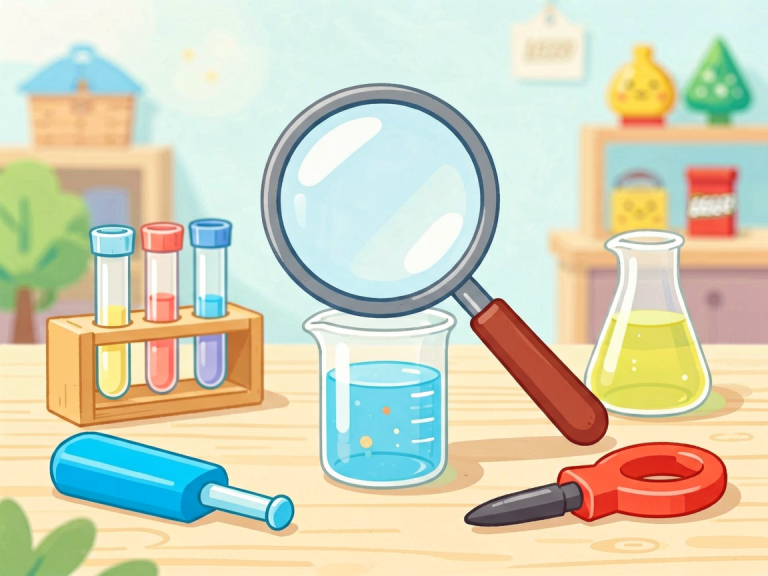
For younger children (ages 6–9), the Learning Resources Primary Science Lab Set provides a gentler introduction. With oversized test tubes, a magnifying glass, and simple activity cards, it allows kids to mix colored liquids, observe floating and sinking, and make predictions about what will happen. The key here is that the toy is designed to be open-ended—children can invent their own experiments, fostering creativity within a scientific framework.
Crystal Growing Kits – Patience and Beauty
Crystal growing kits occupy a special niche because they teach two critical scientific concepts: supersaturation and crystallization. The 4M Crystal Growing Experiment kit allows kids to grow their own colorful crystals in just a few days. Watching tiny seed crystals form and expand into geometric shapes is nothing short of magical. But the real learning happens when children ask, “Why do some crystals grow faster than others?” or “What makes the color change?” Parents can guide them to understand temperature, concentration, and impurities as variables. These kits also introduce the scientific method: the child forms a hypothesis, sets up the experiment, observes results, and adjusts conditions for the next attempt.
Physics in Action: Mechanics, Motion, and Energy
Building and Engineering Kits – The Foundation of Innovation
The LEGO Technic series deserves a special mention. While standard LEGO bricks encourage creativity, Technic sets introduce gears, axles, pulleys, and pneumatics. A child who builds the LEGO Technic Bugatti Chiron (with its working gearbox and suspension) gains an intuitive understanding of mechanical advantage and torque. More affordable options like the LEGO Classic Creative Bricks allow children to design their own machines, learning iteratively through failure and redesign.
For older children (ages 10+), the K'NEX Education Intro to Simple Machines kit is exceptional. It includes 221 pieces specifically designed to build levers, pulleys, inclined planes, wheels and axles, and wedges. A built-in spring scale lets kids measure force, so they can quantify how much easier it is to lift a load using a pulley versus lifting it directly. This hands-on quantification transforms abstract physics concepts into tangible experiences. The kit comes with detailed lesson plans that align with STEM education standards, making it an excellent choice for homeschooling or after-school enrichment.
Electronics and Circuits – Lighting Up the Mind
Understanding electricity is fundamental to modern science, and toys that teach circuits are both engaging and empowering. The Snap Circuits Jr. SC-100 kit is a perennial favorite. Using color-coded, snap-together components, children can build over 100 projects, including a working doorbell, a light-sensitive alarm, and a flying fan. The snap design eliminates the frustration of fiddling with wires, allowing kids to focus on the logic of circuit design. What makes this toy truly educational is the failure mode: when a project doesn’t work, children must troubleshoot, checking connections and polarity. This process mirrors real-world engineering.
For a more advanced option, the littleBits Electronic Music Inventor Kit combines electronics with creativity. Children build their own synthesizer by snapping together modules that control pitch, volume, and modulation. Along the way, they learn about resistors, capacitors, and signal processing—without realizing they’re studying physics. The kit includes a companion app that shows the schematic diagram of each project, bridging the gap between physical building and abstract representation.
Life Sciences: Exploring Biology and the Natural World
Microscopes – A Window Into the Invisible
A quality microscope remains one of the most transformative science toys a child can own. The AmScope 120X-1200X 52-pcs Kids Student Microscope is an excellent entry-level choice. It includes prepared slides of plant cells, insect parts, and animal tissues, but the real wonder comes when children prepare their own samples. A drop of pond water under the microscope reveals a bustling ecosystem of paramecia, algae, and rotifers. A scraped cheek cell shows the nucleus and membrane. This direct observation makes biology visceral and unforgettable.
For a modern twist, the Tomlov Digital Microscope connects to a smartphone or tablet, allowing children to capture images and videos of their discoveries. The 50x–1000x zoom capability reveals the intricate scales on a butterfly wing or the micro-structure of a leaf. Sharing these images with friends or uploading them to science forums can extend the learning beyond the toy itself.
Bug Catching and Observation Kits – Respecting Living Things
The Nature Bound Bug Catcher and Habitat Bucket is more than just a container for insects. It includes a magnifying lid, a tweezer tool, and a small ventilated carrying case. Children learn to safely catch and observe beetles, ants, and crickets, then release them after a few hours. This teaches respect for living creatures and introduces concepts of habitat, food chains, and adaptation. Accompanying the kit with a simple journal encourages kids to record observations: “The ant carried a crumb three times its size.” “The roly-poly curled up when touched.” These are the raw materials of scientific inquiry.
Space and Astronomy: Reaching for the Stars
Telescopes – Bringing the Cosmos Home
A beginner telescope is a gift that literally expands a child’s universe. The Celestron PowerSeeker 70EQ Refractor Telescope is affordable and powerful enough to reveal the rings of Saturn, the moons of Jupiter, and the craters of the Moon. The equatorial mount introduced in this model teaches children about celestial coordinates—a real-world application of geometry and astronomy. What makes this toy special is the accompanying software (The Sky, Level 1) that helps identify stars, planets, and constellations. On a clear night, a child who spots the Andromeda Galaxy for the first time understands, in a profound way, that they are part of something vast.
For younger children, the Educational Insights GeoSafari Jr. Talking Telescope offers a screen-free experience with audio facts about space. But it’s the hands-on adjustment of the focus knob and the thrill of “finding” a planet that builds genuine curiosity.
Rocket Kits – Newton’s Laws in Action
Building and launching a model rocket is one of the most exciting science activities a child can do. The Estes Tandem-X Launch Set includes two rockets and a launch pad. Children assemble the rockets from balsa wood and plastic fins, learning about aerodynamics and stability. The launch itself demonstrates Newton’s Third Law: for every action, an equal and opposite reaction. Watching the rocket soar 800 feet into the air, then deploy a parachute to return safely, is a lesson in physics that no textbook can replicate. The process also teaches patience—the rocket must be assembled carefully, the engine inserted correctly, and the launch sequence followed precisely.
Coding and Robotics: The Science of the Future
Programmable Robots – Learning Logic Through Play
Coding is increasingly recognized as a fundamental science skill, and toys that teach programming without a screen are particularly valuable. The Botley 2.0 Coding Robot Activity Set is designed for ages 5 and up. Children use a remote programmer to input a sequence of commands (forward, turn, loop, and even object detection). Botley then executes the code. The toy teaches sequencing, debugging, and algorithmic thinking—the same cognitive skills used by software engineers. The activity cards guide children through increasingly complex challenges, such as navigating a maze or avoiding obstacles.
For older children (ages 8+), the LEGO Boost Creative Toolbox combines building with coding. Kids construct a robot, a guitar, a cat, or a rover, then use a tablet app to drag-and-drop code blocks that control movement, sound, and lights. The transition from physical construction to digital programming mirrors real-world robotics, where hardware and software must work together seamlessly.
Micro:bit – A Tiny Computer with Limitless Potential
The BBC micro:bit is a small, programmable microcontroller that can be embedded into toys and projects. With built-in LEDs, buttons, sensors (temperature, light, accelerometer), and Bluetooth connectivity, it opens up endless possibilities. A child can program it to flash a message, play a tune, or even control a servo motor. The online editor (Microsoft MakeCode) uses blocks for beginners and transitions to JavaScript or Python for advanced users. Unlike many toy robots, the micro:bit is a genuine piece of technology—the same kind used by engineers in industry. This authenticity inspires confidence and ambition.
Conclusion: Choosing the Right Toy for the Right Mind
The best science toys do not merely teach facts; they teach a way of thinking. They encourage questioning, experimentation, failure, and iteration. They transform abstract concepts into tangible experiences. When choosing a science toy for a child, consider their age, interests, and attention span. A five-year-old fascinated by dinosaurs might love a fossil excavation kit. A ten-year-old who takes apart old electronics will thrive with a Snap Circuits set. A teenager who dreams of space will treasure a telescope.
Above all, look for toys that are open-ended. A chemistry set with hundreds of experiments is superior to one with ten, because it allows for repeated discovery. A building kit that can be reconfigured in multiple ways encourages creativity. A coding robot that challenges the child with new puzzles each time keeps the mind engaged.
Science is not a collection of facts—it is a process of wonder. The right toy can ignite that wonder and keep it burning for a lifetime. So whether you choose a microscope, a rocket, a robot, or a crystal growing kit, you are giving more than a gift. You are giving the tools to explore, to question, and to understand the magnificent world we live in. And in doing so, you might just be inspiring the next great scientist.