The Power of Play: Selecting the Best Learning Toys for 5-Year-Olds
Introduction: Why Age Five Matters
At five years old, children stand at a remarkable crossroads. They have outgrown the simple sensory exploration of toddlerhood but have not yet entered the rigid structure of formal schooling. This is the golden age of curiosity, imagination, and rapid cognitive development. A five-year-old’s brain is like a sponge, absorbing language, social norms, mathematical concepts, and problem-solving skills at an astonishing pace. The toys they interact with during this critical window are not mere distractions—they are the tools that shape their neural pathways, foster creativity, and build foundational skills. Choosing the right learning toys for a five-year-old is therefore a decision that carries lasting significance. This article will explore the developmental needs of five-year-olds, categorize the most effective types of learning toys, and provide practical guidance for parents and educators seeking to balance fun with educational value. By the end, you will understand why the best learning toys are those that spark joy while secretly teaching resilience, logic, and empathy.
The Developmental Landscape of a 5-Year-Old
Before diving into specific toys, it is essential to understand what a typical five-year-old is capable of and eager to learn. At this age, children exhibit remarkable growth in several domains:
- Cognitive Skills: They can count up to 20 or more, recognize letters, and sometimes read simple words. Their attention span has lengthened to about 10–15 minutes for focused activities. They begin to understand cause and effect, sequencing, and basic categorization.
- Fine Motor Skills: Hand-eye coordination improves dramatically. They can draw shapes, use scissors with some accuracy, and manipulate small objects. This is the perfect time for puzzles, beads, and construction sets.
- Social and Emotional Development: Five-year-olds start to grasp the concept of rules, turn-taking, and cooperation. They engage in complex pretend play, negotiate roles, and can express a wider range of emotions. Empathy begins to bloom.
- Language and Communication: Vocabulary expands to around 2,000 words. They can tell simple stories, ask endless “why” questions, and follow multi-step instructions.
A learning toy that engages all these areas simultaneously is ideal. However, the key is not to overwhelm—the toy must match the child’s current skill level while offering just enough challenge to promote growth.
Category 1: Building and Construction Toys
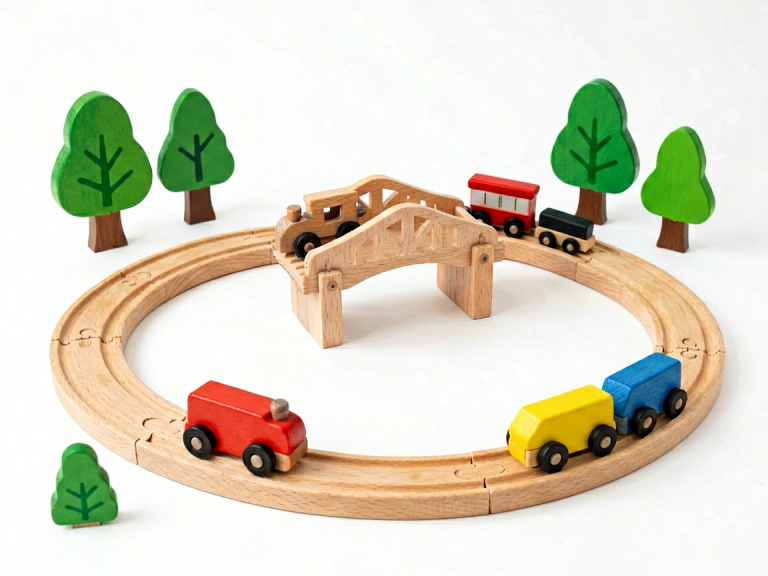
Few toy categories are as universally beneficial as construction sets. For a five-year-old, classic wooden blocks, interlocking plastic bricks (like LEGO Duplo or standard LEGO), and magnetic tiles offer endless opportunities. These toys teach geometry, balance, and spatial reasoning. When a child builds a tower, they learn about stability and gravity. When they create a house or a bridge, they engage in planning and problem-solving. Moreover, construction toys encourage persistence—a tower that falls becomes a lesson in resilience. Parents can scaffold the experience by challenging the child to build a structure that can hold a small toy car or to replicate a picture. This type of play also nurtures creativity, as there is no single “right” answer. For a five-year-old, the open-ended nature of building blocks is far more valuable than a toy that simply makes noise or lights up.
Category 2: Pretend Play and Role-Playing Sets
Imaginative play reaches its peak at age five. Therefore, toys that support role-playing—such as kitchen sets, doctor kits, tool benches, dress-up costumes, and puppet theaters—are not just entertainment; they are vital for social and emotional learning. When a child pretends to be a parent cooking dinner, they practice sequencing (first wash the vegetables, then cut them), language (naming ingredients, giving instructions), and empathy (caring for a doll). Similarly, a doctor’s kit allows them to process real-life experiences, like a visit to the clinic, and transform fear into control. These toys also develop narrative skills: children invent stories, assign characters, and resolve conflicts within their pretend world. The best role-playing toys are those that include realistic accessories but are not overly prescriptive—a simple set of wooden food pieces and pots encourages more creativity than a plastic set that beeps and talks. At this age, the child’s imagination should be the engine, not the toy’s electronics.
Category 3: Puzzles and Logic Games
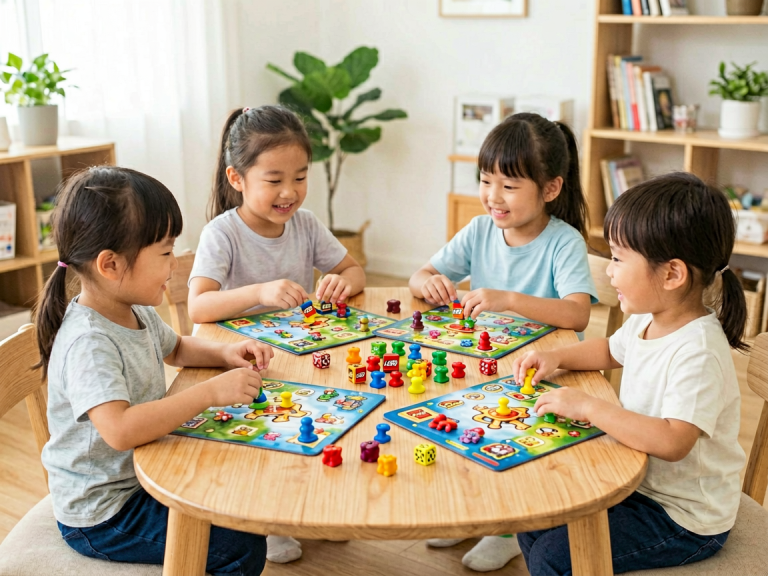
Cognitive development thrives on challenges that require structured thinking. Puzzles—jigsaw puzzles with 24 to 48 pieces, pattern-matching games, and simple board games—are excellent for five-year-olds. Jigsaw puzzles improve visual perception, patience, and manual dexterity. More importantly, they teach the concept of “part-whole relationships,” a fundamental mathematical idea. Logic games such as “Guess Who?” or simple memory card games sharpen concentration and strategic thinking. Some of the best learning toys in this category are specifically designed for preschoolers: for instance, sequencing cards that tell a story, or matching games that pair animals with their habitats. The key is to choose games that have clear rules but allow for occasional variations. Playing with an adult or sibling also reinforces turn-taking, sportsmanship, and verbal communication (“I think the blue piece goes here”).
Category 4: Art and Creative Expression
Creativity is not a luxury; it is a core cognitive skill. Art supplies—washable markers, finger paints, modeling clay, child-safe scissors, colored paper, and sticker sets—offer a child the chance to express ideas that cannot yet be captured in words. For a five-year-old, art is a form of problem-solving: How do I make a dog that looks like mine? What happens if I mix red and blue? These open explorations build neural connections related to innovation and self-regulation. Moreover, art projects can be linked to learning: a child can draw letters, make simple shapes, or create a collage about a story they heard. The best art toys are those that prioritize process over product. Avoid kits that require a predetermined outcome; instead, provide raw materials and let the child lead. The act of cutting, gluing, and drawing also strengthens fine motor skills, which are essential for future handwriting.
Category 5: Science and Discovery Kits
Five-year-olds are natural scientists. They ask “why does the moon follow me?” and “how do plants drink water?” Simple science kits—such as magnifying glasses, bug catchers, magnetic wands, or basic experiments like baking soda and vinegar volcanoes—channel this curiosity into structured exploration. These toys teach observation, prediction, and cause-and-effect reasoning. For example, a child can use a magnet to discover which household items are magnetic, then classify them. A simple microscope for kids can turn a leaf into a universe of wonder. The key is to choose kits that are safe, use common household materials, and include a guide for parents to facilitate discussion. Avoid overly complex kits that require adult intervention at every step; the goal is for the child to lead the discovery. These experiences lay the groundwork for formal science education by making the child feel like an explorer rather than a passive learner.
How to Choose the Right Learning Toy: Practical Tips
With the plethora of options available, parents may feel overwhelmed. Here are some evidence-based criteria for selecting learning toys for a five-year-old:
- Age-appropriate challenge: The toy should be slightly above the child’s current ability but not so difficult that it causes frustration. The “Goldilocks principle” applies—just right.
- Open-endedness: Toys that can be used in multiple ways (e.g., blocks, clay, dress-up clothes) promote divergent thinking. Avoid toys with only one function or a fixed outcome.
- Safety and durability: At five, children still put things in their mouths occasionally. Choose non-toxic materials, avoid small parts that pose choking hazards, and ensure sturdy construction.
- Screen-free engagement: While some educational apps have merit, physical toys provide tactile feedback that is essential for brain development. Prioritize hands-on, three-dimensional play.
- Social potential: The best toys can be enjoyed alone or with others. Cooperative board games or building sets that require two sets of hands teach collaboration.
- Interest-driven: Observe the child’s current passions—dinosaurs, space, vehicles, animals, or fairy tales—and select toys that tap into that enthusiasm. Learning is most effective when it is intrinsically motivated.
Conclusion: Play is the Highest Form of Research
In the end, learning toys for five-year-olds should never feel like homework. They should be invitations to explore, fail, try again, and laugh. The most effective toys are those that respect the child’s innate drive to understand the world—through building, pretending, creating, and questioning. As Albert Einstein famously said, “Play is the highest form of research.” By choosing toys that combine joy with thoughtful challenge, we give five-year-olds not just knowledge, but the love of learning itself. The next time you look at a pile of colorful blocks or a set of plastic dinosaurs, remember: you are not just buying a toy. You are handing a child the keys to a universe of possibilities. And that is the best investment any parent or educator can make.