Beyond the Blue Light: The Ultimate Guide to Screen-Free Birthday Gifts for Newborns
Introduction: Rethinking the First Birthday Gift
A baby’s first birthday is a milestone that parents treasure long after the candles are blown out. Yet in an age dominated by glowing screens, tablets, and interactive gadgets, the simplest gifts are often the most profound. Newborns – even those celebrating their first birthday – are still in a critical window of sensory, motor, and cognitive development. Their brains are not wired to process the rapid, two-dimensional stimulation of a screen; instead, they crave real textures, sounds, scents, and human connection. This article explores why screen-free birthday gifts for newborns are not merely a nostalgic choice but a developmental necessity. It then offers a comprehensive, category‑based guide to selecting gifts that nurture curiosity, creativity, and attachment – without a single pixel.
Why Screen‑Free Matters for Newborns
Before listing gift ideas, it is essential to understand the science behind the recommendation. The American Academy of Pediatrics advises against any screen time for children under 18 months, with the sole exception of live video chatting. For a one‑year‑old, the brain is forming up to one million new neural connections every second. Screens, with their fast‑paced visual cuts and artificial sounds, can overstimulate the developing nervous system, leading to shortened attention spans and reduced opportunities for real‑world exploration. Moreover, screens often replace the most valuable gift of all: face‑to‑face interaction with caregivers. A baby learns language through the lips, eyebrows, and rhythm of a parent’s voice, not from a pre‑recorded cartoon character. By choosing screen‑free presents, you honour the newborn’s natural developmental timeline and give them the gift of presence, not pixels.
1. Sensory and Motor Development Toys
High‑Contrast Soft Blocks and Fabric Books
Newborns – even older infants – are drawn to high‑contrast patterns because their vision is still developing. Gently coloured pastels may be visually lovely to adults, but black‑and‑white or bold primary colours stimulate the optic nerve and help the brain learn to track objects. Gifts like soft fabric blocks with crinkle corners, squeakers, and hidden mirrors offer multiple sensory inputs. They encourage grasping, mouthing (a baby’s primary way of exploring), and eventually stacking. Because they are lightweight and washable, they grow with the child: a three‑month‑old may simply bat at them, while a one‑year‑old will try to build a tiny tower. No battery required – just baby’s own growing strength.
Activity Gyms and Play Mats with Texture Variety
A well‑chosen play gym is not a screen; it is a miniature world of tactile discovery. Look for mats that combine plush, ribbed, corduroy, and satin fabrics. Attach dangling toys that jingle, rattle, or chime when pulled. The critical feature is that the baby must use her own body – reaching, rolling, kicking – to produce a reaction. This builds the foundation for cause‑and‑effect understanding far better than a touchscreen app. Some mats even include a small, unbreakable mirror so the baby discovers her own reflection. This self‑recognition, which typically emerges around 15–18 months, is a profound cognitive leap that no digital device can mimic.
2. Musical and Auditory Gifts
Wooden Rattles and Shakers
The first musical instrument a child ever holds is often a rattle. But not all rattles are created equal. Screen‑free rattles should be made of natural, unpainted wood or food‑grade silicone, sized for tiny hands. The sound – a gentle click, a soft shake – teaches the infant that her actions have a predictable auditory consequence. Unlike an electronic musical toy that plays a prerecorded tune at the press of a button, a wooden rattle requires the baby to experiment with force and angle. This is early problem‑solving. Over time, parents can introduce simple shaker eggs or maracas, always ensuring there are no small parts that could become choking hazards.
Hand‑Cranked Music Boxes or Wind‑Up Lullabies
A wind‑up music box creates an almost magical moment: the parent turns the key, and a delicate melody fills the room. The baby watches the turning mechanism with wide eyes, learning that cooperation (parent turns, baby listens) creates beauty. There is no blue light, no auto‑play, no menu of 50 songs. Just one timeless tune – perhaps Brahms’ Lullaby or Twinkle Twinkle Little Star – repeated a few times before winding down. This simplicity invites the parent to sing along, to hum, to rock. The gift becomes a ritual of connection, not passive entertainment.
3. Books: The Original Screen‑Free Screen
Cloth, Board, and Touch‑and‑Feel Books
Reading to a newborn – even one who tries to eat the corner of the book – is one of the most powerful screen‑free activities. Books for the first birthday should be sturdy board books with rounded edges, or cloth books that can be washed. Look for titles that incorporate different textures: a fuzzy duck, a shiny mirror, a scratchy patch of velcro. The baby’s fingers will explore while the parent’s voice narrates. This dual‑track sensory input – tactile plus verbal – builds vocabulary and comprehension far more effectively than a video. For a one‑year‑old, simple books with one object per page (ball, dog, apple) are ideal. Avoid “talking” books that require batteries; they undermine the parent‑child dialogue.
Personalised Name Books
A growing trend is the custom‑printed board book that includes the baby’s name and photos of family members. Because each page is unique, the baby becomes the hero of the story. “This is Lily. Lily has a red ball. Look, Lily’s mommy is here!” These books create a personal narrative that no algorithm can replicate. They also reinforce the child’s sense of identity and belonging. And because they are printed on thick cardstock, they withstand the inevitable chewing and drooling.
4. Open‑Ended Imaginative Play
Simple Wooden Stackers and Nesting Cups
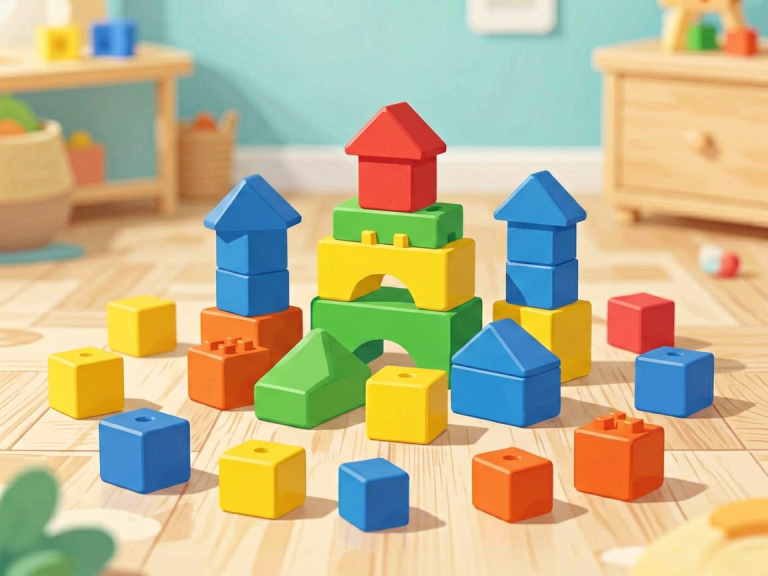
A set of rainbow‑coloured wooden nesting cups or stacking rings might seem old‑fashioned, but they are cognitive gold. A baby learns size discrimination, order, and spatial relationships by trial and error. Unlike an app that flashes a “correct” answer, wooden toys allow the baby to fail safely. When the tallest ring topples because it was placed on the smallest peg, the baby giggles and tries again. This iterative learning is the seed of perseverance. Choose toys with smooth, non‑toxic finishes and large enough pieces to prevent swallowing.
Doll or Soft Character with Simple Features
A soft, machine‑washable doll or stuffed animal with a simple face (embroidered eyes and a stitched smile) becomes a baby’s first friend. The child learns to care for the doll – to “feed” it, to hug it, to put it to sleep. This is the beginning of empathy and pretend play. Avoid dolls with electronic voices or pre‑recorded phrases; they rob the baby of the chance to assign her own words and emotions to the toy. A plain cloth doll invites the child to create her own dialogue, her own story.
5. Outdoor and Gross Motor Gifts
Baby Slide or Push‑Along Walker
For a one‑year‑old who is pulling to stand or taking first steps, a sturdy wooden push‑along walker (without wheels that go too fast) or a small indoor slide encourages large motor development. The slide teaches balance and risk‑assessment as the baby climbs and glides down. The walker provides support for unsteady legs. Both require the child to coordinate multiple muscle groups, which strengthens the core and legs. Screens, by contrast, keep children sedentary. A gift that gets a baby moving is a gift that fights obesity, improves sleep, and boosts mood – all without a single notification.
Sensory Balls and Tunnels
A set of bumpy, spiky, or squishy balls of different sizes invites rolling, chasing, and catching. Babies love to watch a ball roll under a chair and then crawl after it – this is problem‑solving in motion. A fabric tunnel (similar to those used in baby gym classes) turns the living room into an adventure course. The baby crawls through the tunnel, emerging at the other end with a triumphant smile. These activities develop spatial awareness and physical confidence.
6. Keepsakes and Meaningful Memory Gifts
Handprint or Footprint Kit
A non‑toxic, child‑safe clay or ink kit that allows parents to capture the baby’s tiny hand or footprint at age one is a gift that lasts decades. The process itself is screen‑free: the parent gently presses the baby’s hand into the soft material, the baby feels the cool texture, and together they create a lasting memento. Unlike a digital photo that can be deleted or lost, a three‑dimensional print is tangible. It becomes a family heirloom, often displayed on a shelf or framed.
Personalised Growth Chart
A wooden or fabric growth chart that can be hung on the wall, with the baby’s name and room for marking height over the years, is both practical and sentimental. It encourages parents to measure their child’s physical growth as a family ritual – the child stands against the chart, the parent makes a pencil mark, and everyone celebrates. This is a gentle way to teach the concept of time and change without any electronic tracking. Future birthdays will include new marks, creating a visual timeline of the child’s development.
7. The Gift of Time and Presence
Subscription to a Hand‑Written Letter Service
While this is not a physical gift in the traditional sense, a subscription to a service that sends a monthly hand‑written letter to the child (usually from a grandparent or family friend) is entirely screen‑free. The letters are printed on paper, with real stamps and envelopes. For the first birthday, you can start with a simple “Happy Birthday, Sweet One” letter. As the child grows, she will treasure these pieces of mail, learning to recognise the handwriting of loved ones. In an era of emails and texts, a physical letter is a rare and beautiful anomaly.
Blank Coupon Book for “Baby’s Day Out”
Another idea is a small booklet of coupons that the parent can redeem: “One trip to the park with Grandma,” “One afternoon of babysitting so Mom can nap,” “One picnic in the backyard.” These coupons do not require batteries or WiFi, but they create memories. They also acknowledge that a caregiver’s time is the most precious resource. For a newborn’s birthday, the parents are often more exhausted than the baby – so a gift that gives them a break, while also giving the baby attention from a loving relative, is a win‑win.
How to Choose the Perfect Screen‑Free Gift
With so many options, the choice can still feel overwhelming. Here are a few guiding principles:
- Focus on the baby’s current developmental stage, not the “age on the box.” A one‑year‑old who is not yet walking may need a push toy, while an early talker may love a board book with animal sounds (made by the parent, not a speaker).
- Prioritise natural materials. Wood, organic cotton, bamboo, and silicone are safer for teething mouths and gentler on the planet.
- Consider the parent’s storage space and aesthetic. A minimalist wooden toy might be welcomed more than a loud plastic pop‑up toy.
- Think long‑term. A simple stacking toy can be used from 6 months to 3 years in different ways. A one‑time‑use plastic gadget is less sustainable.
- Always check for choking hazards. Small parts, loose buttons, or batteries that can be accessed are dangers. A screen‑free gift should be safe first, fun second.
Conclusion: The Gift That Grows
A screen‑free birthday gift for a newborn is not a rejection of technology; it is a celebration of humanity. It says, “I want you to touch the world, to listen without interruption, to move your body, and to know that you are loved in real time.” In a culture that often measures value by pixels and notifications, the simple wooden rattle, the hand‑sewn doll, and the dog‑eared board book stand as quiet acts of rebellion. They invite parents to slow down, to sit on the floor, to make eye contact, to be present. And that presence – that unmediated, screen‑free connection – is the most profound gift a newborn can ever receive. As the baby grows, the toy may be outgrown, but the pattern of engagement it encourages will shape how the child learns, plays, and relates to others for years to come. So on that first birthday, skip the app‑enabled tablet. Pick up a bell, a book, a block. Watch the baby’s face light up – not with reflected light from a screen, but with the true glow of discovery. That is a birthday worth remembering.