Beyond Pixels: The Essential Role of Screen-Free Toys in the Development of 10-Year-Olds
—
Introduction
At ten years old, children stand at a pivotal crossroads of childhood and early adolescence. Their cognitive abilities are sharpening, their social circles are widening, and their sense of identity is beginning to form. Yet in today’s hyper-connected world, the average ten-year-old spends upwards of five to six hours per day in front of screens—whether for school, entertainment, or social interaction. While digital devices offer undeniable benefits, they also carry risks: shortened attention spans, reduced physical activity, and diminished opportunities for unstructured, imaginative play. This is where screen-free toys reclaim their vital importance. Far from being outdated relics, carefully chosen analog toys can nurture the specific developmental needs of ten-year-olds in ways that screens simply cannot replicate. From building resilience to fostering deep social bonds, the best screen-free toys for this age group are not just entertainment—they are tools for growth. In this article, we explore the multifaceted value of screen-free play, offering a detailed look at why and how these toys matter, and which types are most beneficial for ten-year-olds.
—
The Cognitive Benefits of Analog Play
Screen-free toys demand active mental engagement. Unlike passive screen consumption, where information is pre-packaged and instantly delivered, analog play requires the child to generate, hypothesize, and solve problems in real time. For a ten-year-old, whose brain is undergoing a surge in logical reasoning and executive function, this active cognitive workout is invaluable.
Take construction kits, for example. Advanced building sets—such as complex Lego Technic models, magnetic tiles, or wooden architectural blocks—force children to follow multi-step instructions, visualize spatial relationships, and troubleshoot when pieces do not fit. This process strengthens working memory, mental rotation skills, and flexible thinking. Similarly, strategy board games like Chess, Settlers of Catan, or Ticket to Ride require forward planning, resource management, and the ability to anticipate an opponent’s moves. Research has consistently shown that regular engagement with such games improves problem-solving abilities and even boosts academic performance in mathematics and reading comprehension.
Puzzles also deserve a spotlight. Jigsaw puzzles with 500 to 1,000 pieces challenge a child’s pattern recognition and perseverance. Unlike a video game that offers immediate feedback and “checkpoints,” a puzzle provides only the quiet satisfaction of a piece clicking into place after minutes of careful searching. This delayed gratification trains the brain to tolerate frustration—a skill that is becoming increasingly rare in the age of instant rewards. Moreover, many contemporary puzzles incorporate science themes, geography, or art history, subtly expanding a child’s knowledge base while they play.
Another exceptional screen-free cognitive tool is the science experiment kit. Ten-year-olds are naturally curious about how the world works. A chemistry set, a crystal-growing lab, or a simple circuit board kit invites them to hypothesize, test, and observe outcomes. This hands-on experimentation cannot be replicated by a simulation app because the sensory experience—the smell of vinegar, the feel of a wire, the surprise of a chemical reaction—anchors learning in the physical world. Such experiences cultivate a scientific mindset that values curiosity over speed, and discovery over consumption.
—
Fostering Social Skills Through Cooperative and Competitive Play
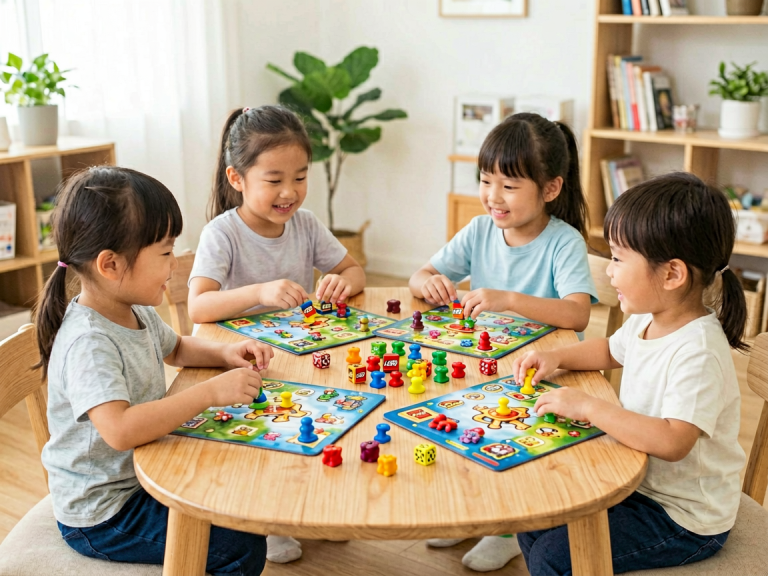
By age ten, peer relationships become increasingly important. Children are learning to navigate complex social dynamics: negotiation, compromise, empathy, and conflict resolution. Screen-free toys, especially those designed for multiple players, provide the perfect sandbox for these skills to develop organically. Unlike online multiplayer games, where communication is often limited to typed messages or voice chat behind a screen, physical toys demand face-to-face interaction, eye contact, and non-verbal cues.
Cooperative board games—such as “Forbidden Island” or “Pandemic”—require players to work together toward a common goal. In these games, ten-year-olds must discuss strategies, share resources, and adjust plans when things go wrong. They learn that sometimes the best move is to help a teammate rather than to advance their own position. This experience of shared victory or shared defeat fosters emotional resilience and a sense of community that is difficult to achieve in solitary screen activities.
On the other hand, competitive games like “Monopoly” or “Battleship” teach children how to win and lose gracefully. A ten-year-old who loses a close game of chess must learn to shake hands, congratulate the winner, and internalize the lesson without throwing a tantrum—and the same child, when winning, must avoid gloating. These are foundational social-emotional skills that will serve them throughout life. Because the game unfolds in real time in the same physical space, every reaction is visible and every word is heard. There is no “mute” button. This immediacy forces children to confront their emotions and to practice self-regulation.
Role-playing toys also deserve mention. While younger children often engage in pretend play, ten-year-olds can explore more sophisticated forms, such as tabletop role-playing games (RPGs) like a simplified version of Dungeons & Dragons. These games involve collaborative storytelling, character creation, and dice-based improvisation. They encourage verbal creativity, active listening, and the ability to think on one’s feet. Even a simple set of costume props or a collection of action figures can spark elaborate narrative play that involves negotiation of plotlines and character motivations. Such interaction builds language skills and deepens friendships, because shared stories create lasting bonds.
—
Cultivating Creativity and Imagination
At ten, a child’s imagination is still vivid, but it often gets stifled by the structured, predefined worlds of video games and apps. Screen-free toys, by contrast, are open-ended; they provide raw materials rather than finished narratives. This distinction is crucial for fostering true creativity.
Consider art supplies—not just crayons and markers, but high-quality materials like watercolor paints, clay, weaving looms, or calligraphy pens. A ten-year-old equipped with a blank sketchbook and a set of pastels is free to invent worlds, express emotions, and experiment with techniques. There is no “right” answer, no level to beat, no algorithm predicting their next move. The process itself becomes the reward, and the child learns that creativity is a muscle that must be exercised. Many art-focused toys also encourage cross-disciplinary thinking: a child who builds a clay sculpture must consider balance and form; a child who stitches a fabric pouch must understand geometry and sequencing.
Building toys that are not instruction-based—such as loose parts like wooden blocks, marble runs, or K’NEX—encourage divergent thinking. Divergent thinking is the ability to generate multiple solutions to a single problem, and it is a hallmark of creative intelligence. For example, a ten-year-old might be challenged to build the tallest tower that can withstand a “wind” from a fan. There are countless ways to achieve this, and the child must iterate, test, and revise. This process mirrors the design thinking used by engineers and inventors. Such toys also allow for collaboration: two or three children might work together, brainstorming and debating ideas, which further enriches creative output.
Even narrative-driven toys, such as story cubes or magnetic poetry kits, stimulate linguistic creativity. Story cubes—dice with pictures on each face—can be rolled to generate random story elements. A child must then weave these elements into a coherent tale, practicing plot development and character building. This is fundamentally different from consuming a pre-written story on a screen; it is active creation. The more a child practices creating, the more confident they become in their own ideas—a confidence that carries over into school projects and personal expression.
—
Building Resilience and Patience in a Fast-Paced World
Modern digital entertainment is engineered for instant gratification. A ten-year-old can swipe through hundreds of short videos in an hour, each lasting just seconds. The brain becomes accustomed to rapid dopamine hits, making sustained attention feel laborious. Screen-free toys counteract this by demanding patience, persistence, and tolerance for delayed rewards.
Take model building—whether it’s a plastic airplane kit, a wooden ship model, or a 3D metal puzzle. These projects require careful reading of instructions, precise assembly, and often hours of painstaking work. A mistake might mean dismantling several steps to correct an error. For a ten-year-old, this process teaches that success is not immediate; it is earned through effort. When the model is finally complete, the sense of accomplishment is deep and genuine—far more satisfying than the fleeting thrill of beating a level in a video game. Similarly, knitting or friendship bracelet kits require repetitive, focused hand movements. A dropped stitch can be frustrating, but learning to fix it builds resilience. The final product—a scarf, a bracelet—is a tangible reward that the child can see, touch, and even gift to someone else.
Another powerful resilience builder is the Rubik’s Cube and its various spin-offs. Solving a Rubik’s Cube is notoriously difficult for a beginner. A ten-year-old who commits to learning the algorithms must overcome repeated failures, consult tutorials, and practice deliberately. The moment the cube is solved—after days or weeks of struggle—teaches a profound lesson: that perseverance pays off. Moreover, the process improves fine motor skills, memory, and spatial reasoning.
Outdoor screen-free toys, such as a slackline (a flat webbing stretched between two trees) or a pogo stick, also build physical and mental resilience. Learning to balance on a slackline requires repeated falling and getting back up. The child experiences failure in a low-stakes, physical context, and internalizes the fact that mistakes are not catastrophic—they are part of learning. This mindset is essential for success in school, sports, and later life.
—
Physical Activity and Motor Skill Development
While cognitive and social benefits are critical, screen-free toys also play an irreplaceable role in physical development. At ten, children are refining gross and fine motor skills, building strength, and developing coordination. A sedentary lifestyle dominated by screens can lead to poor posture, reduced muscle tone, and even increased risk of obesity. Screen-free toys that get children moving are not just fun—they are necessary.
In the gross motor domain, consider traditional outdoor toys: a soccer ball, a jump rope, roller skates, a bicycle, or a set of badminton rackets. These encourage running, jumping, balancing, and coordinating with others. Unlike organized sports, which can be competitive and pressure-filled, unstructured play with these toys allows children to set their own pace and goals. A simple game of catch can improve hand-eye coordination and spatial awareness. A hula hoop challenges core strength and rhythm. A scooter or skateboard teaches balance and control—and also imparts valuable lessons about safety and risk assessment.
Fine motor skills are equally important, especially for handwriting, drawing, and other school-related tasks. Screen-free toys that target fine motor development include intricate bead-loom kits, miniature model-building sets with tiny screws and bolts, or even calligraphy fountain pens. A ten-year-old who practices with model clay or origami paper is not just creating art—they are strengthening the small muscles in their hands that will help them write neatly and type efficiently later. Similarly, construction toys with tiny connecting pieces, such as K’NEX or Meccano, demand precise fingertip work. These activities are especially beneficial for children who struggle with dysgraphia or who simply need more practice with dexterity.
Even seemingly simple toys like a yo-yo or a diabolo (Chinese yo-yo) can challenge coordination and persistence. Mastering a yo-yo trick involves timing, wrist control, and visual tracking—all of which are neural processes that benefit overall motor planning. Additionally, these toys can be enjoyed alone or with friends, giving children a sense of mastery and a party trick to show off.
—
Conclusion
In a world that increasingly demands children to be consumers of digital content, screen-free toys offer a powerful counterbalance for ten-year-olds. They cultivate cognitive depth, foster genuine social bonds, spark unbounded creativity, build resilience, and promote physical health. No app or video game can replace the feeling of snapping the last piece of a puzzle into place, the laughter shared over a board game with friends, or the pride of holding a handmade clay sculpture. As parents, educators, and caregivers, we have a responsibility to resist the gravitational pull of screens and to intentionally curate a play environment that nurtures the whole child. The best screen-free toys for ten-year-olds are not just distractions—they are invitations to think, feel, move, connect, and grow. By choosing them wisely, we give our children the greatest gift of all: the opportunity to become active creators of their own lives, rather than passive passengers in a digital world.