Beyond Play: The Transformative Power of Learning Toys for 10-Year-Olds
Introduction
At the age of ten, a child stands at a remarkable crossroads. The pure, unadulterated wonder of early childhood begins to give way to a more structured, analytical way of thinking. Simultaneously, the social landscape shifts, peer relationships deepen, and a nascent sense of identity starts to emerge. This is not merely a transitional phase; it is a critical window for cognitive, emotional, and social development. The toys that fill a 10-year-old’s room are far more than sources of entertainment—they are the silent architects of their future skills, interests, and attitudes. Learning toys, in particular, become powerful catalysts in this process. They transform abstract concepts into tangible experiences, turn failure into a safe and instructive game, and make the sometimes-daunting process of growing up feel like an adventure. This article delves into the multifaceted world of learning toys for 10-year-olds, exploring why this age group is so uniquely receptive, what types of toys offer the most profound benefits, and how parents and educators can make informed choices that inspire a lifelong love for learning.
Why Age Ten is a Golden Age for Learning Through Play
The developmental milestones of a 10-year-old are ideally suited for the kind of structured, goal-oriented play that learning toys provide. Cognitively, children at this age have typically moved from concrete operational thought to the beginnings of formal operational thought, as described by Piaget. They can now grasp cause-and-effect relationships on a more abstract level, understand analogies, and engage in hypothetical reasoning. A simple board game about supply chains, for example, teaches them about scarcity, investment, and risk—concepts far beyond simple counting. Their attention spans have also lengthened significantly, allowing them to commit to complex projects like building a robotic arm or completing a month-long science experiment kit. This is no longer the world of 30-second video clips; ten-year-olds can delve into deep, sustained engagement.
Socially, 10-year-olds are often seeking more sophisticated cooperative and competitive interactions. They love to collaborate but also enjoy friendly rivalry. Learning toys that require teamwork—like escape-room-in-a-box kits or collaborative engineering challenges—help them practice negotiation, division of labor, and collective problem-solving. At the same time, their growing sense of independence means they relish toys that allow for self-directed learning. A 10-year-old who masters a coding app or builds a working model of a volcano gains immense self-efficacy. They begin to see themselves as capable, competent individuals who can tackle challenges on their own. This intrinsic motivation is the holy grail of education, and learning toys are one of the most effective tools to cultivate it.
STEM Toys: Cultivating the Logic and Innovation of Tomorrow’s Engineers
Science, Technology, Engineering, and Mathematics (STEM) toys are arguably the most prominent category of learning toys for this age group. They are designed to make abstract scientific and mathematical principles tangible and fun. For a 10-year-old, the best STEM toys go beyond simple demonstrations; they require active experimentation, iteration, and failure.
- Robotics and Coding Kits: Products like LEGO Mindstorms, Sphero, or micro:bit starter kits allow children to build physical robots and then program their behavior using block-based or even simple text-based coding. This blends engineering design with computational thinking. A child learns about gears, sensors, and motor power while also debugging code to make the robot follow a line or navigate a maze. The thrill of seeing a self-created machine come to life is unmatched, and the process teaches resilience—a robot rarely works perfectly on the first try.
- Circuitry and Electronics Sets: Snap Circuits or more advanced electronic labs introduce the basics of voltage, current, and resistance. Children can build a working radio, an alarm system, or a light-sensitive lamp. These kits demystify the technology that surrounds them, turning everyday devices from black boxes into understandable systems. The hands-on nature of connecting wires and seeing LEDs light up is far more impactful than reading a textbook diagram.
- Chemistry and Physics Experiment Kits: At age ten, children are ready for real, albeit safe, scientific experimentation. Kits that allow them to grow crystals, create chemical reactions (like a vinegar-and-baking-soda volcano with a twist), or build a hydraulic arm teach the scientific method. They learn to form hypotheses, observe results, record data, and draw conclusions. The messiness of a failed crystal growth or a reaction that didn't work as expected becomes a valuable data point rather than a source of frustration.
- Geometry and Architecture Kits: Magnetiles, Keva Planks, or more complex architectural models (like building a dome or a bridge truss) challenge spatial reasoning and geometric understanding. Children learn about structural integrity, balance, and symmetry. These toys are particularly good for kinesthetic learners who need to feel physical shapes and forces to understand them.
Creative and Language Arts Toys: Fueling Imagination and Communication
While STEM toys dominate the conversation, a 10-year-old’s cognitive development is not just about logic. The pre-teen years are also a time of burgeoning creativity, emotional depth, and narrative thinking. Learning toys that support language arts, storytelling, and artistic expression are equally crucial.
- Storytelling and Writing Games: Games like "Storyteller" (a card game where players create narrative chains to match prompts) or "Rory's Story Cubes" encourage children to invent characters, settings, and plots. These sharpen narrative skills, vocabulary, and the ability to think sequentially. More advanced writing kits might include a "novel workshop" with prompts, character development sheets, and plot structure cards, giving a budding author the tools to write a short story.
- Advanced Art and Craft Kits: Beyond simple painting sets, look for kits that teach specific techniques. A watercolor techniques book with exercises, a stop-motion animation kit (using clay or paper figures), or a calligraphy set all blend skill-building with creative expression. Stop-motion animation, in particular, is a rich learning tool: it requires storyboarding, patience (shooting hundreds of frames for a 30-second film), and basic understanding of kinematics.
- Music and Composition Tools: For a 10-year-old with a musical inclination, a simple electronic keyboard with recording capabilities, a ukulele, or a digital audio workstation (DAW) for beginners (like GarageBand on an iPad) can be powerful learning toys. They can experiment with melody, harmony, and rhythm. Learning an instrument at this age also builds discipline and fine motor skills, while composing their own songs fosters a deep sense of personal accomplishment.
- Debate and Public Speaking Tools: Some innovative toys now focus on oral language development. Card games that require persuasive arguments (e.g., "convince your parents to let you stay up late by giving three logical reasons") or debate-oriented board games help children organize their thoughts and articulate them clearly. These skills are often overlooked but are essential for academic and later professional success.
Strategy and Logic Games: Sharpening Executive Function
The toys in this category are often deceptively simple in appearance but incredibly deep in cognitive demand. They target the prefrontal cortex, home of executive functions like planning, impulse control, working memory, and cognitive flexibility.
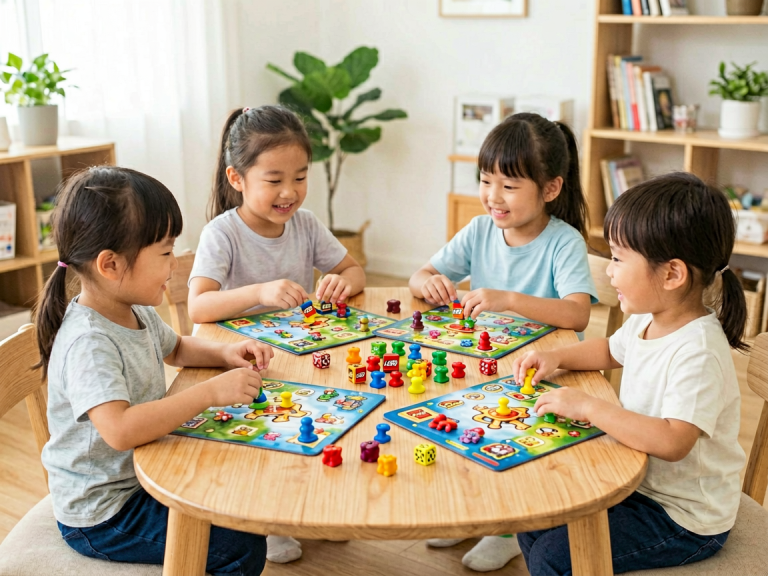
- Complex Board Games: Games like "Settlers of Catan," "Ticket to Ride," "Codenames," or "Chess" are superb learning tools. They require players to manage resources, predict opponents’ moves, adapt to changing circumstances, and delay gratification. "Codenames," for instance, demands lateral thinking and vocabulary. These games are also deeply social, teaching turn-taking, sportsmanship, and strategic negotiation. Unlike video games, board games force face-to-face interaction and reading body language, a skill set that is increasingly rare in a digital age.
- Puzzles and Brain Teasers: Jigsaw puzzles with 500–1000 pieces are excellent for spatial reasoning, pattern recognition, and perseverance. But beyond traditional puzzles, 3D puzzles (like building a globe or a famous landmark) and logic puzzles (like Sudoku, KenKen, or logic grid puzzles) push cognitive boundaries. A dedicated "escape room" puzzle box that requires solving a series of riddles to open a lock can occupy a 10-year-old for hours, reinforcing multi-step problem solving.
- Construction and Engineering Challenges: While part of STEM, these toys deserve a special mention because of their role in executive function. A complex construction set (like a model airplane that requires gluing and careful assembly) demands meticulous attention to instruction-following, spatial planning, and fine motor control. The process of completing a 50-step build teaches project management on a micro scale.
How to Choose the Right Learning Toy: A Practical Guide for Parents
The sheer variety of learning toys on the market can be overwhelming. A few key principles can guide a wise investment.
- Follow the Child’s Passion, Not the Trend: A coding kit is useless if the child is fascinated by marine biology. Instead, look for toys that align with their existing interests. For a child who loves animals, a biology kit about bird anatomy or an ecology board game will be far more engaging than a generic robotics set.
- Look for "Low Floor, High Ceiling" Toys: The best learning toys are easy to start but offer endless depth. A set of magnetic tiles is simple for a beginner but allows for incredibly complex structures as the child grows. Similarly, a good coding platform like Scratch has an easy drag-and-drop interface but supports advanced projects like game creation.
- Prioritize Open-Ended Over Single-Outcome: Avoid toys that have only one correct result (e.g., a kit that makes only one specific chemical reaction). Instead, choose kits that allow for experimentation, variation, and multiple outcomes. An open-ended construction set or a programmable robot is far more valuable than a one-time-only craft project.
- Consider the Social Aspect: Many of the most powerful learning experiences at this age are social. A board game or a collaborative engineering challenge can bond siblings, friends, and parents. If a child is an only child or tends to play alone, intentionally choosing a game that requires at least two players can encourage social interaction.
- Respect the Child’s Frustration Threshold: Learning involves failure. But a toy that is too frustrating will be abandoned. Consider the child’s persistence level. If they are easily discouraged, start with toys that have clear, achievable steps and provide a sense of progress (e.g., a modular robotics kit where each module works independently). For a more resilient child, a more complex, multi-step challenge may be ideal.
- Beware of Over-Screened Time: Many modern learning toys have digital components—apps, tablets, or screens. While these can be beneficial, ensure that the toy still requires active physical manipulation. A toy that is primarily a screen with a few physical buttons may not offer the same tactile, kinesthetic learning benefits as a purely physical kit.
Conclusion: The Lasting Impact of Purposeful Play
The toys a child plays with at age ten are not mere diversions to fill the hours between school and dinner. They are the raw materials from which a child constructs their understanding of the world and their place in it. Learning toys, chosen with care and intention, can ignite a passion for discovery that lasts a lifetime. A child who builds a working electrical circuit in the living room today might become an electrical engineer tomorrow. A child who loses themselves in a complex board game of strategy and diplomacy might grow into a thoughtful leader. A child who creates a stop-motion film might discover a love for storytelling that defines their career.
In a world that often prizes test scores and measurable outcomes, it is tempting to view learning toys as just another educational tool. But their true magic lies in their ability to blend the two essential ingredients of childhood: joy and growth. They allow a 10-year-old to be both a child at play and a budding scientist, artist, or engineer. As parents and educators, our role is not to dictate what they should learn, but to provide the rich, stimulating environment where their natural curiosity can flourish. The right learning toy, at the right moment, is a gift that keeps on giving—a spark that can light a fire of intellectual exploration that burns bright for years to come.