Beyond Play: The Transformative Power of Learning Toys for 11-Year-Olds
Introduction
At the age of eleven, children stand at a fascinating crossroads. They are no longer toddlers who simply explore the world with their senses, nor are they fully independent teenagers. This is the golden age of curiosity, where abstract thinking begins to blossom, social awareness deepens, and the desire for autonomy grows stronger. For parents and educators, selecting the right learning toys for 11-year-olds is not merely about keeping them occupied—it is about nurturing critical skills that will shape their academic success, emotional intelligence, and lifelong love for learning. In this article, we will explore the categories of learning toys that best suit this age group, their developmental benefits, and practical tips for making wise choices. Each section below is designed to offer a comprehensive view, ensuring that every word supports the central theme: that well-chosen toys are powerful tools for growth.
The Cognitive Leap: Why 11-Year-Olds Need Specialized Learning Toys
Eleven-year-olds are in the midst of what developmental psychologists call the “formal operational stage,” according to Jean Piaget’s theory. This means they can now think logically about abstract concepts, hypothesize, and systematically solve problems. However, their brains are still highly plastic, meaning they learn best through hands-on, engaging experiences that connect theory to practice. Generic toys—such as simple building blocks or basic board games—may no longer challenge them adequately. Instead, they require learning toys that demand strategic thinking, creativity, and persistence.
For instance, a chemistry set that allows an 11-year-old to mix safe household substances to observe reactions is far more effective than a textbook explaining the same principles. Similarly, a coding robot that requires programming simple commands teaches logic and sequencing in a way that feels like play. The key is that these toys must be open-ended—they should allow for trial and error, multiple outcomes, and personalization. At this age, children also begin to compare themselves to peers, so toys that foster a sense of accomplishment (such as completing a complex LEGO Technic model or mastering a math puzzle) can boost self-esteem and resilience.
Building STEM Skills: Robotics, Coding, and Engineering Kits
One of the most impactful categories of learning toys for 11-year-olds is STEM (Science, Technology, Engineering, and Mathematics) kits. These toys do not just teach facts; they teach the process of inquiry. A robotics kit like the *LEGO Boost* or *Makeblock mBot* introduces children to mechanical engineering and basic programming. The child must assemble gears, sensors, and motors, then write a simple drag-and-drop code to make the robot move, avoid obstacles, or follow a line. This process develops fine motor skills, spatial reasoning, and logical sequencing.
More advanced coding toys, such as *Sphero Bolt* or *Raspberry Pi* starter kits, take learning a step further. With *Sphero*, children can program the robot to perform loops, conditional statements, and even respond to its environment using light and sound sensors. For an 11-year-old, the satisfaction of seeing their code come to life is immense. Moreover, these toys often come with online communities and challenges, encouraging collaboration and healthy competition. Engineering kits, such as *K’NEX Education* or *Thames & Kosmos* structural engineering sets, allow children to build bridges, cranes, and vehicles that must bear weight or move. They learn about tension, compression, and balance—concepts that form the foundation of physics.
Such toys also teach grit. When a robot does not move as intended, the child must debug the code or adjust the physical assembly. This iterative process mirrors real-world problem-solving and prepares them for future STEM careers. According to a 2022 report from the American Institutes for Research, children who regularly engage with construction and coding toys score significantly higher in spatial visualization and mathematical reasoning by age 14.
Cultivating Creativity: Art, Music, and Language Toys
While STEM is crucial, learning toys for 11-year-olds must also nurture the right brain—creativity, emotional expression, and language. At this age, children begin to develop more sophisticated aesthetic sensibilities. Art kits that go beyond coloring books—such as *watercolor pencil sets* with blending tutorials, *pottery wheels*, or *stop-motion animation kits*—encourage them to plan, execute, and refine their visions. For example, a *Klutz* “Sew Your Own Furry Friend” kit teaches pattern recognition, fine stitching, and patience. The end product is a tangible source of pride.
Music toys also play a vital role. Simple keyboards with built-in learning apps (like *Yamaha PSS-F30* or *KORG M01D* for synths) allow children to compose melodies. Alternatively, a *kalimba* or *ukulele* is portable and easy to learn, offering immediate gratification while teaching rhythm and pitch. For children interested in technology, *Loog Guitars* are designed with a small size but real strings, and they connect to an app that teaches chords through games. Studies from the University of Southern California’s Brain and Creativity Institute have shown that learning a musical instrument before age 12 improves executive function and language processing.
Language toys are another essential category. At 11, vocabulary expands rapidly, and children can grasp nuances like idioms and metaphors. Word games such as *Scrabble Junior* (advanced version), *Bananagrams*, or *Dixit* (a storytelling card game) build verbal fluency and narrative skills. A *storytelling dice set* or *Rory’s Story Cubes* can spark creative writing sessions where children invent characters, settings, and plots. For bilingual households, language learning subscription boxes (like *Little Pim* or *Lingokids* activities) incorporate physical cards, puzzles, and audio guides to reinforce a second language.
Social Intelligence and Emotional Growth: Strategy Games and Role-Playing
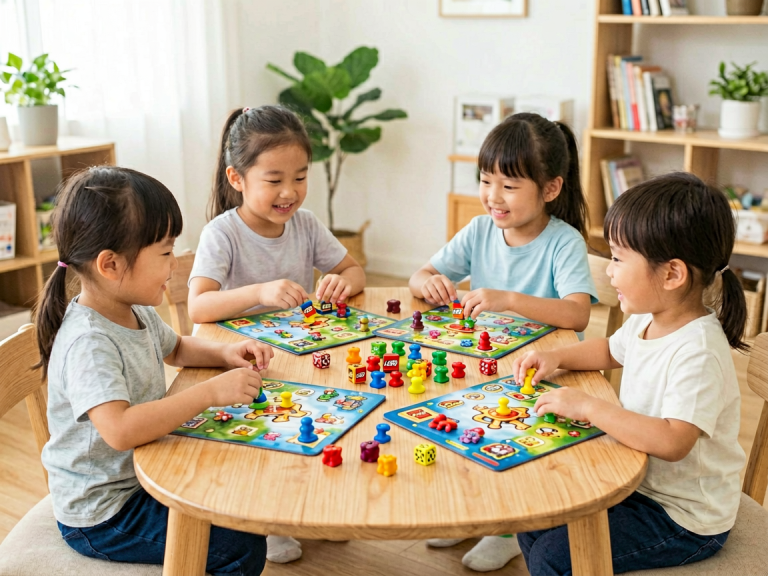
Eleven-year-olds are increasingly aware of social dynamics, peer pressure, and their own emotions. Learning toys that promote social-emotional learning (SEL) are therefore invaluable. Board games that require negotiation, collaboration, and strategic thinking—such as *Settlers of Catan*, *Ticket to Ride*, or *Codenames*—teach patience, turn-taking, and the ability to compromise. Unlike video games, these board games involve face-to-face interaction, reading body language, and managing frustration when luck does not go your way.
Similarly, role-playing games (RPGs) like *Dungeons & Dragons* (D&D) for younger audiences, or simplified versions such as *No Thank You, Evil!* allow children to create characters, solve puzzles, and work as a team. D&D, in particular, has been shown to improve reading comprehension (players must read rulebooks and descriptions), mathematical skills (calculating dice probabilities), and empathy (understanding the motivations of non-player characters). A 2021 study published in the *Journal of Youth Development* found that regular D&D participation among preteens correlated with increased emotional resilience and reduced anxiety.
Other toys in this category include *The Mindfulness Game* (cards that teach breathing exercises and gratitude) or *Uno* with custom rules that encourage positive communication. Even simple cooperative puzzle games, like *Race to the Treasure* or *Forbidden Island*, require groups of children to plan together and share resources. These experiences help 11-year-olds navigate the complexities of friendship and develop conflict-resolution skills.
Physical and Sensory Learning: Active Toys with Educational Value
Learning is not confined to the mind. At 11, many children are in the midst of growth spurts, and physical activity remains crucial for brain development. Learning toys that combine movement with knowledge are a win-win. For example, *smart jump ropes* (like Tangram Smart Rope) count jumps and display LED animations while the child jumps—motivating them to exercise. Science-themed scavenger hunt kits, such as *Nature’s Workshop Plus* insect observation kits or *Geology Explorer’s Kit*, encourage outdoor exploration and classification skills.
Construction toys that involve large-scale building, like *PlasmaCar* (a ride-on car powered by inertia and steering) or *Ride-on digger* toys for sandbox play, engage gross motor skills while teaching physics principles like centrifugal force and leverage. Another excellent option is *circuit building snap kits* such as *Snap Circuits*—these allow children to build radios, doorbells, and flying disks, and the components snap together without soldering. The physical act of snapping pieces reinforces cause-and-effect thinking.
Sensory regulation is also important. Some 11-year-olds, especially those on the autism spectrum or with ADHD, benefit from fidget toys that double as learning tools. For instance, *Tangles* or *Fidget Cubes* with built-in calculators or mini puzzles can keep hands busy during homework, helping focus. Weighted lap pads or bean bag chairs can provide calming input during study time.
Practical Guidance: How to Choose the Right Learning Toys for Your 11-Year-Old
Given the vast array of options, parents may feel overwhelmed. Here are five evidence-based criteria to consider:
- Align with Interests, Not Trends. A child passionate about dinosaurs will engage far more with a paleontology excavation kit than with a generic coding robot. Observe what they talk about, draw, or ask questions about. If they love fantasy, choose storytelling or map-making toys. If they love sports, consider a toy that combines sports with math (e.g., a basketball that tracks shooting percentages).
- Check for Age-Appropriate Complexity. Look for toys labeled for ages 8–12 or 10+. Avoid toys that are either too simplistic (leading to boredom) or too advanced (causing frustration). Many manufacturers provide “challenge levels” within the same kit. For example, *littleBits* electronic kits have basic, intermediate, and advanced projects.
- Prioritize Open-Ended vs. Single-Outcome. Toys that can be used in multiple ways foster creativity. A box of *KEVA planks* (identical wooden blocks) can become a castle, a bridge, or a domino run, whereas a ready-made plastic castle offers only one type of play.
- Balance Screen Time with Hands-On Experience. While many learning toys now have app components, ensure the primary interaction is physical. Too much screen dependency can negate the benefits of tactile learning. Hybrid toys, like *Osmo* (which uses an iPad camera to recognize real objects), strike a good balance.
- Read Reviews from Educators and Other Parents. Websites like *Common Sense Media*, *The Toy Association*, and *STEM.org* offer expert reviews. Also, encourage your child to try the toy at a local store or library maker space before committing to a purchase.
Conclusion: The Gift of Lifelong Learning
In a world increasingly dominated by passive entertainment and digital distractions, learning toys for 11-year-olds serve as antidotes. They are not mere distractions; they are catalysts for curiosity, resilience, and understanding. By investing in quality toys—whether a science kit, a strategy board game, or a musical instrument—we give children the tools to ask bigger questions, experiment boldly, and collaborate effectively. The memories of constructing a working robot or winning a cooperative game with friends will last far longer than any video game high score. More importantly, these experiences plant the seeds for a mindset that views challenges as opportunities. As you browse for the next gift for an 11-year-old in your life, remember: the best learning toy is not the one with the most features, but the one that whispers, “Try again,” “What if?” and “I can do this.” That is the true magic of play.