Beyond the Screen: The Cognitive Renaissance of Screen-Free Coding Toys
Introduction: The Paradox of Digital Literacy
In an era where children are born into ecosystems of glowing rectangles and touch-sensitive glass, the phrase “screen-free coding toys” might sound like an oxymoron. How can one teach the language of computers without a computer? Yet this very paradox encapsulates one of the most significant pedagogical shifts of the early twenty-first century. Parents, educators, and child development researchers have begun to recognize that the most effective way to introduce computational thinking to young minds is not through more screen time, but through its deliberate absence. Screen-free coding toys—physical, tangible, manipulable objects that teach logic, sequence, and algorithm design without a single pixel—represent a quiet revolution in early childhood education. They acknowledge that the essence of coding lies not in the flashing interface of an app, but in the fundamental human activity of breaking down a problem into step-by-step instructions and then executing that plan through concrete actions. This article explores the philosophy, design, pedagogical underpinnings, and practical implications of screen-free coding toys, arguing that they offer children something far more valuable than technical proficiency: they cultivate patience, spatial reasoning, collaborative problem-solving, and a deep, intuitive understanding of cause and effect that no amount of keyboard tapping can replicate.
The Anatomy of Screen-Free Coding Toys: What Are They?
Defining the Category
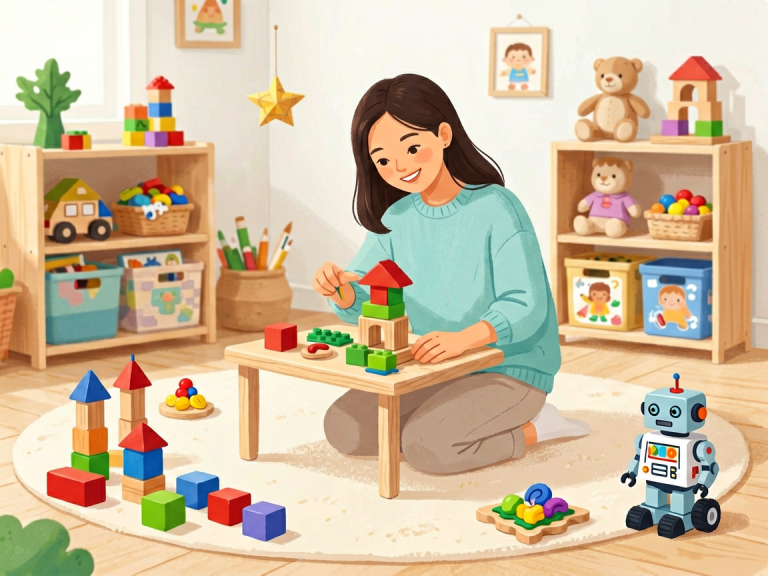
Screen-free coding toys encompass a diverse range of physical products that allow children to write and execute programs using tangible commands—blocks, cards, tiles, magnetic pieces, robotic modules, or even wooden figurines—rather than a digital display. The child places a sequence of physical objects in a specific order to instruct a companion robot, a light-up device, or a mechanical contraption to perform a corresponding action. The feedback is immediate, tactile, and often multisensory: a robot rolls forward, a ball drops into a chute, a musical tone plays, or a series of lights flash. There is no lag, no loading screen, no distracting notification. The child sees, hears, and feels the direct consequence of their logical choices.
Categories and Examples
The market has produced several distinct categories of screen-free coding toys. Sequencing robots are among the most popular: the Cubetto (by Primo Toys) uses a wooden board, colored coding blocks, and a small wooden robot. Children place blocks in a sequence to tell the robot where to go, and the robot executes the commands on a map. Similarly, the KIBO (by KinderLab Robotics) integrates with art supplies, allowing children to combine programming blocks with crafts. Magnetic coding tiles like the Learning Resources Code & Go Robot Mouse let children construct a path for a mouse-shaped robot, teaching directional commands. Sound-based and light-based systems such as Osmo’s Coding Awbie (though partially screen-based) have screen-free variations like the Tegu Coding Wheel, where physical wheels represent code. Mechanical coding toys like the Turing Tumble (a marble-run computer) are uniquely impressive: children arrange ramps and bits to create a simple mechanical computer that replicates binary logic and memory through the fall of marbles.
The Design Philosophy: Simplicity and Open-Endedness
Crucially, the best screen-free coding toys are not prescriptive. They do not offer a single correct answer or a fixed set of puzzles. Instead, they function as open-ended construction kits. A child can create an infinite variety of programs, making mistakes, debugging, and refining their algorithms without any external judgment. The design philosophy prioritizes low floor, high ceiling—easy to start for a four-year-old, but deep enough to challenge a ten-year-old. The absence of a screen also means that the toy is socially activating: siblings, parents, or classmates can gather around a physical board, point to blocks, discuss moves, and collaborate in real time. This social dimension is often lost when each child stares at their own tablet.
Cognitive and Developmental Benefits: Why Screen-Free Matters
Executive Function and Sequential Reasoning
The process of programming with physical objects directly trains executive functions—working memory, cognitive flexibility, and inhibitory control. A child must hold a sequence of commands in mind (working memory), consider alternative paths when the robot hits a wall (cognitive flexibility), and resist the urge to place blocks randomly (inhibitory control). These are not abstract skills; they are the foundation for academic success in mathematics, reading comprehension, and even emotional regulation. Screen-free coding toys make these cognitive demands explicit and visible. When a child places a “forward” block incorrectly, the robot bumps into a barrier. The immediate physical consequence provides unambiguous and non-punitive feedback, allowing the child to self-correct without adult intervention. This process mirrors the real-world debugging cycle of a software engineer, but at a scale and pace appropriate for a developing brain.
Spatial Awareness and Motor Skills
Unlike dragging a virtual block across a flat screen, manipulating physical coding blocks involves fine motor control, hand-eye coordination, and spatial reasoning. The child must orient the block correctly, align it with others, and view the robot’s path from multiple perspectives. Research in embodied cognition suggests that learning through physical manipulation strengthens neural pathways because the brain integrates motor, visual, and tactile information. A study published in the *Journal of Educational Psychology* found that children who used physical coding blocks demonstrated a deeper understanding of directional concepts (left, right, forward) than those who used a tablet app with the same logical structure. The physical toy anchors abstract ideas in concrete bodily experience, making transfer to other domains (like map reading or geometry) more likely.
Fostering Persistence and a Growth Mindset
One of the hidden dangers of screen-based coding apps is the instant gratification loop. If a child makes a mistake, an app often provides a hint, an automatic correction, or a dazzling animation that distracts from the failure. Screen-free toys strip away these digital crutches. When the robot fails to reach its target, there is no pop-up window saying “Try again!” There is only the silent, stubborn robot sitting at a dead end. This blankness forces the child to engage in genuine problem-solving: “Why did my program not work? Where did I go wrong? What command should I change?” The process requires patience, systematic thinking, and a willingness to iterate. Over time, children internalize the idea that failure is not a dead end but a stepping stone—a core tenet of Carol Dweck’s growth mindset. Screen-free coding toys, by making failure tangible but reversible, become powerful tools for emotional resilience.
Pedagogical Integration: From Home to Classroom
Curriculum Alignment in Early Childhood Education
Forward-thinking schools have begun integrating screen-free coding toys into Pre-K through Grade 2 curricula. The toys align naturally with STEM learning objectives, but they also support language development (describing sequences, giving instructions), social studies (mapping and geography), and even literacy (storytelling through programmed paths). For example, a teacher can ask a child to program a robot to visit the “library” and then the “playground” on a classroom map, thereby combining coding with narrative structure. Because the toys require no reading ability, they are accessible to emergent readers and English language learners. The tactile nature also makes them inclusive for children with visual impairments or attention disorders, who may struggle with screen-based instruction.
The Role of the Adult: Facilitator, Not Director
The most effective use of screen-free coding toys requires a shift in adult behavior. Instead of showing a child exactly how to solve a puzzle, the adult acts as a Socratic guide: “What do you think will happen if you put this block here? How could you make the robot go around the obstacle? What is the shortest path?” This approach cultivates metacognition—thinking about one’s own thinking. It also models the language of computational thinking: “First, we need to break this problem into smaller steps. Then, we can test each step.” Adults can scaffold debugging by asking, “Can you find the one block that is wrong?” without correcting the error themselves. The physicality of the toy makes this collaborative problem-solving natural and engaging, far more so than a teacher huddling over a tablet.
Potential Pitfalls and Counterarguments
Critics might argue that screen-free coding toys are a nostalgic rejection of the digital world, or that they teach only the most rudimentary concepts. But such criticisms miss the point. No one claims that a wooden robot game will train a seven-year-old to write Python. The goal is not vocational training; it is cognitive scaffolding. Children who grasp the logic of sequencing, looping, conditionals, and debugging through physical toys will later learn text-based programming with greater ease and deeper intuition. There is also the practical concern of cost: high-quality screen-free toys can be expensive. However, many are designed for repeated use across years, and schools often purchase them as shared resources. Additionally, low-cost alternatives exist, such as printable coding cards or even DIY projects using cardboard and markers.
Conclusion: The Quiet Wisdom of Tangible Logic
As the digital tide rises ever higher, submerging childhood in endless streams of pixels, notifications, and algorithmic feeds, the screen-free coding toy stands as a quiet counterpoint. It reminds us that the most profound learning happens not through passive consumption of digital content, but through active, physical, social construction. By teaching children to think like programmers without requiring them to become screen zombies, these toys honor both the technological future and the developmental needs of the human child. They cultivate patience over speed, collaboration over isolation, and understanding over rote clicking. In a world obsessed with the next shiny digital interface, the most revolutionary educational tool might be a simple wooden block that, when placed in the right order, makes a small robot roll forward. That robot carries with it a powerful message: the most important code a child can learn is not written in JavaScript or Python. It is written in the language of curiosity, persistence, and wonder—a language that needs no screen at all.