The Power of Play: How Educational Coding Toys Are Shaping the Next Generation of Innovators
Word count: 987
—
Introduction
In an era where technology permeates every aspect of our lives, equipping children with foundational skills in computational thinking has become as essential as teaching them to read and write. Yet the challenge for parents and educators lies in making abstract concepts like algorithms, loops, and conditionals accessible and engaging for young minds. Enter educational coding toys for kids—a vibrant, hands‑on category of playthings that transform screen‑based code into tangible, tactile experiences. These toys are not merely gadgets; they are bridges between the digital world and the physical one, fostering creativity, problem‑solving, and resilience from preschool through early adolescence. This article explores the landscape of coding toys, their multifaceted benefits, practical guidance for selection, and the exciting future they herald for early childhood education.
—
What Are Educational Coding Toys?
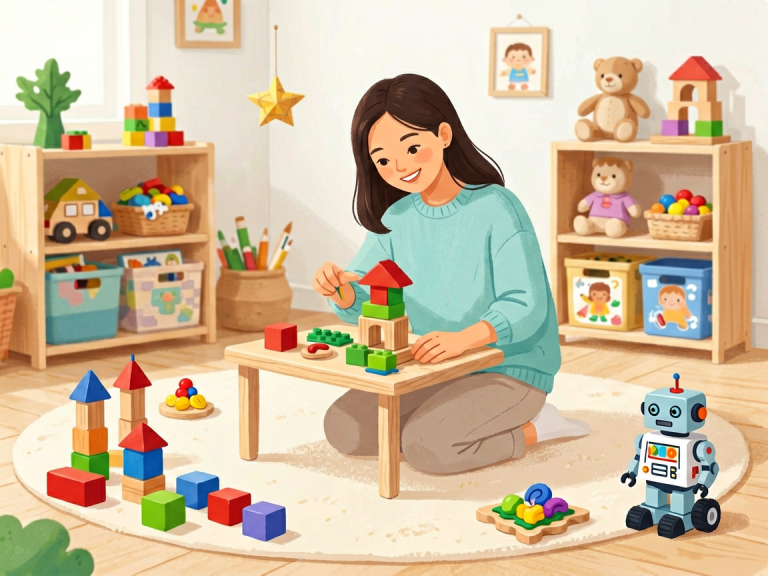
Educational coding toys are specifically designed play materials that introduce children to the principles of programming without requiring them to sit in front of a traditional computer. They range from simple screen‑free robots that children command with physical blocks, to more advanced kits that integrate with tablets or laptops and use drag‑and‑drop languages like Scratch. Some toys emphasize sequencing and logic through puzzles, while others teach basic electronics and sensor integration.
A common thread is the “learn by doing” philosophy. Instead of memorizing syntax, children experiment: they place a block to make a robot move forward, press a button to trigger a light pattern, or connect modules to create a working game controller. This hands‑on approach demystifies technology and shows children that coding is a creative tool—a way to bring ideas to life. Brands like LEGO Education, Sphero, Osmo, and Botley exemplify this category, each targeting different age groups and skill levels.
—
The Cognitive and Academic Benefits
Research in developmental psychology and education consistently shows that engaging with coding toys cultivates higher‑order thinking skills. First, they enhance logical reasoning. When a child must arrange a sequence of commands so that a toy navigates a maze, they are practicing the very essence of algorithm design. Mistakes become learning opportunities: if the robot crashes into a wall, the child must debug the sequence, developing a growth mindset that embraces trial and error.
Second, these toys boost spatial awareness and geometry. Many coding robots require children to estimate distances, angles, and rotations. For example, programming a toy to turn 90 degrees or move a specific number of steps reinforces mathematical concepts in a concrete, visual way—far more engaging than a worksheet.
Third, coding toys nurture perseverance and self‑regulation. A complex puzzle may require several attempts. Children learn to break a big problem into smaller steps, test each step, and adjust their approach. This metacognitive skill—thinking about one’s own thinking—is transferable to every academic subject, from writing a research paper to solving algebraic equations. A 2020 study published in the *Journal of Educational Computing Research* found that preschoolers who used coding toys for just six weeks showed significant gains in executive function, particularly in inhibitory control and cognitive flexibility.
—
Beyond Screens: Unplugged Coding Toys and Hands‑On Learning
One common concern among parents is screen time. The best educational coding toys for kids address this by offering “unplugged” experiences. Unplugged coding toys use physical cards, tiles, or buttons to input commands, eliminating the need for a glowing screen. For instance, Botley the Coding Robot (for ages 5+) operates entirely with a remote programmer; children press sequence buttons, then watch Botley follow their instructions. Similarly, Cubetto uses a wooden board and colorful blocks to guide a friendly wooden robot, making it ideal for toddlers (ages 3+) who are still developing fine motor skills.
These unplugged options are especially valuable for fostering social interaction. Children can work in pairs or small groups, discussing their strategies and negotiating turns. Educators also use them in classrooms where Wi‑Fi access is limited. Because there are no digital distractions, the focus remains on the logic and the physical outcome—a satisfying, screen‑free journey that often leads to deeper understanding.
—
How to Choose the Right Coding Toy for Your Child
With hundreds of products on the market, selecting an appropriate coding toy can feel overwhelming. The key is to match the toy’s complexity with the child’s developmental stage and interests.
- Ages 3–5: Look for toys that emphasize cause and effect, with large, easy‑to‑grasp pieces. Options like Code‑a‑pillar or Learning Resources’ Switcheroo Coding Crew allow children to snap segments together; the toy’s immediate movement rewards their choices. No reading required.
- Ages 5–7: Introduce sequential logic and basic loops. Toys like Osmo’s Coding Starter Kit or Sphero’s indi robot offer a blend of physical puzzles and simple app‑based challenges. At this stage, children can also begin “debugging” when their robot doesn’t behave as expected.
- Ages 7–10: Move to more open‑ended platforms. LEGO Spike Essential or LEGO Mindstorms combine building bricks with programmable hubs and motors. Children design their own machines—a robotic arm, a windmill, a car—and then write code to control them. This fosters creativity and engineering thinking.
- Ages 10+: Consider text‑based coding kits or advanced robotics. The micro:bit (a pocket‑sized computer) paired with a starter kit allows children to code in Python or JavaScript and create wearable tech, games, or even weather stations. These toys prepare teens for real‑world coding environments.
Also consider the toy’s expandability. Some toys require subscription‑based apps or additional purchases to unlock all features. Reading reviews from educators and testing the toy yourself (or watching unboxing videos) can help you avoid gimmicks.
—
The Role of Parents and Educators
Educational coding toys achieve their full potential when adults actively engage with children. Play should not be a solitary activity. Parents can ask open‑ended questions: “What do you think will happen if you change this block?” or “How could you make the robot go faster?” Such dialogue prompts children to articulate their reasoning—a crucial step in solidifying learning.
Educators, meanwhile, can integrate coding toys into cross‑curricular lessons. A history unit on ancient Egypt can include a coding challenge to move a “pyramid‑building” robot; a science unit on ecosystems can have children program a toy to simulate animal migration. When coding is presented as a tool for inquiry rather than a stand‑alone subject, children see its relevance and are more motivated to persist.
Professional development for teachers is equally important. Many schools now offer workshops on how to use coding toys in the classroom, and online communities (e.g., ScratchEd, the LEGO Education Community) provide free lesson plans. With proper support, even teachers with limited technical backgrounds can become confident facilitators.
—
Looking Ahead: The Future of Coding Toys
The field of educational coding toys is evolving rapidly. One emerging trend is artificial intelligence (AI) integration. New toys can recognize voice commands, adapt difficulty based on a child’s performance, or even converse with the user. For instance, the recently launched “KIBO 21” allows children to blend speech recognition with physical coding blocks—a glimpse into a future where code becomes conversational.
Another exciting development is modular, eco‑friendly design. Startups are creating toys made from recycled materials that can be endlessly reconfigured, reducing electronic waste. Subscription‑based “toy libraries” are also growing, allowing families to borrow different coding kits each month, ensuring variety without clutter.
Finally, the line between toys and tools is blurring. As children master basic coding with toys, they can seamlessly transition to professional development environments. Some kits now include tutorials for languages like C++ or JavaScript, bridging the gap between playful learning and serious skill‑building. This continuity is vital if we want to prepare children for a world where coding literacy is as fundamental as reading.
—
Conclusion
Educational coding toys for kids are far more than mere amusements. They are sophisticated pedagogical instruments that turn abstract computation into tangible play, building cognitive skills, resilience, and creativity. By choosing age‑appropriate toys, engaging with children during play, and staying open to emerging technologies, parents and educators can unlock a child’s potential to become not just a consumer of technology, but an active creator. In a world driven by code, the best gift we can give the next generation is the confidence to write their own stories—one block, one loop, one proud smile at a time.