Beyond the Glow: The Essential Guide to Screen-Free Toys for 3-Year-Olds
—
Introduction
In an age where digital devices are woven into nearly every aspect of daily life, the allure of a glowing screen as a quick pacifier for a restless toddler is understandable. Yet for three-year-olds, whose brains are forging neural connections at a breathtaking rate, the choice of playthings can profoundly shape their cognitive, social, and physical development. Screen-free toys—those that require hands-on manipulation, imagination, and real-world interaction—offer a wealth of benefits that no app or video can replicate. This article explores why unplugged play matters for three-year-olds, highlights the most effective categories of screen-free toys, and provides practical guidance for parents navigating the noisy landscape of modern childhood. By stepping away from the screen and returning to the tangible, we can give our youngest learners the gift of deep, meaningful play that builds a foundation for lifelong curiosity and competence.
—
The Developmental Power of Unplugged Play
Three-year-olds are at a remarkable crossroads of development. They are refining fine motor skills, expanding vocabulary, learning to regulate emotions, and beginning to understand cause and effect. Screen-free toys are uniquely suited to support these leaps because they demand active, rather than passive, engagement.
When a child stacks wooden blocks, she must coordinate her hand movements, judge balance, and adjust her grip—activities that strengthen the small muscles of the hands and enhance hand-eye coordination far more effectively than tapping a touchscreen. Similarly, a simple set of shape sorters or large puzzles teaches problem-solving and spatial reasoning through trial and error. The satisfaction of fitting the triangle piece into the correct slot comes from the child’s own effort, not from a digital congratulatory animation.
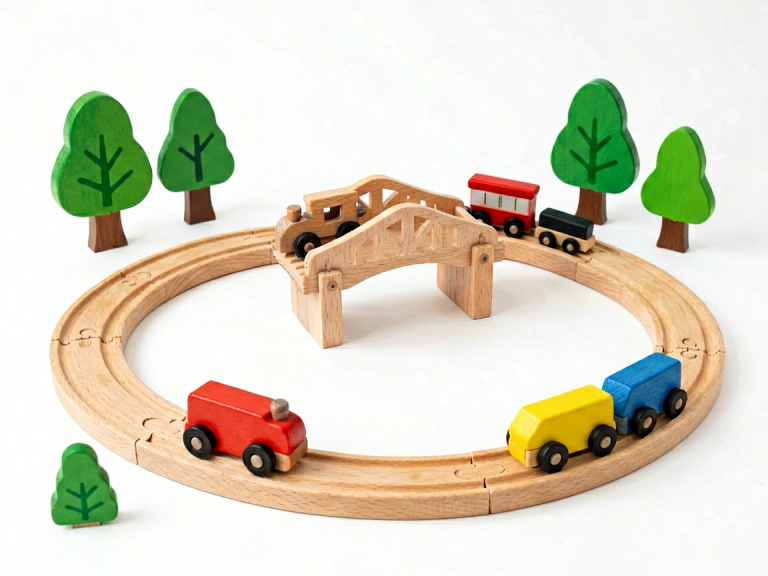
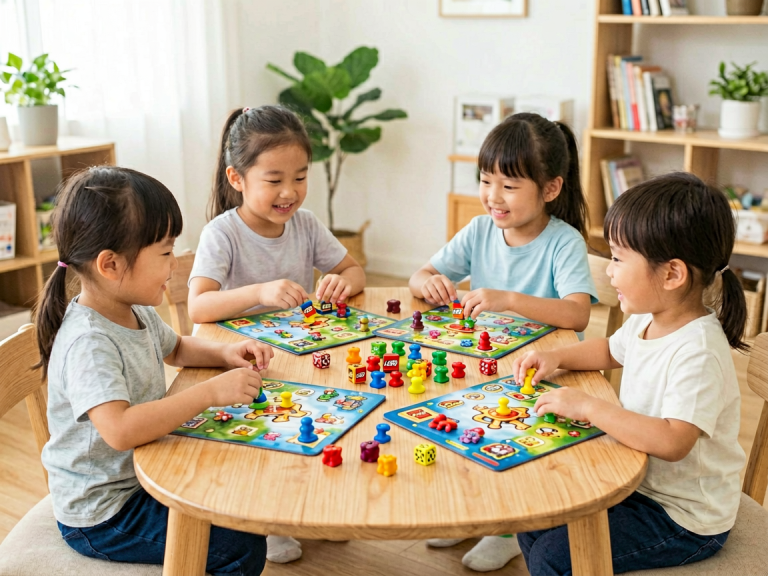
Socially and emotionally, unplugged toys invite cooperation and negotiation. Two children sharing a set of toy vehicles must learn to take turns, express their desires, and sometimes resolve conflicts—skills that are essential for preschool and beyond. Screen-based play, by contrast, often isolates the child in a solitary bubble. Furthermore, open-ended toys such as wooden train tracks or dollhouses encourage storytelling, which builds narrative language and empathy as children project feelings onto their characters. The slow, unhurried pace of physical play also helps toddlers practice patience and frustration tolerance—qualities that are eroded by the instant gratification of screens.
—
Top Categories of Screen-Free Toys for Three-Year-Olds
Not all screen-free toys are created equal. For three-year-olds, the best choices are those that are safe, durable, and matched to their developing abilities. Below are the most effective categories, each with a brief rationale.
1. Construction and Building Sets
Blocks, magnetic tiles, and large interlocking bricks are perennial favorites. They allow children to build towers, bridges, and imaginary worlds. The act of stacking and balancing strengthens fine motor control and teaches basic physics: a tower that is too tall will topple. Magnetic tiles, in particular, offer a satisfying snap and allow for three-dimensional structures that spark creativity. Look for sets with large pieces to avoid choking hazards and ensure easy handling.
2. Creative Art Supplies
Non-toxic crayons, washable markers, finger paints, play dough, and simple scissors (with child-safe blades) give three-year-olds a powerful outlet for self-expression. Art materials are inherently open-ended: there is no “right” way to use them. Scribbling, mixing colors, and squishing dough develop hand muscles and promote sensory exploration. Importantly, art also supports emotional regulation—a child can “draw” her frustration away. Beware of digital drawing tablets that mimic the experience; the tactile resistance of paper and the smell of paint are irreplaceable.
3. Pretend Play Sets
Three-year-olds are just beginning to engage in symbolic play. A toy kitchen with plastic pots and pans, a doctor’s kit, a small shopping cart with play food, or a simple dress-up trunk with hats and scarves can ignite hours of imaginative scenarios. Pretend play allows children to make sense of the adult world by imitating roles, which builds social understanding and language. Wholesale “playsets” with many pieces can be overwhelming, so start with a few high-quality items and rotate them to maintain novelty.
4. Puzzles and Matching Games
Floor puzzles with 8 to 24 large pieces are excellent for this age. They challenge spatial awareness, perseverance, and visual discrimination. Similarly, matching games that involve memory—turning over cards to find pairs—train concentration and short-term recall. These toys are best enjoyed with an adult or sibling, because the social interaction adds a layer of communication and encouragement.
5. Musical Instruments
Simple, child-friendly instruments like maracas, tambourines, xylophones, and drums introduce cause and effect (shaking makes sound) and rhythm. Making music together—even if it’s just a chaotic jam session—fosters listening skills, turn-taking, and joy. Unlike electronic music toys that play pre-recorded tunes, these instruments give the child full control over the sound, nurturing a sense of agency.
6. Outdoor and Gross Motor Toys
Three-year-olds have boundless energy. Push-and-pull toys (like a wooden wagon or a lawnmower), tricycles, balls of various sizes, tunnels, and low climbing structures strengthen large muscle groups and develop balance. Outdoor play also exposes children to nature—digging in dirt, collecting leaves, or watching insects—which has been shown to reduce stress and improve attention. A simple bucket and shovel can occupy a child for an hour, building both physical strength and scientific curiosity.
—
How to Choose the Right Screen-Free Toys
With thousands of options on the market, selecting toys for a three-year-old can feel overwhelming. Here are four criteria to keep in mind:
- Safety First. Always check for non-toxic materials, rounded edges, and no small parts that could be swallowed. Look for certifications like ASTM or EN71. Avoid toys with long cords that could pose a strangulation risk.
- Open-Endedness. The best toys do not prescribe a single outcome. A set of wooden blocks can become a castle, a spaceship, or a garage depending on the child’s mood. Avoid toys that only do one thing, such as a plastic shape sorter with a single solution; once mastered, it loses value.
- Age-Appropriate Challenge. The toy should be easy enough to avoid frustration but hard enough to require effort. For instance, a three-year-old can typically complete a 12-piece floor puzzle but may struggle with a 48-piece version. Observe your child’s current abilities and choose accordingly.
- Variety Over Quantity. Young children benefit from rotating a limited selection of toys rather than being overwhelmed by a flood of options. A small set of high-quality items—say, one building set, one art kit, one puzzle, and one outdoor toy—can be more engaging than a cluttered playroom. Swap toys every few weeks to reignite interest.
—
Creating a Screen-Free Play Environment
Even the best screen-free toys lose their appeal if a tablet is always within reach. To truly reap the benefits of unplugged play, parents need to intentionally design the home environment. Store screens out of sight during playtime, or designate specific times for digital content. Create low shelves where toys are accessible and inviting; a tidy, organized space encourages independent play.
Equally important is the parent’s role. Joining a child in block-building or serving pretend tea not only strengthens the parent-child bond but also models how to use the toys creatively. Narrate what you are doing: “I’m going to put the blue block on top of the red one. Oh, it wobbles—let’s try a flat base.” This language enriches vocabulary and demonstrates problem-solving. Yet it is also crucial to step back and allow the child to lead. The magic of screen-free play lies in the child’s own agency—the freedom to make mistakes, discover, and invent.
—
Conclusion
The push for screen-free toys is not about rejecting technology wholesale, but about ensuring that the first years of life are anchored in the rich, sensory world of physical play. For a three-year-old, every block stacked, every scribble drawn, and every make-believe conversation builds the architecture of a capable, creative, and emotionally intelligent mind. By choosing toys that demand active engagement rather than passive consumption, parents give their children the chance to become not just users of devices, but architects of their own imagination. In the end, the most powerful “toy” is simply the world itself—touched, sorted, built, and reimagined by small hands that have never lost sight of its wonder.