Building the Future: The Best Building Toys for 8-Year-Olds and Why They Matter
Introduction
At the age of eight, children stand at a remarkable crossroads of development. They have outgrown the simple stacking blocks of toddlerhood, yet they are not quite ready for the intricate engineering kits that appeal to teenagers. This sweet spot makes building toys for 8-year-olds a uniquely powerful tool for growth. Building toys are not just about keeping children busy; they are about sparking creativity, honing problem-solving skills, and laying the foundation for a lifelong love of learning. In this article, we will explore why construction play is critical at this age, what to look for when selecting such toys, the most effective types available, and how parents and educators can maximize their benefits. By the end, you will see that the right building toy is far more than a plaything—it is a gateway to cognitive, social, and emotional development.
Why Building Toys Matter for 8-Year-Olds
Eight-year-olds are in what psychologists call the “concrete operational stage.” Their thinking is becoming more logical, but they still learn best through hands-on, tangible experiences. Building toys tap directly into this developmental need. When an eight-year-old connects two plastic bricks or balances a wooden beam, they are not merely playing—they are testing hypotheses about gravity, stability, and geometry. Each construction project is a miniature experiment in physics and design.
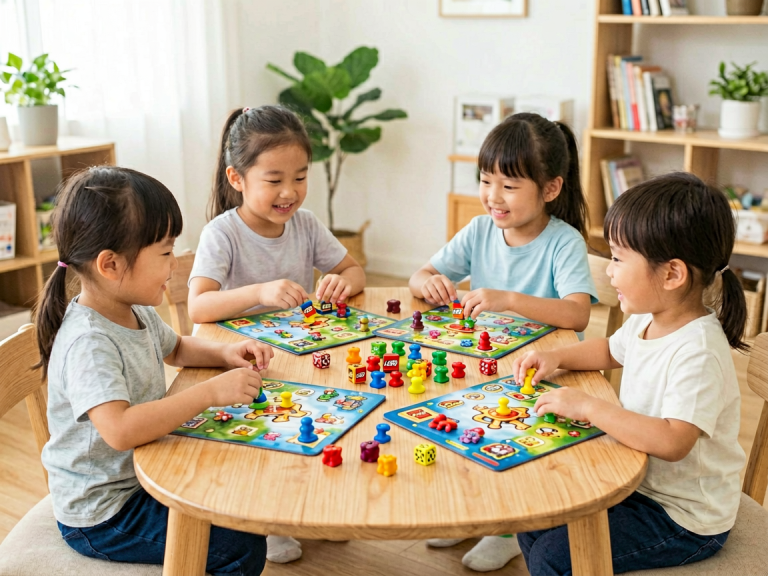
Moreover, this age group craves autonomy and a sense of mastery. Building toys provide immediate feedback: a tower that falls teaches a lesson in balance; a bridge that holds weight confirms a successful design. This cause-and-effect relationship builds resilience and a growth mindset. Children learn that failure is a stepping stone to success, and that persistence leads to improvement. Socially, building toys often become collaborative projects. Siblings or friends who build together negotiate roles, share ideas, and resolve conflicts—all essential life skills. In an era of screen-dominated entertainment, the tangible, offline engagement of building toys offers a crucial counterbalance.
Key Considerations When Choosing Building Toys for 8-Year-Olds
Not all building toys are created equal, and selecting the right one for an eight-year-old requires thought. Here are several criteria to keep in mind.
First, age-appropriateness and safety. At eight, children have developed fine motor skills, but small pieces can still be a choking hazard for younger siblings in the house. Look for sets labeled for ages 6–12 or 8+. Avoid overly complex instructions that might frustrate a child who is not yet a confident reader, but also avoid sets that are too simple—eight-year-olds quickly lose interest if there is no challenge.
Second, open-endedness vs. structured play. Some building toys come with specific blueprints (e.g., a model of a car or a castle), while others are purely creative (a bag of wooden blocks). The best choice often depends on the child’s personality. A child who thrives on clear goals may enjoy following instructions to build a working crane. A more imaginative child may prefer a set of magnetic tiles that allows infinite geometric creations. Ideally, provide a mix of both.
Third, material quality and durability. Eight-year-olds can be enthusiastic builders, but they can also be rough. Toys made of brittle plastic that cracks easily will lead to frustration. Look for solid ABS plastic, high-quality wood, or metal components. The toy should withstand repeated assembly and disassembly.
Fourth, educational value. The best building toys subtly teach STEM concepts—engineering, mathematics, spatial reasoning, and even basic coding. However, the learning should feel like play, not homework. Avoid toys that are marketed solely as “educational” but lack engagement.
Finally, expandability. Many building toy systems (like LEGO, K’NEX, or Magna-Tiles) offer expansion packs. A starter set that can grow with the child provides long-term value and encourages sustained interest.
Top Types of Building Toys for This Age Group
There is a wide universe of building toys, but certain categories stand out as particularly beneficial for eight-year-olds.
1. Classic Interlocking Brick Systems (e.g., LEGO, Mega Bloks)
The iconic brick is a staple for good reason. LEGO sets for eight-year-olds (typically in the “Creator” or “City” lines) offer a balance of guided instructions and creative freedom. A child can build a police station following the manual, then dismantle it and invent a spaceship. The precision required to snap bricks together develops finger strength and dexterity. More advanced sets introduce gears, axles, and motors (such as LEGO Technic), which teach mechanical principles. For an eight-year-old, a set with around 200–500 pieces is ideal—not overwhelming but substantial enough to provide a sense of accomplishment.
2. Magnetic Building Tiles (e.g., Magna-Tiles, PicassoTiles)
Magnetic tiles have become a modern classic. Their translucent, geometric shapes click together with satisfying magnets, allowing children to build 3D structures like castles, rockets, and geometric domes. The beauty of magnetic tiles is their extreme open-endedness. An eight-year-old can experiment with shapes, angles, and symmetry without any instructions. This type of toy is excellent for visual-spatial development and for introducing concepts like magnetism and structural integrity. It also works wonderfully for group play, as multiple children can collaborate on a single large structure.
3. Wooden Block Sets and Unit Blocks
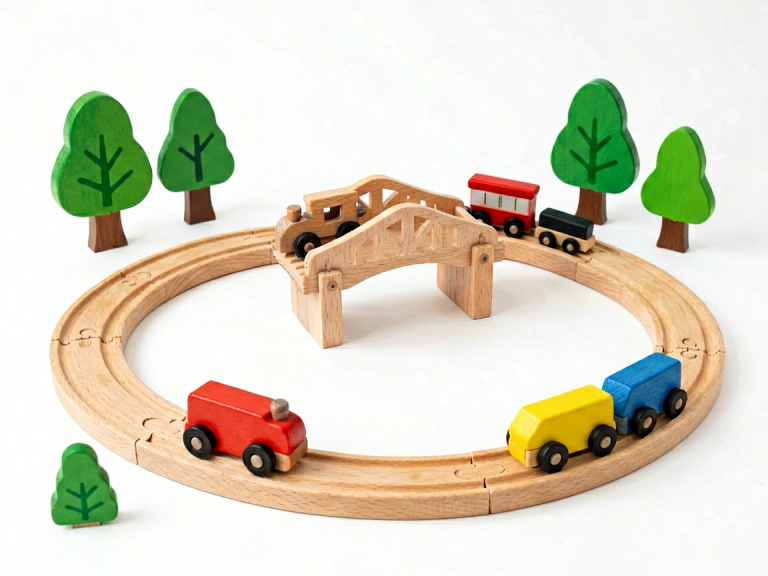
Old-fashioned wooden blocks remain powerful developmental tools. At age eight, children can handle larger sets with complex shapes—arches, ramps, cylinders, and quarter-circles. Unlike plastic bricks, wooden blocks rely entirely on friction and balance, so children must think carefully about weight distribution. Building a tall tower or a suspension bridge from wooden blocks teaches patience and precision. Many schools use unit blocks in kindergarten through third grade for exactly this reason. For home use, look for sets that include enough pieces to build substantial models—at least 100 blocks.
4. Construction Beams and Connectors (e.g., K’NEX, Tinkertoys)
Rod-and-connector systems allow children to build moving machines, such as Ferris wheels, roller coasters, and vehicles with working wheels and pulleys. K’NEX, in particular, offers sets designed for ages 7–10 that require following step-by-step instructions to create functional models. This type of building toy is ideal for introducing basic engineering concepts like tension, torque, and mechanical advantage. The challenge of making a model actually move (e.g., a motorized car) gives a powerful reward. Children also learn to read schematic diagrams, a skill that translates to many real-world contexts.
5. Modular Construction Kits (e.g., Plus-Plus, Strawbees)
Plus-Plus consists of small, interlocking pieces shaped like plus signs that connect in multiple directions. Strawbees, meanwhile, uses flexible plastic connectors and straws. Both systems emphasize creativity and are forgiving—mistakes are easy to undo. These kits are particularly good for children who are not naturally drawn to traditional building toys, as they allow for organic, sculptural creations. An eight-year-old can make a 3D animal, a mask, or a large abstract sculpture. The lightweight pieces also make them portable for travel.
Educational Benefits Beyond Fun
The cognitive gains from building toys extend far beyond the immediate play session. Research in developmental psychology consistently shows that construction play enhances spatial reasoning—the ability to visualize and manipulate objects in three dimensions. This skill is a strong predictor of success in STEM fields, including mathematics, engineering, and computer science.
Furthermore, building toys naturally teach the engineering design process: ask, imagine, plan, create, test, and improve. When an eight-year-old’s bridge collapses, they go back to the drawing board. They ask: “What went wrong? Maybe the supports need to be wider.” This iterative thinking is the heart of innovation. Language skills also benefit—children often narrate their building process, explaining what they are doing, or they argue with a friend about the best way to attach a piece. Such verbal negotiation builds vocabulary and communication.
Emotionally, building toys provide a safe space for taking risks. A child who is shy or perfectionistic in other areas may feel free to experiment with a pile of bricks. There is no wrong answer in construction play—only different outcomes. This freedom reduces anxiety about failure and builds self-esteem. Additionally, completing a complex model gives a dopamine boost that reinforces a love of challenge.
Tips for Parents and Educators
To get the most out of building toys, adults can play an active but unobtrusive role. Here are practical suggestions.
- Start with a shared project. Build together for the first time. Sit side by side and follow the instructions or create a freeform design. This models problem-solving and shows that you value the activity. However, avoid taking over—let the child lead.
- Praise the process, not the product. Instead of saying “What a beautiful castle,” say “I noticed how you figured out that the tower kept falling, and you added extra support. That was smart thinking.” This reinforces a growth mindset.
- Encourage recycling of creations. Many children want to keep their builds intact forever, but the real value lies in dismantling and rebuilding. Set aside a display shelf for “masterpieces” but gently encourage the child to reuse pieces for new projects. If they are reluctant, take a photo of each creation before disassembly.
- Combine building toys with storytelling. Ask the child: “Who lives in this space station? What happens there?” This adds a narrative layer that enhances creativity and language skills.
- Create a dedicated building space. A large, flat surface like a low table or a tray on the floor keeps pieces organized. Having storage bins sorted by type (e.g., bricks, rods, connectors) reduces frustration.
- Rotate toys. If a child has too many building options at once, they may feel overwhelmed. Store some sets away and rotate them every few weeks to renew interest.
- Look for community building events. Many libraries and toy stores host LEGO club meetups or building competitions. These provide social motivation and expose children to new build ideas.
Conclusion
Building toys for 8-year-olds are far from simple distractions. They are sophisticated learning tools that harness a child’s natural curiosity and drive to create. Whether it is a LEGO city skyline, a magnetic tile rainbow, or a wobbling wooden tower, each construction project builds more than just a model—it builds a mind that can analyze, persist, and innovate. As parents and educators, the choices we make in play materials can shape a child’s attitude toward learning for years to come. So next time you see a pile of bricks on the living room floor, know that you are not just looking at a mess. You are looking at a future engineer, architect, or inventor, one block at a time.