Building the Future: How Engineering Toys Shape Young Minds
Introduction
In an age dominated by screens and passive entertainment, parents and educators are increasingly seeking tools that actively engage children’s curiosity and problem-solving abilities. Engineering toys for kids have emerged as a powerful category of playthings that do more than just occupy time—they lay the groundwork for critical thinking, creativity, and technical literacy. From simple wooden blocks to sophisticated robotics kits, these toys transform play into a hands-on learning experience. This article explores why engineering toys matter, what types are available, how they benefit children, and how to choose the right ones for different ages.
Why Engineering Toys Matter
Engineering is not just about building bridges or coding apps; it is a mindset that involves identifying problems, designing solutions, testing them, and iterating. When children engage with engineering toys, they naturally adopt this process. Unlike traditional toys that often have a single, fixed outcome, engineering toys encourage open-ended exploration. A set of magnetic tiles can become a castle, a spaceship, or a geometric sculpture—each creation requiring different structural reasoning. This flexibility fosters resilience, because when a tower collapses, the child learns to analyze the failure and try again.
Moreover, early exposure to STEM (Science, Technology, Engineering, and Mathematics) concepts through play helps demystify these fields. Children who might otherwise feel intimidated by math or physics later in school develop a intuitive understanding of balance, force, and spatial relationships. Engineering toys also promote collaboration when shared with siblings or friends, teaching communication and compromise—skills that are invaluable in both academic and professional settings.
Types of Engineering Toys for Different Ages
Not all engineering toys are created equal. The best choices depend on a child’s developmental stage and interests. Below are several categories, each suited to specific age groups and learning goals.
Preschool (Ages 3–5): Building Foundations
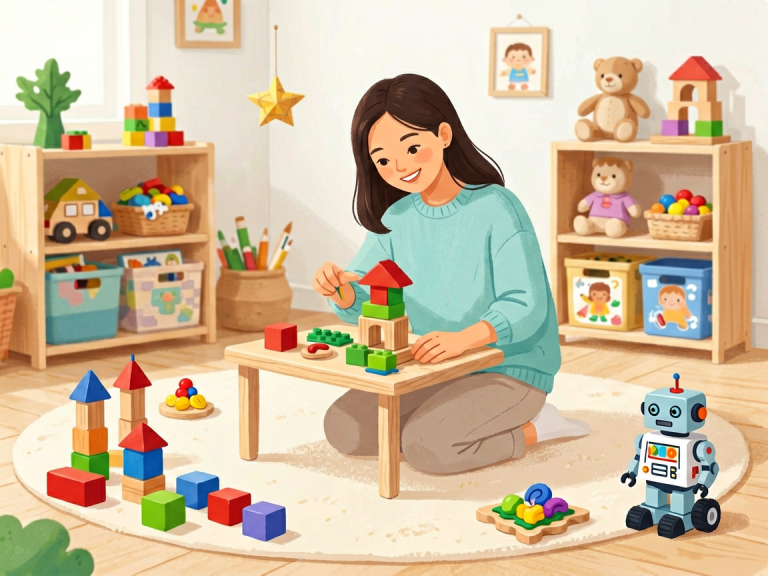
For the youngest engineers, the focus should be on gross motor skills, cause-and-effect, and basic construction. Classic wooden blocks remain unmatched for their simplicity and versatility. More modern options include large interlocking plastic bricks (like Duplo), magnetic tiles (e.g., Magna-Tiles), and simple gear sets. These toys allow toddlers to stack, connect, and rotate pieces, building an intuitive sense of balance and symmetry. At this stage, the goal is not to follow instructions but to explore freely. Parents can encourage language development by asking questions such as “What happens if you put a big block on top of a small one?”
Early Elementary (Ages 5–8): Structures and Mechanisms
As children enter kindergarten and early primary grades, their fine motor skills improve, and they begin to understand cause and effect more deeply. Engineering toys at this level introduce basic mechanical principles. Construction kits with nuts, bolts, and screwdrivers (like the popular “tool” sets or building kits from brands like K’NEX or LEGO Classic) allow kids to create moving vehicles, simple machines, and even working doors or hinges. Additionally, marble runs teach gravity, momentum, and track design. Magnetic building tiles with more pieces enable complex 3D structures. At this stage, children benefit from both free play and simple challenge cards that prompt them to build a bridge that can hold weight or a tower that withstands a “wind” (a fan).
Upper Elementary (Ages 8–12): Circuits and Robotics
Older children are ready for more technical engineering concepts. Electronic building kits such as Snap Circuits let them safely explore electricity, resistors, and switches by snapping together color-coded modules. Robotics kits like LEGO Boost, VEX IQ, or even entry-level Arduino-based robots introduce programming logic through visual coding. Children learn that engineers must consider both hardware and software. These toys often come with structured projects but also encourage customization—a critical step toward true innovation. For example, a child might build a robot that follows a line and then modify its code to make it avoid obstacles instead.
Teens (Ages 12+): Advanced Prototyping
For teenagers, engineering toys evolve into proper engineering tools. 3D printing pens and small 3D printers allow them to design and fabricate custom parts. Microcontroller kits (Arduino, Raspberry Pi) combined with sensors and motors enable projects like weather stations, automated plant waterers, or simple drones. Competition-oriented kits like FIRST LEGO League challenge teams to solve real-world problems using engineering principles. At this stage, the line between “toy” and “tool” blurs, and children who persist often develop skills that translate directly into careers.
Key Developmental Benefits of Engineering Toys
Beyond the obvious technical knowledge, engineering toys nurture a range of cognitive and social-emotional skills.
Problem-Solving and Critical Thinking
When a child attempts to build a stable bridge from only popsicle sticks and glue, they must plan, test, and revise. This iterative process mirrors the scientific method. Engineering toys teach that failure is not a dead end but a data point. A child who learns this early is more likely to embrace challenges later in life, whether in mathematics, entrepreneurship, or personal relationships.
Spatial Awareness and Fine Motor Skills
Manipulating small parts—whether snapping together plastic bricks or threading a screw into a nut—refines dexterity and hand-eye coordination. Simultaneously, visualizing how a 2D diagram translates into a 3D object strengthens spatial reasoning, which is a strong predictor of success in STEM fields.
Creativity and Self-Expression
Engineering toys are not just about following blueprints. Many kits encourage open-ended creation. A child might combine gears, wheels, and connectors to invent a machine that has no name. This freedom to imagine and build something entirely new fosters creative confidence. Moreover, when children personalize their creations (painting a cardboard robot or adding stickers to a LEGO car), they infuse engineering with artistry.
Persistence and Grit
Engineering projects often require sustained effort. A complex model may take hours or days to complete. Children learn to break large tasks into smaller steps, manage frustration, and celebrate incremental progress. These grit-building experiences are far more valuable than the final product itself.
How to Choose the Right Engineering Toys
With countless options on the market, selecting the right toy can be overwhelming. Here are practical guidelines for parents, educators, and gift-givers.
Match the Toy to the Child’s Age and Ability
A toy that is too simple will bore a child; one that is too advanced will frustrate them. Pay attention to the recommended age range, but also consider the child’s prior experience. If a 7-year-old has already built several LEGO sets, they might be ready for a motorized building kit. Conversely, a child who rarely builds may need more guided play.
Prioritize Open-Endedness Over Instructions
While step-by-step kits can teach specific skills, toys that allow multiple outcomes offer more long-term value. A set of magnetic tiles can be used for a thousand different projects; a single-model snap-together plane cannot. Look for kits that include basic pieces and then challenge the child to invent their own designs.
Consider Safety and Material Quality
Especially for younger children, avoid toys with small parts that pose choking hazards. Ensure that materials are non-toxic and durable. Reputable brands like LEGO, Magna-Tiles, and Snap Circuits have rigorous safety standards. Also, consider storage—engineering toys often come with many small pieces; a good storage solution prevents frustration.
Encourage Social Play
Engineering toys can be solitary, but they shine in group settings. Consider toys that allow or require cooperation. For instance, a giant marble run with multiple tracks encourages children to negotiate who places which piece. Robotics competitions (even informal ones with siblings) teach teamwork and sportsmanship.
Integrate Screen Time Wisely
Many modern engineering toys connect to apps or tablets for programming. While this can be educational, it is important to balance screen-based coding with hands-on building. Look for toys that allow children to code on a tablet but then see their robot move in the real world. Avoid toys that require constant screen attention without physical manipulation.
The Role of Parents and Educators
A toy is only as effective as the environment in which it is used. Parents and teachers can maximize the benefits of engineering toys by adopting a few simple practices. First, ask open-ended questions: “What do you think will happen if we add another wheel?” or “How could you make this bridge stronger?” Second, allow children to struggle and figure out solutions independently—resist the urge to fix their mistakes immediately. Third, celebrate the process rather than the final product. A child who spent three hours building a wobbly structure learned far more than one who snapped together a pre-designed model in ten minutes.
In classrooms, engineering toys can be integrated into project-based learning. For example, a group of students might use a simple robotics kit to design a prototype of a recycling sorting machine. This combines engineering with environmental science and social studies. Teachers should also encourage reflective journaling or sketching, asking children to document what worked and what didn’t.
Conclusion
Engineering toys for kids are far more than entertainment—they are catalysts for cognitive growth, resilience, and future-ready skills. In a world that increasingly values innovation and adaptability, these playthings give children a head start in understanding how things work and how to make them work better. Whether it is a toddler stacking blocks or a teenager programming a drone, every small engineering project plants a seed of curiosity. As parents and educators, we have the privilege—and responsibility—to choose toys that open doors rather than lock them. The next great engineer, architect, or inventor might just be the child who, today, is building a tower of wooden blocks and wondering, “What if I try it a different way?”