Building Minds: The Best Building Toys for Problem-Solving Skills
Introduction
In a world that increasingly values critical thinking, adaptability, and creative resilience, problem-solving has become one of the most essential skills a child can develop. While formal education often focuses on rote memorization or standardized tests, the most powerful lessons in logic, perseverance, and strategic thinking often happen during unstructured play. Among the most effective tools for nurturing these abilities are building toys. Far from being simple pastimes, high-quality building sets challenge children to plan, test, revise, and overcome obstacles—skills that directly translate to real-world problem-solving.
This article explores the best building toys specifically designed to enhance problem-solving capabilities. Each category offers unique cognitive demands, from spatial reasoning and systematic trial-and-error to algorithmic thinking and collaborative engineering. Whether you are a parent, educator, or caregiver, understanding these options will help you choose the right tool to turn playtime into a training ground for sharp, resourceful minds.
—
Classic Wooden Blocks: Foundations of Creativity and Logic
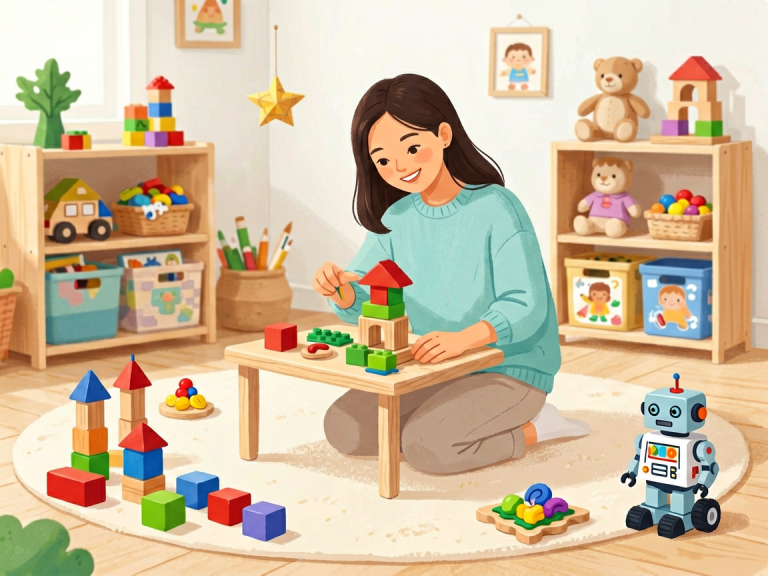
Before modern plastic bricks or magnetic tiles, there were simple wooden blocks. Despite—or perhaps because of—their simplicity, they remain one of the most powerful problem-solving toys available. A set of wooden blocks in various shapes and sizes presents an open-ended challenge: how to stack, balance, and arrange them to achieve a stable structure.
Problem-solving emerges naturally when a child tries to build a tower taller than their own height. The first collapse teaches a lesson in physics and center of gravity. The child must then adjust the base width, align the blocks precisely, or choose rectangular pieces over cubes to improve stability. This iterative process—observe, hypothesize, test, adjust—is the very essence of scientific problem-solving.
Moreover, wooden blocks encourage divergent thinking. Unlike many modern toys that come with explicit instructions, a pile of blocks has no prescribed outcome. A child must define the problem themselves: “I want to build a bridge that can hold a toy car.” Then they must solve a series of sub-problems: which shape provides the strongest support? How do I prevent the middle from sagging? This self-directed problem-solving builds intrinsic motivation and executive function.
Recommended sets:
- Melissa & Doug Unit Blocks (natural, unpainted, versatile)
- Tegu Magnetic Wooden Blocks (adds a dynamic magnetic element)
—
Magnetic Tiles: Spatial Reasoning and Iterative Design
Magnetic construction sets, such as Magna-Tiles or PicassoTiles, have become a classroom and home staple because they combine the tactile satisfaction of blocks with the instant feedback of magnetic connections. The translucent, geometric tiles click together with satisfying ease, allowing children to build 2D patterns and 3D structures rapidly.
What makes magnetic tiles exceptional for problem-solving is their rapid prototyping capability. Because pieces attach and detach effortlessly, children can test many ideas in a short time. They can try different roof angles for a house, reconfigure a cube into a pyramid, or experiment with symmetrical patterns. Each failure is low-cost: a tower collapses? Just pick up the tiles and try a new configuration. This reduces frustration and encourages persistence.
Spatial reasoning is a core component of problem-solving that gets neglected in many school curricula. Magnetic tiles require children to mentally rotate shapes, visualize how a 2D net folds into a 3D solid, and understand symmetry and balance. For example, building a dome or a sphere from flat pieces demands careful planning and adjustment—a perfect analogy for solving multi-step, non-linear problems.
Furthermore, magnetic toys are highly social. When two children build together, they must negotiate, share ideas, and combine their solutions—another crucial problem-solving skill: collaborative reasoning.
Recommended sets:
- Magna-Tiles Clear Colors (100-piece set offers ample variety)
- Playmags 3D Magnetic Tiles (includes wheels and car bases for moving structures)
—
LEGO and Construction Kits: Systematic Problem Solving
LEGO bricks are arguably the most iconic building toys in history, and their problem-solving potential is unmatched—especially when used beyond strictly following instructions. While building a pre-designed model (like a Star Wars ship) improves reading diagrams and sequencing, the true cognitive gold lies in free-form building or “master builder” challenges.
When a child decides to build a castle from a random pile of bricks, they encounter real engineering dilemmas: How do I make a wall that doesn’t fall? How do I attach a roof without it sagging? How do I create a working drawbridge using hinges and pulleys? These require systems thinking—understanding that a change in one part (e.g., making a wall thinner) affects the whole structure.
LEGO Technic sets take this further by introducing gears, axles, beams, and motors. Here, problem-solving becomes mechanical. A child building a working crane must understand gear ratios, torque, and structural support. If the crane arm won’t lift, they must debug the problem: Is the gear mesh correct? Is the axle binding? This mirrors troubleshooting in real-world engineering.
Even following instructions can teach problem-solving if the instructions are complex. Children learn to break a large task into manageable steps, check their progress, and recover from mistakes (e.g., “I put the wrong brick two steps ago; now I need to reverse engineer the build”). This stepwise, logical approach is directly applicable to coding, math, and project management.
Recommended sets:
- LEGO Classic Creative Bricks (for open-ended play)
- LEGO Technic (for mechanical problem-solving; e.g., the “Remote-Controlled Stunt Racer”)
—
Engineering Sets (K’NEX, Meccano): Mechanical Thinking
While LEGO focuses on modular plastic bricks, K’NEX and Meccano offer rod-and-connector systems that simulate real trusses, bridges, and mechanical linkages. These toys require a more abstract understanding of physics and geometry. Instead of stacking, children must join rods at specific angles, creating triangles and quadrilaterals to distribute forces.
Problem-solving with K’NEX often involves structural integrity. A bridge built with only rectangular frames will wobble; adding diagonal bracing (forming triangles) suddenly makes it rigid. The child discovers this not through a textbook, but through trial and error—a far more memorable lesson. Advanced sets include pulleys, motors, and even plastic gears to build working mechanisms like conveyor belts or Ferris wheels.
Meccano sets, made of metal parts with nuts and bolts, demand fine motor precision and patience. They teach sequential thinking: you must assemble parts in the correct order because reinstalling a bolt later is impossible. This builds discipline and attention to detail—both critical for tackling complex problems.
These toys also introduce failure analysis. When a K’NEX roller coaster car derails, the child must inspect the track: Is a joint loose? Is the slope too steep? This systematic debugging is a high-level problem-solving skill often overlooked in childhood play.
Recommended sets:
- K’NEX Education – Intro to Structures: Bridges (focused on engineering concepts)
- Meccano – Supercar (metal pieces, requires patience and logic)
—
Robotics and Coding Kits: Computational Problem Solving
The digital age demands a new kind of problem-solving: computational thinking. Robotics kits like LEGO Mindstorms, VEX Robotics, or Botzees combine building with programming. Children construct a physical robot and then write code to control its movements, sensors, and reactions.
Here, problem-solving becomes two-layered: first, the mechanical build; second, the algorithmic control. For instance, a child building a line-following robot must design a chassis that can turn accurately, place sensors at the correct height, and program it to adjust speed when the line curves. If the robot overshoots a turn, the child must debug both the physical design (e.g., wheel traction) and the code (e.g., threshold values for light sensors).
This integration of hardware and software mirrors real-world engineering challenges. It teaches decomposition—breaking a big problem (e.g., “have the robot navigate a maze”) into smaller sub-problems (move forward, turn left, sense wall, etc.). It also builds iteration: rarely does the first attempt work; children learn to test, gather data, and refine their solution repeatedly.
Even simpler coding toys like “Coding Critters” or “Artie 3000” introduce sequence, loops, and conditionals through building-based play. The key is that the building and the coding are inseparable: you build a structure that must interact with the code, creating a holistic problem-solving ecosystem.
Recommended sets:
- LEGO Mindstorms Robot Inventor (advanced, for ages 10+)
- Makeblock mBot (affordable intro to robotics and coding)
—
How to Choose the Right Toy for Your Child
Not every building toy suits every child. Age, interest, and developmental stage matter. For toddlers aged 2–4, large wooden blocks or soft foam blocks are perfect for grasping cause and effect. Preschoolers (4–6) thrive with magnetic tiles, which offer easy success and encourage spatial language. Primary school children (6–10) benefit from LEGO Classic or K’NEX to develop systematic thinking. Preteens and teens should tackle robotics kits or Meccano to combine logic with technology.
Consider the child’s natural problem-solving style, too. Some children love open-ended chaos: they will build abstract sculptures and invent stories. For them, classic blocks or magnetic tiles are ideal. Others are methodical and enjoy following instructions: LEGO sets with detailed manuals or Meccano kits will satisfy their need for order while still teaching troubleshooting.
The best approach is to rotate toys and mix open-ended and structured sets. A child who only builds from instructions may never learn to think flexibly; a child who only free-builds may never learn to follow a complex sequence. Both skills are essential for holistic problem-solving.
—
Conclusion
Building toys are far more than entertainment; they are laboratories for the mind. Through stacking, connecting, programming, and rebuilding, children learn to navigate uncertainty, persist through failure, and craft creative solutions. The best building toys for problem-solving are those that strike a balance between challenge and accessibility, allowing children to experience both the frustration of dead ends and the joy of breakthrough.
Whether you choose classic wooden blocks, magnetic tiles, LEGO, K’NEX, or a programmable robot, remember that the most valuable part is not the final structure—it’s the thinking that happens along the way. Give a child the right building toy, and you are not just giving a gift; you are giving them the tools to solve tomorrow’s problems, one brick at a time.
*(Word count: ~1,280 words)*