Building Minds Without Screens: The Enduring Power of Screen-Free STEM Toys
Introduction: A Digital Dilemma in the Age of STEM
In an era where children as young as two can swipe a tablet with uncanny precision, the term “STEM education” has become almost synonymous with coding apps, virtual labs, and interactive online games. Yet a quiet revolution is taking place in classrooms and living rooms alike: a growing movement of parents, educators, and child-development experts is rediscovering the profound value of screen-free STEM toys. These tactile, hands-on tools—ranging from wooden gears to programmable bricks that require no Wi-Fi—offer something that no screen can replicate: the raw, messy, and deeply satisfying experience of physical discovery. This article explores why screen-free STEM toys are not merely a nostalgic alternative, but an essential component of authentic scientific learning, creativity, and cognitive development.
Why “Screen-Free” Matters in a Hyper-Connected World
The Hidden Costs of Digital STEM Tools
Digital STEM apps and games are undeniably convenient and often engaging, but they come with trade-offs that are seldom discussed. A growing body of research in child development and neuroscience suggests that over-reliance on screens can impair a child’s ability to focus, delay fine motor skill development, and reduce opportunities for open-ended experimentation. When a virtual chemistry set allows a child to “mix” chemicals with a tap, the consequences are risk-free—but so is the learning. Screen-free toys, by contrast, involve real physics: a block tower that falls teaches gravity; a wooden marble run that jams teaches friction. These lessons are not just remembered—they are felt.
Reclaiming Tactile Learning
The human brain learns most effectively when multiple senses are engaged simultaneously. Screen-free STEM toys naturally provide this multisensory input: the weight of a metal bearing, the resistance of a rubber band, the satisfying click of a interlocking gear. Neuroscientists call this phenomenon haptic learning—knowledge gained through touch and proprioception—and it is dramatically underutilized in digital environments. By removing the screen, we force children to use their hands, their eyes, and their reasoning skills in concert, building neural pathways that are stronger and more durable than those formed by passive observation alone.
Categories of Screen-Free STEM Toys: From Gears to Gizmos
Construction and Engineering Toys
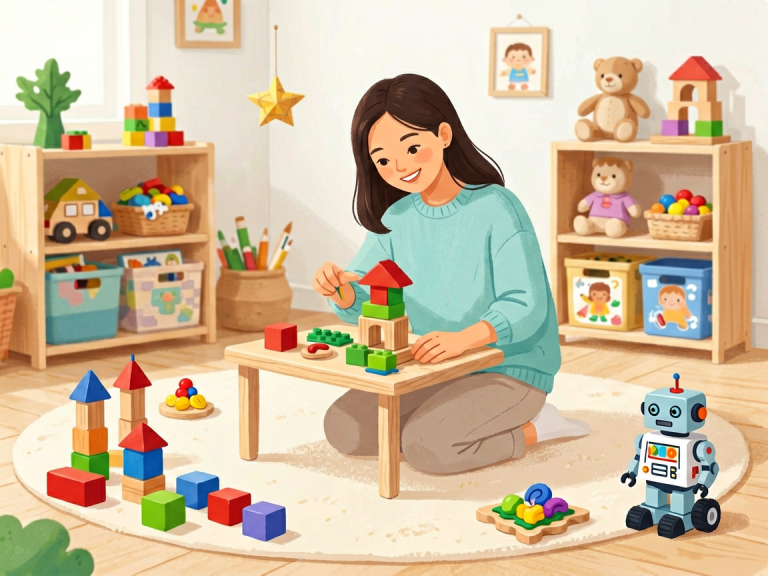
Perhaps the most iconic category of screen-free STEM play is construction sets. Classic examples include traditional wooden blocks, magnetic tiles, and interlocking plastic bricks. But modern iterations have evolved far beyond simple stacking. Toys like K’NEX and Engino introduce mechanical principles through rods, pulleys, and gears that children must physically assemble. More advanced sets, such as Meccano or Thames & Kosmos engineering kits, allow kids to build functioning cranes, wind turbines, or even hydraulic robots—all without a single pixel. These toys teach structural integrity, load distribution, and the iterative process of design and failure.
Circuitry and Electronics Without a Screen
Contrary to popular belief, electronics education does not require a computer. Screen-free circuit kits like Snap Circuits and littleBits (which can be used without the companion app) let children connect physical modules—switches, lights, motors, sensors—to create real electrical circuits. When a child accidentally reverses a connection and the LED fails to light, they must physically trace the path, check the components, and troubleshoot with their hands and eyes. This embodied debugging process is far more instructive than clicking “undo” on a simulation.
Robotics and Coding in the Physical World
Even coding, often considered the most screen-bound of STEM disciplines, can be taught screen-free. Toys like Code-a-Pillar, Cubetto, and Botley use tangible programming blocks or physical command cards to guide a robot’s movements. Children arrange wooden or plastic tiles in a sequence, press a button, and watch their code come to life as the robot rolls across the floor. This removes the abstraction of syntax and places coding into a concrete, spatial context. Research from Tufts University has shown that children who learn sequencing through physical blocks demonstrate stronger comprehension of algorithmic thinking than those who use on-screen drag-and-drop interfaces.
Science and Nature Exploration Kits
Screen-free STEM also extends into the natural world. Field microscopes that require no digital camera, rock and mineral sorting kits, ant farms, and crystal-growing sets all encourage observation, documentation, and hypothesis testing. A child who keeps a physical journal of plant growth over four weeks is engaging in authentic scientific method—recording data, noticing anomalies, and drawing conclusions. No app can replicate the patience required to watch a seed actually sprout.
Cognitive and Developmental Benefits Backed by Research
Enhanced Problem-Solving and Persistence
One of the most important benefits of screen-free STEM toys is that they naturally foster productive struggle. When a digital puzzle becomes too difficult, children often abandon it for a new game or watch a hint video. But a physical marble run that keeps derailing at the same curve cannot be “skipped.” The child must manipulate the track, adjust the angles, and test repeatedly. This cycle of trial-and-error builds what psychologist Carol Dweck calls a growth mindset—the belief that intelligence can be developed through effort. Screen-free toys reduce the temptation of instant gratification and reward sustained attention.
Spatial Reasoning and Mathematical Intuition
Multiple studies have linked hands-on construction play with improved spatial reasoning skills, which are predictive of later success in geometry, engineering, and even surgery. When a child rotates a block in their hand to see if it fits, they are training mental rotation abilities that correlate with higher math scores. Similarly, balancing a seesaw with weights develops an intuitive understanding of algebraic equivalence long before formal equations are introduced. Screen-free toys make abstract STEM concepts physically visible and manipulable.
Creativity and Divergent Thinking
Unlike many digital STEM games that offer predetermined outcomes (solve the puzzle to advance), screen-free toys are inherently open-ended. A set of magnetic tiles can become a castle, a spaceship, a DNA helix, or a Rube Goldberg machine. This freedom encourages divergent thinking—the generation of multiple solutions to a single problem. In a world that increasingly demands innovation, the ability to imagine novel possibilities is arguably more valuable than the ability to follow instructions. Screen-free toys naturally reward the “what if?” question.
Social and Emotional Dimensions of Unplugged Play
Cooperation and Communication
Screen-free STEM toys are often best experienced with others. Building a bridge from spaghetti and marshmallows requires teamwork, negotiation, and verbal communication. Children learn to articulate their ideas, listen to peers, and compromise on design decisions—skills that are often muted in solitary digital play. Moreover, when a structure collapses, the group must manage disappointment and collaboratively rebuild. These social-emotional lessons are as important as the physics ones.
Reducing Screen Fatigue and Anxiety
The American Academy of Pediatrics has raised alarms about the link between excessive screen time and increased rates of anxiety, sleep disruption, and attention difficulties in children. By deliberately incorporating screen-free STEM toys into a child’s routine, parents provide a cognitive reset. The slower pace of physical play, combined with the absence of notifications and algorithm-driven content, allows the brain to enter a calmer, more focused state. This is not just healthy—it is restorative.
Choosing the Right Screen-Free STEM Toys: Practical Advice for Parents and Educators
Age-Appropriate Complexity
For toddlers (ages 2–4), simple stacking and sorting toys lay the groundwork for pattern recognition. For early elementary (ages 5–7), magnetic construction sets and simple gear kits introduce cause and effect. For older children (ages 8–12), complex mechanical kits, circuit sets, and programmable robots (without screens) provide satisfying challenges. Always look for toys that are slightly above a child’s current ability—this “zone of proximal development” maximizes growth without causing frustration.
Prioritizing Open-Endedness Over Prescriptive Kits
While project-specific kits (e.g., “Build a Volcano”) can be fun, the most valuable screen-free STEM toys are those that can be used in countless ways. A set of 100 wooden blocks is more versatile than a kit that produces only one model. Open-ended toys encourage experimentation and reduce the pressure to “get it right.” They also tend to have longer play lives.
Avoiding the “STEM Washing” Trap
Not every toy labeled “STEM” delivers genuine learning. Some sets include a few plastic pieces and a glossy box but offer little meaningful engineering or science. Look for toys that require active problem-solving, have multiple pieces that interact in non-obvious ways, and allow for failure. Check reviews from educators and STEM professionals.
Conclusion: The Timeless Value of Hands-On Discovery
As we navigate an increasingly digital educational landscape, it is easy to assume that the best STEM learning tools must be high-tech. Yet the evidence—from developmental psychology, neuroscience, and classroom practice—points in a different direction. Screen-free STEM toys nourish the mind in ways that no app can: they teach patience through physical failure, ignite creativity through open-ended play, and build the neural architecture of logical thinking through tangible trial and error. They remind us that science and engineering are not spectator sports—they are crafts that demand the full engagement of our hands, eyes, and minds. In a world obsessed with connectivity, perhaps the most connected learning experience is the one that requires no screen at all.