Building Toys for 10-Year-Olds: Unlocking Creativity and STEM Skills Through Play
At the age of ten, children stand at a unique developmental crossroads. They have outgrown the simple stacking blocks of toddlerhood, yet they are not quite ready for the abstract engineering challenges of adolescence. This is precisely the golden window for building toys. These playthings are far more than just entertainment; they are powerful tools that nurture spatial reasoning, logical thinking, problem-solving, and even social collaboration. Building toys for 10-year-olds offer a perfect balance of complexity and accessibility, challenging young minds without overwhelming them. In this article, we will explore the best types of building toys for this age group, delve into their developmental benefits, and provide practical guidance for parents and educators seeking to make informed choices.
Why Building Toys Matter at Age Ten
At ten years old, children typically enter a phase of cognitive development described by Jean Piaget as the “concrete operational stage.” They can think logically about concrete events, understand cause and effect, and perform mental operations such as classification and seriation. Building toys tap directly into these emerging abilities. Unlike passive entertainment such as watching videos, building toys require active engagement. A child must plan, visualize, test, and revise. This process mirrors the scientific method and engineering design cycle, making building toys a natural gateway to STEM education.
Moreover, ten-year-olds are beginning to develop a sense of mastery and self-efficacy. Completing a complex structure—whether it is a suspension bridge from K’NEX or a motorized robotic arm from LEGO Technic—provides a profound sense of accomplishment. This success boosts confidence and encourages a growth mindset. When a child struggles with a connection that keeps slipping or a gear that doesn’t mesh, they learn persistence and creative problem-solving. Mistakes become opportunities for learning rather than failures.
The Best Types of Building Toys for 10-Year-Olds
Not all building toys are created equal, and the choice should reflect the child’s interests, attention span, and fine motor skills. Below are the most effective categories, each with distinct features and learning outcomes.
LEGO Technic and LEGO Mindstorms
LEGO is a household name, but for 10-year-olds, the classic bricks may feel too simple. Enter LEGO Technic. These sets replace traditional studs with beams, pins, gears, axles, and connectors that mimic real mechanical systems. Children build functioning cars with steering mechanisms, elevators with pulleys, or excavators with hydraulic pistons. The complexity is just right: instructions are clear yet challenging, and the final product often moves or performs a task.
For tech-savvy ten-year-olds, LEGO Mindstorms offers a programmable robotics experience. Using a brick-based computer and sensors, children can create robots that respond to touch, color, or distance. They learn basic coding concepts like loops, conditionals, and variables without needing a computer screen—the programming language is icon-based and intuitive. This combination of physical building and digital logic is perfect for preparing children for more advanced STEM studies.
K’NEX and Erector Sets
If a child shows interest in bridges, roller coasters, or structural engineering, K’NEX is an excellent choice. It uses rod-and-connector pieces that snap together to form rigid frames. The system excels at creating large, lightweight structures such as Ferris wheels, swing rides, or dome shapes. Building a K’NEX roller coaster involves thinking about gravity, friction, and kinetic energy. Children can experiment with different track layouts and observe how the marble’s speed changes with height and slope.
Erector sets, now often rebranded as Meccano, offer metal parts that are screwed together. This adds a layer of fine-motor precision and durability. Ten-year-olds can construct models with real working winches or gearboxes. The metal components feel more “real” and appeal to children who dream of being engineers or architects. The downside is that screws and nuts require more patience, but that is a valuable lesson in its own right.
Magnetic Building Tiles
Magnetic tiles, such as Magna-Tiles or PicassoTiles, are often dismissed as toys for younger children. However, advanced sets with various shapes, wheels, and hinge pieces can captivate a 10-year-old. The key is to move beyond simple 2D polygons and into 3D architectural challenges. Children can build geodesic domes, castles with turrets, or even marble runs with magnetic walls. The instant connection provided by magnets reduces frustration, allowing the child to focus on geometry and stability. These toys are also excellent for collaborative play—two or three children can pool their tiles to create a city.
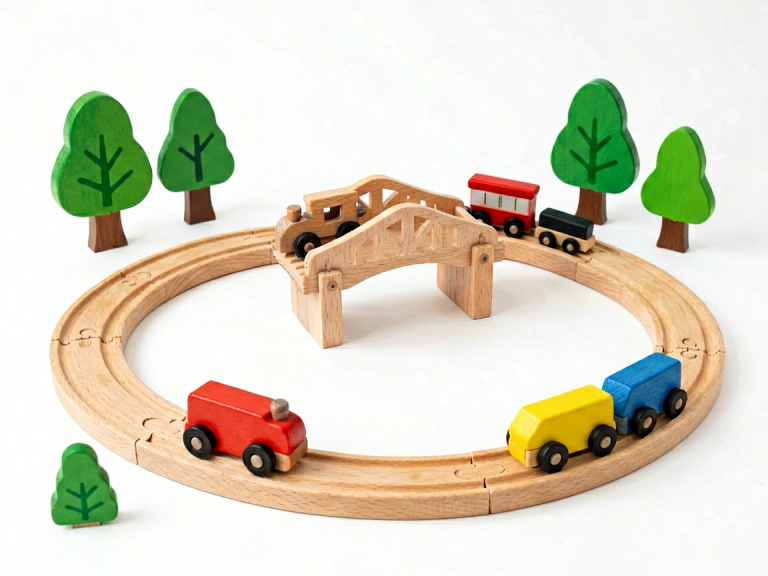
Wooden Construction Kits
For those who prefer natural materials and a more tactile experience, wooden building kits like KEVA planks or Kapla blocks are fantastic. These are simple, identical wooden planks that children stack without glue or connectors. The challenge lies entirely in balance and friction. Ten-year-olds can learn about center of gravity, load distribution, and cantilevers. Building a tall tower that doesn’t topple requires careful planning and steady hands. More advanced kits include interlocking beams and dowels, allowing for the construction of houses, bridges, or even fully functional siege catapults.
3D Puzzles and Model Kits
Not every building toy involves snapping or stacking. 3D puzzles, such as those from Ravensburger or CubicFun, require children to slot flat pieces together to form a stand-alone structure. These range from famous landmarks like the Eiffel Tower to intricate dragon figures. The process improves visual-spatial reasoning and pattern recognition. Model kits, such as those for ships or airplanes, are also popular at this age. They may involve cutting, gluing, and painting, which teaches step-by-step procedures and attention to detail. While they require more adult supervision, the finished model is a source of pride and decoration.
Cognitive and Social Benefits Beyond the Build
The value of building toys extends far beyond the finished product. During the building process, a child engages multiple cognitive domains simultaneously. Let’s break down the key benefits.
Enhancing Spatial Intelligence
Spatial intelligence—the ability to mentally manipulate objects and visualize them in three dimensions—is a critical skill for success in fields like architecture, engineering, surgery, and computer graphics. Research shows that children who frequently engage with construction toys score higher on spatial reasoning tests. When a ten-year-old reads a two-dimensional diagram and tries to reproduce a three-dimensional model, they are training their brain to rotate and translate shapes mentally. Over time, this skill transfers to map reading, geometry, and even data visualization.
Developing Executive Function and Persistence
Executive functions, including planning, working memory, and self-regulation, are essential for academic and life success. Building a complex set requires following a multi-step sequence, often over several hours or days. A child must keep track of where they are, manage small parts without losing them, and resist the urge to give up when a piece doesn’t fit. This naturally builds patience and delayed gratification. Unlike video games that offer instant rewards, building toys provide a slower, more deliberate satisfaction.
Encouraging STEM Learning Through Play
STEM (Science, Technology, Engineering, and Mathematics) education is often framed as formal instruction, but play-based exploration is equally important. Building toys are hands-on experiments. A child who builds a cantilever might accidentally discover that a longer beam creates more leverage. A child who adds too many gears to a LEGO Technic car might learn about gear ratio and torque. These discoveries stick because they are self-motivated and contextually meaningful. Some building kits even come with educational booklets explaining principles of physics or mechanics.
Social and Collaborative Skills
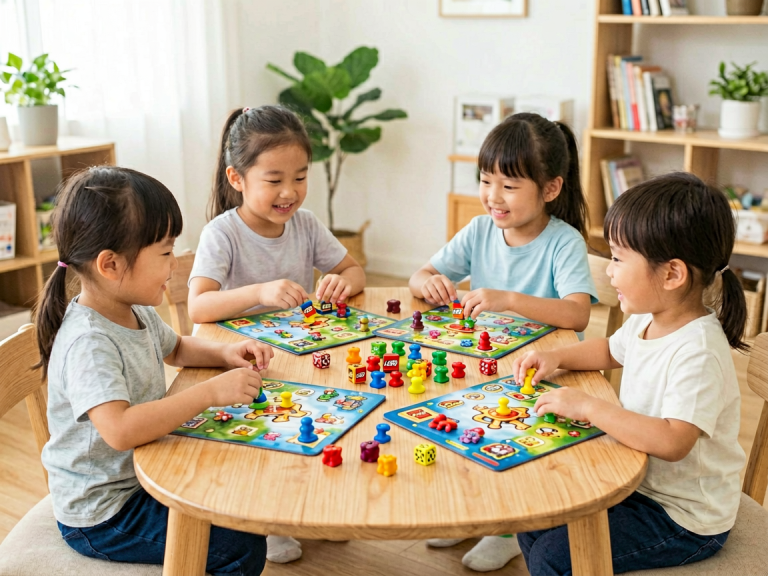
While many building toys can be used solo, they also excel as social activities. At ten, children are deeply engaged in peer relationships. Working together on a large build—like a marble maze or a city block—teaches negotiation, division of labor, and communication. One child might specialize in structural support while another focuses on aesthetics. Disagreements about design decisions force them to articulate their ideas and compromise. These soft skills are just as important as the hard skills gained from building.
How to Choose the Right Building Toy for a 10-Year-Old
With so many options, selecting the perfect building toy can feel overwhelming. Consider the following factors to match the toy to the child.
Assess the Child’s Previous Experience
A child who has spent years playing with basic LEGO bricks may quickly tire of a repetitive set. They might be ready for LEGO Technic or Mindstorms. Conversely, a child who has never built anything beyond Duplo may struggle with a 750-piece Erector set. Start with something moderately challenging—aim for sets rated for ages 8–12 or 9–14. If the instructions are too hard, the child may feel defeated; if too easy, they may lose interest.
Consider the Child’s Interests
Does the child love vehicles, animals, buildings, or fantasy themes? Many building toy brands offer themed lines: LEGO has Speed Champions (cars), Hidden Side (spooky mystery), and City (everyday life). K’NEX has roller coasters and amusement park sets. Magnetic tiles can be used to build anything, but themed sets like “Gears” or “Marble Run” add extra appeal. Matching the toy to the child’s passion ensures engagement.
Budget and Longevity
Building toys can be expensive. Look for sets that offer high replay value—the ability to disassemble and create something new. Open-ended sets, such as a large tub of K’NEX rods or a bulk box of LEGO Technic pieces, allow for infinite creativity beyond the instructions. Alternatively, some brands sell expansion packs that connect with previous purchases. This investment pays off as the child grows and builds more complex models.
Safety and Durability
Most commercial building toys for 10-year-olds are safe, but always check for small parts that could be choking hazards for younger siblings. Also consider the materials: plastic sets are lightweight and easy to clean; wooden sets are durable but may splinter over time; metal sets are sturdy but can have sharp edges. Ensure that connectors fit snugly without requiring excessive force, which could cause frustration.
Conclusion: Invest in Play That Builds the Future
Building toys for 10-year-olds are not merely a pastime; they are an investment in a child’s cognitive, social, and emotional development. At this critical age, children are eager to understand how things work and to prove their competence. By providing them with quality building toys, we give them the tools to create, fail, learn, and succeed—all while having fun. Whether it’s a towering LEGO Technic crane, a wobbling wooden skyscraper, or a programmable robot that rolls across the floor, each finished project is a testament to a child’s growing mind. The next time you see a ten-year-old huddled over a pile of gears and beams, remember: they are not just playing. They are engineering their own future.