The Ultimate Guide to the Best Toys for 8-Year-Olds: Fostering Curiosity, Creativity, and Connection
Introduction
At eight years old, children are in a remarkable phase of development. They have outgrown the simple sensory toys of early childhood yet are not quite ready for the complex demands of pre-adolescence. This age is a sweet spot where imagination runs wild, logical thinking begins to solidify, and social skills become increasingly important. The best toys for 8-year-olds are those that strike a balance between fun and purpose—they should challenge the mind, inspire creativity, encourage physical activity, and promote meaningful interaction with peers or family. Whether you are a parent, a relative, or a friend looking for the perfect gift, understanding what makes a toy truly valuable at this stage can guide your choice. In this article, we will explore six categories of exceptional toys, each designed to support different aspects of an eight-year-old’s growth, from STEM learning and artistic expression to cooperative play and outdoor adventure.
STEM and Educational Toys: Building a Foundation for Future Learning
Science, technology, engineering, and mathematics (STEM) toys are more than just educational gimmicks; they provide hands-on experiences that teach problem-solving, critical thinking, and perseverance. At age eight, children are naturally curious about how things work, making this an ideal time to introduce kits that allow them to experiment and discover.
One outstanding example is the Snap Circuits Jr. SC-100 Electronics Exploration Kit. With over 100 projects ranging from a simple light switch to a flying fan, this kit teaches the basics of electrical circuits without requiring soldering or complicated wiring. Children can follow the illustrated manual to build working devices, then modify them to create their own inventions. The snap-together pieces are easy for small hands to manage, and the sense of accomplishment when a bulb lights up or a motor spins is genuinely rewarding. Another excellent STEM toy is the 4M Crystal Growing Experiment Kit, which allows kids to watch vibrant crystals form over several days. This not only introduces concepts of chemistry and saturation but also teaches patience and observation. For tech-savvy eight-year-olds, LEGO Boost Creative Toolbox offers a programmable building set that introduces basic coding. By using a tablet app to command a robot, guitar, or cat to move and react, children learn sequencing, logic, and debugging in a playful context. These toys are not mere diversions; they plant seeds of scientific thinking that can blossom into lifelong passions.
Building and Construction Sets: Engineering Imagination and Fine Motor Skills
Construction toys have been beloved for generations, and for good reason. For an eight-year-old, building complex structures—whether with interlocking bricks, magnetic tiles, or wooden planks—enhances spatial awareness, planning ability, and fine motor coordination. Unlike simpler sets for younger children, advanced construction kits offer more intricate designs and greater creative freedom.
The classic LEGO Classic Creative Bricks (such as the 11022 set with 1,500 pieces) remains a top choice because it contains a wide variety of shapes and colors, enabling children to build anything from a castle to a spaceship. The absence of a specific theme encourages open-ended play, which is crucial for developing original thinking. Another standout is Magna-Tiles 100-Piece Clear Color Set. These magnetic tiles click together easily, allowing children to build 3D structures like houses, rockets, and geometric shapes. The translucent panels let light pass through, adding an artistic element. For those who prefer a different medium, Keva Planks – 200 Plank Set consists of identical wooden planks that can be stacked and balanced without glue or connectors. This challenges children to understand physics, balance, and architecture while fostering patience and resilience when towers inevitably tumble. The beauty of construction toys is that they can be used alone or in groups, making them perfect for playdates or family bonding time.
Board Games and Strategy Games: Sharpening Social and Cognitive Skills
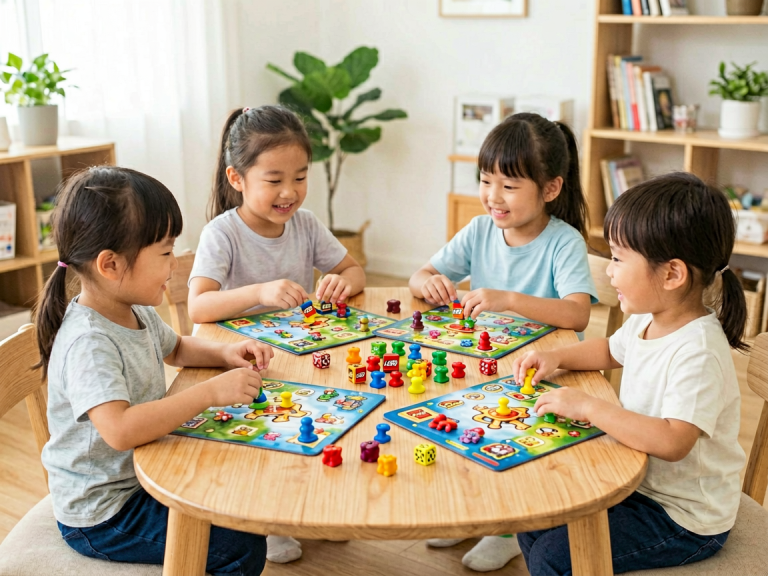
Board games for eight-year-olds are far more than simple roll-and-move affairs. The best ones engage players in strategic thinking, cooperative decision-making, and even a bit of friendly competition. They teach how to follow rules, take turns, and handle both victory and defeat with grace—all valuable life lessons wrapped in an entertaining package.
Ticket to Ride: First Journey is an excellent introduction to strategy-based board games. Players collect train cards and claim railway routes across a simplified map of North America or Europe. The game is easy to learn but requires planning and resource management, making it ideal for eight-year-olds who are developing logical reasoning. For a cooperative experience, consider Outfoxed! by Educational Insights. Players work together as detective foxes to solve a mystery, using clue cards and a special decoder. There is no single winner; either everyone wins or everyone loses, which promotes teamwork and shared problem-solving. Another perennial favorite is Catan Junior, a simplified version of the classic Settlers of Catan. Players build pirate hideouts and ships, trading resources and racing to control the island. This game introduces concepts like negotiation, probability, and forward planning. Finally, don’t overlook Blokus, a tile-placement game where players try to place as many of their colorful pieces as possible on a grid. It’s easy to learn but offers deep strategic possibilities, helping children visualize geometry and anticipate opponents’ moves. These games are not only fun for family game nights but also provide a rich social experience that digital games often lack.
Arts and Crafts Kits: Unleashing Self-Expression and Fine Motor Mastery
Eight-year-olds are at a prime age for exploring artistic talents. Their fine motor skills are developed enough to handle tools like scissors, glue, and needles, yet their imaginations remain wide open. Arts and crafts kits allow them to create tangible objects—paintings, jewelry, models, or even simple sewing projects—that boost confidence and provide a sense of ownership.
One of the most popular options is the Klutz Maker Lab: Craft and Create Book and Kit, which includes materials for over 60 projects, from tie-dye to scratch art. The step-by-step instructions are clear, but children are encouraged to put their own spin on each project. For those interested in textiles, the Beading Loom Kit by Creativity for Kids enables kids to weave intricate bracelets or keychains using colorful beads and a simple loom. This activity improves hand-eye coordination and pattern recognition. Another fantastic choice is the Melissa & Doug Stained Glass Made Easy Activity Kit (or similar sun-catcher kits). Children use pre-cut, self-adhesive shapes to create colorful window decorations that look like real stained glass. The process is mess-free and rewarding. If your eight-year-old loves drawing, consider the Sketch‑A‑Day Daily Drawing Journal combined with a set of high-quality colored pencils or markers—not a kit per se, but a tool that encourages daily creative practice. Art kits that produce wearable or displayable items (like painted pottery or friendship bracelets) are especially motivating, as they give children something to share and be proud of.
Outdoor and Active Play: Energizing Body and Mind
In an age of screens, it is vital to encourage physical activity that is both fun and unstructured. Outdoor toys for eight-year-olds should combine gross motor challenges with opportunities for social play. From classic sports equipment to modern interactive gadgets, the right outdoor toy can turn a backyard or park into a lively adventure zone.
A top recommendation is the Nerf N‑Strike Elite Disruptor 2‑in‑1 Blaster (or any foam dart blaster). While parents may worry about conflict, Nerf games actually promote running, dodging, and strategic team play. The blasters are safe when used with proper eye protection and can be used for target practice or group battles. Another excellent choice is the Razor A Kick Scooter—lightweight, foldable, and fast. Scooters improve balance and coordination, and children can use them for neighborhood rides or commuting to school. For a more team-oriented activity, consider a Spikeball Standard Kit. Spikeball is a fast-paced game similar to volleyball but played on a trampoline-like net on the ground. It requires quick reflexes and cooperation, making it great for groups of two to four players. If you want something that fosters creative building outdoors, the Step2 Playhouse or a Backyard Ninja Warrior Obstacle Course Kit (like those with climbing ropes, rings, and balance beams) provides hours of active imaginative play. Finally, never underestimate the simple joy of a high-quality Frisbee or a Jump Rope—these classics encourage spontaneous play and can be enjoyed anywhere. Outdoor toys are essential for physical health, but they also teach risk-taking, resilience, and the joy of movement.
Role-Playing and Imaginative Play: Exploring Identity and Storytelling
Even as children grow more logical, the world of make-believe remains powerful. Role-playing toys let eight-year-olds experiment with different identities, practice social scenarios, and craft elaborate narratives. This type of play is crucial for emotional development and empathy.
One of the most engaging options is the Melissa & Doug Wooden Castle Tabletop Play Set or any detailed playset with figures—knights, princesses, pirates, or astronauts. These sets encourage children to invent stories, negotiate roles, and build miniature worlds. For a more modern twist, consider Playmobil City Action sets (like a police station, fire truck, or hospital). Playmobil figures are highly detailed, and the sets often include moving parts and accessories that spark endless scenarios. Another fantastic choice is a Dress-Up Costume Trunk filled with capes, hats, masks, and props. At eight, children love to reconstruct scenes from movies or invent entirely new characters. Costumes for superheroes, historical figures, or animals can be used for solo play or group performances. Additionally, Imaginary Play Food Kits and Play Kitchen Sets (even simplified versions) allow children to mimic adult roles like cooking or running a restaurant, which helps them make sense of the world around them. Finally, consider a DIY Puppet Theater Kit where children create their own puppets and perform shows. This combines crafting, writing, and performance—a rich, multidisciplinary experience. Role-playing toys are invaluable for developing language skills, emotional intelligence, and the ability to see the world from another’s perspective.
Conclusion
Choosing the best toys for eight-year-olds does not have to be overwhelming. The key is to look for items that align with their developing interests and abilities—toys that challenge without frustrating, inspire without directing, and connect without isolating. Whether you opt for a STEM kit that lights up a child’s eyes with scientific wonder, a construction set that turns a tabletop into a city, a board game that brings the family together, an art kit that fosters self-expression, an outdoor toy that gets hearts pumping, or a role-playing set that unlocks imagination, the best gift is one that respects the child’s growing independence while still offering the joy of play.
Remember: the most valuable toys are those that children return to again and again, discovering something new each time. As you shop, consider the child’s unique personality—some may prefer quiet crafting, others may crave high‑energy competition. The list above covers a wide spectrum, ensuring there is something for every eight-year-old. Ultimately, the true measure of a great toy is not its price tag or popularity, but the laughter, learning, and memories it creates. So go ahead—pick a toy that sparks curiosity, and watch an eight-year-old’s world expand one playful moment at a time.