The Ultimate Guide to Choosing Outdoor Toys: Safety, Fun, and Development
Introduction
In an era where screens dominate children’s attention, outdoor play has never been more essential. Fresh air, sunlight, and physical activity are vital for a child’s physical health, cognitive development, and emotional well-being. But choosing the right outdoor toys can be overwhelming. With countless options—from trampolines and swing sets to sandboxes and scooters—parents and caregivers need a clear, strategic approach. This comprehensive guide will walk you through every critical factor: age-appropriate design, safety standards, space considerations, developmental benefits, durability, and budget. By the end, you will be equipped to make informed decisions that maximize fun and minimize risk, ensuring your child’s outdoor adventures are both joyful and safe.
Understanding Your Child’s Age and Developmental Stage
The most fundamental rule in choosing outdoor toys is matching the toy to the child’s age and abilities. A toy that is too advanced can frustrate or endanger a child, while one that is too simple fails to stimulate growth.
For infants and toddlers (ages 1–3), focus on sensory and gross motor development. Push-and-pull toys, small slides with low heights, sandboxes with large scoops, and ride-on cars (foot-powered) are ideal. These toys encourage crawling, walking, and balance without complex mechanisms. Always choose toys without small parts that could be swallowed.
Preschoolers (ages 3–5) have more coordination and imagination. Tricycles, balance bikes, small climbing structures, and water tables are excellent. At this stage, pretend play blossoms—consider toy gardening sets, play houses, or simple obstacle courses. Safety remains paramount: avoid ropes or chains that could cause strangulation, and ensure all structures have rounded edges.
School-age children (ages 6–12) crave challenges and social interaction. Bicycles, scooters, skateboards, sports equipment (basketball hoops, soccer goals), and advanced climbing sets with monkey bars are appropriate. This age group can also handle more complex toys like go-karts, archery sets (with supervision), and slacklines. However, be mindful of weight limits and surface impact—soft grass or rubber mulch is far safer than concrete.
Teens (13+) benefit from equipment that builds endurance and skill: trampolines (with proper enclosures), large sports nets, and even outdoor fitness gear like pull-up bars or agility ladders. Don’t forget passive toys like giant board games, cornhole, or hammocks for relaxation.
Prioritizing Safety: Materials and Design
Safety is non-negotiable. Every outdoor toy should be assessed for potential hazards before purchase. Start with materials: Avoid toys made with BPA, phthalates, lead-based paints, or formaldehyde-treated woods. Look for certifications like ASTM (American Society for Testing and Materials) or EN71 (European standard). For plastic toys, high-density polyethylene (HDPE) is durable and UV-resistant. For metal toys, powder-coated steel resists rust and sharp edges.
Check for structural stability. Swing sets and climbing frames must have wide bases and anchor stakes for grass installations. Weight limits should be clearly exceeded—if a swing set is rated for 100 pounds, do not allow two children to swing at once unless the manufacturer specifies. Inspect moving parts: chains should be coated plastic to prevent pinch points, and bearings on wheels or axles should be enclosed.
Avoid strangulation and entanglement hazards. Ropes, cords, or nets longer than 12 inches are dangerous. Helmets, knee pads, and elbow pads are essential for bikes, scooters, and skateboards. For trampolines, invest in an enclosure net and a zippered door; place the trampoline on a level, shock-absorbing surface (not concrete or asphalt).
Finally, consider the environment. Hard sun exposure can degrade plastic and fade colors—look for UV-stabilized materials. If you live in a rainy or snowy climate, choose toys that drain water (e.g., sandbox covers, holes in plastic slides) to prevent mold and insect breeding.
Considering Your Outdoor Space
Before buying anything, measure your yard or designated play area. A toy that looks small in a store can dominate a tiny patio. Sketch the layout, factoring in clearance zones. For example, a swingset needs at least 6 feet of clearance to the front and back, and 3 feet on each side. A trampoline requires a radius of at least 8 feet free of obstacles, including tree branches, fences, and houses.
Consider the ground surface. Hard-packed soil, concrete, or asphalt is dangerous for falls. Grass is forgiving but must be well-maintained to prevent hidden rocks. For high-impact toys (climbers, swings), install safety surfacing like rubber mulch, engineered wood fiber, or poured-in-place rubber (at least 6–9 inches deep). Sandboxes should have a lid or cover to keep out animals and debris.
Also factor in storage. Many outdoor toys—like water tables, scooters, and basketballs—need to be stored indoors during winter or rain to extend their life. If you lack a shed or garage, prioritize foldable or collapsible designs (e.g., pop-up tents, folding slides).
Types of Outdoor Toys: From Active Play to Creative Exploration
Variety is key to keeping children engaged. Here are the main categories and their benefits:
Active Play Equipment – Promotes cardiovascular health, strength, and coordination. Examples: swings, slides, climbing domes, trampolines, scooters, bikes, and sports sets. For younger children, balance bikes improve coordination without training wheels. For older kids, adjustable basketball hoops grow with them.
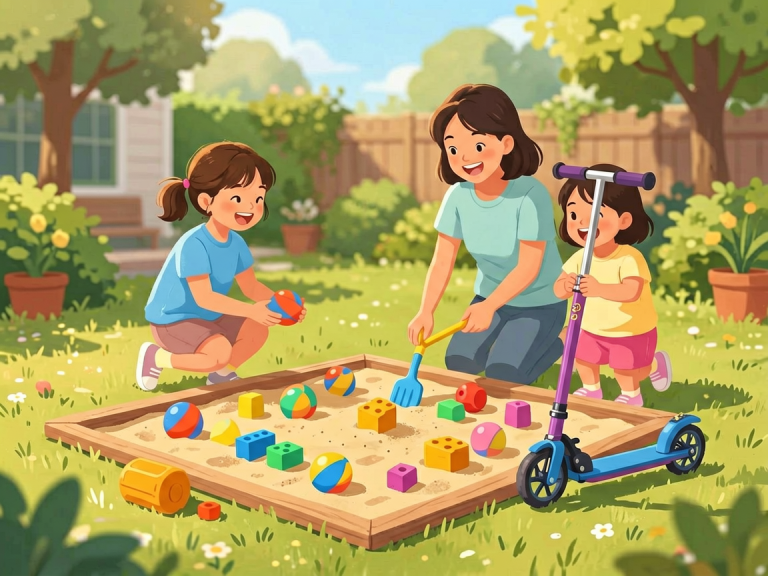
Creative and Sensory Toys – Sand and water tables, play houses, easels, and gardening kits. These foster imagination, fine motor skills, and scientific curiosity. A sandbox with scoops, molds, and construction vehicles can occupy a child for hours, while a water table with cups and tubes teaches cause and effect.
Social and Group Toys – Giant Jenga, cornhole, badminton sets, and parachutes. These encourage turn-taking, teamwork, and communication. They are perfect for birthday parties or neighborhood playdates.
Nature Exploration Tools – Bug catchers, binoculars, magnifying glasses, and nature journals. These inspire environmental awareness and a love for the outdoors. Pair them with a simple hiking or camping gear such as a child-sized backpack and water bottle.
Quiet or Relaxation Toys – Outdoor hammocks, rope swings, or teepee tents. These offer downtime and sensory calm, especially for children who get overwhelmed by active play.
Durability and Weather Resistance
Outdoor toys endure rain, sun, wind, snow, and dirt. Investing in quality now prevents frequent replacements and safety hazards. For plastic toys, check for UV stabilizers that prevent cracking and fading. For wooden toys, look for hardwood like cedar or pressure-treated pine; they should be painted or stained with non-toxic, weather-resistant finishes. Avoid particleboard or MDF, which swell and rot in moisture.
Metal toys should be galvanized or powder-coated to resist rust. For inflatable toys, like bounce houses or water slides, ensure the material is heavy-duty puncture-resistant PVC with reinforced seams. Always store inflatables dry and deflated when not in use.
Consider warranties. Many reputable brands offer 1–5 years on frames and 30 days on fabric. Read reviews for real-world longevity. A toy that is “outdoor-rated” does not guarantee it can survive a blizzard—sometimes covering with a tarp or storing indoors during extreme weather is wise.
Encouraging Social Interaction and Solo Play
A great outdoor toy should support both independent and group play. For example, a sandbox naturally invites parallel play (children digging side by side) but also cooperative play (building a castle together). A double swing set allows two children to swing simultaneously but one can also swing alone.
Balance is important: too many complex toys can overwhelm a child, but not enough variety can lead to boredom. Rotate toys occasionally to maintain novelty. Also, consider toys that adapt to different play styles—a climbing frame with a slide, a rock wall, and a fireman’s pole can be used alone or with friends.
If your child is shy, simple toys like bubble machines or a hopscotch mat can encourage interaction without pressure. If they are competitive, set up timed challenges on a trampoline or balance beam. Always supervise to ensure safe social dynamics.
Budget Considerations and Long-Term Value
Outdoor toys range from under $20 (a jump rope, bucket of chalk) to over $500 (a modular swing set). Set a realistic budget, but also think about cost per use. A $300 trampoline used daily for three years costs about $0.27 per play session. A cheap $50 water table that cracks in one season is actually more expensive in the long run.
Consider buying used. Check yard sales, Facebook Marketplace, and consignment shops for quality wooden swing sets or bikes. Inspect thoroughly for rust, cracks, missing parts, or recalled models (you can search CPSC.gov for recalls). If buying new, wait for off-season discounts—swing sets are cheapest in fall, water toys in spring.
Think about family growth. Choose toys with adjustable features or that can be used by multiple age ranges. A climbing dome works for toddlers and elementary kids. A balance bike converts to a pedal bike for some models. Multi-functional toys, like a playset with a slide, climbing wall, and swing, sometimes offer better value than separate pieces.
Conclusion
Choosing outdoor toys is not about buying the most expensive or flashiest item. It is about thoughtful selection that prioritizes safety, matches your child’s stage, fits your space, and encourages healthy, joyful play. Start with age-appropriate design, inspect materials for safety, ensure your yard can accommodate the toy, and invest in durability. Remember to balance active, creative, and social play. A well-chosen toy becomes a portal to adventure, exercise, and lasting memories. With this guide, you are now ready to make confident, informed decisions that will get your child off the screen and into the sunshine—one safe, delightful toy at a time.