The Ultimate Guide to the Best Toys for 9-Year-Olds: Sparking Curiosity, Creativity, and Confidence
At the age of nine, children are at a remarkable crossroads. They have outgrown the simple sensory toys of toddlerhood and the basic pretend play of early childhood, yet they are not quite ready for the complex abstractions of teenage hobbies. Instead, 9-year-olds are bursting with energy, curiosity, and a growing desire for independence. They want to master real skills, solve challenging problems, and express their unique personalities. The best toys for this age group do more than entertain—they engage a child’s developing mind, nurture social skills, and build confidence. Whether the child is a budding scientist, a creative artist, a strategic thinker, or an active adventurer, the right toy can become a catalyst for lifelong learning. This guide explores top-tier toy categories that meet the needs of 9-year-olds, with carefully selected recommendations that combine fun with developmental value.
STEM and Science Kits: Igniting the Engineer Within
Nine-year-olds are natural question-askers. They want to know how things work, why the sky is blue, and whether they can build a robot that moves on its own. STEM (Science, Technology, Engineering, and Mathematics) toys answer these questions with hands-on experimentation. Unlike passive screen time, these kits require active participation, trial and error, and creative problem-solving. For example, a Snap Circuits Junior Kit allows children to build over 100 different electronic projects, from a simple light switch to a working FM radio. The snap-together components are safe and intuitive, teaching the basics of circuitry without needing a soldering iron. Another standout is the Thames & Kosmos Chemistry Set, which comes with real lab equipment and dozens of safe experiments. Children can create color-changing solutions, grow crystals, and learn about acids and bases. These experiences demystify science and show that failure is simply a stepping stone to discovery. Furthermore, coding toys like Sphero Mini or Osmo Coding Starter Kit introduce programming logic through play. Sphero is a small robotic ball that can be programmed via a smartphone app to navigate mazes, play games, or even paint. Such toys develop computational thinking—a skill increasingly essential in the modern world. When choosing a STEM toy, look for one that offers clear instructions but also encourages open-ended exploration. The best kits grow with the child, offering advanced challenges as their skills improve.
Creative and Artistic Toys: Unleashing Imagination
At nine, children have refined fine motor skills and a sophisticated sense of aesthetics. They can draw with precision, mix colors intentionally, and even critique their own work. Artistic toys that allow for self-expression are invaluable for emotional development. A high-quality K’NEX Building Set 一 though often classified as a construction toy—is actually a bridge between engineering and art. Kids can build intricate models like Ferris wheels, roller coasters, or dinosaur skeletons, then paint or decorate them. For traditional art, consider Crayola Light-Up Tracing Pad or a Pottery Wheel Kit. The tracing pad helps children learn proportion and line work by tracing images, then creating their own original drawings. The pottery wheel gives them the tactile joy of shaping clay into bowls, vases, or sculptures. Another fantastic option is Klutz LEGO Chain Reactions craft kit, which combines building with physics and storytelling. Children construct clever chain-reaction machines using LEGO bricks and everyday objects. This kind of toy encourages patience and iterative design—they will rebuild and tweak their contraptions until they work perfectly. For children who love music, a Loog Acoustic Guitar is a three-stringed guitar designed specifically for kids. Its smaller scale makes it easy to learn chords, and it comes with a free app that teaches songs through gamification. Creative toys help 9-year-olds process emotions, build pride in accomplishment, and discover talents they might carry into adulthood.
Strategy and Board Games: Sharpening the Mind
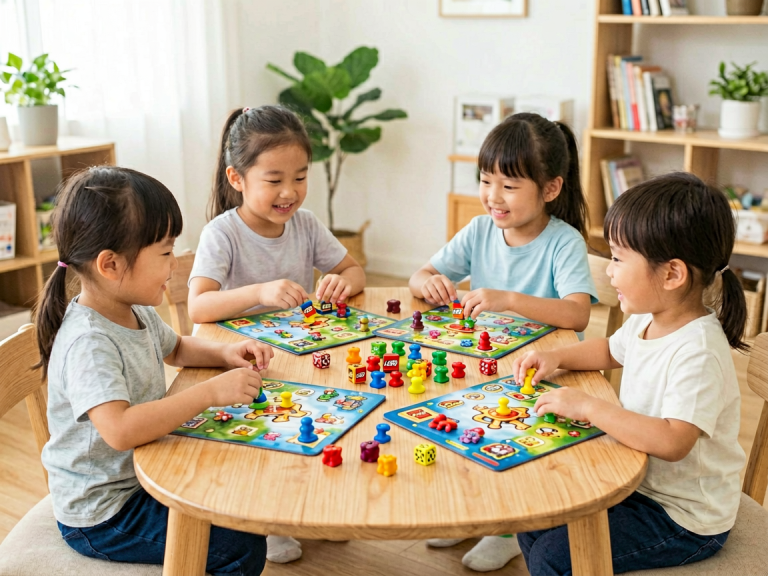
Nine-year-olds are ready for more complex rule systems, longer attention spans, and a healthy dose of competition. Board games that require strategy, cooperation, or deductive reasoning are excellent for family bonding and cognitive growth. Catan Junior is a simplified version of the classic Settlers of Catan. Players build ships and outposts on a pirate-themed island, trading resources and making strategic decisions. It teaches resource management, negotiation, and forward thinking. Ticket to Ride: First Journey is another gem, where players collect train cards to claim railway routes across a map. Younger players can plan simple routes, while older ones learn to block opponents and optimize points. For a cooperative game, Forbidden Island pits all players against the island itself; they must work together to collect four treasures and escape before the island sinks. This game builds communication, leadership, and empathy. Blokus is a geometric strategy game where players place colored pieces on a grid, aiming to cover the most area while blocking opponents. It trains spatial reasoning and pattern recognition. Finally, Dixit is a beautifully illustrated storytelling game that stretches the imagination. One player gives a clue—a word, a phrase, or a sound—and others choose cards that best match that clue. The scoring system encourages creative thinking and reading social cues. These games are not only fun but also teach 9-year-olds to handle wins and losses gracefully, a skill that will serve them well in school and life.
Outdoor and Active Toys: Channeling Endless Energy
Nine-year-olds often have seemingly boundless energy. They need to run, jump, climb, and challenge their bodies. Outdoor toys that promote physical activity are essential for health, coordination, and social play. A Nerf Rival blaster is a step up from typical foam dart guns: these shoot high-speed foam balls with greater accuracy, and they come in teams (blue and red) for organized battles. Setting up backyard obstacle courses or target ranges encourages active play and teamwork. Racquet sports are also excellent at this age; a Kids’ Tennis Racket Set or a Badminton Set with adjustable net height allows children to practice hand-eye coordination. For solo play, a Freestyle Scooter (like those from Razor) provides hours of cruising and tricks. Look for models with adjustable handlebars and robust wheels that can handle pavement and light off-road. Another classic is the Nintendo Switch Ring Fit Adventure, which gamifies exercise. Players wear a leg strap and use a ring-con to run, jump, and fight in a fantasy world. It combines screen time with physical movement, perfect for rainy days. Trampolines remain a hit, but safety is paramount—opt for a Springfree Trampoline, which uses composite rods instead of metal springs, dramatically reducing injury risk. Also consider a Kids’ Slackline Kit, which teaches balance and core strength. Children can set it up between two trees and challenge themselves to walk across. Outdoor toys should be durable and, where possible, encourage social interaction. A simple flying disc (frisbee) or a bubble machine can turn a backyard into a festival of movement and laughter.
Tech and Building Toys: Digital Innovation with Hands-On Play
While many parents worry about screen time, the key is quality over quantity. For 9-year-olds, technology toys that require active input—coding, building, or designing—are far more valuable than passive consumption. The LEGO Mindstorms Robot Inventor Kit is the gold standard. It contains over 900 pieces, including sensors, motors, and a programmable hub. Children can build a robot that drives, shoots, or even plays basketball, then code its behavior using a drag-and-drop scratch-like interface. This toy teaches engineering, programming, and debugging in a deeply engaging way. Makey Makey is a simple invention kit that turns everyday objects into touchpads. By connecting a banana, a pencil, or a piece of play-dough to a circuit board, children can control their computer keyboard. They can make a banana piano or a game controller made of clay. It sparks creativity and shows that technology is not a black box but something they can hack and customize. For a screen-based but constructive experience, Minecraft: Education Edition (or the regular version with parental controls) allows children to build entire worlds using digital blocks. They learn resource management, geometry, and collaborative planning. Many schools now use Minecraft to teach history and architecture. Another wonderful tool is the Kano Pixel Kit, a set of 128 programmable LED lights that children can code to display animations, games, and even weather data. It connects to a computer via USB and uses a simple drag-and-drop coding interface. The tangible output—a glowing light display—provides immediate satisfaction. When selecting tech toys, prioritize those that come with clear tutorials and expandable challenges. The goal is not to replace hands-on play but to augment it with digital literacy.
Social-Emotional and Role-Play Toys: Building Character
Even as children grow more independent, they still need opportunities to practice empathy, negotiation, and self-regulation. Role-play toys that involve real-world scenarios help them process social dynamics and develop emotional intelligence. A Professional Chef Costume Set (with aprons, chef hat, and play food) can inspire a 9-year-old to “cook” for the family, taking orders and serving meals. This builds confidence and language skills. Doctor’s Kit with a stethoscope, syringe, and bandages allows children to role-play caring for a sick doll or sibling, practicing empathy. Another powerful tool is The Game of Life Junior, which introduces concepts of money, decision-making, and consequences in a safe, fun context. For children who are shy or anxious, social narrative toys like Slumberkins stuffed animals come with storybooks that teach resilience, kindness, and emotional vocabulary. While a 9-year-old might be too old for traditional plushies, these creatures serve as comfort objects and conversation starters. Magnetic Dress-Up Dolls or Wooden Dollhouses with diverse family figures help children explore identities and relationships. Also consider journaling kits with a lock and key, decorated pens, and stickers. Writing or drawing about feelings is a proven way for 9-year-olds to regulate emotions. Finally, a simple card deck of conversation starters (e.g., “What would you do if you found a wallet on the ground?”) can be used at the dinner table to spark meaningful discussions. These toys may not be flashy, but they lay the groundwork for a child’s emotional maturity.
Conclusion: Choosing the Perfect Toy for Your 9-Year-Old
There is no single “best” toy for every 9-year-old because each child is a unique blend of interests, strengths, and temperaments. However, the most successful toys share common traits: they challenge without frustrating, they encourage active participation rather than passive consumption, and they offer room for growth. A 9-year-old who loves building might thrive with LEGO Mindstorms, while a social butterfly might prefer cooperative board games. An introverted artist might lose hours in a Klutz crafting kit, and an adventurous spirit might need a scooter and a Nerf blaster. The best approach is to observe your child’s natural inclinations and then choose a toy that expands that interest in a new direction. Rotate toys to avoid boredom, and don’t be afraid to invest in one high-quality item that will last for years. Remember that play is not a break from learning—it is learning. The right toy can teach a 9-year-old resilience, creativity, and the joy of discovery. So pick one, sit down with them, and play. You might just discover something new about your child—and about yourself.