Choosing Safe Toys for 5-Year-Olds: A Comprehensive Guide for Parents
Introduction
Toys are more than mere playthings; they are the tools through which children explore the world, develop cognitive skills, and express their creativity. For a 5-year-old, the right toy can spark a lifelong love of learning, while a poorly chosen one can pose serious risks. At this age, children are curious, active, and increasingly independent, yet they still lack the judgment to avoid all dangers. Their motor skills are still developing, and they may put small objects in their mouths or engage in rough play without understanding the consequences. Therefore, selecting safe toys for 5-year-olds is not merely a matter of preference—it is an essential responsibility for parents, caregivers, and educators. This article provides a thorough, practical guide to understanding the safety requirements for toys designed for this age group, identifying common hazards, and making informed purchasing decisions. With over 1,000 words of detailed advice, you will be equipped to create a play environment that is both stimulating and secure.
Why Safety Matters for 5-Year-Olds
Developmental Characteristics of a 5-Year-Old
A 5-year-old is in a transitional phase. They are no longer toddlers but not yet school-age children. Their physical abilities have improved dramatically: they can run, jump, climb, and handle small objects with greater dexterity. However, their fine motor control is still imperfect, and they are prone to accidents like tripping, dropping items, or accidentally swallowing small pieces. Cognitively, they are beginning to understand cause and effect but may still test boundaries. They are also highly imaginative, which means they might use a toy in ways its designers never intended—a building block can become a spaceship, a pretend phone, or even a projectile. Socially, they play both alone and with peers, and conflicts over toys can lead to dangerous situations if a toy has sharp edges or breakable parts. Safety standards for toys are designed with these exact developmental milestones in mind.
Common Injuries and Their Causes
According to data from the U.S. Consumer Product Safety Commission (CPSC), thousands of children under the age of 6 are treated in emergency rooms each year due to toy-related injuries. The most common incidents include choking on small parts, falls from riding toys, cuts from sharp edges, burns from overheated batteries, and poisoning from toxic materials. For 5-year-olds, choking remains a significant risk because they are still prone to exploring objects with their mouths, especially when distracted or excited. Another frequent hazard is strangulation from cords, strings, or ribbons that are too long. Riding toys, such as bicycles, scooters, or wagons, can cause falls, head injuries, or collisions if not properly designed or if the child lacks protective gear. Understanding these risks is the first step toward prevention.
How to Identify Safe Toys for 5-Year-Olds
Check Age Recommendations and Labels
The most straightforward guideline is the age label printed on the toy’s packaging. These recommendations are based on extensive research into children’s developmental abilities and typical behaviors. A toy labeled "for ages 3 and up" may be appropriate for a 5-year-old, but a toy labeled "for ages 8 and up" likely contains small parts, complex mechanisms, or choke hazards that are too advanced. However, age labels are not infallible—some manufacturers may overestimate or underestimate a toy’s safety for a specific child. Parents should also consider their own child’s maturity, habits, and tendencies. For example, a 5-year-old who still puts non-food items in their mouth should avoid any toy with parts smaller than a standard toilet paper roll core (approximately 1.25 inches in diameter and 2.25 inches in length), which is the standard "small parts test" used by regulators.
Avoid Small Parts and Detachable Components
One of the cardinal rules for toys intended for 5-year-olds is that they should be free of small parts that can be swallowed or inhaled. Any toy that breaks easily into small pieces, has loose beads, buttons, or batteries, or contains magnets is a potential hazard. Loose magnets are especially dangerous because if two or more are ingested, they can attract each other through intestinal walls and cause severe internal injuries or blockages. For this reason, many magnetic building sets are recommended only for children over 6. Parents should also be wary of toys with eyes, noses, or other decorations that are glued on rather than sewn or molded securely. A simple tug test can help: if a small part can be pulled off with moderate force, it is not safe for a 5-year-old.
Examine Material Safety and Toxicity
Young children have developing immune systems and are more vulnerable to chemical exposure. Safe toys for 5-year-olds should be made from non-toxic materials that are free from lead, phthalates, BPA, and other harmful substances. Many countries have strict regulations: in the United States, the Consumer Product Safety Improvement Act (CPSIA) mandates that toys for children under 12 must meet limits for lead and phthalates, and they must be tested by certified laboratories. Look for labels like "ASTM F963" (the American standard for toy safety) or the CE mark in Europe. Also consider the type of paint or finish—it should be lead-free and non-toxic. For wooden toys, ensure they are finished with water-based, non-toxic varnishes or paints. For plastic toys, avoid those with a strong chemical smell, which may indicate off-gassing of volatile organic compounds (VOCs). Cloth toys should be machine-washable and flame-resistant or retardant.
Assess Structural Integrity and Durability
A safe toy must withstand the enthusiastic play of a 5-year-old without breaking into sharp pieces. Look for solid construction: seams on stuffed animals should be double-stitched and reinforced; plastic toys should have no thin, brittle edges; wooden toys should be smooth and free of splinters. Avoid toys with sharp points, rough surfaces, or pinch points where small fingers could get caught. Riding toys, such as tricycles or balance bikes, should have a stable base, no protruding bolts, and a seat that does not tip forward easily. Also check for electrical safety: battery compartments should be secured with a screw to prevent children from accessing the batteries, and any electronic toys should be tested for overheating. If a toy has cords or strings, they should be no longer than 12 inches (about 30 cm) to prevent entanglement or strangulation.
Recommended Types of Safe Toys for 5-Year-Olds
Building and Construction Sets
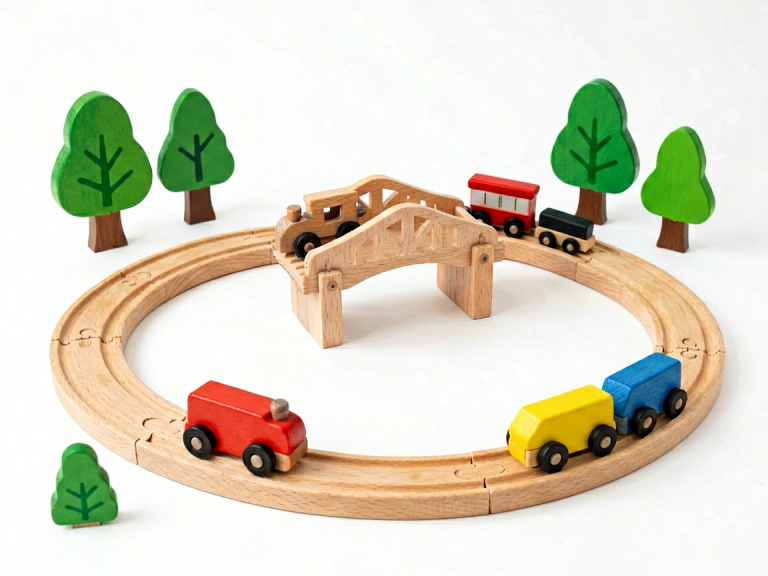
Building toys like large LEGO Duplo blocks, wooden unit blocks, or interlocking plastic bricks are excellent for 5-year-olds because they promote fine motor skills, spatial awareness, and creativity. Choose sets with blocks that are large enough to avoid choking (typically at least 1.25 inches in any dimension). Avoid sets with tiny specialized pieces unless you are certain your child is beyond the mouthing stage. Magna-Tiles or magnetic building tiles designed for children aged 3+ are generally safe because the magnets are encased in thick plastic. However, always inspect for cracks that could expose the magnets.
Arts and Crafts Supplies
Artistic expression is vital at this age, but many standard art supplies contain toxic substances. For safe creative play, choose washable, non-toxic markers, crayons, and paints that carry the "AP" (Approved Product) seal from the Art and Creative Materials Institute. Avoid powdered paints or clays that can be inhaled. Play-Doh and other modeling compounds are generally safe, but supervise to prevent ingestion of large amounts. Scissors should have blunt tips and be designed for children. Glue sticks are safer than liquid glue. Also ensure that all art supplies are stored out of reach when not in use, as a curious 5-year-old might attempt to taste them.
Puzzles and Board Games
Puzzles with large, chunky pieces (at least 1.5 inches) are ideal. Look for puzzles made of thick cardboard or wood with a smooth finish. Board games for 5-year-olds should have simple rules and pieces that are too large to swallow. Games like "Candy Land" or "Hi Ho! Cherry-O" are classics, but always check the components—sometimes older versions include small plastic cherries or tokens. Many modern games use sturdy cardboard pieces. Avoid games with small dice (standard 16mm dice are borderline; larger dice or spinner wheels are safer), tiny game pieces, or marbles.
Ride-On Toys and Outdoor Play Equipment
Ride-on toys like tricycles, balance bikes, and scooters are great for physical development, but safety is paramount. Always purchase a helmet that fits snugly and meets safety standards (e.g., CPSC or ASTM). The toy itself should have a low center of gravity, wide wheels for stability, and a hand brake that a 5-year-old can comfortably operate. For outdoor play equipment like small slides or climbers, ensure it is anchored properly and placed on a soft surface such as mulch or rubber mats. Avoid equipment with gaps that could trap a child’s head or limbs. Inspect for protruding bolts, splinters, or rust.
Stuffed Animals and Dolls
Soft toys are beloved by many 5-year-olds, especially as comfort objects. Choose well-made plush toys with securely attached eyes, noses, and ribbons. Embroidered features are safest because they cannot be pulled off. The stuffing should be made of polyester fiberfill, not small pellets or beans that could leak out if the toy rips. Check for any loose threads that could wrap around a finger or toe. Washable toys are preferable since they can be kept clean of allergens and bacteria. Avoid stuffed animals with long, loose ribbons or strings that could present a strangulation risk.
The Role of Safety Certifications and Standards
Understanding Key Certifications
Throughout the world, various organizations set safety standards for toys. In the United States, the ASTM F963 standard is mandatory, and toys must pass tests for physical and mechanical hazards, flammability, and toxicology. The CPSC also enforces regulations on lead and phthalates. In the European Union, the CE mark indicates that a toy meets essential safety requirements under the Toy Safety Directive (2009/48/EC). However, the CE mark is self-declared by the manufacturer, so it is less rigorous than third-party testing. In Canada, toys must comply with the Canada Consumer Product Safety Act. In China, the GB 6675 standard applies. For extra assurance, look for toys that have been tested by independent laboratories like Underwriters Laboratories (UL) or TÜV Rheinland. Additionally, the Global Organic Textile Standard (GOTS) may apply to organic plush toys.
When Certifications Are Not Enough
No certification can guarantee absolute safety. Parents must still use common sense. For instance, a toy may pass all tests but still be inappropriate for a particular child due to their developmental stage or behavior. Also, some toys may be counterfeit or mislabeled—especially those purchased from online marketplaces or discount stores. Always buy from reputable retailers and brands that have a history of quality and safety. If a toy seems too cheap, it may be made from substandard materials. Remember that safety certifications are a minimum standard; the best toys go beyond them.
Practical Tips for Parents and Caregivers
Inspect Toys Regularly
Even the safest toys can become hazardous over time. Check for wear and tear: stuffed animals may develop holes, plastic toys may crack, batteries may leak, and paint may chip. Establish a routine of inspecting toys at least once a month. Discard any toy that is broken beyond repair. For battery-operated toys, remove batteries when the toy is not in use to prevent corrosion or overheating. If a toy has wooden parts, sand down any rough spots immediately.
Supervise Play, Especially with New Toys
While 5-year-olds are gaining independence, they still benefit from adult supervision, particularly when playing with unfamiliar toys. Watch how they interact with the toy: do they try to bite it? Do they throw it? Do they attempt to dismantle it? Use these observations to determine whether the toy is truly safe. For example, if you give a 5-year-old a set of plasticine and they start putting it in their mouth, it may be better to switch to a less appealing medium. Also, supervise outdoor play to ensure they do not ride into traffic or climb too high.
Teach Children Basic Safety Rules
Education is a powerful tool. Explain to your child why certain toys are not safe—for example, "We don't put these blocks in our mouth because we could choke." Use simple language and repeat the message often. Teach them to tell an adult if a toy breaks or if they find a small part on the floor. Also, establish ground rules for play: no running with toys that have sharp edges, no throwing hard objects, and no playing with toys near stairs or water. Over time, these lessons will become second nature.
Consider the Child’s Individual Needs
Every child is different. A 5-year-old who has a tendency to chew on objects may need even more rigorous avoidance of small parts. A child with sensory sensitivities may react to certain textures or sounds. A child with allergies might react to certain fabrics or paints. Always read ingredient lists and materials carefully. For children with special needs, consult with occupational therapists or pediatricians for toy recommendations. In short, the safest toy for one 5-year-old may not be safe for another.
Conclusion
Selecting safe toys for 5-year-olds is a multifaceted process that requires awareness, vigilance, and a willingness to think like a child. By understanding the developmental milestones of this age group, recognizing common hazards, checking for age-appropriate labels and safety certifications, and regularly inspecting toys, parents can dramatically reduce the risk of injury. At the same time, the goal is not to eliminate all potential challenges—after all, some level of managed risk is essential for growth—but to create an environment where exploration, learning, and joy can flourish without unnecessary danger. Remember that the best toy is one that is not only safe but also engages the child’s imagination and supports their development. With the guidelines provided in this article, you are now better equipped to make informed decisions that will keep your 5-year-old safe while fostering a lifelong love of play.