The Essential Guide to Choosing Screen-Free Toys for Healthy Child Development
Introduction
In an age dominated by glowing screens, buzzing notifications, and endless digital distractions, the humble screen-free toy is making a powerful comeback. Parents, educators, and child development experts are increasingly recognizing that hands-on, imaginative play is not just a nostalgic pastime—it is a critical component of cognitive, social, and emotional growth. But with an overwhelming array of plastic gadgets, electronic learning tools, and “smart” toys flooding the market, how can you confidently choose screen-free toys that truly enrich your child’s world?
This guide offers a comprehensive framework for selecting toys that foster creativity, problem-solving, motor skills, and meaningful human connection—all without a single pixel. Whether you are shopping for a toddler, a preschooler, or an older child, the principles below will help you navigate the toy aisle with clarity and purpose.
—
Why Screen-Free Toys Matter
Before diving into the selection process, it helps to understand why stepping away from screens is so beneficial. Research consistently shows that excessive screen time in early childhood is linked to delayed language development, reduced attention span, and poorer sleep quality. Screen-free toys, by contrast, encourage active engagement rather than passive consumption.
When a child builds a tower with wooden blocks, they are learning physics, balance, and spatial reasoning. When they negotiate roles in a pretend kitchen, they practice social cooperation and emotional regulation. Screen-free toys demand the child’s full participation—their hands, their minds, and their imaginations. This hands-on learning builds neural pathways that screens simply cannot replicate. Moreover, these toys often encourage outdoor play, physical movement, and real-world sensory experiences (textures, smells, sounds) that are vital for sensory integration.
—
Prioritize Open-Ended Play over Prescribed Outcomes
One of the most important criteria when choosing screen-free toys is whether they are *open-ended*. Open-ended toys can be used in many different ways, depending on the child’s imagination and developmental stage. Wooden blocks, magnetic tiles, play dough, simple dolls, and art supplies like crayons and paper are classic examples.
In contrast, toys that have a single prescribed outcome—such as a plastic puzzle that only fits together one way or an electronic toy that sings only when you press the correct button—limit creativity. While they may teach a specific skill, they do not invite the child to invent, improvise, or explore multiple possibilities.
Look for toys that:
- Can be used in more than one way.
- Allow for self-directed play.
- Encourage storytelling and role-playing.
- Do not require batteries or instructions.
By choosing open-ended toys, you give your child the freedom to become the architect of their own play—whether that means turning a set of wooden arches into a bridge, a crown, or a spaceship.
—
Consider the Child’s Age and Developmental Stage
A screen-free toy that delights a three-year-old might frustrate a six-year-old, and vice versa. Age appropriateness is not just about safety (choking hazards) but also about cognitive and motor challenges.
- Infants and toddlers (0–2 years): Prioritize sensory exploration. Look for toys with varied textures, safe mouthable materials, rattles, soft stacking rings, and chunky wooden puzzles. Avoid toys with flashing lights or recorded sounds—these are essentially screen-like stimuli.
- Preschoolers (3–5 years): This is the golden age of pretend play. Dress-up clothes, play kitchens, dollhouses, building sets (like LEGO Duplo or wooden train tracks), and simple board games (without screens) support language development and social skills.
- School-age children (6–9 years): More complex construction kits (LEGO Classic, marble runs, K’NEX), strategy board games, science experiment kits, and art supplies like modeling clay or weaving looms encourage persistence and critical thinking.
- Tweens (10+): Craft kits (sewing, woodworking, painting), advanced building sets (magnetic construction, robotics without apps), and multi-player board games (like chess, Catan, or card games) keep them engaged without screen dependency.
Matching the toy to the child’s zone of proximal development—not too easy, not too hard—ensures that play remains both fun and challenging.
—
Embrace Natural and Sustainable Materials
The material a toy is made from affects not only durability and safety but also the quality of the sensory experience. Screen-free toys crafted from natural materials—wood, wool, cotton, stone, metal, or paper—offer richer textures, scents, and weights than plastic alternatives. They also tend to be more environmentally friendly and less likely to contain harmful chemicals like BPA or phthalates.
Wooden toys, in particular, have a timeless appeal. The grain of the wood, the slight unevenness of a hand-finished edge, and the satisfying clack of blocks stacking all provide subtle sensory feedback that plastic cannot mimic. Additionally, natural materials often age gracefully, becoming family heirlooms passed down through generations.
When possible, choose:
- Untreated or food-grade wood (maple, beech, bamboo).
- Organic cotton or wool for stuffed toys and dolls.
- Non-toxic, water-based paints or finishes.
- Recyclable or biodegradable packaging.
Avoid toys that are excessively glossy, have a strong chemical smell, or are made from cheap, brittle plastic that will break within a month. Investing in a few high-quality screen-free toys is far better than accumulating a cluttered bin of disposable ones.
—
Encourage Social and Cooperative Play
One of the hidden dangers of screen-based play is that it often isolates the child. Even “educational” apps rarely require two or more children to interact face-to-face. Screen-free toys, on the other hand, can naturally bring people together.
When selecting toys, consider whether they invite collaboration. Board games, for example, require players to take turns, read social cues, and negotiate rules. Building sets can be used by multiple children working toward a shared structure. Simple items like a large ball, a parachute (for group games), or even a set of musical instruments encourage cooperative physical activity.
Ask yourself:
- Can this toy be enjoyed by siblings or friends simultaneously?
- Does it require conversation, negotiation, or joint problem-solving?
- Would it work well in a playdate or family game night context?
Even solitary screen-free toys—like a set of watercolors or a puzzle—can become social when a parent or sibling sits down to work alongside the child. The key is that the toy itself does not replace human interaction.
—
Limit “Passive” Toys and “Fads”
A final guideline is to be wary of toys that do most of the work for the child. Some screen-free toys, despite lacking an actual screen, can be surprisingly passive. For example, battery-operated cars that zoom across the floor with a press of a button, or singing dolls that repeatedly play the same tune, require little to no active input from the child. These toys entertain but do not engage deep thinking.
Similarly, avoid toys that are tied to a popular movie or franchise unless they also genuinely inspire creative play. A Spider-Man action figure might spark some imaginative scenarios, but if the child only reenacts scenes from the film, the play becomes constrained. Better to choose generic figures, animals, or people that allow the child to invent their own stories.
Screen-free toys to embrace:
- Building blocks, magnetic tiles, and construction sets.
- Art supplies (crayons, markers, paint, clay, paper).
- Board games and card games.
- Puzzles (jigsaw, logic, shape-matching).
- Musical instruments (drums, xylophones, shakers).
- Dolls, action figures, and playsets (simple, not pre-programmed).
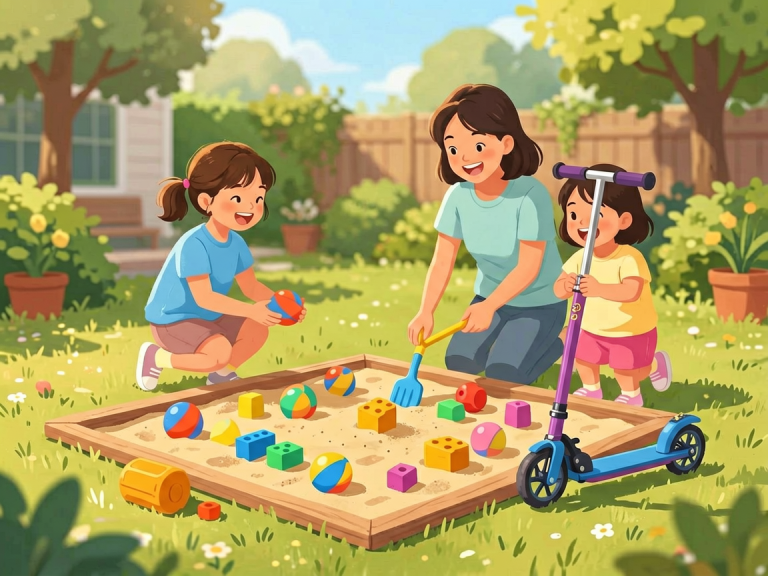
- Outdoor toys (balls, jump ropes, kites, scooters).
- Science and nature kits (magnifying glass, bug catcher, prism).
Toys to avoid:
- Single-function plastic gadgets (e.g., a plastic cash register that only makes one sound).
- “Interactive” plush dolls that require an app or subscription.
- Anything with a screen, even if it’s marketed as “educational.”
- Cheap, breakable toys that lead to frustration.
—
Conclusion: Less Screen, More Wonder
Choosing screen-free toys is not about depriving your child of technology—it is about giving them the gift of deep, imaginative, and hands-on play. The best toy is one that becomes a tool for curiosity, a catalyst for friendship, and a canvas for creativity. It does not need batteries, updates, or Wi-Fi. It simply needs a child who is ready to explore.
As you build your toy collection, remember the golden rule of screen-free play: *A toy should be 90% child and 10% toy.* The child should be the actor, the inventor, and the storyteller. The toy is merely a stage. By following the guidelines in this guide—prioritizing open-endedness, age-appropriateness, natural materials, social potential, and active engagement—you will create an environment where your child can thrive without a screen.
In a world that constantly pulls our attention toward glowing rectangles, the simple wooden block or the cloth doll may seem old-fashioned. But these humble objects hold a secret power: they invite children to slow down, to imagine, and to connect—to themselves, to others, and to the real world. That is the most valuable gift of all.