Navigating the World of Screen-Free Toys: Essential Considerations Before You Buy
Introduction
In an age where digital screens dominate children’s attention from infancy onward, the appeal of screen-free toys has resurged with remarkable force. Parents, educators, and child development experts alike champion unplugged play as a remedy for overstimulation, attention deficits, and the erosion of imaginative thinking. Yet simply buying a wooden puzzle or a set of building blocks does not automatically guarantee a rich play experience. Choosing the right screen-free toy requires thoughtful evaluation of your child’s developmental stage, your family’s values, and the toy’s long-term potential. Before you fill your shopping cart with seemingly wholesome alternatives, here are the critical facts you need to know.
—
The Developmental Benefits of Screen-Free Play
Understanding why screen-free toys matter will anchor your decision-making. Unlike digital entertainment, which often provides instant gratification and pre-packaged narratives, physical toys demand active participation. When a child manipulates a set of nesting cups, she is not just stacking objects—she is building spatial reasoning, fine motor control, and cause‑and‑effect logic. A simple wooden train set encourages storytelling, social negotiation (when siblings share tracks), and problem‑solving when a bridge collapses.
Research consistently shows that open‑ended, non‑electronic play fosters executive function skills: self‑regulation, working memory, and cognitive flexibility. Screen‑free toys also reduce the risk of “passive consumption,” where a child merely watches rather than creates. In contrast, a well‑chosen physical toy becomes a tool for experimentation. The key is to recognize that not all screen‑free toys are equally beneficial. Some are disguised as educational but offer only a narrow range of interactions. Your goal should be to select toys that spark curiosity rather than provide a single correct answer.
—
Understanding Your Child’s Age and Interests
One of the most common mistakes parents make is buying a toy that is either too advanced or too simplistic for their child’s current stage. A complex chemistry set might frustrate a four‑year‑old, while a rattle will bore an eight‑year‑old. To make an informed choice, map the toy to your child’s typical developmental milestones.
- Infants (0–12 months): Look for sensory toys that stimulate touch, sight, and sound—textured cloth books, teething rings, and unbreakable mirrors. At this stage, cause‑and‑effect is emerging: a ball that wobbles when pushed teaches early physics.
- Toddlers (1–3 years): This is the golden age of pretend play and gross motor development. Push‑and‑pull toys, stacking blocks, and simple shape sorters are ideal. Avoid toys with too many small parts that pose choking hazards, and choose ones that encourage movement rather than sedentary sitting.
- Preschoolers (3–5 years): Imagination soars. Dress‑up costumes, play kitchens, building sets (like Duplo or wooden train tracks), and art supplies (crayons, play dough, safety scissors) allow for rich narrative play. At this age, cooperative play becomes important, so consider toys that two or three children can use together.
- School‑age children (6+): Complex construction sets (LEGO Technic, marble runs), board games with simple rules, science experiments, craft kits, and strategy games like chess or checkers support logical thinking and patience.
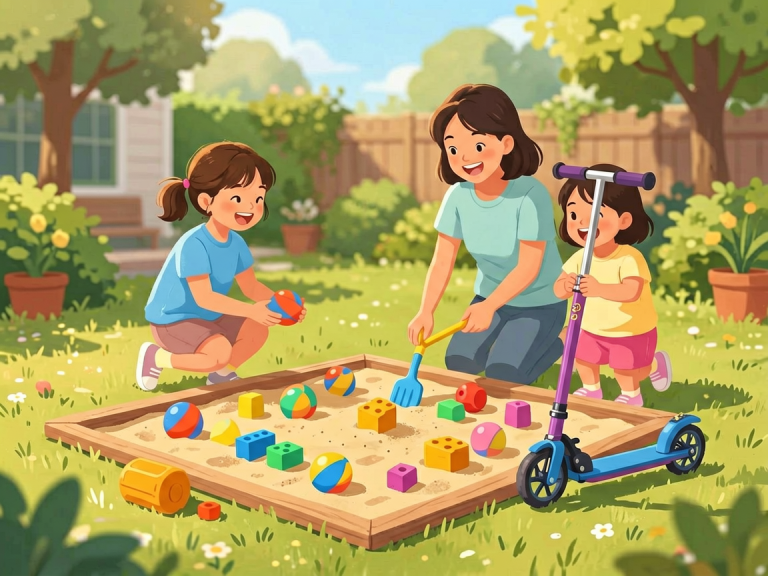
Beyond age, pay close attention to your child’s unique passions. Does your child love dinosaurs? A set of realistic dinosaur figures and a sandbox will ignite hours of storytelling. Is your child fascinated by building? Magnetic tiles or interlocking planks can serve as a blank canvas. Resist the urge to buy a toy simply because it is trending or recommended by a generic best‑seller list. The best screen‑free toy is one that aligns with your child’s natural curiosity.
—
Quality Over Quantity: Material and Safety
Screen‑free toys often carry an eco‑friendly, artisanal reputation, but not all are created equal. When evaluating materials, consider durability, chemical safety, and environmental impact.
- Wood vs. Plastic: High‑quality hardwood toys (maple, beech, or rubberwood) are durable, biodegradable, and often finished with non‑toxic paints or oils. However, cheap plywood toys may splinter or contain formaldehyde. Plastic toys, while lighter and often washable, can contain BPA, phthalates, or lead. Look for certifications such as ASTM F963 (U.S.), EN71 (Europe), or the CE mark. For wooden toys, seek out brands that use water‑based, non‑toxic finishes.
- Soft Toys: Stuffed animals and fabric dolls should have securely sewn seams and hypoallergenic stuffing. Avoid those with glued‑on eyes or buttons that can become choking hazards. Organic cotton and natural wool are preferable for children with sensitive skin.
- Small Parts: Always check age labels. Even a toy marketed for “preschoolers” might contain tiny magnets or beads. Magnet ingestion can be life‑threatening. If you have a child under three, avoid any toy with parts smaller than a toilet paper roll.
- Noise Levels: Some screen‑free toys incorporate sounds (e.g., a talking cash register or a musical instrument). Ensure the volume is not excessively loud—children’s ears are more sensitive than adults’. Toys that emit sounds above 85 decibels can cause hearing damage over time.
A durable, safe toy will outlast fleeting trends. Investing in a few high‑quality pieces is far better than accumulating a mountain of cheap, easily broken items.
—
Encouraging Open‑Ended Play
The most valuable screen‑free toys are those that allow for multiple uses and unlimited creativity. Open‑ended toys have no fixed outcome—they can become whatever a child imagines. A set of plain wooden blocks can be a castle, a bridge, a rocket, or a balance scale. A box of scarves can become a cape, a river, a tent roof, or a character’s hair.
Closed‑ended toys, in contrast, have a single correct use—a puzzle with one solution, a talking toy that says only pre‑recorded phrases, or a battery‑operated robot that performs the same action each time. While these have their place (e.g., puzzles teach spatial matching), an over‑reliance on them can limit flexible thinking.
When shopping, ask yourself: “What can my child do *with* this toy that I haven’t imagined?” If the answer is “just push the button and watch it light up,” reconsider. Look for toys that invite manipulation, assembly, and re‑assembly. Loose parts—items like beads, stones, wooden rings, fabric scraps, and recycled containers—are especially powerful because they can be combined in endless ways. Even a simple cardboard box, with a few holes cut in it, can become a car, a house, or a time machine.
—
The Role of Parental Involvement
Screen‑free toys are not a substitute for parental interaction. Ironically, many parents assume that unplugged toys will keep children happily occupied without adult effort. While independent play is valuable, young children often need a “play partner” to model language, demonstrate possibilities, and provide emotional scaffolding. A toddler who receives a new set of magnetic tiles may initially use them only to pile them up—until a parent shows how to build a tower and then gently knocks it down, turning the activity into a game.
Furthermore, parental involvement can prevent screen‑free toys from becoming another kind of “passive” experience. A child left alone with a bin of colorful plastic pieces might soon grow bored if no one explains the purpose or suggests a challenge. Be prepared to sit on the floor, ask questions (“What happens if we put the big block under the small one?”), and allow the child to lead the play. Over time, as the child internalizes problem‑solving strategies, independent play will naturally expand.
At the same time, avoid over‑directing. The point of screen‑free play is autonomy. If you constantly tell your child *how* to use a toy, you risk turning it into a lesson rather than a joyful exploration. Find a balance between guided play and free exploration.
—
Avoiding Overstimulation and Commercial Hype
The screen‑free toy market has exploded, with countless products claiming to be “Montessori,” “STEM‑focused,” or “brain‑building.” But these labels are often marketing gimmicks. A brightly colored plastic toy with 47 buttons that lights up and plays songs is still screen‑free, but it may overstimulate a child’s senses and hinder concentration.
True screen‑free toys tend to be simpler, often monochromatic or with muted colors. They rely on texture, weight, and function rather than flashing lights. When evaluating a toy, consider its “sensory load.” Does it demand that the child attend to multiple stimuli at once? Does it make noise when the child is trying to think? A calm, quiet toy—like a set of wooden stacking rings—allows the child to focus deeply on the task at hand.
Also, be cautious of toys that associate play with consumerism. Many screen‑free toys now come with app‑compatible features or QR codes that link to online content. If a toy requires a smartphone or tablet for its “full experience,” it is not truly screen‑free. Resist the temptation to buy a toy that promises to “teach coding” through a plastic coding board that requires a tablet to program—it’s a screen in disguise.
Finally, avoid falling for the “educational” label without evidence. The best educational toy is one that your child actually wants to play with repeatedly. A toy that sits on a shelf is educational for no one. Choose fewer, more meaningful objects, and rotate them periodically to reignite interest.
—
Conclusion
Selecting screen‑free toys is not merely a rejection of digital devices—it is an active choice to cultivate a richer, more imaginative, and more physically engaged childhood. By considering developmental appropriateness, material safety, open‑ended designs, parental involvement, and the avoidance of over‑stimulation, you can build a play environment that nurtures creativity and independence. Remember that the best toy does not have a screen, a speaker, or a user manual—it has a child who is free to dream. Take time to observe your child, trust your instincts, and resist the noise of flashy marketing. In the quiet simplicity of a wooden block or a piece of fabric, a universe of possibilities awaits.