Ignite Curiosity: The Best Science Gifts for 6-Year-Olds
Introduction: Why Science Gifts Matter at Age Six
At six years old, children are at a magical crossroads of development. Their cognitive abilities have matured enough to ask "why" and "how" with genuine curiosity, yet their imagination remains boundless. They are no longer toddlers who simply explore by mouthing objects, nor are they yet constrained by the rigid logic of older children. This makes age six the perfect time to introduce science gifts that spark wonder, encourage hands-on experimentation, and build foundational skills in observation, problem-solving, and critical thinking. The best science gifts for 6-year-olds are not just toys—they are tools that transform everyday play into a journey of discovery. They cultivate a lifelong love for learning, teach resilience through trial and error, and most importantly, they make the complex world of science accessible and thrilling. In this guide, we will explore seven categories of exceptional science gifts, each carefully chosen to align with a six-year-old’s developmental stage, attention span, and natural curiosity. From erupting volcanoes to miniature robotic critters, these gifts promise hours of engagement and genuine educational value.
Hands-On Experiment Kits: Learning Through Messy Play
Nothing captures a six-year-old’s attention quite like a fizzy, colorful, or bubbly reaction. Hands-on experiment kits are the quintessential science gift because they transform abstract concepts into tangible experiences. Look for kits that focus on chemistry basics, such as mixing acids and bases to create eruptions, changing colors with pH indicators, or growing crystals. For example, a classic "Volcano Making Kit" allows children to mold their own volcano, then combine baking soda and vinegar to watch it erupt—a mesmerizing demonstration of chemical reactions. Many kits now include safety goggles, child-friendly tools, and detailed instruction booklets written in simple language, often with illustrations. A standout recommendation is the *National Geographic Earth Science Kit*, which combines multiple experiments including a digging activity for real fossils and gemstones. This kit not only teaches about geology but also incorporates fine motor skills as children chip away at plaster blocks to reveal hidden treasures. Another excellent option is the *Learning Resources Primary Science Lab Set*, which includes real beakers, test tubes, and a magnifying glass, allowing children to conduct their own "experiments" with safe, household materials like oil and water. The key is to choose kits where parents can easily join the fun—supervision is necessary at this age, but the shared experience deepens bonding and reinforces learning. These kits often come with a "science notebook" to record observations, encouraging early scientific writing and drawing.
Outdoor Exploration Tools: Connecting with Nature
Six-year-olds are natural explorers, and the outdoors is their biggest laboratory. Science gifts that encourage them to investigate the natural world can foster a sense of wonder about biology, ecology, and physics. A high-quality magnifying glass or a bug-catching kit is an excellent starting point. For instance, the *Backyard Explorer Kit* by Educational Insights comes with a sturdy magnifying case, a collection jar, tweezers, and an activity guide. Children can catch and observe insects, leaves, or pebbles, learning about life cycles and habitats. A step up is a child’s first pair of binoculars—opt for lightweight, rubber-armored models like the *Educational Insights GeoSafari Jr. Kidnoculars* that are designed for small faces and have large, easy-to-focus eyepieces. These allow kids to spot birds, clouds, or faraway trees, sparking conversations about animal behavior and weather patterns. Perhaps the most transformative outdoor gift is a portable bug hotel or a butterfly growing kit. The *Insect Lore Butterfly Garden* is a classic: children watch caterpillars transform into painted lady butterflies inside a mesh habitat, then release them into the wild. This hands-on experience with metamorphosis is unforgettable and teaches patience, responsibility, and the beauty of life cycles. Additionally, a simple compass or a basic weather station (with a rain gauge, thermometer, and wind vane) can turn a backyard into a meteorological hub. These tools are not only fun but also help children develop spatial awareness and an understanding of cause and effect—why does the wind blow? What makes rain? Outdoor exploration gifts also encourage physical activity and reduce screen time, making them a win-win for parents.
Building and Engineering Toys: From Blocks to Bridges
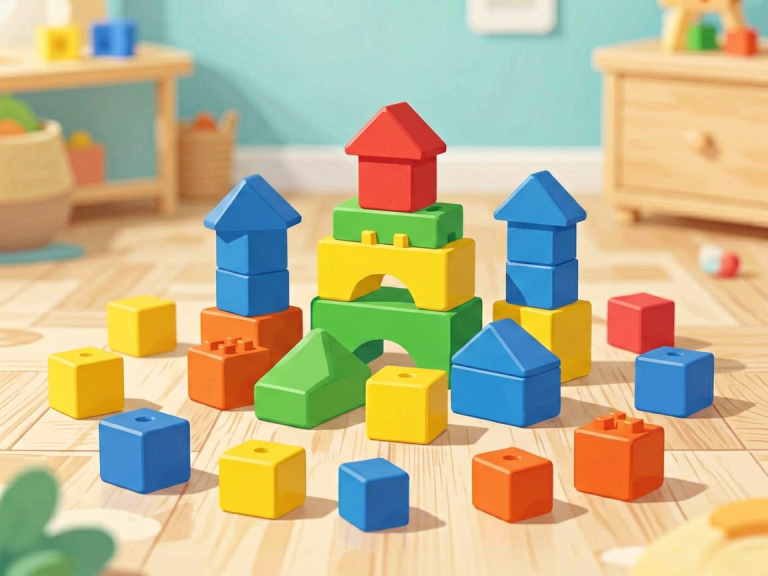
Engineering and construction toys are classic science gifts that never go out of style, but modern versions have become smarter and more educational. For a six-year-old, the sweet spot is between simple stacking blocks and complex robotics. Magnetic building sets, such as *Magna-Tiles* or *PicassoTiles*, are phenomenal because they allow children to build 3D structures while exploring concepts like magnetism, geometry, and structural stability. Kids can build a tower and then test its strength by gently pushing it, learning about balance and gravity. Another powerful option is the *K’NEX Education – Intro to Simple Machines: Gears* set, which introduces levers, pulleys, wheels, and axles through color-coded pieces and easy-to-follow instructions. Children can build a working crane or a seesaw, and then experiment with different gear combinations to see how speed and force change. These sets often come with a small motor, adding an element of motion that is irresistible. For a more open-ended experience, *LEGO Classic Creative Bricks* plus a supplementary "science" themed set (like the *LEGO City Space Mars Research Shuttle*) allows for freeform building with a scientific twist. The act of constructing—whether following plans or designing from scratch—strengthens spatial reasoning, persistence, and early physics understanding. When a child builds a bridge and realizes it collapses because of weak support, they naturally internalize the principles of engineering. Many of these toys are also compatible with each other, meaning the play can expand over multiple birthdays. Importantly, building toys are collaborative; siblings or friends can work together, fostering communication and teamwork.
Space and Astronomy: Reaching for the Stars
Space is a source of endless fascination for young minds. The best science gifts in this category ignite curiosity about the universe without overwhelming a child with complex math. A starter item is a *planetary mobile* or a *glow-in-the-dark solar system poster* that adorns a bedroom ceiling, creating a nightly routine of identifying planets. More interactive is a *projector planetarium*, such as the *Uncle Milton Star Lighter* or the *Educational Insights GeoSafari Jr. Space Projector*. These devices project constellations and planet images onto walls or ceilings, often with narrated facts for each image. Children can learn about Orion’s Belt or the rings of Saturn while lying in bed, turning bedtime into a cosmic lesson. A step further is a *simple refractor telescope* designed for young children. Look for models like the *Celestron FirstScope* or *National Geographic 50mm Portable Refractor Telescope*. They are small, easy to set up, and durable enough to survive a drop. With parental help, a six-year-old can focus on the moon’s craters, Jupiter’s moons, or even a bright star. The moment a child sees the moon’s surface up close is often transformative—it makes science tangible and personal. Additionally, a *space-themed board game* like *The Magic School Bus: Solar System Game* combines learning with friendly competition. These gifts teach vocabulary (orbit, asteroid, gravity), encourage patience (waiting for a clear night), and foster a sense of scale and wonder. For added fun, pair the telescope with a *moon phase calendar* or a *star chart* so children can track what they see from night to night.
Microscope and Magnification: The Hidden World
Six-year-olds are fascinated by tiny things—a grain of sand, an ant, the pattern on a leaf. A microscope designed for their age opens up a hidden universe that is otherwise invisible. The best beginner microscopes are not the high-powered lab versions but rather sturdy, simple, and colorful models. Consider the *Educational Insights GeoSafari Jr. Talking Microscope*—a safe, non-toy-like device that uses slides with images of insects, plants, and animals, and narrates fun facts when the slide is inserted. This eliminates the frustration of focusing and allows children to explore at their own pace. For a more hands-on experience, the *AmScope 120X-1200X 52-pcs Kit* is a popular choice that comes with prepared slides, blank slides, and tools like a pipette and tweezers. However, at age six, adult supervision is essential, especially for handling coverslips. A safer alternative is a *digital handheld microscope* that connects to a tablet or phone. Products like the *JOYIN Digital Microscope* (often priced under $40) allow kids to capture images and videos of everyday objects—a penny, a hair strand, a flower petal—magnified up to 1000x. The screen display makes sharing discoveries easy and keeps children from pressing their eyes against an eyepiece (which can be tricky for small faces). Pair the microscope with a set of *generic collectible insect specimens* or a *mineral rock collection* to give children a purpose for their investigation. The core lesson here is that science is about looking closer—and the ability to see details that the naked eye misses is exhilarating at this age.
Coding and Robotics: Building Logical Thinking
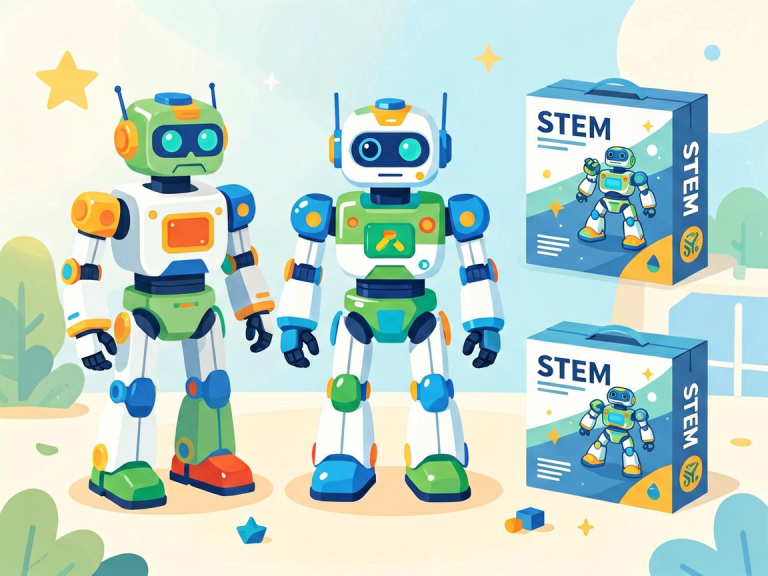
In the digital age, introducing basic coding concepts at age six is less about screens and more about tangible, hands-on logic. The best coding toys for this age use physical blocks or cards to "program" a robot’s movements, teaching sequencing, cause and effect, and debugging without requiring reading or typing. The *Coding Critters* by Learning Resources (such as *Rumble & Bumble*) are adorable robotic dinosaurs or dogs that follow command cards placed in a path. Children arrange the cards to make the pet roll, spin, and light up, learning that actions have step-by-step orders. A more advanced yet still age-appropriate option is the *Botley 2.0 Coding Robot*, which can be programmed using a remote control or through a sequence of physical buttons. Botley can detect objects, follow lines, and perform up to 150 steps. It’s fully screen-free, which reduces eye strain and keeps the focus on logical thinking. For children who enjoy building, the *LEGO Boost Creative Toolbox* combines building with coding—using a tablet app, children program a robot kitten or a guitar to move and make sounds. However, some six-year-olds may need help with the app interface, so consider the child’s tech comfort level. Another brilliant low-cost option is the *Code & Go Robot Mouse Activity Set* where children design mazes for a mouse robot, using coding cards to navigate it through to the cheese. The mouse is cute, the mazes are reconfigurable, and the learning is built-in. These toys do not just teach the mechanics of coding—they teach problem-solving, patience, and the satisfaction of seeing a plan work perfectly (or learning from a failure). They also lay the groundwork for more formal languages like Scratch or Python in later years.
Conclusion: The Gift That Keeps on Questioning
The best science gifts for 6-year-olds are more than just objects—they are invitations to ask questions, make mistakes, and discover the joy of understanding. Whether it’s a simple magnifying glass that reveals the veins on a leaf, a coding mouse that teaches the logic of sequencing, or a butterfly kit that demonstrates the miracle of metamorphosis, these gifts nurture a mindset that will serve children throughout their lives. They teach that it’s okay to fail; that “I don’t know” is the beginning of an adventure; and that the world is full of patterns waiting to be uncovered. When choosing a science gift, prioritize durability, safety, and the potential for open-ended play. Avoid kits that are too prescriptive or require excessive adult intervention. Instead, look for items that allow the child to experiment, adapt, and repeat. And remember, the best gift of all is the time you spend exploring alongside them—watching an ant crawl, mixing colors, or asking “what if?” together. In a world of fleeting digital entertainment, science gifts offer something enduring: the spark of curiosity that never fades.