Introduction
Title: Safe Toys for 2-Year-Olds: A Comprehensive Guide to Choosing Playthings That Nurture Development Without Compromising Safety
The second year of life is a whirlwind of discovery. At 24 months, toddlers are no longer passive observers; they are explorers, climbers, testers, and imitators. Their cognitive, motor, and social skills blossom at an astonishing pace. A child of this age learns through touch, taste, sound, and movement—and toys are the tools of that learning. But with this newfound curiosity comes a sobering responsibility for parents and caregivers: the toys that delight a 2-year-old can also pose hidden dangers if not carefully selected. According to the U.S. Consumer Product Safety Commission, thousands of emergency-room visits each year involve children under five injured by toys—choking on small parts, cuts from sharp edges, or burns from faulty electronics. For the 2-year-old demographic, the risks are especially acute because they lack the impulse control to avoid hazards and the verbal skills to communicate distress.
This article aims to provide an evidence-based, practical roadmap for selecting safe toys for 2-year-olds. We will explore the key safety standards, the most dangerous pitfalls, the best materials, and the specific types of toys that support developmental milestones while minimizing risks. Each section is structured around a critical dimension of toy safety, ensuring that you can make informed choices whether you are a parent, a grandparent, or an educator.
1. Understanding Safety Standards and Regulatory Labels
Before any toy reaches a child’s hands, it should have passed rigorous testing. In the United States, the Consumer Product Safety Improvement Act (CPSIA) mandates that all toys intended for children under 12 must undergo third-party testing for lead, phthalates, and mechanical hazards. For 2-year-olds, the most relevant standard is ASTM F963, which covers small parts, sharp points, choking hazards, and toxicity. Any toy that bears the “ASTM” label or the CPSC’s certification mark has been screened against these criteria.
When shopping, look for explicit age labels. A toy marked “3+” is not safe for a 2-year-old, even if it seems simple. The small-parts test uses a cylinder with a diameter of 1.25 inches (31.7 mm) and a depth of 1 inch (25.4 mm)—roughly the size of a toddler’s windpipe. Any toy or detachable component that fits completely inside this cylinder is a choking hazard. Remember that a 2-year-old’s mouth is their primary investigative tool; buttons, eyes on stuffed animals, wheels, and screws are all potential culprits.
International buyers should also check for the CE mark (European conformity) or the UKCA mark. However, no label is foolproof. A 2021 study by the World Health Organization found that roughly 15% of toys sold in informal markets in low-income countries failed basic safety tests. Therefore, purchasing from reputable manufacturers—such as Melissa & Doug, Fisher-Price, Hape, or Green Toys—provides an additional layer of assurance.
2. Material Safety: What Goes Into a Toy Matters as Much as What Comes Out
Two-year-olds mouth everything. Even if a toy is not designed to be chewed, it will be chewed. Consequently, the chemical composition of the toy is paramount. The most common toxic offenders are lead, cadmium, arsenic, and phthalates (softening chemicals used in PVC plastics). Lead can cause irreversible neurological damage, while phthalates disrupt endocrine function.
The safest materials for 2-year-old toys are:
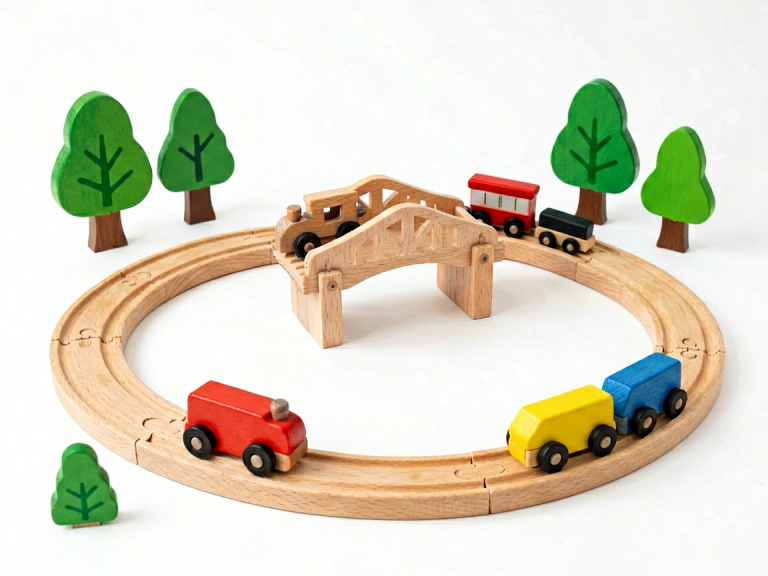
- Solid wood (preferably beech, maple, or birch) finished with water-based, non-toxic paints or oils. Avoid composite woods (MDF or particleboard) because they often contain formaldehyde-based glues.
- Food-grade silicone – soft, flexible, and heat-resistant. Silicone toys are ideal for teething and can be sterilized in boiling water.
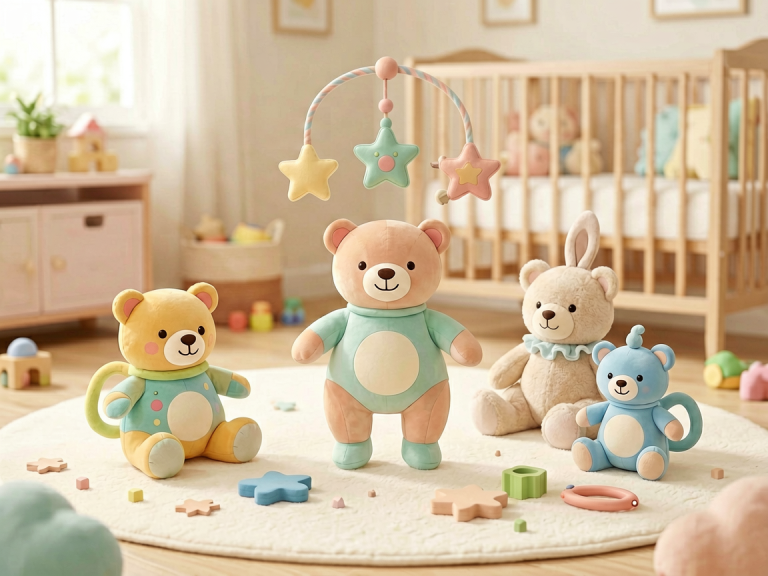
- Organic cotton or wool for plush toys. Ensure that the fabric is certified by Oeko-Tex Standard 100 or GOTS (Global Organic Textile Standard).
- High-density polyethylene (HDPE) plastic – often labeled #2 or #4. These are BPA-free and phthalate-free. Avoid #3 (PVC), #6 (polystyrene), and #7 (polycarbonate, which may contain BPA).
A simple testing method: if a plastic toy has a strong chemical smell, it is not safe. Similarly, painted wooden toys that flake or chip should be discarded immediately. Lead paint was banned in the U.S. in 1978, but vintage or imported toys may still contain it. For this reason, second-hand toys for 2-year-olds require extra scrutiny.
3. Choking, Strangulation, and Entrapment Hazards
Choking is the leading cause of toy-related deaths among toddlers. Beyond small parts, parents must also consider strings, cords, and elastic bands. A 2-year-old can easily wrap a long cord around their neck. The CPSC recommends that any string or cord attached to a toy should be less than 12 inches (30 cm) in length. Toys with loops—such as pull-along wagons with a looped handle—should be cut or modified.
Batteries are another hidden danger. Many musical or light-up toys use button batteries (coin-sized lithium cells). If swallowed, these batteries can cause severe internal burns or even death within two hours. Always ensure that the battery compartment is secured with a screw—not a snap or a clip that a toddler can pry open. Better yet, avoid toys with electronics entirely for 2-year-olds unless the batteries are completely inaccessible.
Entrapment hazards include openings that a child can squeeze into (e.g., hollow blocks or tunnels with a diameter larger than 9 inches) and spaces where fingers can get caught. Choose toys with rounded edges and avoid any toy that has hinges, seams, or sliding parts that could pinch skin.
4. Age-Appropriate Features: Balancing Challenge and Safety
A safe toy is not merely one that avoids harm; it should also match the child’s developmental stage. A toy that is too advanced can frustrate a child and lead to unsafe behavior—like a 2-year-old trying to stand on a toy meant for sitting. A toy that is too simple fails to engage, causing the child to abandon it and find something potentially hazardous around the house.
For 2-year-olds, safe and appropriate categories include:
- Push-and-pull toys – sturdy, with a short handle and broad base to prevent tipping. Avoid those with a long rope.
- Stacking and nesting toys – large, chunky pieces that cannot be swallowed. Ensure the stack does not wobble dangerously.
- Shape sorters – with large, smooth shapes and a container that has no sharp edges.
- Pounding toys – with a mallet that is too large to fit in the mouth and a base that stays stable.
- Simple puzzles – with knobs large enough for small hands and pieces too big to swallow.
- Ride-on toys – with a low center of gravity, wide wheels, and no sharp protruding parts. Never let a 2-year-old ride a wheeled toy near stairs or uneven surfaces.
Avoid toys with magnets (even “educational” magnetic building sets) because if two magnets are ingested, they can pinch intestinal walls and cause perforations. Also avoid toys with small beads, glitter, or sand (like kinetic sand) because these can cause inhalation or eye irritation.
5. Noise and Light: Sensory Safety
Many toys for 2-year-olds produce sounds and lights to attract attention. However, some can harm hearing or vision. The American Academy of Pediatrics warns that toys emitting sounds over 85 decibels (about the loudness of heavy traffic) can damage a child’s hearing over time. Test noisy toys by holding them near your own ear; if it is uncomfortably loud for you, it is too loud for a 2-year-old.
Similarly, flashing lights—especially strobe-like effects—can trigger seizures in children with photosensitive epilepsy. Even in healthy children, bright, rapidly changing lights can cause eye strain and overstimulation. Opt for toys with gentle, constant illumination or soft pulsing rather than rapid strobes.
6. Maintenance and Inspection: Safety Is an Ongoing Process
A toy that was safe when purchased can become dangerous after weeks of play. Wood can splinter, plastic can crack, fabric can tear, and batteries can leak. Establish a weekly inspection routine: run your fingers over all surfaces to feel for sharp edges, check that seams are intact, and test that all parts are securely attached.
Washable toys are essential for hygiene, but cleaning methods must not degrade safety. Machine-wash plush toys in a mesh bag on gentle cycle, and air-dry (the dryer can melt synthetic fibers). Silicone and plastic toys can be washed with warm soapy water or wiped with a diluted vinegar solution. Avoid bleach, which can weaken materials and leave toxic residues.
When a toy shows any sign of damage—even a small crack—discard it immediately. Do not attempt to repair it with glue or tape, because a determined toddler will find a way to dislodge the fix.
7. Educational vs. Marketing Hype: What Science Says
A final layer of safety involves protecting a child’s cognitive and emotional well-being. Many toys marketed as “educational” for 2-year-olds are actually overstimulating or developmentally inappropriate. For example, electronic tablets with “learning apps” are not recommended by pediatricians for children under 3 because they displace real-world interaction and can lead to attention difficulties.
What truly benefits a 2-year-old’s development are open-ended toys that encourage creativity, problem-solving, and physical activity: blocks, play dough (non-toxic and homemade or certified), pretend-play sets (like a toy kitchen with large, soft food pieces), and art supplies (large crayons and washable markers). These toys are safe because they have no hidden electrical components, few small parts, and are easy to clean.
Conclusion
Safe toys for 2-year-olds are those that respect the child’s physiology, psychology, and voracious curiosity. The best toy is not necessarily the most expensive or the most colorful—it is the one that passes the rigorous tests of small parts, non-toxic materials, sturdy construction, and quiet simplicity. By understanding choking hazards, avoiding toxic chemicals, choosing age-appropriate designs, and maintaining regular inspections, parents can create a play environment that is both joyful and secure. Remember that no toy can substitute for attentive adult supervision. Even the safest toy in the world can become dangerous if left unattended near a flight of stairs, a pool, or a busy street.
As your 2-year-old takes their first steps toward independence, the toys you choose will accompany them on that journey. Let those toys be safe, thoughtful, and full of wonder—not worry.