Nurturing Little Explorers: The Best Toys for Kids Who Love Nature
Introduction
In an age dominated by screens and structured schedules, fostering a child’s connection to the natural world has never been more important. Nature offers endless opportunities for wonder, creativity, and hands-on learning—qualities that shape resilient, curious, and empathetic individuals. Yet, for many parents, the challenge lies in finding toys that complement and enhance this innate curiosity rather than distracting from it. The best toys for kids who love nature are those that bridge the gap between indoor play and outdoor discovery, encouraging observation, experimentation, and imaginative storytelling. They are not mere plastic distractions; they are tools that transform a backyard into a rainforest, a puddle into an ocean, and a fallen leaf into a treasure. This article explores six categories of nature-inspired toys that ignite a child’s sense of adventure, deepen their understanding of ecosystems, and—most importantly—make learning about the environment pure joy.
—
Outdoor Adventure Toys: Equipping Young Naturalists for the Field
The simplest yet most powerful toys for nature-loving kids are those designed for exploration. A well-chosen piece of equipment can turn a routine walk into a scientific expedition. Binoculars designed for children—lightweight, durable, and with large eyepieces—allow little eyes to spot birds, squirrels, or distant cloud formations. Brands like GeoSafari or Educational Insights offer models with built-in compasses or magnifying glasses, combining multiple functions in one tool. Similarly, a high-quality insect observation jar (such as the Nature Bound Bug Catcher) with a magnifying lid and air holes gives children a safe way to study beetles, caterpillars, or ladybugs up close before releasing them back into the wild.
Another indispensable item is a child-friendly field journal or nature notebook. While not a “toy” in the traditional sense, pairing it with a set of colored pencils and a waterproof cover encourages kids to sketch leaves, record weather patterns, or press flowers. For older children (ages 6–10), a simple compass and a map-reading kit can turn a family hike into a treasure hunt. The Learning Resources GeoSafari Jr. Talking Microscope is a more advanced option—it introduces kids to microscopic details of nature (like the veins of a leaf or the scales of a butterfly wing) through spoken facts and high-quality images. These tools not only satisfy a child’s desire to explore but also teach patience, observation, and respect for living creatures. They create a sense of purpose: every rock turned over or bird song identified becomes a small victory.
—
Nature-Themed Building and Construction Sets: Sculpting Ecosystems
Building toys have long been a staple of childhood development, but those rooted in nature offer a unique blend of creativity and ecological awareness. Many parents turn to wooden block sets that mimic natural forms—tree stumps, river stones, and branches—like the Grimm’s Wooden Rainbow Stacker or the Tegu magnetic wooden blocks. These allow children to build forests, animal dens, or waterfalls without the rigid constraints of plastic bricks. The open-ended nature of such toys means a child can construct a bird’s nest one day and a mountain range the next, all while exploring concepts of balance, symmetry, and structure.
For more structured play, consider eco-friendly construction sets like the Playmobil Wiltopia series, which features animal figures (including endangered species), trees made from recycled materials, and even a solar-powered research station. Alternatively, the LEO & FRIENDS Wooden Animal Stacking Blocks combine fine-motor skills with knowledge of habitats: each block is engraved with a different animal or plant. There are also subscription-based kits, such as the KiwiCo Koala Crate’s “Wild” line, which deliver monthly projects like building a cardboard hedgehog house or a miniature terrarium. These toys subtly teach children about habitats, food chains, and the importance of biodiversity, all while keeping their hands busy. The best part? They encourage cooperative play—siblings or friends can work together to design a forest, argue over where the bear should sleep, and invent stories about the creatures that live there.
—
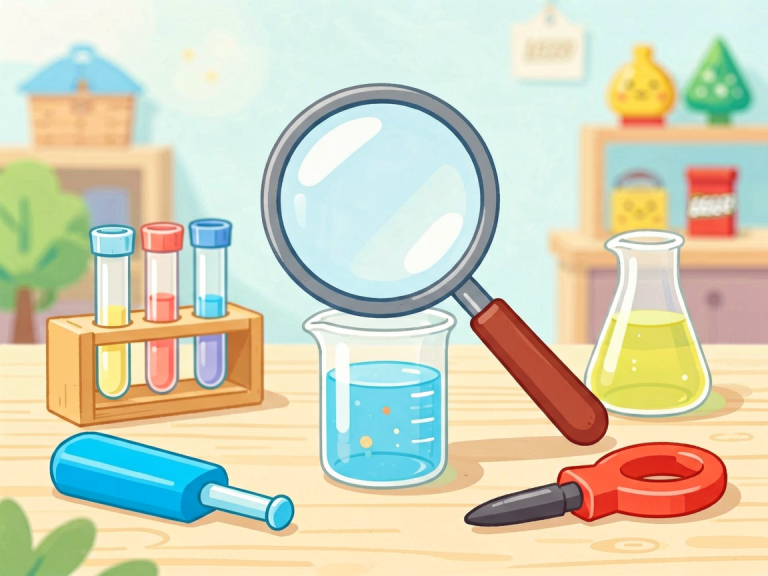
Science and Discovery Kits: Hands-On Lessons from the Natural World
Children are natural scientists. They ask why the sky is blue, how a seed grows, and where insects go in winter. The right science kit can turn these questions into experiments, making abstract concepts tangible. One timeless favorite is the Thames & Kosmos “Biology: Genetics & DNA” kit, but for younger kids (ages 4–8), simpler options are better. The NATIONAL GEOGRAPHIC “Mega Science Kit” includes a bug-catching tool, a rock tumbler, and a germination station where kids can sprout beans in a jar. Another star is the Snap Circuits “Green Energy” kit, which teaches how solar panels and wind turbines work—ideal for children fascinated by renewable resources.
For a more tactile experience, the 4M “Crystal Growing” Kit lets kids observe how different minerals form over days, while the Discovery Kids “Fossil Excavation Kit” has them chisel away at a plaster block to uncover a shark tooth or ammonite. These activities simulate real archaeological work and build patience. Particularly inspired is the “Grow Your Own Butterfly” kit from Insect Lore: children watch caterpillars transform into Painted Lady butterflies, then release them into the garden. This process sparks profound discussions about life cycles, metamorphosis, and the fragility of life. Such kits are not merely educational; they create lasting memories and a sense of stewardship for the environment. Parents often report that after using a butterfly kit, their child becomes obsessed with planting milkweed or avoiding pesticides. That’s the power of a well-designed discovery toy—it plants seeds of lifelong curiosity.
—
Art and Craft Supplies Inspired by Nature: Creating with the Outdoors
Nature is the ultimate artist, and providing children with materials that allow them to mimic or incorporate natural elements fuels both creativity and environmental appreciation. Instead of generic markers and glitter, consider Nature Craft Kits that include items like pressed flowers, wooden discs, and leaf-shaped punches. The Creativity for Kids “Pressed Flower Art” set includes a flower press, glue, and frames so children can create sun-catchers or bookmarks. For a more open-ended approach, a “Nature Weaving Loom” (made from a simple cardboard frame) lets kids weave grass, twigs, and petals into textured art.
Another innovative product is the Eco-Dough range by Hape, a set of play dough made from natural ingredients and scented with lemon or lavender. Children can sculpt mushrooms, snakes, or trees, then add real leaves or seeds as decorations. The Crayola “Outdoor In” Color Wonder activities use special markers that only appear on specially coated paper, allowing children to (mess-free) color scenes of forests, ponds, and mountains. For older kids (ages 7+), a “Natural Dye Kit” (like the Earth Paint set) enables them to make ink from berries, turmeric, or beets, then paint on recycled paper. This not only teaches chemistry but also reduces reliance on synthetic materials.
Perhaps the simplest yet most profound craft toy is a “Nature Scavenger Hunt” card deck—a set of cards that prompts kids to find items like “a feather, a Y-shaped stick, a smooth white stone.” Companies like Uncommon Goods sell these sets with eco-friendly pouches. Once collected, the items can be arranged into a collage or used to tell a story. These activities train children to see the natural world as a source of endless, free materials, fostering gratitude and resourcefulness.
—
Books and Storytelling Kits: Immersive Nature Narratives
While digital media often overshadows print, there is a special magic in a well-illustrated nature book or a storytelling kit that comes alive outdoors. Look for lift-the-flap books about woodland animals, like “The Woods” by Paul Hoppe, or field guides written for children, such as the “Peterson First Guide to Butterflies and Moths.” However, a truly interactive option is a “Storytelling Kit”—a box containing a short book plus character figurines and a play mat. For example, the “In the Woods” kit from Storytime Toys includes a wooden fox, a bear, a rabbit, and a set of trees, encouraging children to act out the story under a real tree.
Another award-winning product is the “Talking Tubes” system by Educo, which allows kids to whisper into a tube and hear the sound travel through a garden—a physics lesson mixed with pure fun. Pair this with a nature-themed audio player like Yoto Player’s “Forest Sounds” card, which plays ambient recordings of birds, wind, and water, and you have a sensory-rich experience that can accompany outdoor quiet time. For the more scientifically inclined, the “Nature Anatomy” book by Julia Rothman combines stunning illustrations with fascinating facts about everything from fungus to clouds. It’s not a toy per se, but it’s a tool that children will return to again and again. These narrative-driven toys and books don’t just teach facts; they build empathy for the creatures and plants that share our world. A child who has “met” a bear in a story is more likely to care about bear habitats in real life.
—
Role-Play and Imaginative Play: Becoming a Guardian of the Wild
Imagination is a child’s greatest superpower, and nature-themed role-play toys allow them to inhabit the roles of scientists, conservationists, or woodland creatures. Costume kits are a natural starting point. A “Wildlife Vet” set (such as the Melissa & Doug “Rescue Vet” outfit) includes a lab coat, a stethoscope, and a plush bear or lizard that needs “care.” This kind of play teaches empathy and introduces basic ideas about animal health and habitat preservation. For a more high-tech twist, the “GeoSafari Jr. My First Microscope” (a handheld, fully functional microscope) lets children pretend to be field researchers as they examine a bug’s leg or a petal’s surface.
Construction-based role-play is equally engaging. The “Tegu Magnetic Treehouse” set allows kids to build a treehouse on a magnetic board, complete with a swing, ladder, and tiny animal figures. They can then imagine themselves as forest rangers, tending to the tree’s ecosystem. Another hit is the “Planet Earth Adventure Set” by Grimm’s, which includes a wooden globe, a compass, and felt animals from each continent—perfect for pretend journeys to the Amazon or the Arctic. For the water-loving child, a “Fishing Set” (like the Hape “Great Fish Sinker”) made from sustainable bamboo lets them “catch” magnetic fish from a blue felt “lake” while learning about aquatic life.
Role-play is not just fun—it’s a rehearsal for real-world stewardship. When a child pretends to be a park ranger cleaning up litter or a botanist planting seeds, they internalize those behaviors. They start to see themselves as active protectors of the environment, not just passive viewers. That shift in identity is priceless.
—
Conclusion
The best toys for kids who love nature do not sever them from the outdoors; they invite deeper engagement with it. Whether it’s a pair of binoculars that makes a blue jay feel within arm’s reach, a crystal-growing kit that turns weeks into a slow miracle, or a simple bag of wooden blocks that becomes an entire forest, these toys respect a child’s innate wonder. They do not shout for attention with flashing lights or noisy music; they whisper possibilities. In selecting toys that mirror the natural world—its textures, rhythms, and mysteries—parents give children the greatest gift of all: the knowledge that they belong to something vast, beautiful, and worth protecting. As the leaves fall and the seasons turn, these toys will be there, reminding every little explorer that the greatest adventure is just outside the door.