Nurturing Tiny Explorers: The Ultimate Guide to Outdoor Toys for Newborns
Introduction
Becoming a parent opens a world of joyous discovery, and one of the most exciting milestones is introducing your newborn to the great outdoors. While it might seem early to think about "toys" for a baby who can barely hold up their head, appropriate outdoor toys for newborns play a vital role in sensory development, bonding, and establishing healthy sleep patterns. Unlike the flashy, electronic gadgets marketed for older infants, outdoor toys for newborns are gentle, nature-inspired tools that complement a baby’s natural curiosity. This article explores why outdoor play matters, what to look for in safe toys, and specific categories that will delight both you and your little one. Remember: the best "toy" for a newborn is often a calm parent, a soft blanket, and a gentle breeze, but a few carefully chosen items can elevate those precious moments outdoors.
Why Outdoor Play Matters for Newborns
Sensory Stimulation in a Natural Environment
Newborns are born with an innate drive to make sense of their world. The outdoors offers a rich tapestry of sensory inputs—the rustle of leaves, the warmth of sunlight filtered through a canopy, the gentle touch of a breeze, and the distant chirp of birds. Unlike indoor environments, which can be static and predictable, outdoor spaces change constantly. High-contrast visual patterns (like dappled light and moving shadows) help stimulate the developing visual cortex. Soft textures from grass, sand, or fabric encourage tactile exploration. Moreover, the natural humidity and oxygen levels outdoors support respiratory health. Outdoor toys for newborns should amplify these natural stimuli without overwhelming them.
Supporting Physical Development
Even in the first few months, outdoor play can aid motor skill development. Lying on a soft, clean mat under a shade tree allows a newborn to practice lifting their head during tummy time, strengthening neck and shoulder muscles. A mobile made of lightweight, natural materials (like wooden leaves or fabric animals) suspended from a stroller canopy encourages visual tracking and reaching motions. Exposure to different surfaces—a blanket on grass, a padded play mat on a deck—provides varied proprioceptive feedback. While newborns don’t yet crawl or walk, these early experiences build the foundation for later gross motor milestones. Outdoor toys designed for this age are intentionally simple: no batteries, no bright flashing lights, just objects that invite gentle interaction with the world.
Key Safety Considerations for Newborn Outdoor Toys
Material and Construction
The skin of a newborn is extremely delicate, so any outdoor toy must be made from non-toxic, hypoallergenic materials. Avoid toys containing BPA, phthalates, lead, or harsh chemical dyes. Look for certifications like ASTM (American Society for Testing and Materials) or EN71 (European safety standard). Organic cotton, natural rubber, and untreated wood (sanded smooth to prevent splinters) are excellent choices. For toys that will be chewed or mouthed (which newborns start doing around three months), ensure they are free of small parts that could become choking hazards. Outdoor toys also need to be easy to clean—mold and mildew can develop quickly in humid conditions. Machine-washable fabrics and wipeable surfaces are a must.
Environmental Factors
Newborns cannot regulate their body temperature well, and their skin has little melanin, making them highly vulnerable to sunburn. The American Academy of Pediatrics recommends keeping infants under six months out of direct sunlight entirely. Therefore, outdoor toys for newborns should be used under shade: a tree, a canopy, or a UV-protective umbrella. Never use sunscreen on babies under six months without consulting a pediatrician; instead, rely on protective clothing and shade. Additionally, avoid toys that can overheat in the sun (dark plastic surfaces can become scorching). Always check the temperature of surfaces before placing your baby on them. A good rule of thumb: if it’s too hot for your touch, it’s too hot for your baby.
Age-Appropriate Design
Newborns lack the coordination and strength to grasp or manipulate toys in the way older babies do. Toys that are too heavy, too complex, or have sharp edges are dangerous. Choose items that are lightweight, with large, soft contours. Avoid strings longer than 12 inches (to prevent strangulation), and never attach toys to a crib or stroller with long cords. For outdoor use, ensure that any toy that goes on the ground is free of dirt, insect nests, or sharp debris. Your baby’s play area should be inspected before each use—check for fallen branches, animal droppings, or toxic plants.
Top Outdoor Toy Categories for Newborns
1. High-Contrast Play Mats and Blankets
A high-contrast play mat is arguably the most essential outdoor toy for a newborn. Newborns see best in black, white, and bold patterns (like checkerboards or stripes) because their retinas are still developing. Spreading a mat on grass—but never directly on the ground if the grass is wet or could harbor bugs—gives your baby a safe, clean space to lie on their back or tummy. The mat itself can be a sensory toy: look for ones with crinkly corners, attached teething rings, or mirrored sections that reflect the sky. Some mats come with built-in shade canopies, which are perfect for keeping the sun off while still allowing fresh air. When choosing, prefer mats made of organic cotton with a waterproof backing to prevent dampness from seeping through. A good mat can be used from day one up to six months, making it a versatile investment.
2. Soft, Hanging Sensory Mobiles and Gym
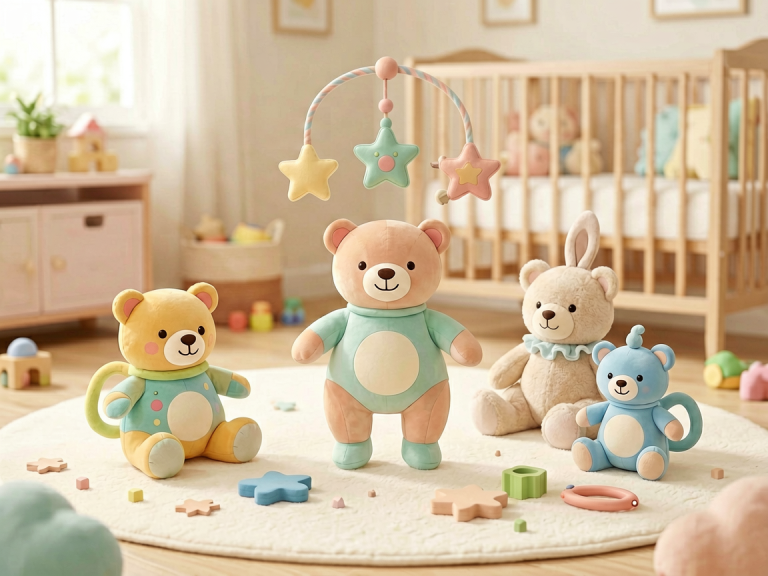
A portable baby gym designed for outdoor use is a wonderful tool. Look for a foldable frame with arching arms that you can place over your baby’s mat or directly on a clean surface. The gym should hold a few dangling toys: soft fabric animals, unbreakable mirrors, wooden rings, or crinkly flowers. These features encourage visual tracking, hand-eye coordination, and bat-at motions. For outdoor settings, weight the base of the gym to prevent it from tipping in a breeze. Alternatively, you can simply hang a mobile from the handle of a stroller or from a low tree branch (ensuring it’s secure and out of reach of your baby’s face). The key is to keep the toys within 8–12 inches of your baby’s eyes—their optimal focusing distance. Rotate the toys every few days to maintain novelty. Avoid mobiles with loud electronic sounds; instead, let the natural sounds of wind chimes or your own voice be the soundtrack.
3. Natural Texture Exploration Tools
Newborns learn about the world through mouthing, touching, and feeling. Provide a small basket of safe, outdoor-friendly textured toys. A clean, smooth river stone (supervised, and only if it’s too large to swallow) can be fascinating for a baby to grip. A strip of organic muslin fabric tied loosely to a stroller bar gives them something to pull and suck on. Soft rubber teethers in leaf or flower shapes offer relief for sore gums when teething begins. You can also make your own "sensory bag" by sealing water, leaves, and a drop of food coloring in a sturdy, double-bagged ziplock (taped shut and supervised). This allows your baby to squish and watch without the mess. Remember: any natural object from outside—like a pinecone or a piece of bark—must be thoroughly cleaned and sized appropriately. A rule of thumb: if it can fit through a toilet paper tube, it’s a choking hazard.
4. Wind and Sound Toys
Because a newborn’s hearing is acute but still maturing, gentle, non-startling sounds are ideal. Hang a set of soft wind chimes made from bamboo or fabric where your baby can hear them but not reach them. The melody of a chime swaying in a real breeze is far more calming than any electronic lullaby. Similarly, a small, baby-safe rattle made from natural wood or silicone can be introduced during tummy time outdoors. When you shake it, your baby will turn their head to locate the sound—a crucial developmental milestone. Another fun idea: attach a small pinwheel to the stroller handle. The spinning motion and the soft clicking sound captivate newborns while also teaching cause and effect as you adjust its speed. Always supervise to ensure the pinwheel is not within grabbing distance.
5. Gentle Rocking or Swinging Equipment
Many babies find rhythmic motion incredibly soothing. While full-sized swings are not safe for unsupervised newborns, there are outdoor-friendly, portable rockers designed for infants. Look for a lightweight, foldable baby rocker with a five-point harness and a wide, stable base. Place it on a flat, shaded area and gently rock your baby while they watch the trees move. Some rockers come with a removable toy bar that holds a few simple toys. Alternatively, a parent can hold the baby in a stretchy wrap or carrier and gently sway while pointing out leaves and clouds. The key is that the motion remains gentle; newborns should never be jostled or shaken. Always read the weight limits—most rockers are safe until the baby can push up on their arms or roll over, typically around four to five months.
How to Choose the Right Outdoor Toys for Your Newborn
Follow Your Baby’s Cues
No two newborns are alike. One might be mesmerized by a swinging mobile, while another prefers to stare at dappled shadows. Introduce one new toy at a time during outdoor sessions and watch for signs of engagement: widened eyes, stilling of movements, or reaching. If your baby becomes fussy or turns away, they may be overstimulated. Outdoors can be intense—too much noise, wind, or brightness may require you to shorten playtime or move to a quieter spot. Your baby’s comfort is paramount, so always prioritise their need for rest, feeding, and cuddles over "play."
Prioritise Multi-Functional and Portable Items
Newborns grow quickly, so choose toys that can adapt. A high-contrast mat can later become a tummy-time mat and then a play mat for sitting up. A soft mobile can be used indoors as well as outdoors. Lightweight, collapsible toys are easier to carry to the park, beach, or backyard. Avoid large, single-use items that will be outgrown in weeks. Remember that your baby’s most important "toy" is you—your voice, your gentle touch, and your attention. Outdoor toys should enhance your interaction, not replace it.
Check for Easy Maintenance
Outdoor toys inevitably get dirty. Choose items that are machine-washable (like cotton covers) or can be wiped down with a mild soap and water solution. Avoid toys with complicated crevices where dirt can hide. If a toy has mold or mildew, discard it immediately. Keep a small, dedicated bag for outdoor toys, and wash them after each use if they’ve been on grass or sand. Proper care ensures your baby stays healthy and the toys last longer.
Tips for Successful Outdoor Play Sessions with Newborns
- Time it right: The best times are early morning (before 10 AM) or late afternoon (after 4 PM) when UV rays are weaker and temperatures are mild. For very hot climates, limit outdoor time to 10–15 minutes at first.
- Dress appropriately: Light-colored, long-sleeve cotton onesies, a wide-brimmed hat, and breathable socks. Avoid overdressing; a newborn’s hands and feet should feel warm but not sweaty.
- Stay hydrated: If breastfed or bottle-fed, offer feeds more frequently during outdoor play, as babies can become dehydrated without you noticing.
- Use bug protection: Avoid chemical insect repellents for newborns. Instead, use mosquito nets over the stroller or carrier, and avoid areas with standing water or tall grass.
- Watch the clock: Newborns have short awake windows (45–60 minutes). A 10–20 minute outdoor session is plenty. End play before your baby becomes overtired.
- Trust your instincts: If the wind picks up, clouds darken, or your baby seems distressed, go inside. There’s always tomorrow.
Conclusion
Introducing your newborn to the outdoor world through carefully selected toys is a gift that nurtures their senses, supports development, and strengthens your bond. The best outdoor toys for newborns are not the most expensive or the most complicated—they are simple, safe, and infused with the natural beauty of the environment around you. A patch of grass, a gentle breeze, a rustling leaf, and your loving presence are the most powerful "toys" of all. Start slowly, observe your baby’s reactions, and let the outdoors become a calm, joyful part of your daily routine. As your little one grows, those early moments under the sky will become the foundation for a lifelong love of exploration. So unfurl that blanket, hang that mobile, and step outside—your newborn’s big, beautiful world is waiting.