The Power of Play: Essential Educational Toys for Science-Loving Kids
For children who constantly ask “why,” who delight in mixing kitchen ingredients, who stare at the night sky with wonder, or who take apart old gadgets just to see how they work, the world is a grand laboratory waiting to be explored. The right educational toys can transform that natural curiosity into a lifelong passion for science. Unlike passive entertainment, well-designed science toys engage children in hands-on discovery, critical thinking, and problem solving—all while feeling like pure fun. This article explores the landscape of educational toys for kids who love science, offering insights into their benefits, types, selection criteria, and specific recommendations to fuel young minds.
Why Science Toys Matter More Than Ever
In an age dominated by screens and instant gratification, science toys provide a tangible, tactile experience that no app can replicate. When a child builds a working circuit, watches crystals grow, or launches a homemade rocket, they are not just playing—they are internalizing fundamental principles of physics, chemistry, biology, and engineering. Research in developmental psychology consistently shows that hands-on learning improves retention, fosters creativity, and builds resilience. A child who fails to make a paper circuit light a bulb learns to troubleshoot, iterate, and try again. That process is invaluable.
Moreover, science toys help bridge the gap between abstract concepts learned in school and real-world phenomena. A child who plays with a magnetic building set understands electromagnetism intuitively long before encountering the term in a textbook. For kids who already have a natural affinity for science, these toys validate their interests and provide the tools to go deeper. For hesitant learners, a well-chosen toy can spark a spark that grows into a flame.
Categories of Science Educational Toys
The variety of science toys available today is staggering, but they generally fall into a few broad categories. Each appeals to different aspects of a child’s personality and developmental stage.
Chemistry and Lab Kits
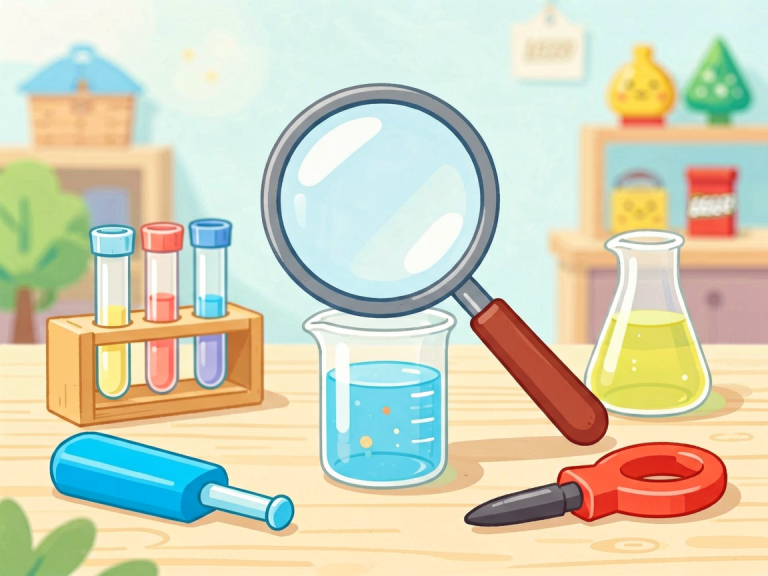
Classic chemistry sets have come a long way from the dangerous, no-instruction kits of the past. Modern versions include safe, non-toxic chemicals, clear instructions, and often online video guides. Children can create slime, make volcanoes erupt, grow crystals, or even extract DNA from strawberries. These kits teach measurement, observation, and the scientific method. Brands like Thames & Kosmos, National Geographic, and MEL Science offer age-appropriate options that balance excitement with safety.
For the truly dedicated young chemist, subscription services deliver new experiments monthly. This recurring structure keeps the momentum alive and introduces a steady stream of new concepts. The key is to choose kits that use everyday materials where possible, so the child can repeat experiments independently.
Robotics and Coding Kits
Robotics toys are a perfect blend of engineering, programming, and creative play. From simple snap-together robots that follow light to advanced programmable bots with sensors, these toys teach logic, sequence, and cause-effect relationships. Lego Mindstorms, Sphero, and Makeblock are popular choices. For younger children, Botley 2.0 or Code-a-Pillar offer screen-free coding concepts. Older kids can move to Arduino-based kits or Raspberry Pi projects.
The beauty of robotics is that the learning is incremental. First, the child builds the robot physically, learning about gears, motors, and structural stability. Then they code it, debugging as they go. When the robot finally moves as intended, the sense of accomplishment is immense. Such toys also develop fine motor skills and spatial reasoning.
Astronomy and Space Exploration Tools
Kids who look up at the stars deserve tools that bring the cosmos closer. A good telescope—even a modest one—can open up the moon’s craters, Saturn’s rings, and Jupiter’s moons. Beginners’ models from Celestron or Orion are designed for ease of use. But astronomy toys aren't limited to telescopes. Planispheres, star charts, glow-in-the-dark constellations, and even build-your-own planetarium models teach celestial mechanics. For the digital age, augmented reality apps paired with physical globes (like the AstroReality series) blend analog and digital learning.
Space exploration kits, such as model rockets from Estes, combine physics with thrill. Building and launching a rocket teaches aerodynamics and Newton’s laws, while recovery systems introduce parachute principles. Always follow safety guidelines and local regulations.
Biology and Nature Exploration
For the budding naturalist, biology toys range from microscopes to ant farms to butterfly growing kits. A high-quality kids’ microscope (with a smartphone adapter for photos) can turn a backyard leaf into an intricate world of cells and veins. Dissection kits are available for older children, using safe, pre-prepared specimens. Butterfly gardens and frog raising kits teach life cycles firsthand. For the more adventurous, geode-cracking kits allow children to find hidden crystals inside rocks.
One underrated category is gardening science kits—hydroponic systems, seed germination labs, and soil testing kits. These teach ecology, botany, and environmental science. A child who grows their own basil under a grow light will understand photosynthesis on a visceral level.
Physics and Engineering Building Sets
Construction sets with a scientific twist go beyond simple blocks. Kits like K’Nex, Engino, or the “Simple Machines” line by Learning Resources introduce levers, pulleys, gears, and inclined planes. More advanced sets like Erector sets or Meccano allow building functional cranes, bridges, or vehicles. Magnetic building toys (Magna-Tiles, Geomag) are excellent for younger children to explore magnetism and geometry.
Circuitry toys—Snap Circuits, littleBits, or Circuit Scribe—let children create working lights, alarms, and sensors with no soldering required. These toys are particularly effective for teaching abstract electrical concepts. Children can experiment: what happens if I add a resistor? What if I reverse the battery? This trial-and-error process is pure science.
How to Choose the Right Science Toy for Your Child
Selecting the best educational toy depends on age, interest, and learning style. Here are some guidelines.
Age appropriateness matters. A complex chemistry set will frustrate a five-year-old and possibly pose safety risks. Conversely, a simple light-up toy will bore a twelve-year-old. Manufacturers usually provide age ranges, but consider your child’s maturity and experience. A precocious eight-year-old might handle a kit labeled for 10+. Always read reviews from other parents.
Follow the child’s current passion. If your child is obsessed with dinosaurs, get a fossil excavation kit or a dinosaur anatomy model. If they love rockets, start with a simple stomp rocket and graduate to a model rocket. Forcing a specific topic can dampen enthusiasm. Let the toy complement, not dictate, the interest.
Look for open-ended play. The best science toys allow multiple experiments or builds. Snap Circuits, for example, come with hundreds of projects, but children can also invent their own. A single-use volcano kit is fun once, but a chemistry set with 50 experiments provides long-term value.
Consider safety and supervision. Some toys require adult guidance, especially those involving chemicals, heat, or sharp tools. This is not necessarily a bad thing—shared experiences strengthen parent-child bonds and teach responsible lab behavior. However, if you cannot commit to supervising, choose simpler, safer options.
Check for educational alignment. Does the toy teach real science, or is it just gimmicky? Look for products endorsed by educators, science museums, or STEM organizations. Avoid toys that make outlandish claims without substance. Ideally, the packaging should explain the scientific principles involved.
The Benefits Beyond Knowledge
While the immediate goal of a science toy is to teach concepts about the natural world, the deeper benefits are even more profound. Science toys nurture a growth mindset. When a child’s experiment fails—and it will—they learn that failure is a stepping stone, not an endpoint. They develop patience, attention to detail, and the ability to follow instructions (and when to break them creatively).
These toys also build confidence. A child who successfully builds a working motor feels a surge of self-efficacy. That confidence spills over into school and other activities. Moreover, many science toys are collaborative. Siblings or friends can work together on a robotics kit, learning communication and teamwork. Parents who play alongside their children model curiosity and lifelong learning.
Finally, science toys can plant the seeds of future careers. Many engineers, doctors, and researchers trace their passion back to a childhood gift—a microscope, a rocketry kit, a chemistry set. By investing in these toys, parents are not just buying entertainment; they are investing in potential.
Recommended Top Picks for Different Age Groups
To help narrow down the choices, here are specific recommendations that consistently earn high marks from educators and families.
Ages 4–6: The “Primary Science Lab Set” from Learning Resources includes real science tools sized for small hands. Magna-Tiles offer endless magnetic building. “Botley 2.0” is a screen-free coding robot that teaches sequencing without a device.
Ages 7–9: National Geographic’s “Earth Science Kit” includes over 15 experiments like growing crystals and erupting volcanoes. “Snap Circuits Jr.” is a brilliant introduction to electricity. The “GeoSafari Jr. Talking Microscope” adds audio narration to biology exploration.
Ages 10–12: “Thames & Kosmos Physics Workshop” allows construction of 30+ models. “LEGO Boost” combines building with coding. The “Celestron FirstScope” telescope gives clear views of the moon and planets. “MEL Chemistry” subscription kits offer monthly, high-quality experiments delivered to your door.
Ages 13+: “Arduino Starter Kit” teaches microcontrollers and programming. “Sphero BOLT” is a programmable robot ball with advanced sensors. “Estes Tandem-X Launch Set” provides dual rocket launching. For biology, the “AmScope 120X-1200X Microscope” is a serious tool that will last through high school.
Conclusion
Educational toys for kids who like science are far more than playthings. They are gateways to understanding the universe, laboratories for creativity, and workshops for building resilience. Whether your child dreams of being an astronaut, a marine biologist, a roboticist, or simply a curious human being, the right science toy can nurture that dream. In a world that increasingly demands scientific literacy, giving children the tools to explore, question, and create is one of the greatest gifts we can offer. So the next time you see a child staring at a beetle or asking why the sky is blue, consider handing them a microscope or a star chart—and watch them ignite.