Beyond Blocks: The Transformative Power of Building Toys for 5‑Year‑Olds
Introduction: More Than Just Play
At the age of five, children stand at a remarkable crossroads. They are no longer toddlers whose play is purely sensory and exploratory, nor are they yet school‑agers bound by formal curricula. Instead, five‑year‑olds are bursting with imagination, developing fine motor skills, and beginning to understand cause and effect, spatial relationships, and social cooperation. In this pivotal stage, few categories of toys offer as much developmental richness as building toys. From classic wooden blocks to magnetic tiles and interlocking plastic bricks, building toys for five‑year‑olds are not merely entertainment—they are powerful tools for cognitive growth, emotional regulation, language development, and early STEM learning. This article explores why building toys are essential for this age group, how to select the best ones, what types work well, and how parents and educators can maximize the learning potential hidden inside every piece.
Section 1: Why Building Toys Matter at Age Five
1.1 Cognitive and Spatial Development
A five‑year‑old’s brain is undergoing explosive growth in the prefrontal cortex, the area responsible for planning, problem‑solving, and impulse control. Building toys directly exercise these regions. When a child attempts to stack blocks so that a tower does not topple, or when they follow a picture guide to assemble a plastic dinosaur, they engage in iterative hypothesis testing: *“If I put this large piece on top of that small one, will it fall?”* Such trial‑and‑error processes are the foundation of scientific thinking. Moreover, building toys teach spatial reasoning—the ability to visualize objects in two and three dimensions. Research from the University of Chicago found that children who frequently play with construction toys score higher on spatial visualization tests later in life, a predictor of success in engineering and the arts.
1.2 Fine Motor Skills and Hand‑Eye Coordination
At age five, children are refining the pincer grip needed for handwriting. Building toys require precisely that: picking up small connectors, aligning tabs with slots, and applying just enough pressure to snap pieces together. Unlike passive screen‑based activities, building toys demand active, bilateral hand coordination. For example, a child using magnetic tiles must hold the base steady with one hand while attaching a new tile with the other. This bilateral integration strengthens the corpus callosum, the bridge between the brain’s hemispheres, which improves overall motor planning and later reading fluency.
1.3 Social and Emotional Learning
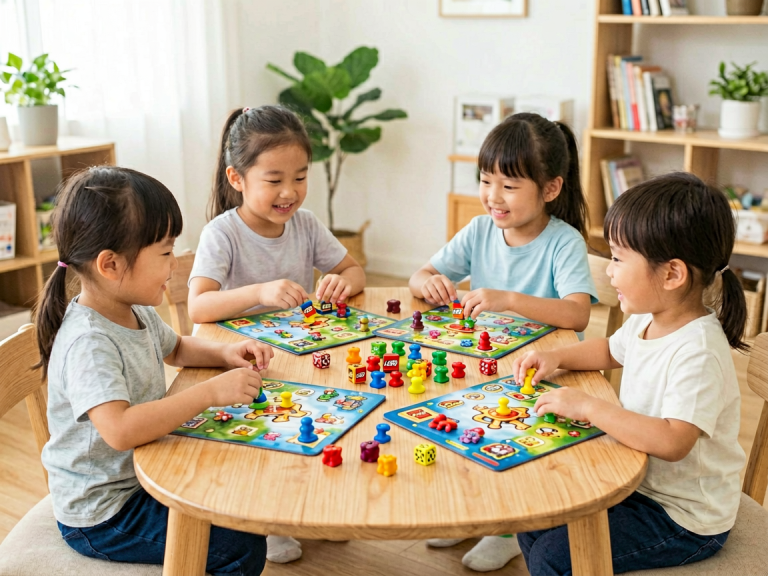
When five‑year‑olds build together, they learn negotiation, turn‑taking, and empathy. A child who wants to use the last red block for her castle must articulate her need, listen to her peer’s counter‑proposal, and perhaps agree to a compromise (e.g., “I’ll use blue instead if you give me the green triangle”). These interactions build emotional vocabulary and self‑regulation. Building also teaches resilience—a tower that crashes is not a failure but an invitation to rebuild stronger. This “growth mindset,” as psychologist Carol Dweck calls it, is one of the most valuable life skills a child can develop.
Section 2: What to Look for When Choosing Building Toys for 5‑Year‑Olds
2.1 Safety First: Materials, Size, and Choking Hazards
Five‑year‑olds still mouth objects occasionally, and their siblings might be younger. Therefore, any building toy should be free of toxic paints, BPA, phthalates, and sharp edges. The small‑parts test is critical: if a component fits entirely inside a toilet paper roll, it poses a choking risk for children under three, but even for five‑year‑olds, pieces smaller than 1.5 inches in diameter are best avoided unless supervised. Always look for certifications like ASTM (American Society for Testing and Materials) or CE (European Conformity). Wooden blocks should be sanded smooth, and plastic pieces should have no burrs.
2.2 Complexity That Matches the “Zone of Proximal Development”
A toy that is too simple (e.g., a set of four oversized blocks) will bore a five‑year‑old within minutes. One that is too complex (e.g., a 1,000‑piece construction set with tiny screws) will frustrate and discourage them. The sweet spot is what developmental psychologist Lev Vygotsky called the “zone of proximal development”—challenges that a child can accomplish with a little help or after some practice. For most five‑year‑olds, that means sets with 30 to 80 pieces, with a variety of shapes and connectors that allow both structured models (like a car or a house) and open‑ended creation. Look for toys that come with idea booklets but also encourage free play.
2.3 Versatility and Longevity
The best building toys grow with the child. Magnetic tiles, for example, can be used at age three for simple stacking, at age five for constructing bridges and animals, and at age eight for exploring geometry and magnets. Similarly, classic wooden unit blocks have been used in kindergartens for a century because they adapt to every developmental stage. Avoid themed sets that are tied to a single movie character—they limit creativity and become outdated quickly. Instead, choose neutral, colorful pieces that can become anything the child imagines.
Section 3: Top Types of Building Toys for Five‑Year‑Olds
3.1 Magnetic Building Sets (e.g., Magna‑Tiles, Picasso Tiles)
Magnetic tiles are arguably the most popular building toy for this age group. Their strong neodymium magnets are safely encased in plastic, and the tiles snap together with an satisfying click. Five‑year‑olds love them because they can create 3D structures that stand without collapsing—a huge confidence booster. They learn about polarity (two magnets repel if oriented the wrong way), symmetry, and basic engineering principles. The translucent colors also allow children to experiment with light and shadows. For group play, magnetic tiles are ideal because they are easy to assemble and disassemble quickly.
3.2 Interlocking Plastic Bricks (e.g., LEGO DUPLO, standard LEGO)
While standard LEGO bricks have a minimum age recommendation of 4 or 5, many five‑year‑olds can handle the smaller classic LEGO sets (about 100–200 pieces) if they have good fine motor skills. DUPLO, the larger version, remains excellent for younger five‑year‑olds or those who need more motor practice. Both systems offer “theme” sets (fire stations, castles, space rockets) that provide step‑by‑step instructions, teaching children to follow a sequential process. However, the real magic happens when children deviate from the instructions and build their own creations. LEGO also boosts math skills: counting studs, sorting colors, and understanding fractions when combining bricks.
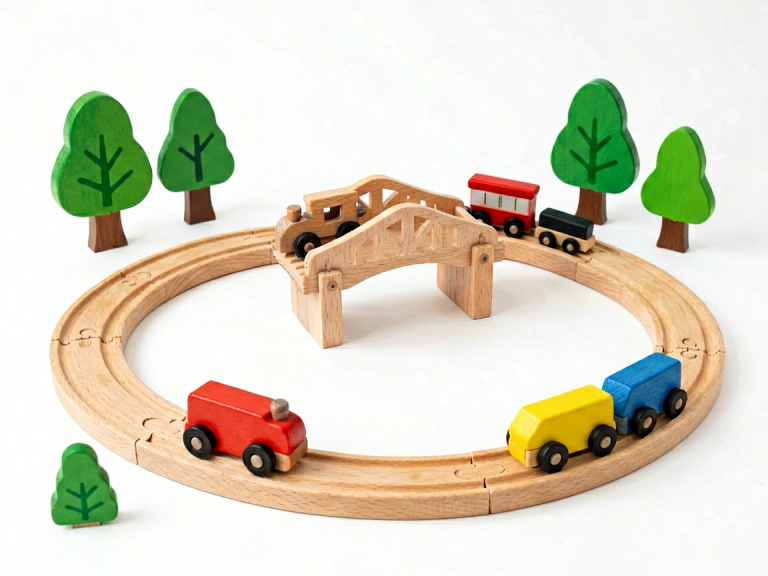
3.3 Wooden Unit Blocks and Planks (e.g., Kapla, standard hardwood blocks)
Wooden blocks are the original “low‑tech” building toy, and they remain irreplaceable. Unlike magnetic or plastic pieces that lock together, wooden blocks rely entirely on gravity and balance. This forces a five‑year‑old to develop a deep intuitive understanding of physics—center of mass, friction, and structural stability. Kapla planks, which are identical thin wooden slats, are especially challenging and rewarding. Children can create cantilevers, arches, and even moving parts (like a pinwheel hinged on a stack). The lack of interlocking means that mistakes lead to dramatic collapses, which teaches grace in failure. Moreover, wooden blocks are silent, tactile, and aesthetically pleasing—they calm the nervous system rather than overstimulate it.
3.4 Gear and Mechanism Sets (e.g., Learning Resources Gears! Gears! Gears!)
Five‑year‑olds are fascinated by cause and effect. Gear sets introduce the concept of mechanical advantage: turning one gear causes a connected gear to spin in the opposite direction. These sets typically include interlocking gears of different sizes, axles, and base plates. Children can build a simple hand‑cranked mechanism that makes a small figure spin or a flag rise. This is an early exposure to engineering concepts like torque, speed, and rotational motion. Such toys also demand patience and problem‑solving: if the gears are not aligned correctly, they will jam. The troubleshooting involved builds executive function.
Section 4: Strategies to Maximize Learning Through Building Play
4.1 Guided Play vs. Free Play: Finding the Balance
Parents often ask whether they should let children build freely or follow instructions. The answer is both. Guided play—where an adult models a technique or helps read a diagram—teaches children how to use the tools and expands their vocabulary (e.g., “This is the base plate,” “Try turning the blue gear clockwise”). Free play, on the other hand, allows children to internalize those lessons and innovate. A good rhythm is: introduce a new building toy with a short demonstration, then step back and let the child explore. If they ask for help, offer a hint rather than a solution.
4.2 Incorporating Storytelling and Pretend Play
Five‑year‑olds are natural storytellers. A pile of blocks can become a kingdom, a spaceship, or a hospital. Parents can enhance this by asking open‑ended questions: “What does your house need so the robot can live there?” “Who lives in this tower?” “How will the animals get up to the second floor?” This merges building with language arts, narrative structure, and social understanding. Children who narrate their building process also improve their sequencing and memory skills.
4.3 Creating a “Building Zone” at Home
Dedicate a low shelf or a large rug for building toys. Keep pieces sorted in bins by type or color (this teaches categorization). Include a small tray to contain loose pieces. Display completed creations on a “gallery” shelf for a few days before dismantling them—this gives a sense of accomplishment and allows reflection. Rotate toys every few weeks to maintain novelty. Avoid offering too many options at once, which can overwhelm a five‑year‑old’s decision‑making abilities.
Section 5: Common Pitfalls and How to Avoid Them
5.1 The Trap of Perfectionism
Some five‑year‑olds become frustrated when they cannot exactly replicate the model on the box. This is especially common with LEGO. To counteract this, remind the child that the picture is just a suggestion. Celebrate “creative modifications.” If a child insists on perfection, help them count studs and double‑check alignment, but also gently introduce the idea that many beautiful buildings in the world are asymmetrical.
5.2 Screen‑Based “Building” Apps
Many digital apps claim to teach building skills through drag‑and‑drop interactions. While some are fun, they cannot replace physical manipulation. Touching a screen does not train the same fine motor pathways as snapping a block. Moreover, digital building lacks the multisensory feedback—weight, texture, sound—that grounds learning in reality. Use apps sparingly, if at all, and prioritize physical building toys.
5.3 Over‑Structuring Play
Resist the urge to turn every building session into a lesson. If a child simply wants to stack blocks as high as possible and watch them crash, that is perfectly valid play. The joy of building toys is that they offer open‑ended possibilities. Structured learning is beneficial, but unstructured, joyful experimentation is where creativity thrives.
Conclusion: Building the Future, One Block at a Time
In a world increasingly dominated by passive entertainment and standardized testing, building toys for five‑year‑olds stand as a defiant celebration of hands‑on creativity. They are not simply toys—they are laboratories for the mind, gyms for the fingers, and stages for the imagination. Whether a child constructs a wobbly tower of wooden blocks, a magnetic castle that glows in the afternoon sun, or a gear‑driven contraption that spins a paper fan, they are laying the neurological foundations for future problem‑solving, resilience, and joy in discovery. For parents and educators, the investment in high‑quality building toys is one of the simplest and most profound gifts we can give a five‑year‑old. The structures they build today may one day crumble, but the skills they build will stand forever.