The Best Educational Toys for 3-Year-Olds: Building Brainpower Through Play
Introduction
At the age of three, children are little explorers bursting with curiosity, energy, and a rapidly expanding vocabulary. Their brains are developing at an astonishing rate, forming millions of neural connections every second. This is the golden window for learning through play—a time when the right toys can transform simple fun into powerful educational experiences. But with a sea of flashing lights and plastic gadgets on the market, how do parents choose the *best* educational toys that truly support a three-year-old’s cognitive, motor, social, and emotional growth? The answer lies not in the price tag or the number of bells and whistles, but in the toy's ability to invite open-ended exploration, problem-solving, and creativity. This article dives deep into the most effective types of educational toys for three-year-olds, offering evidence-based insights and practical recommendations. Each category is designed to target a specific developmental domain, ensuring that playtime becomes a rich learning journey.
Building Blocks of Cognition: Puzzles and Construction Sets
One of the cornerstones of early childhood education is spatial reasoning and logical thinking, and nothing beats classic puzzles and building blocks for this purpose. For a three-year-old, jigsaw puzzles with large, chunky pieces (typically 4 to 12 pieces) teach pattern recognition, shape matching, and the concept of cause and effect. When a child fits a piece into the correct spot, they experience a small triumph that builds confidence and persistence. Look for puzzles featuring familiar themes—animals, vehicles, or family scenes—as these also expand vocabulary and narrative skills.
Similarly, wooden or plastic construction sets, such as large Duplo bricks or magnetic tiles, offer limitless possibilities. These toys encourage children to plan, experiment, and adjust their designs. When a toddler stacks blocks and they tumble, they learn about gravity and balance in a concrete way. More importantly, construction play fosters fine motor control as little fingers grasp, align, and press pieces together. Over time, children begin to create symmetrical structures, bridges, and towers, which are early forms of mathematical thinking. The best part? These toys grow with the child—what starts as simple stacking evolves into complex castles and vehicles, making them a long-term investment in cognitive development.
Fine Motor Mastery: Art Supplies and Manipulatives
Three-year-olds are refining their hand-eye coordination and dexterity, skills that are foundational for writing, self-care, and tool use. Educational toys that target fine motor development are therefore essential. Consider large crayons, washable markers, and finger paints. The act of scribbling, though seemingly random, actually strengthens the muscles in the hand and wrist. When a child holds a crayon and makes deliberate marks, they are learning to control pressure and direction. Add in safety scissors and child-safe glue, and you have a recipe for creativity and precision.
Manipulatives such as lacing beads, threading cards, and pegboards take fine motor practice a step further. Lacing a string through a wooden bead requires concentration, bilateral coordination (using both hands together), and patience. These activities also promote problem-solving: “Will this bead fit? Which hole should I use?” Montessori-style toys like sorting trays with tweezers or tongs challenge small fingers to pick up and transfer objects like pom-poms or buttons. Beyond motor skills, these tasks teach categorisation, colour recognition, and counting. The key is to choose toys that are challenging but not frustrating, allowing children to build competence at their own pace.
Language and Literacy Boosters: Storytelling and Letter Play
At three, children are language sponges, absorbing new words daily and beginning to understand the power of storytelling. Educational toys that nurture pre-literacy skills are invaluable. One of the top choices is a set of high-quality picture books with interactive elements—lift-the-flap, tactile textures, or sound buttons. Reading together not only builds vocabulary but also develops narrative comprehension and emotional intelligence. However, the best toys for language development are those that put the child in the driver’s seat.
Alphabet puzzles, magnetic letters, and simple word games introduce the alphabet in a hands-on way. For example, a set of foam letters for bath time lets children manipulate and name letters while splashing around. Another excellent option is a storytelling kit with felt pieces or wooden characters that children can arrange to create their own tales. This kind of open-ended play encourages them to form sentences, use descriptive words, and sequence events. Hand puppets are also powerful: when a child puts on a puppet, they often speak in a different voice, experimenting with dialogue and social roles. This is not just fun—it’s sophisticated language practice. A rule of thumb: choose toys that invite conversation. If a toy does all the talking (battery-powered and loud), it can actually inhibit a child’s own verbal expression.
Imaginative Play and Social Skills: Role-Playing Sets
Perhaps the most magical type of play for a three-year-old is pretend play. By age three, children begin to understand symbolic representation—a block can become a phone, a cardboard box can transform into a spaceship. Educational toys that support this kind of imaginative thinking are crucial for social-emotional development, empathy, and problem-solving. A simple wooden kitchen set with pots, pans, and play food allows children to mimic adult routines, practice turn-taking, and express emotions through role-playing scenarios. When a child “cooks” for you, they are learning about cause and effect (heat makes food hot), sequencing (first wash, then cut, then cook), and social scripts (asking “Would you like some tea?”).
Dress-up costumes, doctor kits, and tool sets are equally powerful. A child pretending to be a veterinarian learns to care for others; a child using a pretend stethoscope learns about the body. These toys also encourage cooperation when played with siblings or friends, fostering negotiation, sharing, and conflict resolution. The best role-playing sets are made of natural materials like wood or fabric, as they feel more authentic and invite deeper immersion. Avoid overly detailed sets that dictate exactly what the child should do—the more open-ended, the more creative the play.
Sensory Exploration and STEM Foundations
Three-year-olds are inherently sensory learners, and toys that engage multiple senses—touch, sight, sound, and even smell—can spark early interest in science, technology, engineering, and math (STEM). One outstanding category is sensory bins: a container filled with rice, sand, water beads, or kinetic sand, accompanied by scoops, cups, and small figurines. As children dig, pour, and sift, they are learning about properties of matter (wet vs. dry, heavy vs. light) and cause-and-effect relationships. You can easily create themed sensory bins—a “construction site” with small trucks and pebbles, or an “ocean” with shells and plastic sea creatures.
Simple science kits designed for toddlers also make wonderful gifts. Think of a set of colour mixing droppers, where a child drops blue water into yellow and watches it turn green. Such experiments teach observation and prediction. Another STEM-friendly toy is a child-friendly magnifying glass or a set of bug catchers for outdoor exploration. This nurtures a sense of wonder and encourages children to ask “why” and “how.” Look for toys that have no right or wrong outcome—the process of exploring is the education itself.
Choosing Wisely: What to Avoid and Final Tips
While the market is full of toys claiming to be “educational,” not all deliver. Avoid toys that are overly passive, such as electronic tablets or toys that sing or talk endlessly. These often limit a child’s interaction to pressing a button, which does little to build critical thinking or creativity. Also, be wary of toys with too many small parts that pose choking hazards—for a three-year-old, safety is paramount. Stick to age-appropriate recommendations and check for durable, non-toxic materials.
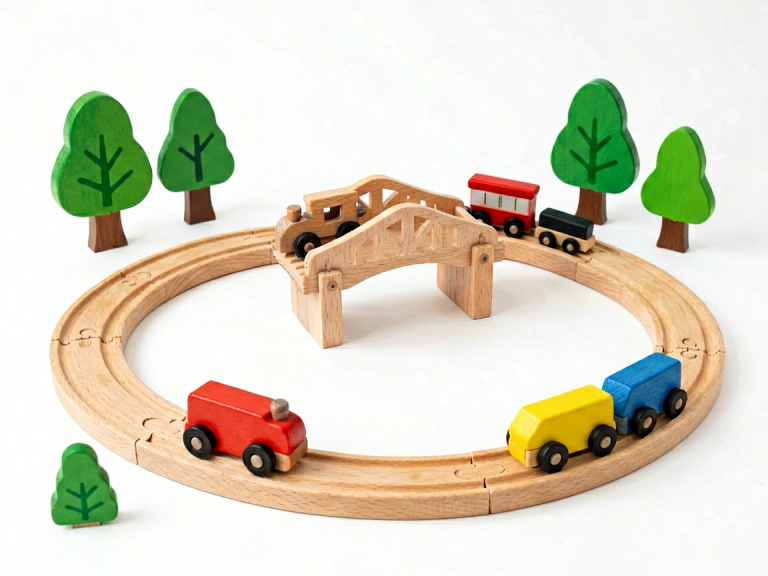
The best educational toys for a three-year-old are those that grow with the child, that require active participation, and that spark genuine joy. A simple set of wooden blocks, a train set, a collection of shells and stones, a sturdy set of markers and paper—these are the true gems. Remember, an educational toy does not need to feel like a lesson. When a child is fully absorbed in play, they are learning the most. As you select toys, consider your child’s unique interests. Does she love animals? Then a farm playset or animal puzzle will delight and educate. Does he enjoy building? Then magnetic tiles will be his best friend. The ultimate gift is not a toy at all—it’s the time you spend playing alongside them, asking questions, and celebrating their discoveries. In that shared joy, the most profound learning happens.
Conclusion
Choosing the best educational toys for a three-year-old is about looking beyond flashy packaging and focusing on the core developmental needs of this vibrant age. From puzzles that sharpen logic, to art supplies that hone fine motor skills, to dress-up trunks that nurture empathy and language—each category plays a vital role. The toys highlighted in this article are not just fun; they are tools that help children make sense of their world. By investing in high-quality, open-ended playthings, parents and caregivers give three-year-olds the freedom to learn at their own pace, in their own way. And in that freedom, the foundation for a lifelong love of learning is laid. So next time you step into a toy store, remember: the best toy is the one that asks a child, “What will you create today?”