The Comprehensive Guide to Choosing Building Toys: Unlocking Creativity and Development
Building toys have been a cornerstone of childhood play for generations, offering far more than mere entertainment. From classic wooden blocks to sophisticated magnetic tiles and programmable robotics kits, the market today is flooded with choices that promise to educate, inspire, and entertain. Yet with so many options, parents, educators, and gift-givers often find themselves overwhelmed: How do you select the right set that truly supports a child's growth while also being engaging and durable? The answer lies not in a single "best" product, but in a thoughtful evaluation of several key factors that align with the child's age, interests, developmental needs, and the play environment. This guide will walk you through the essential considerations for choosing building toys that foster creativity, critical thinking, and joyful learning.
Consider the Age and Developmental Stage
One of the most critical factors in selecting building toys is the child's age and corresponding developmental abilities. Toys that are too simple will bore a child, while those that are too complex may lead to frustration and abandon. Manufacturers often label their products with age recommendations, but it is important to look beyond the numbers and understand the underlying rationale.
For toddlers and preschoolers aged 1 to 3, the focus should be on large, chunky pieces that are easy to grasp and impossible to swallow. Classic wooden blocks, large Duplo-style bricks, or soft foam building sets are ideal because they encourage gross motor skills, hand-eye coordination, and an early understanding of balance and gravity. At this stage, children are not yet building intricate structures; they are exploring cause and effect, stacking and knocking down, and simply enjoying the sensory experience of different textures and weights. Avoid sets with small parts that pose choking hazards, and look for rounded edges and non-toxic finishes.
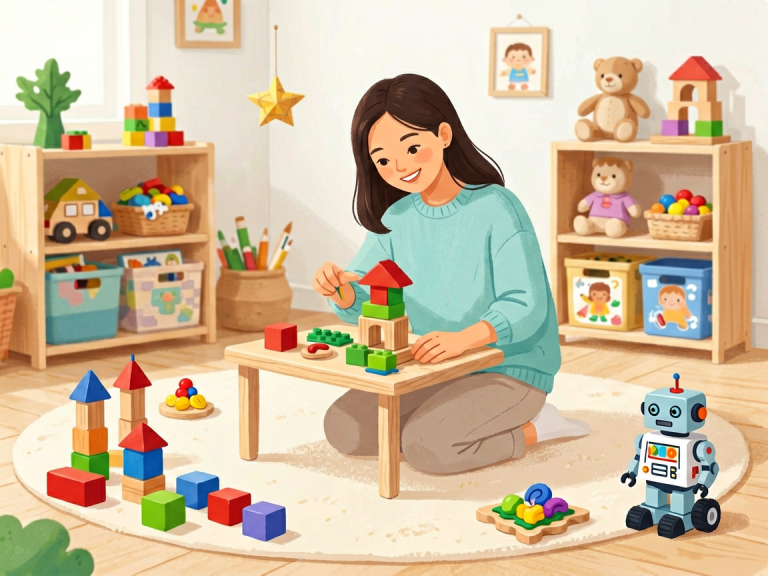
For children aged 4 to 7, fine motor skills improve significantly, allowing them to manipulate smaller pieces. Standard LEGO bricks, magnetic tiles like Magna-Tiles, or interlocking plastic blocks become excellent choices. This age group begins to understand symbolic play and can follow simple instructions, so sets with themed pieces (animals, vehicles, houses) can spark imaginative scenarios. However, open-ended sets that allow free building are equally important, as they nurture creativity without constraining the child to a single outcome. At this stage, the toy should also encourage problem-solving: Can the child make a tower that doesn't fall? How do you create a stable bridge?
For children aged 8 to 12 and beyond, the world of building toys expands dramatically. Advanced LEGO Technic sets introduce gears, axles, and motors, teaching basic engineering principles. Magnetic construction kits with steel balls and rods allow for geometric exploration. Robotics kits, such as those from LEGO Mindstorms or VEX, combine building with programming, offering a rich STEM learning experience. At this age, children can handle complex instructions, refine their patience, and learn from trial and error. The key is to match the challenge level with the child's current skill set while providing room for growth. A child who has mastered simple bricks might be ready for a set that requires reading diagrams or incorporating moving parts.
Prioritize Material Safety and Durability
Safety is non-negotiable when choosing any toy, and building toys are no exception. Because children often put objects in their mouths, especially at younger ages, the materials used must be non-toxic, BPA-free, and free from harmful chemicals like phthalates and lead. Look for certifications such as ASTM (American Society for Testing and Materials) or EN71 (European safety standard) on the packaging. Reputable brands typically list their materials and safety compliance on their websites or boxes.
Beyond safety, durability matters greatly. Building toys are subjected to repeated assembly, disassembly, drops, and occasionally even chewing. Cheap plastic that cracks easily or magnets that become dislodged can quickly turn a fun toy into a hazard or a source of frustration. High-quality building toys are made from robust materials: hard ABS plastic for bricks, natural beechwood for blocks, or strong neodymium magnets encased in plastic or stainless steel for magnetic sets. Wooden blocks should be smoothly sanded and coated with water-based, non-toxic paint or left natural.
Sustainability is an increasingly important consideration for many families. Brands that use recycled plastics, sustainably sourced wood, or biodegradable materials appeal to environmentally conscious consumers. Some companies offer take-back programs or sell refill packs for specific pieces, reducing waste. While sustainable toys may carry a higher upfront cost, they often last longer and can be passed down to younger siblings or friends, making them a wise investment for both the planet and the household budget.
Evaluate Educational and Cognitive Benefits
Not all building toys are created equal when it comes to educational value. Some sets are purely for fun, which is perfectly valid, but many parents seek toys that also promote learning. When choosing, consider how the toy engages different cognitive domains.
STEM (Science, Technology, Engineering, and Math) learning is a primary benefit of building toys. Sets that require following instructions to build a specific model—such as a car, crane, or bridge—teach sequencing, spatial reasoning, and basic physics. For example, a set that includes pulleys and gears introduces concepts of mechanical advantage. Magnetic building sets help children understand polarity and geometry. More advanced robotics kits introduce coding logic and computational thinking.
Equally important are skills like problem-solving, perseverance, and creativity. A toy that offers multiple building possibilities encourages divergent thinking. One child might build a castle, another a spaceship, and a third a abstract sculpture using the same set. Look for sets that do not prescribe a single outcome; instead, they should offer a flexible system of components that can be combined in endless ways. Open-ended building toys, such as unit blocks or modular magnetic tiles, are excellent for this purpose because they do not come with a predetermined picture on the box. Instead, the child's imagination sets the goal.
Moreover, building toys can enhance social-emotional development when played with in groups. Cooperative building projects teach teamwork, communication, and negotiation. Kits that are designed for multiple builders, such as large floor blocks or collaborative marble runs, can be particularly valuable for children who need practice sharing and working toward a common goal.
Foster Creativity and Open-Ended Play
While structured sets with instructions have their place, the true magic of building toys often lies in open-ended play—the ability to create something entirely original without a blueprint. When choosing a building toy, evaluate how much freedom it allows. Does the child need to complete a specific model to feel successful, or can they build whatever comes to mind?
Take LEGO bricks as an example: classic brick boxes with no theme are open-ended, while themed sets (like a Harry Potter castle) come with detailed instructions and specialized pieces that may not be useful for other creations. Themed sets can be engaging and offer a sense of accomplishment, but they can also limit creative use if the child feels the pieces only belong to that one model. A balanced approach is to provide both: a themed set for guided building and a collection of basic bricks for free play. Similarly, magnetic tile sets are inherently open-ended because the tiles can be arranged into any 2D or 3D shape.
Another aspect of creativity is the inclusion of accessories or character pieces that inspire storytelling. A set that includes small figures, animals, or environmental elements (trees, flags, wheels) can transform a simple structure into a narrative scene. This combination of building and pretend play deepens engagement and enriches the play experience.
Balance Budget with Quality and Longevity
Building toys range in price from a few dollars for a handful of blocks to hundreds for elaborate robotics kits. The budget you set will naturally influence your choices, but it is wise to consider the long-term value rather than just the immediate cost. A cheap set that breaks after a few uses is ultimately more expensive than a durable set that provides years of play.
One way to maximize value is to choose sets that are expandable or compatible with other systems. Many major brands (LEGO, Magformers, K'NEX) offer interchangeable pieces within their own lines, so you can start with a small set and add more over time. This modularity means the toy grows with the child, and old pieces never become obsolete. Some brands, like wooden block sets from companies like Melissa & Doug or Hape, are designed to mix with other wooden toys, offering timeless appeal.
Consider also the possibility of buying used building toys. Second-hand markets, garage sales, and online resale platforms often have large lots of LEGO bricks or wooden blocks at deep discounts. As long as the pieces are clean and not damaged, used toys are a budget-friendly and environmentally responsible choice.
Consider the Child's Personal Interests and Preferences
No matter how well-designed a building toy is, it will fail to engage a child who simply is not interested in its theme or building style. Some children are fascinated by vehicles and machinery; they will gravitate toward sets that let them build trucks, robots, and construction equipment. Others love fantasy and storytelling; they might prefer castle sets with dragons and knights, or space stations with astronauts. Still others are drawn to patterns and symmetry; for them, magnetic tiles or colorful geometric blocks will be captivating.
Pay attention to the child's current obsessions and hobbies. If they love dinosaurs, a dinosaur-themed building set could be a huge hit. If they enjoy puzzles, a construction set that requires precise placement might be perfect. Likewise, consider the child's learning style: some children thrive on following detailed instructions, while others prefer to experiment freely. A child who is a natural tinkerer might adore a motorized kit, while a more reflective child might prefer building intricate, static models.
It is also helpful to involve the child in the decision-making process, especially for older children. Show them a few options and let them express their preference. Children who feel ownership over their toy choice are more likely to play with it repeatedly and take care of it.
Conclusion
Choosing the right building toy is a nuanced process that goes beyond simply picking the most popular or the most advertised product. By considering the child's age, safety, educational value, creative potential, budget, and personal interests, you can select a toy that not only entertains but also nurtures essential skills for life. Remember that the best building toy is one that encourages exploration, tolerates failure, and celebrates imagination. Whether it is a simple set of wooden blocks or an advanced robotics kit, the true benchmark of success is the joy and curiosity it inspires in the child. So take your time, do your research, and watch as the child transforms a pile of pieces into a world of their own making.