What to Know Before You Compare Toys: A Parent’s Guide to Informed Choices
Introduction
Walking into a toy store—or scrolling through an endless online marketplace—can be an overwhelming experience. Every shelf is packed with bright colors, flashing lights, and promises of endless fun. As a parent, caregiver, or gift-giver, you naturally want to choose the toy that will bring the most joy and benefit to the child. But before you start comparing toys based on price, popularity, or packaging, there are several critical factors you must understand. Comparing toys without a clear framework can lead to wasted money, safety risks, or toys that end up forgotten in a corner within a week. This article will walk you through the essential knowledge you need before you begin any toy comparison, ensuring your final choice is not only fun but also developmentally appropriate, safe, and lasting.
1. The Child’s Age and Developmental Stage
The number one rule in toy comparison is never to ignore age recommendations. Manufacturers label toys with age ranges for a reason—these guidelines reflect safety concerns, motor skill requirements, and cognitive complexity.
1.1 Safety Hazards of Age-Inappropriate Toys
A toy designed for a 5-year-old might contain small parts that pose a choking hazard for a toddler. Before you compare two seemingly similar building sets, check the age labels. For children under three, avoid any toy with detachable pieces smaller than a standard toilet paper roll. Even if a toy seems “advanced” for a younger child, the risk of ingestion or suffocation outweighs any potential learning benefit.
1.2 Developmental Readiness
Beyond safety, consider whether the toy matches the child’s current developmental abilities. A 2-year-old who is still developing hand-eye coordination will struggle with a complex puzzle designed for a 6-year-old. Conversely, a preschooler may become bored with a rattle. When comparing toys, think about what the child can physically handle, what they understand, and what challenges they are ready for. Look for toys that offer a “zone of proximal development”—not too easy, not too hard.
2. The Purpose and Educational Value
Not all toys are created equal in terms of what they teach. Before you compare, ask yourself: “What do I want this toy to do for the child?”
2.1 Open-Ended vs. Closed-Ended Toys
Open-ended toys, such as building blocks, art supplies, or play dough, allow for infinite creativity. They grow with the child and can be used in countless ways. Closed-ended toys, like a puzzle with a single solution, have a fixed purpose and may be outgrown quickly. When comparing, consider whether you prefer a toy that sparks imagination or one that teaches a specific skill. Often, the best choices combine both—for example, a magnetic tile set that can be used for construction, color recognition, and early geometry.
2.2 Skill Development
Break down the educational value into categories: cognitive (problem-solving, memory), motor (fine and gross motor skills), social-emotional (turn-taking, empathy), and language (vocabulary, storytelling). A toy that claims to be “educational” should actually engage the child in active learning, not passive observation. For instance, a tablet game that requires tapping a screen may claim to teach numbers, but a physical abacus or counting beads offers hands-on sensory feedback that strengthens neural connections.
3. Materials, Durability, and Safety Standards
Toy safety goes far beyond age labels. The materials used can affect health, the environment, and the toy’s lifespan.
3.1 Non-Toxic and BPA-Free
Many plastic toys contain harmful chemicals like phthalates, lead, or BPA. Before you compare, check if the toy is certified by recognized safety organizations (e.g., ASTM in the US, CE in Europe, or ISO standards). For younger children who put everything in their mouths, choose toys labeled “non-toxic” and “BPA-free.” For wooden toys, ensure the paint is water-based and lead-free.
3.2 Durability and Repairability
A cheap toy that breaks within days is not a bargain. Compare build quality: Are the seams glued or riveted? Is the plastic brittle? Can batteries be easily replaced? Many electronic toys have non-replaceable batteries, turning the entire toy into e-waste once the battery dies. Consider toys that are designed to last, especially if you plan to pass them down.
4. The Child’s Interests and Personality
No amount of objective comparison matters if the toy doesn’t align with what the child actually enjoys.
4.1 Observe Before Buying
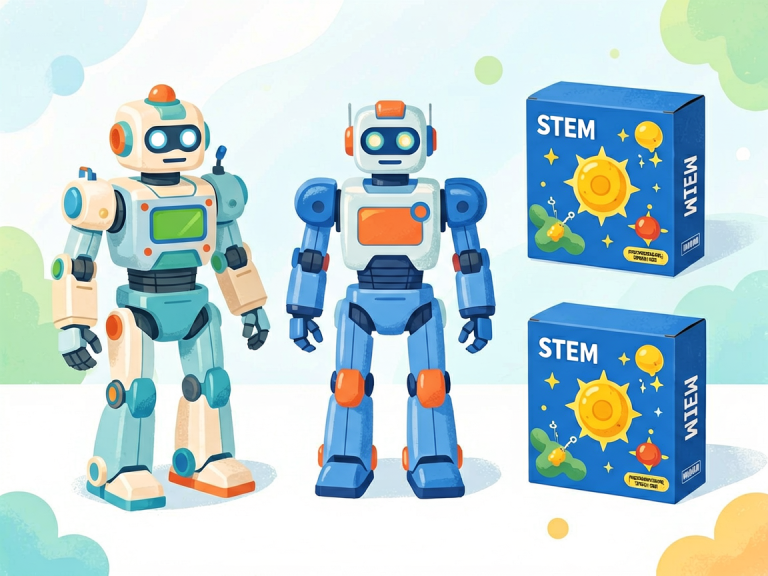
Spend time watching how the child plays. Do they prefer solitary activities or group games? Are they drawn to pretend play, building, art, or movement? A highly-rated STEM robot might be a waste if the child loves storytelling and dolls. Conversely, a quiet child who hates noise might be overwhelmed by a loud musical toy. When you compare toys, make a list of the child’s current obsessions—dinosaurs, space, animals, cars—and match your options to those themes.
4.2 Gender and Stereotypes
Avoid assuming that a toy is “for boys” or “for girls.” Research shows that children’s preferences are influenced more by exposure and marketing than by innate differences. A construction set is wonderful for any child, and a dollhouse encourages nurturing skills in all genders. When comparing, disregard gendered packaging and focus on the activity itself.
5. Social and Emotional Impact
Toys are not just objects; they shape how children interact with others and themselves.
5.1 Cooperative vs. Competitive Play
Some toys encourage solo play (e.g., a single-player puzzle), while others promote cooperation (e.g., board games that require teamwork). Consider the child’s social environment. If they have siblings or playmates, a cooperative game might reduce conflict. If they need to build independence, a solo activity is fine. Also, be wary of toys that promote aggressive competition or unrealistic body images.
5.2 Screen Time and Active Play
In an age of screens, compare how much active engagement a toy offers. A toy that requires physical movement—like a ball, jump rope, or balance bike—promotes health and gross motor skills. Electronic toys that simply flash lights and play sounds can be passive and overstimulating. The American Academy of Pediatrics recommends limited screen time for young children. Before you compare, decide if you want a toy that gets the child moving or one that keeps them stationary.
6. Price, Longevity, and Value for Money
Budget is always a factor, but price alone is a poor metric for comparison.
6.1 Cost Per Play
Calculate the “cost per play” by estimating how often the toy will be used. A $50 toy that is played with daily for a year costs about 14 cents per use. A $5 toy that breaks after one use is far more expensive in the long run. When comparing, look for toys with high replay value—those that can be used in multiple ways, have expandable components, or can be combined with other toys.
6.2 Secondhand and Swap Options
Before buying new, consider comparing with secondhand options from thrift stores, garage sales, or online marketplaces. Many high-quality wooden toys, LEGO sets, and classic board games hold their value and are often in good condition. This allows you to afford more expensive brands or multiple toys within the same budget.
7. Noise Level and Parental Sanity
An often-overlooked factor is the noise level of a toy. Some toys come with adjustable volume, but many do not. A toy that plays the same jingle repeatedly can drive parents crazy and may even harm a child’s hearing if too loud. Before you compare, read reviews about noise. Many parents appreciate toys with an “off” switch or a silent mode.
8. Environmental and Ethical Considerations
Increasingly, consumers are concerned about where toys come from and what happens to them after use.
8.1 Sustainable Materials
Compare toys made from recycled plastics, sustainably sourced wood, or biodegradable materials. Avoid toys that contain single-use plastic components that cannot be recycled. Brands with transparent supply chains and ethical labor practices are worth a premium for many families.
8.2 Packaging Waste
Toys often come in excessive packaging—plastic ties, blister packs, cardboard boxes with windows. Check if the packaging is recyclable or minimal. Some companies now offer packaging that doubles as a storage box or part of the toy.
9. Reviews and Testimonials – But Be Critical
Online reviews can be helpful, but they can also be misleading.
9.1 Look for Verified Purchases
When comparing toys on Amazon or other platforms, prioritize reviews from verified buyers. Be wary of overly positive reviews that sound generic or overly negative ones that may stem from misuse.
9.2 Consider the Context
A toy that gets a great review from a 4-year-old’s parent might not work for a 2-year-old. Look for reviews from parents with similar-aged children, similar play styles, and similar safety concerns.
10. The “Gift” Factor: Surprise vs. Practicality
If you are buying a gift, the fun of unwrapping is important, but so is long-term satisfaction.
10.1 Experience Over Objects
Sometimes the best “toy” is not a toy at all—it’s an experience. Tickets to a children’s museum, a subscription to a craft kit, or a membership to a zoo. These create memories and often involve physical activity and learning. When comparing a physical toy vs. an experience, consider which will produce more lasting joy.
10.2 The Unwrapping Moment
For a surprise gift, a visually appealing package and a toy that makes a satisfying reveal (e.g., a pop-up or a big box) can enhance the excitement. But don’t sacrifice quality for presentation. You can always wrap a high-quality toy in a fun way.
Conclusion
Comparing toys is not a simple task of looking at prices or brand names. It requires a holistic understanding of the child—their age, interests, development, and environment—as well as a clear-eyed assessment of safety, durability, educational value, and long-term practicality. By knowing these key factors before you begin your comparison, you can make confident, informed choices that will delight the child, support their growth, and avoid regret. The next time you stare at a mountain of colorful options, take a deep breath, recall this guide, and remember: the best toy is the one that gets played with—safely, joyfully, and for a long time.