The Power of Play: Selecting the Best Learning Toys for 3-Year-Olds
The third year of a child’s life is a whirlwind of discovery, curiosity, and rapid development. At age three, toddlers are no longer babies; they are emerging as independent little people who ask endless questions, test boundaries, and absorb everything around them like sponges. The toys they play with during this critical window can do far more than simply keep them occupied—they can actively shape cognitive skills, motor coordination, language acquisition, and social-emotional growth. Choosing the right learning toys for a three-year-old is not about buying the most expensive or flashy gadgets; it is about understanding how a child’s mind works and selecting tools that encourage exploration, problem-solving, and creativity. In this article, we will explore why learning toys matter at this age, what developmental areas they support, and how to navigate the vast landscape of options to find toys that truly educate while entertaining.
Why Learning Toys Matter at Age Three
Three-year-olds are at a unique developmental stage where their brains are forming neural connections at a staggering rate. According to early childhood experts, the first five years of life are the most critical for brain development, and the quality of a child’s environment—including the toys they interact with—directly influences that growth. Learning toys are purposefully designed to stimulate specific skills, such as counting, letter recognition, cause-and-effect reasoning, or hand-eye coordination. But beyond academic preparation, these toys also teach patience, persistence, and the joy of discovery. For example, a simple set of wooden blocks might seem basic, but when a three-year-old stacks them, knocks them down, and tries again, they are learning physics, spatial awareness, and emotional resilience. Furthermore, learning toys can foster independence: a child who figures out how to fit a shape into a puzzle box without adult help gains confidence and a sense of accomplishment. In a world filled with passive entertainment like screens, active, hands-on learning toys remain irreplaceable for building foundational skills that will serve a child for life.
Key Developmental Areas for 3-Year-Olds
Before diving into specific toy categories, it helps to understand the primary developmental areas that are most active at age three. These include:
- Cognitive Development: Three-year-olds begin to understand simple sequences, sorting by color or size, and basic counting. They are also developing memory and attention span.
- Language and Communication: Vocabulary explodes from about 200 words at age two to over 1,000 words by age three. They start forming three- to four-word sentences and enjoy rhyming, storytelling, and naming objects.
- Fine and Gross Motor Skills: Fine motor skills involve small muscle movements like using crayons, stringing beads, or turning pages. Gross motor skills involve larger movements like running, jumping, climbing, and balancing.
- Social and Emotional Skills: Three-year-olds are learning to share, take turns, express feelings, and empathize with others. They also engage in parallel play (playing alongside others) and begin cooperative play.
- Creativity and Imagination: Pretend play becomes elaborate—they might pretend to cook, drive a car, or care for a doll. This type of play is essential for problem-solving and emotional regulation.
A well-rounded selection of learning toys should address each of these areas, providing a balanced diet of challenges and fun.
Categories of Learning Toys
Cognitive and Problem-Solving Toys
Puzzles are a classic example of cognitive learning toys. For a three-year-old, simple jigsaw puzzles with four to eight large pieces help develop spatial reasoning, pattern recognition, and patience. Look for puzzles with familiar themes like animals, vehicles, or family scenes. Another excellent option is matching games: cards with pictures of fruits, shapes, or numbers that the child flips over to find pairs. These games enhance memory and concentration. Building sets, such as large interlocking blocks (like Duplo or Mega Bloks), allow children to follow instructions or create their own structures, teaching cause and effect—if you put a block on an unstable base, it falls. Counting toys, such as abacuses, number peg puzzles, or simple board games that use dice with dots, introduce early math concepts in a playful way. Sorting and stacking toys, like rainbow-colored rings on a cone or shape sorters, reinforce classification skills. When selecting cognitive toys, ensure they are not too difficult; frustration hinders learning, while achievable challenges build confidence.
Fine Motor and Gross Motor Toys
Fine motor development is crucial for future writing and self-care skills. Lacing beads or lacing cards require a three-year-old to thread a string through holes, strengthening hand muscles and improving dexterity. Play dough with simple tools—rollers, cookie cutters, and plastic scissors—encourages squeezing, pinching, and cutting motions. Crayons, washable markers, and chunky chalk allow for scribbling and drawing, which are pre-writing activities. For gross motor skills, consider riding toys (balance bikes, tricycles, or push cars) that build leg strength and coordination. Small trampolines, soft climbing structures, and tunnels are perfect for indoor active play. Balls of various sizes help with throwing, catching, and kicking. Simple obstacle courses using cushions, hula hoops, and low balance beams can be created at home to challenge a child’s body awareness. Remember that three-year-olds have short attention spans for structured activities, so change toys often and let the child lead the play.
Language and Communication Toys
Books are the ultimate language learning toys. At this age, children love interactive books with flaps, textures, or sounds. Board books with repetitive phrases (“Brown Bear, Brown Bear, What Do You See?”) encourage participation. Puppets, especially hand puppets that adults or children can use, spark conversation and storytelling. Magnetic letters and a small whiteboard introduce letter recognition; start with the child’s own name. Simple card games that require naming pictures (“What is this? It’s a cat!”) build vocabulary. Electronic toys that speak words or play songs should be used sparingly—research shows that human interaction is far more effective for language development than screen-based toys. A toy telephone, pretend play microphone, or a set of picture cards for describing scenes are all wonderful for encouraging verbal expression. The key is to use these toys as prompts for conversation, not as replacements for it.
Imaginative and Creative Play Toys
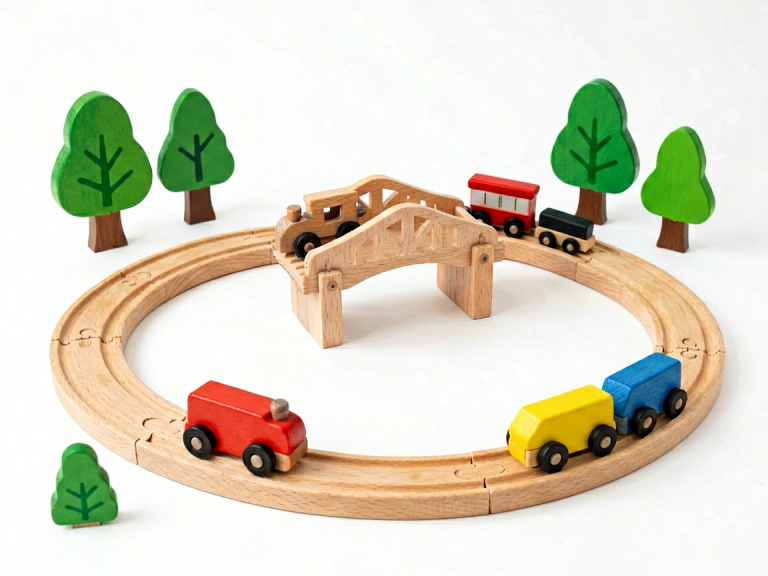
Pretend play reaches new heights at age three. A play kitchen with plastic food, pots, and pans lets children mimic cooking and serving, teaching sequencing (first wash, then cut, then cook) and social roles. Dress-up clothes—hats, scarves, vests, and shoes—allow them to become a firefighter, doctor, or princess. Dollhouses with miniature furniture encourage narrative creation. Tools like a toy tool bench or a doctor kit promote role-playing and empathy. Creative toys also include art supplies: washable paints, finger paints, large sheets of paper, stickers, and collage materials. Open-ended toys like wooden blocks, toy animals, and plain cardboard boxes are priceless because they can become anything the child imagines—a castle, a spaceship, or a farm. Avoid toys that dictate exactly what to do (like those with only one correct button to press); instead, choose toys that encourage divergent thinking and multiple uses.
Social and Emotional Learning Toys
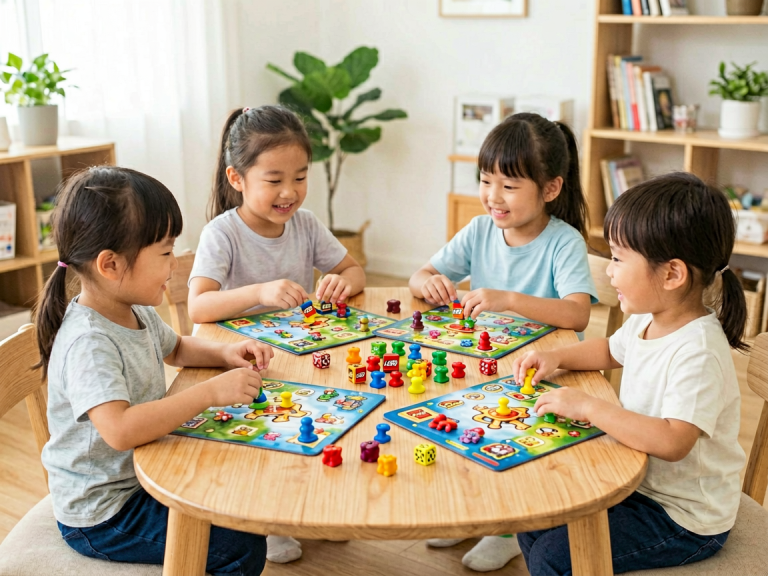
While many toys naturally foster social skills when played with siblings or friends, some are specifically designed to teach emotions and cooperation. Board games for three-year-olds—like “The Sneaky, Snacky Squirrel Game” or “Hoot Owl Hoot!”—teach turn-taking, following rules, and handling winning or losing gracefully. Emotion cards or dolls with different facial expressions help children identify and name feelings. Cooperative games, where everyone works together toward a common goal rather than competing, are ideal for this age because they reduce pressure and build teamwork. A simple matching game about feelings (“Which face shows happy?”) can be a gentle introduction to emotional literacy. Also, consider toys that encourage sharing, such as a large set of building blocks that requires two children to build a tower together. Remember that social skills are learned through practice, so guided play with an adult or older sibling is beneficial.
Tips for Choosing Safe and Engaging Learning Toys
Safety is non-negotiable for three-year-olds, who still explore by putting objects in their mouths. Always check for small parts that could be choking hazards—avoid toys with pieces smaller than a 1.25-inch diameter. Ensure materials are non-toxic, BPA-free, and free from sharp edges or long cords that could pose strangulation risks. Look for labels such as “ASTM” (American Society for Testing and Materials) or “CE” (Conformité Européenne) for safety compliance.
Beyond safety, consider the “open-ended” factor. Toys that can be used in multiple ways—like blocks, play dough, or a set of scarves—offer more learning opportunities than toys with a single function. Also, choose toys that match the child’s current interests. If a three-year-old loves animals, a set of plastic farm animals combined with a barn playset will be more engaging than a random puzzle. Rotate toys every few weeks to maintain novelty; a toy that has been tucked away for a month can feel brand new again. Finally, remember that the best learning toy is a caring adult who plays alongside the child. No toy can replace the warmth of a parent’s voice, the encouragement of a grandparent, or the laughter of a friend. Use toys as tools to facilitate interaction, not as babysitters.
Conclusion
Selecting learning toys for a three-year-old is both an art and a science. It requires understanding that play is a child’s work, and the right toys can turn everyday moments into powerful lessons. From cognitive puzzles and fine-motor lacing beads to imaginative play kitchens and cooperative board games, each category serves a unique purpose in nurturing a young mind. As you walk through the toy store or browse online, remember that less is often more—a few well-chosen, high-quality toys that encourage active exploration will benefit a child far more than a mountain of plastic gadgets. Pay attention to your child’s cues: which toys do they return to again and again? What kind of play brings them joy and concentration? By observing, you will become the best judge of what truly helps them learn. Ultimately, the goal is not to create a “genius” toddler, but to foster a lifelong love of discovery, creativity, and connection. So embrace the mess, the repetition, and the giggles. In the world of learning toys, the best investment you can make is time—time to play, to talk, and to wonder together.