The Top Educational Toys for 11-Year-Olds: Fostering Creativity, Critical Thinking, and STEM Skills
Introduction
Eleven is a pivotal age. Children are no longer little kids, but they are not yet teenagers. Their cognitive abilities are expanding rapidly: they can handle abstract reasoning, multi-step problem solving, and sustained focus on complex tasks. At the same time, their social and emotional worlds are becoming more nuanced, and their interests are diversifying. Choosing the best educational toys for an 11-year-old means selecting items that challenge their intellect, nurture their curiosity, and respect their growing independence. The right toy can ignite a lifelong passion for science, engineering, art, or storytelling. In this article, we will explore the key categories of educational toys that are most beneficial at this age, provide detailed reviews of specific top-rated products, and offer practical advice for parents and gift-givers. Whether you are looking for a birthday present, a holiday gift, or simply a way to keep your child engaged during school breaks, this guide will help you make an informed choice.
Why Educational Toys Matter at Age 11
At eleven, children are at a developmental sweet spot. Their brains are highly plastic, yet they have the discipline to follow instructions and the patience to work through failures. Educational toys at this stage serve several critical purposes.
First, they bridge the gap between concrete play and abstract learning. For example, a chemistry set allows a child to see physical reactions while also understanding concepts like pH, density, and chemical bonding. Second, they promote executive function skills: planning, organization, time management, and self-regulation. A complex building kit or a strategy board game requires the child to set goals, allocate resources, and adjust tactics when things go wrong. Third, these toys encourage collaboration and communication. Many of the best educational toys for this age are designed for two or more players, teaching turn-taking, negotiation, and respectful debate. Finally, they provide a healthy alternative to passive screen time. While digital learning tools have their place, hands-on toys engage the senses in ways that screens cannot replicate, strengthening fine motor skills, spatial reasoning, and tactile memory.
Top Categories of Educational Toys for 11-Year-Olds
STEM Building and Engineering Kits
STEM (Science, Technology, Engineering, and Mathematics) toys are among the most popular and effective educational tools for 11-year-olds. At this age, children are ready to move beyond simple snap-together blocks and into more sophisticated mechanical and electrical systems.
One standout category is robotics and coding kits. Products like the LEGO Boost Creative Toolbox or the more advanced LEGO Mindstorms Robot Inventor allow children to build programmable robots using motors, sensors, and a visual coding interface. These kits teach sequencing, logic, debugging, and basic engineering principles. An 11-year-old can spend hours designing a robot that responds to touch, follows a line, or picks up objects. The sense of accomplishment when the robot finally works is immense and builds resilience.
Another excellent subcategory is mechanical construction sets. The Engino STEM series, for example, offers kits focused on levers, pulleys, gears, and pneumatics. Children can build functional models like cranes, windmills, or cars while learning about mechanical advantage and energy transfer. These kits often come with detailed instructions and online resources that explain the physics behind each model.
Science Experiment and Exploration Kits
Eleven-year-olds are natural scientists. They ask "why" and "how" constantly. Science kits that allow them to conduct real experiments are perfect for channeling that curiosity.
Chemistry sets have come a long way since the basic test-tube kits of the past. The Thames & Kosmos Chem C2000 or the National Geographic Mega Chemistry Lab include dozens of experiments: growing crystals, making slime, creating chemical reactions that change color or produce gas. Safety is paramount, so these kits include goggles, gloves, and clear instructions. They also introduce the scientific method: hypothesizing, observing, recording data, and drawing conclusions.
Microscopy is another fantastic hands-on science activity. A high-quality microscope like the OMAX 40X-2000X or the AmScope B120C gives an 11-year-old the power to explore the invisible world. They can examine onion cells, pond water, insect wings, or their own cheek cells. This not only teaches biology but also patience and careful observation. Many kits come with prepared slides and blank slides, so the child can create their own specimens.
Strategy and Logic Games
Educational toys are not only about building and experimenting; they also include board games and puzzles that sharpen critical thinking. At eleven, children can handle complex rule sets and long-term strategies.
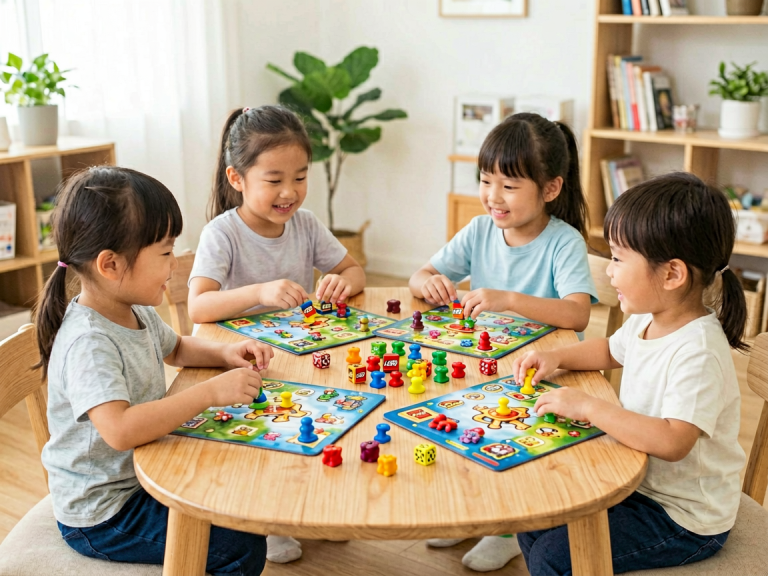
Abstract strategy games like Chess, Go, or the modern classic Settlers of Catan are excellent. Chess teaches planning, pattern recognition, and the ability to think several moves ahead. Catan introduces resource management, negotiation, and probability. These games are social, too, making them perfect for family game nights or playdates.
Logic puzzles and brain teasers also deserve a spot on the list. ThinkFun’s Gravity Maze or the Rubik’s Cube (and its many variations) provide solo challenges that improve spatial reasoning and problem-solving persistence. For a more collaborative experience, escape room-style games like Exit: The Game or Unlock! require a group to work together to solve a series of riddles and hidden clues within a time limit. These games promote communication, division of labor, and lateral thinking.
Creative Arts and Engineering
Not every 11-year-old is drawn to circuits and chemical reactions. Many thrive on artistic expression, and there are educational toys that blend creativity with learning.
Advanced model-building sets such as wooden architectural kits (e.g., Rolife’s miniature dollhouses or UGEARS’ mechanical models) require careful reading of instructions, precise assembly, and an eye for aesthetics. They teach patience and fine motor control while producing a beautiful, functional object. Some kits even include gears and motors, so the final model moves.
Art and design tools like the Cricut Joy or a high-quality drawing tablet (e.g., Wacom Intuos) can introduce digital design, typography, and color theory. An 11-year-old can design stickers, cards, or simple animations. Traditional art supplies like a professional watercolor set or a pottery wheel also encourage creativity while teaching techniques that require practice and discipline.
Language and Storytelling Toys
Reading and writing skills continue to develop rapidly at age 11. Educational toys that encourage storytelling and vocabulary expansion are valuable.
Interactive story-building games like Rory’s Story Cubes or the game Dixit inspire imagination. Story Cubes consist of dice with different pictures; players roll them and craft a story using the images. This builds narrative structure, vocabulary, and confidence in public speaking. Journaling kits with guided prompts, lock and key, and decorative stickers can encourage reflective writing. For children who love technology, apps like Book Creator or StoryJumper allow them to write, illustrate, and publish their own digital books.
Detailed Reviews of Specific Top-Rated Educational Toys
To give you a concrete sense of what to look for, here are in-depth reviews of five exceptional toys currently on the market.
1. LEGO Mindstorms Robot Inventor (51515)
Price: around $350
Age Range: 10+
Skills: Robotics, coding, engineering, problem-solving
This kit includes 949 pieces: motors, sensors, a programmable hub, and a variety of beams, gears, and axles. The accompanying app offers a drag-and-drop coding interface based on Scratch, making it accessible yet powerful. Children can build five different robot models, including a wheeled rover, a walking humanoid, and a four-legged spider. The coding allows for custom behaviors: the robot can avoid obstacles, follow a line, or respond to voice commands with the built-in microphone. Advanced users can even program in Python. The durability of LEGO bricks and the brand’s extensive online community provide endless support and inspiration. The main drawback is the price, but for a serious young engineer, it is a worthwhile investment.
2. Thames & Kosmos Chem C2000
Price: around $80
Age Range: 11+
Skills: Chemistry, scientific method, observation
This chemistry set contains 250 experiments with a comprehensive 96-page manual. It includes real lab equipment: test tubes, beakers, a graduated cylinder, a pipette, and a safety goggles. Experiments range from simple (making a vinegar-baking soda volcano) to more advanced (electrolysis of water, growing a crystal garden, and testing the pH of common household substances). The instructions clearly explain the chemical reactions and the scientific principles behind them. Safety is taken seriously: no toxic or dangerous chemicals are included, and all experiments are designed to be safe when adult supervision is provided. This kit is perfect for a child who loves to ask “what happens if…?”
3. ThinkFun Gravity Maze
Price: around $30
Age Range: 8–15
Skills: Spatial reasoning, logic, planning
Gravity Maze is a marble-run logic game. It comes with a grid base, 9 towers of varying heights, a target tower, and 60 challenge cards from beginner to expert. The goal is to place the towers on the grid so that when you drop a marble from a starting point, it rolls down through the towers and lands in the target. The challenges require careful spatial analysis: you must consider the path of the marble, the height of each tower, and the placement of any holes or ramps. It is single-player, but siblings or parents can take turns solving puzzles. The game is compact and travel-friendly. It excels at teaching trial-and-error and perseverance because many puzzles require multiple attempts to solve.
4. UGEARS Wooden Model – Mechanical Horse
Price: around $30
Age Range: 14+ (but 11-year-olds with adult help can manage)
Skills: Fine motor skills, patience, mechanical understanding
UGEARS produces self-assembly wooden models that run without glue or batteries. The Mechanical Horse is a stunning example: it consists of laser-cut plywood pieces that you pop out and assemble using only the included rubber bands and dowels. Once built, it walks forward by its own internal gear-and-lever mechanism when you turn a crank. The assembly process is detailed and takes several hours, teaching following instructions, manual dexterity, and an intuitive understanding of how gears and linkages convert rotational motion into walking. The final model is a beautiful display piece. Note that some younger 11-year-olds may struggle with small pieces and complex steps, so adult supervision is recommended.
5. Rory’s Story Cubes – Voyages
Price: around $15
Age Range: 8+
Skills: Creativity, storytelling, vocabulary, social interaction
This is a deceptively simple toy: nine dice, each with a different image (a map, a compass, a treasure chest, a whale, etc.). The game can be played alone or in a group. Roll all nine dice, then start a story that incorporates each image. The rule is that there are no wrong answers—the only goal is to have a coherent narrative. It can be played competitively (each player adds a sentence) or cooperatively (building a single story together). The Voyages edition has a travel/adventure theme, which appeals to 11-year-olds who love exploration. The benefits are immense: it boosts oral language, quick thinking, and wild imagination. It is also portable and inexpensive, making it an excellent stocking stuffer or travel companion.
Tips for Choosing the Best Educational Toy for Your 11-Year-Old
With so many options, how do you pick the right one? Here are a few guidelines.
Know your child’s interests. A child who loves building might prefer a robotics kit, while a child who loves reading might prefer a storytelling game or a journaling set. Forcing a STEM toy on an artistic child can backfire. Instead, find a toy that bridges their interest—for example, a mechanical model that results in an art piece.
Consider the level of challenge. The toy should be just hard enough. If it is too easy, the child will be bored; if too hard, they will be frustrated. Look at the recommended age range but also read reviews from parents of similar-aged children. Many toys offer progression from simple to advanced tasks.
Think about social context. Does your child prefer solo play or group play? Some toys (like Gravity Maze) are perfect for quiet independent time. Others (like strategy board games) are better for family or friends. Having a mix of both is ideal.
Check for safety and quality. At age 11, children are generally responsible, but small parts can still pose a choking hazard for younger siblings. Look for toys made from non-toxic materials and with sturdy construction. Brands with a long track record—LEGO, ThinkFun, Thames & Kosmos—are generally reliable.
Don’t underestimate the value of open-ended play. Toys that have a single correct solution (like most puzzles) are good for specific skills, but open-ended toys (like building kits or art supplies) allow for creativity and multiple outcomes. The best educational toys offer both guided activities and free play.
Conclusion
The best educational toys for 11-year-olds are those that challenge their minds, engage their hands, and spark their imaginations. Whether it is a programmable robot that teaches coding, a chemistry set that turns the kitchen into a lab, or a storytelling game that turns a rainy afternoon into a world of adventure, the right toy can be a powerful catalyst for learning. At this age, children are ready to dive deep into subjects that fascinate them. By choosing toys that align with their passions and push their abilities just a little further, you are not just giving a gift—you are investing in their growth as thinkers, creators, and lifelong learners. So go ahead: pick a toy that makes them think, tinker, and talk. Watch as they discover the joy of mastering something difficult, and enjoy the journey together.