Unlocking Early Imagination: The Best Pretend Play Sets for Newborns
When we think of pretend play, our minds often drift to preschool classrooms filled with miniature kitchens, doctor kits, and tool benches. But the truth is that the foundation for imaginative play is laid much earlier — even during the newborn stage. While a brand-new baby may not be able to hold a toy telephone or stir a tiny pot, their brain is already absorbing the world through every sense. The best pretend play sets for newborns are not about elaborate role-playing scenarios; rather, they are carefully designed tools that encourage early interaction, sensory exploration, and the first sparks of imitation. These sets help parents engage with their infants in ways that build neural connections, promote bonding, and support cognitive development from day one. In this article, we will explore the essential criteria for choosing pretend play sets for newborns and highlight the most effective options available today.
Why Pretend Play Matters for Newborns
Before diving into specific products, it is important to understand why pretend play sets are relevant for babies who cannot yet sit up or grasp objects deliberately. Even in the first three months, infants are busy learning about cause and effect, facial expressions, and the sounds of human communication. When a parent holds a soft doll and speaks to it in a gentle voice, the newborn watches and listens, beginning to connect the idea of caring and interaction. Simple pretend play props — such as a fabric mirror, a rattle shaped like a teapot, or a plush animal with a crinkly texture — introduce the concept of representation. The baby may not consciously think, “This is a cat,” but their developing brain starts to associate shapes, sounds, and movements with real-world objects. Moreover, engaging in pretend play with a newborn stimulates the mirror neuron system, which is crucial for empathy and social learning later in life. Therefore, choosing age-appropriate pretend play sets is not merely about entertainment; it is a vital part of early childhood development.
Key Features of the Best Pretend Play Sets for Newborns
Not all pretend play toys are suitable for newborns. The best sets share several common characteristics that prioritize safety, sensory stimulation, and developmental appropriateness.
Safety and Material Considerations
Newborns explore the world primarily through their mouths and skin. Therefore, any pretend play set intended for this age group must be made from non-toxic, BPA-free, and phthalate-free materials. Fabrics should be soft, washable, and free of small parts that could pose a choking hazard. Look for items with embroidered eyes rather than plastic ones, and avoid any sharp edges or long strings. Additionally, the size of each piece should be large enough that it cannot be swallowed or lodged in the baby’s throat. Many reputable brands follow strict safety standards such as ASTM F963 or EN71, so checking for these certifications is a wise step.
Sensory-Rich Elements
A newborn’s nervous system is rapidly developing, and they crave varied sensory input. The best pretend play sets incorporate high-contrast colors (especially black, white, and red), different textures (soft fleece, crinkly fabric, smooth wood), gentle sounds (rattles, squeakers, bells), and even faint scents or mirrors. These elements capture the baby’s attention and encourage them to track objects with their eyes, reach out, and eventually grasp. For example, a pretend tea set made of soft fabric with a crinkly “sugar bowl” and a jingling “teaspoon” can hold a newborn’s interest far longer than a plain rattle.
Opportunities for Parent-Child Interaction
The most effective pretend play sets for newborns are those that invite the caregiver to participate actively. A set that includes a hand puppet, a soft book with a simple story about feeding a baby, or a plush toy with a removable blanket all encourage parents to narrate, sing, and model pretend actions. This interaction is the heart of early pretend play: the adult demonstrates the “as if” behavior, and the baby gradually absorbs the concept. The best sets come with simple guides or suggestions for how to use them with a newborn, such as making animal sounds, pretending to feed the doll, or covering and uncovering a toy to play peek-a-boo.
Top Categories of Pretend Play Sets for Newborns
Based on developmental research and parent feedback, the following categories represent the most valuable pretend play sets for babies from birth to three months. Each set is designed to grow with the child, offering simple engagement now and more complex play later.
Soft Fabric Dolls and Play Mats
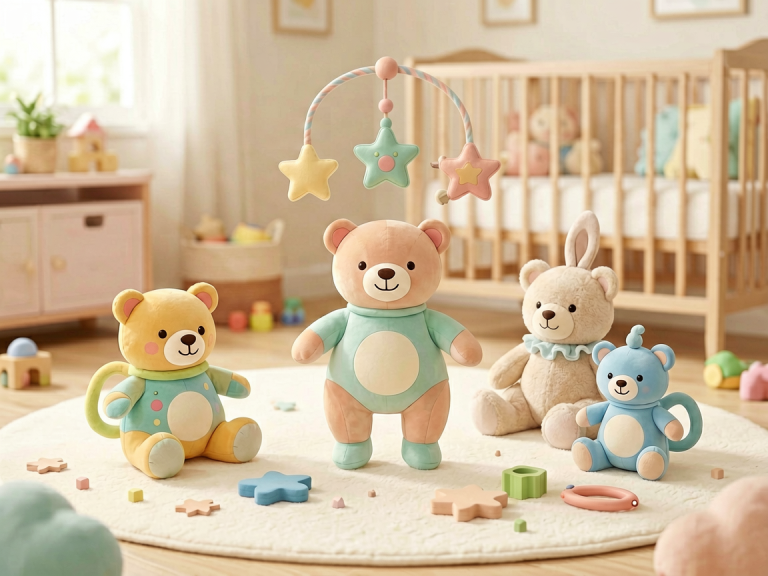
A soft-bodied doll with a simple face and a coordinating play mat is a classic choice. Look for dolls that are lightweight (around 100–150 grams), small enough for tiny hands to hold with assistance, and made of organic cotton or bamboo fabric. The best options have a stitched smile, embroidered eyes, and a gently weighted body that feels comforting. Pair the doll with a play mat that features high-contrast patterns, a mirror, and dangling toys. During tummy time, lay the doll next to the baby and talk about its features: “Look, the baby has eyes just like you! Can you touch the baby’s nose?” This simple imitation game lays groundwork for social-emotional learning. Some sets even include a small blanket or a tiny bottle that the baby can mouth — a perfect opportunity for the parent to pretend to feed the doll, then feed the baby.
Sensory Play Kits with Themed Elements
Sensory play kits designed for newborns often center around a theme, such as “a day in the garden” or “bedtime routine.” For instance, a set might include a crinkly leaf, a soft flower with a rattle inside, a satin cloud, and a small plush sun. While these are not strictly pretend play in the traditional sense, they encourage the baby to engage with symbolic shapes. A parent can say, “Here is the sun, it makes a crinkly sound! Let’s say goodnight to the sun,” and then hide it under a cloth. Such activities foster object permanence and the early notion of representation. When choosing a sensory pretend play set, ensure that all pieces are securely attached to straps or a base to prevent scattering, or that they are large and easy to keep track of. Sets that come in a small carry bag or box also help with organization and can be used for peek-a-boo games.
Musical and Sound-Based Pretend Sets
Newborns are highly responsive to sound, and musical pretend play sets can be wonderfully engaging. Examples include a soft toy telephone that plays gentle lullabies when a button is pressed, a plush music box shaped like a bunny that a parent can wind up before “calling” the baby, or a set of soft maracas designed for tiny hands. The key is that these items encourage the adult to act out scenarios: “Hello, is this Grandma calling? Let me get the phone for you! Oh, she says she loves you.” The baby may not understand the words, but they will respond to the tonal variation, rhythm, and the parent’s animated face. Over time, these early interactions become the roots of turn-taking and conversational skills. Look for musical toys with volume control and a gentle, non-startling sound.
High-Contrast Visual Play Kits with Story Cards
Visual stimulation is paramount for newborns, whose vision gradually improves during the first months. A pretend play set that includes large, high-contrast story cards (about 8×10 inches) with simple images — a smiling face, a cat, a ball, a bottle — can be used in a storytelling ritual. Lay the baby on their back or hold them upright against your chest, and slowly show each card while narrating a tiny story. For example: “Here is a cat. The cat says meow! The cat wants to play with a ball. Can you see the ball?” These cards act as props for pretend play because the parent is engaging in symbolic activity — treating a flat image as if it were a real cat. Some sets also include a stand so that the cards can be propped up during tummy time, creating a mini theater. The best visual kits are made of high-contrast black, white, and red patterns, with some cards featuring mirrored surfaces.
Mirror-Based Pretend Sets
Mirrors are magical for newborns. A pretend play set that centers on a safe, baby-proof mirror (made of polished stainless steel or shatterproof acrylic) can be used in countless ways. One excellent product is a soft fabric book with a mirror on the last page, or a small plush toy with a mirror attached to its belly. Parents can hold the mirror up to their own face and make exaggerated expressions, then turn it to the baby: “Now look at you! Where are your eyes? There they are!” This activity is a form of early pretend play because the adult is acting “as if” the mirror is a window to another person. Over time, the baby begins to recognize their own reflection, which is a crucial milestone in self-awareness. Some mirror sets also come with attachable soft toys that can be affixed to the mirror’s edge, turning it into a little stage for tiny characters.
How to Introduce Pretend Play Sets to Your Newborn
Even the best play sets require thoughtful introduction. Start by choosing a calm time when your baby is fed, alert, and not too tired. Hold the toy about 8–12 inches from their face (the optimal focal distance for newborns) and slowly move it from side to side, watching for their eyes to track. Use a sing-song voice and keep your expressions warm and exaggerated. For a soft doll, you might gently stroke its head and then stroke the baby’s head, making a connection. Repeat the same short phrases each time — “Time to say hello to Dolly,” or “Let’s feed the bunny” — so that the baby begins to anticipate the routine. It’s perfectly fine if the baby only engages for a minute or two; their attention span is naturally short. The goal is not to complete a game but to create a positive, shared experience. As the weeks pass, you will notice your baby reaching out, cooing in response, or staring intently at the pretend props. These are signs that the seeds of imagination are already sprouting.
Conclusion
The myth that pretend play is only for toddlers overlooks the incredible potential of the newborn period. When parents choose the best pretend play sets for their newborns — those that are safe, sensorially rich, and designed for interaction — they are not merely buying toys. They are investing in a relationship built on communication, joy, and the earliest forms of symbolic thought. A soft doll with a crinkly tummy, a black-and-white story card set, a gentle musical telephone, or a safe mirror can become treasured tools for bonding and brain development. As your baby grows from a sleepy newborn to a curious infant, these same pretend play sets will transform into props for more complex games — feeding, dressing, talking on the phone, and putting toys to bed. By starting early, you are giving your child a head start in the lifelong journey of imagination. So go ahead, pick up that cloth teapot, pretend to pour a cup of tea, and watch your newborn’s eyes light up. That spark is the beginning of everything.