Timber or Thermoset? Choosing Between Wooden and Plastic Toys for Nine-Year-Olds
Introduction: The Crossroads of Play
At the age of nine, children stand at a fascinating developmental crossroads. They are no longer toddlers who mouth every object, nor are they fully-fledged teenagers craving digital immersion. Instead, they possess a sophisticated blend of cognitive, emotional, and physical abilities: they can reason abstractly, solve multi-step problems, engage in complex social negotiations, and pursue hobbies with genuine passion. This is the golden age of hobbies—the time when a child might discover a lifelong love for chess, model-building, drawing, or science experiments. For parents and educators, selecting the right toys during this period is not merely a matter of entertainment; it is a subtle act of nurturing minds, values, and even future career inclinations. The perennial debate between wooden toys and plastic toys takes on new urgency when the child is nine. Both materials offer distinct advantages and pitfalls. Wooden toys evoke nostalgia, sustainability, and tactile warmth, while plastic toys dazzle with color, versatility, and technological integration. This article delves deep into the comparative merits of each, examining developmental psychology, environmental impact, safety, and play value to help caregivers make informed choices for their nine-year-olds.
1. The Enduring Appeal of Wooden Toys: Craftsmanship, Calm, and Connection
1.1 Tactile and Sensory Stimulation
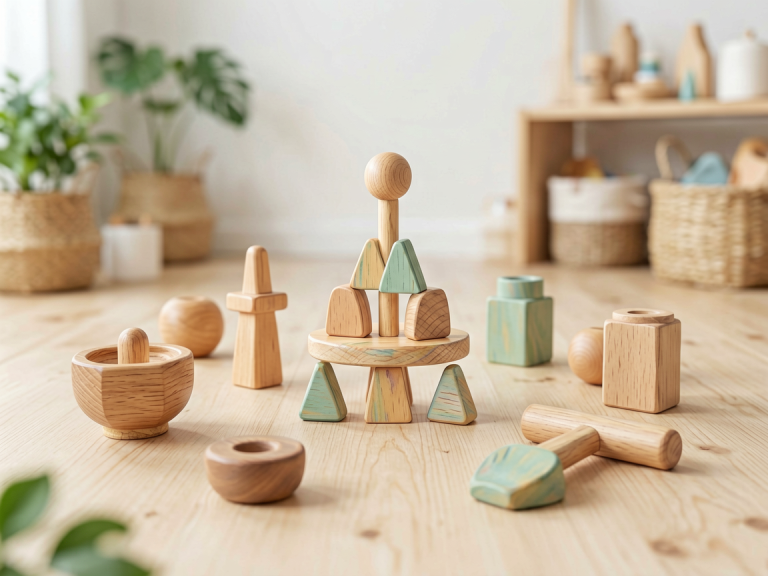
Wooden toys provide a sensory experience that plastic rarely replicates. Natural wood is warm to the touch, varies in grain and color, and often carries a subtle, earthy scent. For a nine-year-old, whose brain is still refining proprioception and fine motor control, handling a smoothly sanded wooden block or a carved puzzle piece offers a grounding, almost meditative feedback. Unlike the uniform, often cold surface of plastic, wood invites exploration through texture—rough edges, smooth curves, and the occasional knot. Research in developmental psychology suggests that diverse tactile experiences in middle childhood can enhance neural connectivity and even improve handwriting and tool manipulation skills. When a nine-year-old builds a structure with wooden planks or balances a set of wooden animals, they are not just playing; they are calibrating their sense of force, gravity, and material resistance.
1.2 Open-Ended, Imaginative Play
Wooden toys are famously “open-ended,” meaning they have no single prescribed function. A set of simple wooden blocks can become a castle one day, a spaceship the next, and a maze for a marble run the day after. This flexibility is especially valuable for nine-year-olds, whose cognitive development allows them to engage in sophisticated pretend play that involves complex narratives and rule systems. Plastic toys, in contrast, often come with explicit functions: a plastic dinosaur that roars on command or a plastic spaceship with pre-molded buttons and lights may actually limit creative reinterpretation. Studies in child-led play (e.g., the work of Piaget and Vygotsky) indicate that open-ended materials encourage divergent thinking—the ability to generate multiple solutions to a problem. For a nine-year-old preparing for the abstract reasoning demands of middle school, this cognitive flexibility is a crucial asset.
1.3 Durability and Longevity
Well-made wooden toys can outlast their owners’ childhood. They rarely break into sharp shards, and their weight gives them a satisfying heft that plastic copies often lack. Many families pass down wooden train sets, building blocks, or chess boards from one generation to the next. This durability aligns with the nine-year-old’s growing sense of responsibility. Children this age can learn to care for valuable possessions, understand the concept of heirlooms, and develop respect for craftsmanship. Moreover, wooden toys are easier to repair—a loose joint can be glued, a scratched surface can be sanded and oiled—which teaches resourcefulness rather than disposability.
1.4 Environmental and Safety Considerations
From a sustainability perspective, wood is generally superior to plastic—provided it comes from responsibly managed forests (look for FSC-certified products). Wood is biodegradable and has a lower carbon footprint in production. Plastic toys, especially those made from cheap thermoplastics, often contain phthalates, bisphenols, or other endocrine disruptors that can be harmful during the rapid growth phase of a nine-year-old. While many products now claim to be BPA-free, the long-term safety of alternative plasticizers remains under scrutiny. Wooden toys, finished with non-toxic paints or natural oils, pose minimal chemical risk. However, it is important to note that not all wooden toys are created equal; some cheap imported wood products may use formaldehyde-based glues or lead-based paints. Caregivers should always verify safety certifications (such as ASTM or CE marks).
2. The Dynamic World of Plastic Toys: Versatility, Interaction, and Modern Learning
2.1 Diversity of Forms and Functions
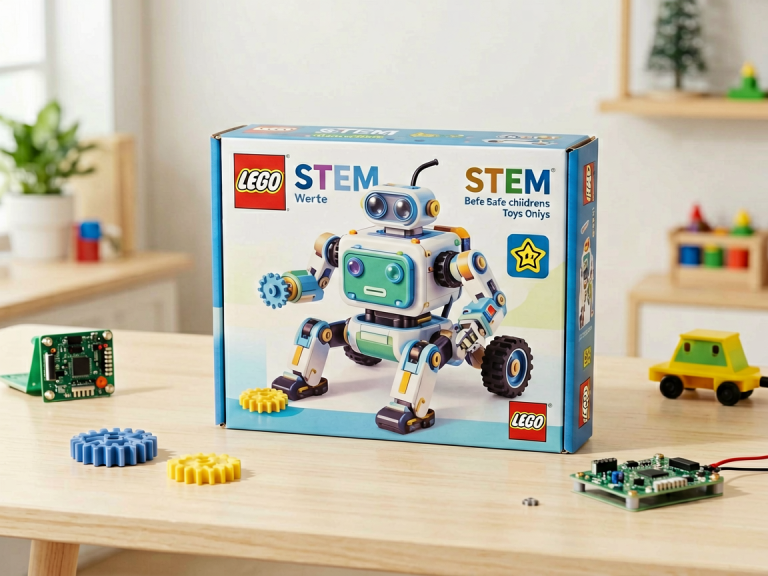
Plastic toys dominate the modern toy market for good reason: they can be molded into virtually any shape, color, or mechanism. For a nine-year-old, this means access to elaborate construction systems (like LEGO Technic or K’Nex), action figures with articulated joints, remote-controlled vehicles, and complex board games with plastic components that snap together precisely. Plastic enables the creation of toys that incorporate electronics, such as coding robots (like Sphero or Botley), which teach programming logic. At nine, children are capable of understanding cause-and-effect relationships, following multi-step instructions, and even debugging simple code. Plastic-based STEM kits have become powerful educational tools, blending play with computational thinking.
2.2 Social and Collaborative Play
Plastic toys often facilitate social play more readily than wooden ones. Mass-produced plastic toys are tied to popular media franchises—superheroes, video game characters, movies—which gives nine-year-olds a shared cultural language. A child who brings a plastic Pokémon figure to school immediately connects with peers who recognize it. This social bonding is crucial at age nine, when friendships become more complex and peer acceptance starts to influence self-esteem. Plastic toys also enable “collecting” behaviors; children trade, display, and compare items (like Beyblades, Hot Wheels, or trading cards), which teaches negotiation, categorization, and delayed gratification. Wooden toys, while beautiful, rarely have the same mainstream social currency. A child may love a handcrafted wooden puzzle, but it will not spark a playground conversation the way a plastic “Lightning McQueen” car might.
2.3 Interactivity and Technological Integration
Nine-year-olds are digital natives. Their brains are accustomed to responsive stimuli—lights, sounds, motion, and feedback. Many plastic toys now incorporate sensors, microcontrollers, and app connections that adapt to the child’s skill level. For example, a plastic drone that requires assembly and then responds to voice commands engages both engineering and artificial intelligence. Such toys can demystify technology and prepare children for a world where human-computer interaction is ubiquitous. Wooden toys, by their very nature, cannot offer this kind of adaptive feedback. A wooden abacus is wonderful for math, but a plastic “Math Whiz” calculator game can provide immediate correction and encouragement, which can be motivating for a struggling learner.
2.4 Lightness, Portability, and Cost
Plastic toys are typically lighter and cheaper to produce than their wooden counterparts. This means that families on a budget can provide a greater variety of toys for their nine-year-old—an important consideration given that children this age often have rapidly changing interests. Plastic toys are also easier to store, stack, and transport to a friend’s house or on a trip. Furthermore, plastic can be produced in bright, fade-resistant colors that appeal strongly to children’s visual preferences. While some argue that these bright colors overstimulate rather than calm, for many nine-year-olds, a vibrant plastic toy can be a source of joy and excitement, which is itself a valid function of play.
3. Making the Right Choice for a Nine-Year-Old: A Balanced Approach
3.1 Consider the Child’s Temperament and Interests
No single material is universally superior. A nine-year-old who is naturally introspective, enjoys quiet concentration, and shows an affinity for art or craftsmanship may thrive with wooden toys: a wood-burning kit, a set of wooden tangrams, or a beautifully crafted marble run. Conversely, a highly social, kinetic child who loves gadgets, competition, and narrative-rich play may find plastic toys more engaging. The best strategy is to observe the child’s natural predilections. Parents should avoid imposing their own nostalgia for wooden toys if the child genuinely prefers the interactive allure of plastic.
3.2 Mix and Match for Developmental Balance
The ideal toy box for a nine-year-old likely contains a combination of both materials. Wooden toys can anchor the “slow play” corner—a place for puzzles, strategy games (like chess or backgammon with weighted wooden pieces), and construction sets that demand patience. Plastic toys can occupy the “fast play” zone—battery-operated cars, programmable robots, or building sets that snap together quickly. This diversity exposes the child to different modes of thinking: deliberate, analog problem-solving on one hand, and rapid, feedback-driven experimentation on the other. Both are essential for a well-rounded cognitive toolkit.
3.3 Quality Over Quantity—and Safety First
Regardless of material, quality matters more than quantity. A single well-crafted wooden toy can provide years of engagement, while a cheap plastic toy that breaks in a week teaches frustration and disposability. For plastic toys, look for brands with a reputation for durability and safety (such as LEGO, Magformers, or learning-oriented sets from reputable educational companies). Avoid toys with small parts that can be easily swallowed or sharp edges. For wooden toys, ensure the finish is smooth and non-toxic, and that there are no loose splinters. At age nine, children are still developing impulse control, so supervision during play with complex or mechanical plastic toys is wise.
3.4 Sustainability and Long-Term Value
If environmental impact is a priority, prioritize wooden toys made from sustainable sources. However, do not overlook the fact that many plastic toys can be recycled (though the recycling rate for mixed plastic toys is low) or passed down. The most sustainable toy is one that is used for years, not months. A plastic LEGO set can be reconfigured into thousands of different models over a decade, making its per-use environmental cost relatively low. Meanwhile, a wooden toy that sits unused because it no longer appeals to the child’s interests may have a larger footprint relative to its actual play time.
Conclusion: The Toy Is a Tool, Not a Statement
In the end, the debate between wooden and plastic toys for nine-year-olds is less about material superiority and more about intentionality. The best toy is one that respects the child’s current developmental stage—their need for autonomy, their desire for mastery, their hunger for social connection, and their innate curiosity about how the world works. Both wood and plastic can serve these needs, but in distinct ways. Wood offers grounding, sustainability, and open-ended creativity; plastic offers versatility, interactivity, and cultural relevance. The wise caregiver will not choose one over the other as an ideological stand, but will curate a diverse collection that speaks to the whole child. The nine-year-old does not need a “natural” toy world or a “high-tech” one—they need a world filled with opportunities to build, imagine, experiment, and connect. Whether that world is carved from birch or molded from ABS plastic, the true magic lies not in the material, but in the moments of discovery it enables.